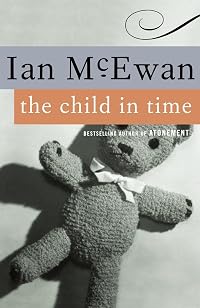
The Child in Time
by Ian McEwan
On This Page
Description
A child's abduction sends a father reeling in this Whitbread Award-winning novel that explores time and loss with "narrative daring and imaginative genius" (Kirkus Reviews, starred review).Stephen Lewis, a successful author of children's books, is on a routine trip to the supermarket with his three-year-old daughter. In a brief moment of distraction, she suddenly vanishes—and is irretrievably lost. From that moment, Lewis spirals into bereavement that effects his marriage, his psyche, show more and his relationship with time itself: "It was a wonder that there could be so much movement, so much purpose, all the time. He himself had none at all."
In The Child in Time, acclaimed author Ian McEwan "sets a story of domestic horror against a disorienting exploration in time" producing "a work of remarkable intellectual and political sophistication" that has been adapted into a PBS Masterpiece movie starring Benedict Cumberbatch (Kirkus Reviews, starred review).
"A beautifully rendered, very disturbing novel." —Publishers Weekly. show less
Tags
Recommendations






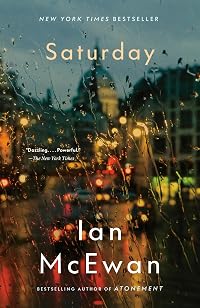



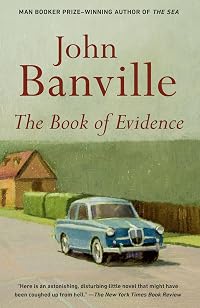

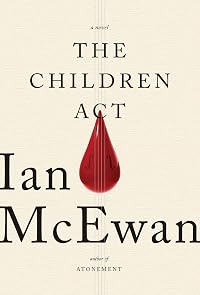







Member Reviews
A superb book about every parent's worst nightmare (a child goes missing), but you don't need to be a parent to appreciate it because it is primarily a story of loss, family (is it a couple, parents and children or a patriarchal institution such as the RAF?), distortions in (the perception of) time and reality, and of growing up and of regressing.
Stephen Lewis is a children's author who also sits on a government committee that is meant to produce a handbook on child-rearing - to regenerate the UK. He takes his 3 year old daughter, Kate, to the supermarket, where she is abducted. The rest of the story charts the effects on him, his marriage, his relationship with his parents, and his work.
His life is marked by reacting to circumstances show more rather than instigating things and thus he is even more adrift once Kate is lost.
Language
It is full of painful ironies (Stephen making policy about parenthood, yet losing his own child, while a friend effectively gains one) and wonderful imagery:
* In a lonely flat the "deadly alignment of familiar possessions... the stubborn conspiracy of objects... to remain exactly as they had been".
* The committee meeting with "vestigial stateliness and dozy bureaucracy mingling soporifically".
* Making love "sleepily, inconclusively".
* "The lost child was everyone's property. But Simon was alone."
* "Nappies proclaimed from diagrammatic metal trees a surrender to new life."
* A mother "whose worrying was a subtle form of possessiveness".
* On a train, the “customary search for the loneliest seat”.
Contemporary Past
It is set in roughly the present day of when it was written: 1987. It made me acutely aware of how much the world has changed in barely 20 years: there is no mobile phone at a crucial point, public fear of strangers was clearly much less than now, and the tactics of parents and police are very different from the Madeleine McCann case.
That made for a rather slippery feel about the period, which fits with the aspects of temporal elasticity that are also hinted at.
McEwan does Magical Realism?
Unlike other McEwans I have read, this has touches of magical realism (mainly regarding the nature and experience of time) .
Time is elastic, capricious, malleable, parallel and relative. There are episodes where it seems to speed up, slow down, or short circuit. A train leaving London travels "from the past into the present" in an architectural but also metaphorical sense and Stephen's parents condense all their history into souvenirs in a single room.
Time slows down, cinematically, in a collision, stretches out in an endless cornfield and "time would stop" without the fantasy of her [Kate's:] continued existence". "Duration shaped itself around the intensity of the event".
One of the characters is a physicist who explains something of this, but some incidents are neither explained nor, perhaps, explicable.
A Sprinkling of Satire?
This also has some humorous political satire that I don't associate with McEwan (he "hoped to discover what is was they thought in the process of saying it"), but it works very well.
Damp Squib
It would have been a comfortable 5*, but I disliked the ending, so dropped it to 4*. If he were writing it now, I suspect it would end differently.
TV Adaptation in 2017
I'm looking forward to seeing Benedict Cumberbatch in the title role: CiT on IMDB. I may have to read or skim to book first, to see if the ending is as McEwan wrote it, how I wanted it (eight years later, I don't remember what that was), or something else. show less
Stephen Lewis is a children's author who also sits on a government committee that is meant to produce a handbook on child-rearing - to regenerate the UK. He takes his 3 year old daughter, Kate, to the supermarket, where she is abducted. The rest of the story charts the effects on him, his marriage, his relationship with his parents, and his work.
His life is marked by reacting to circumstances show more rather than instigating things and thus he is even more adrift once Kate is lost.
Language
It is full of painful ironies (Stephen making policy about parenthood, yet losing his own child, while a friend effectively gains one) and wonderful imagery:
* In a lonely flat the "deadly alignment of familiar possessions... the stubborn conspiracy of objects... to remain exactly as they had been".
* The committee meeting with "vestigial stateliness and dozy bureaucracy mingling soporifically".
* Making love "sleepily, inconclusively".
* "The lost child was everyone's property. But Simon was alone."
* "Nappies proclaimed from diagrammatic metal trees a surrender to new life."
* A mother "whose worrying was a subtle form of possessiveness".
* On a train, the “customary search for the loneliest seat”.
Contemporary Past
It is set in roughly the present day of when it was written: 1987. It made me acutely aware of how much the world has changed in barely 20 years: there is no mobile phone at a crucial point, public fear of strangers was clearly much less than now, and the tactics of parents and police are very different from the Madeleine McCann case.
That made for a rather slippery feel about the period, which fits with the aspects of temporal elasticity that are also hinted at.
McEwan does Magical Realism?
Unlike other McEwans I have read, this has touches of magical realism (mainly regarding the nature and experience of time) .
Time is elastic, capricious, malleable, parallel and relative. There are episodes where it seems to speed up, slow down, or short circuit. A train leaving London travels "from the past into the present" in an architectural but also metaphorical sense and Stephen's parents condense all their history into souvenirs in a single room.
Time slows down, cinematically, in a collision, stretches out in an endless cornfield and "time would stop" without the fantasy of her [Kate's:] continued existence". "Duration shaped itself around the intensity of the event".
One of the characters is a physicist who explains something of this, but some incidents are neither explained nor, perhaps, explicable.
A Sprinkling of Satire?
This also has some humorous political satire that I don't associate with McEwan (he "hoped to discover what is was they thought in the process of saying it"), but it works very well.
Damp Squib
It would have been a comfortable 5*, but I disliked the ending, so dropped it to 4*. If he were writing it now, I suspect it would end differently.
TV Adaptation in 2017
I'm looking forward to seeing Benedict Cumberbatch in the title role: CiT on IMDB. I may have to read or skim to book first, to see if the ending is as McEwan wrote it, how I wanted it (eight years later, I don't remember what that was), or something else. show less
As an author of children's books and expected to be knowledgable about childcare, Stephen Lewis participates by daydreaming through meetings of a government committee tasked with creating an official childcare handbook. At the time he is suffering from cataclysmic despondency following the abduction of his daughter. Each of the chapters open with an excerpt from the handbook, eventually printed without the authority of the committee, a risible document that combines a voguish modernity with Victorian severity.
McEwan examines many forms of the child, time, and responsibility: Stephen's desolation for the missing child; the missing time as she grows older; his friend Charles' return to childhood; his concern for a young homeless woman; show more and his mother's memory of choosing to have a child or termination.
McEwan's writing is superb. He is genius at providing the detail that will complete a picture in the mind of the reader. This is a book that will stay in the memory. show less
McEwan examines many forms of the child, time, and responsibility: Stephen's desolation for the missing child; the missing time as she grows older; his friend Charles' return to childhood; his concern for a young homeless woman; show more and his mother's memory of choosing to have a child or termination.
McEwan's writing is superb. He is genius at providing the detail that will complete a picture in the mind of the reader. This is a book that will stay in the memory. show less
Personally I found The Child In Time a depressing read dealing as it does with the after effects of the unsolved case of a child abducted from a grocery store while she and her father were waiting in line to pay. The book starts two years after this event, but this is the shadow that hangs over Stephen ‘s life. His child gone, his marriage shattered, his career as a writer stalled, and his psyche totally caught up in the tragedy. I found my heart going out to this man as he first throws himself into the search for his daughter, then works on theories as to why she was taken, he feels that he should continue to buy birthday gifts for her as an ‘act of faith’ that someday she will be returned. Eventually when he mistakes a little show more girl for his daughter he realizes he needs to move on to other things so he sets himself a routine of tennis, instruction in Arabic and trying to write again but it really seems as if his time is mostly spent mindlessly watching television and daydreaming.
Through his daydreams and musings over his life, we learn of his own childhood, the courtship of his parents, his relationship with his wife, and the slipping into madness of his friend and former publisher all of which adds to Stephen’s own confusion and precarious mental state. The author uses this stream-of-consciousness in other scenes as well to build on the theme of childhood and the loss of innocence.
If the author’s objective was to leave his readers feeling uncomfortable, sad and disturbed then this beautifully written story is a great success. This was my first book by Ian McEwan and I can see that he is a brilliant writer but the subject matter of The Child in Time was too disheartening for me at this time. show less
Through his daydreams and musings over his life, we learn of his own childhood, the courtship of his parents, his relationship with his wife, and the slipping into madness of his friend and former publisher all of which adds to Stephen’s own confusion and precarious mental state. The author uses this stream-of-consciousness in other scenes as well to build on the theme of childhood and the loss of innocence.
If the author’s objective was to leave his readers feeling uncomfortable, sad and disturbed then this beautifully written story is a great success. This was my first book by Ian McEwan and I can see that he is a brilliant writer but the subject matter of The Child in Time was too disheartening for me at this time. show less
I had high hopes for this one having heard good things about it but although there were elements I liked, I thought it was trying to reconcile too many incompatible elements and some of it seemed rather silly.
The first part, in which the protagonist loses his daughter when she is apparently abducted in a supermarket, could have been the basis of a stronger but shorter story. Instead we get a lot of pseudo science about the elasticity of time, a near future (in 1987 terms) in which the Thatcher government lasts longer, and a lot of stuff about the nature of childhood experience.
I can't resist commenting on one ludicrous detail - not only can I see no way a sleeper train from Scotland would ever have been diverted through Suffolk, but show more even if it did it wouldn't arrive until much later than 1 a.m. and it wouldn't stop to pick up passengers at a small rural station.
Some interesting ideas but rather too obviously flawed for me to go any higher than three stars. show less
The first part, in which the protagonist loses his daughter when she is apparently abducted in a supermarket, could have been the basis of a stronger but shorter story. Instead we get a lot of pseudo science about the elasticity of time, a near future (in 1987 terms) in which the Thatcher government lasts longer, and a lot of stuff about the nature of childhood experience.
I can't resist commenting on one ludicrous detail - not only can I see no way a sleeper train from Scotland would ever have been diverted through Suffolk, but show more even if it did it wouldn't arrive until much later than 1 a.m. and it wouldn't stop to pick up passengers at a small rural station.
Some interesting ideas but rather too obviously flawed for me to go any higher than three stars. show less
"Only when you are grown up, perhaps only when you have children yourself, do you fully understand that your parents had a full and intricate existence before you were born."
'The Child in Time,' is set in 1980's London and society and this book seems pretty bleak. A fight between a Soviet and an American athlete at the recent Olympics has nearly escalated into nuclear war; although she is never named it is pretty obvious that Margaret Thatcher is Britain's Prime Minister and her Government has undertaken all sorts of cutbacks, home-owners have lost touch with their neighbours living separate lives whilst licensed beggars roam the streets of London.
The book opens with a harrowing event. Stephen Lewis, a well-known writer of children's show more books, one morning, decides to let his wife have a lie in and takes his 3-year-old daughter, Kate, with him to the supermarket, while waiting in the check-out line, she suddenly disappears - apparently kidnapped by a stranger. Despite extensive searches, posters and flyers she isn't found. Whilst Stephen roams the streets in search for Kate, his wife, Julie, stays at home, retreating further and further into her private grief. Lost in their own despair the couple start to drift apart; and as the weeks turn into months, their marriage falls apart. Julie moves to an isolated cottage in the countryside whilst Stephen spends his days watching television and daydreaming.
Through a series of flashbacks, including in to his own childhood, the reader cannot but help feeling a great deal of compassion for Stephen and his shifting emotions but in truth he isn't a particularly likeable character. Royalty payments from his books means that Stephen doesn't have to go out to work and virtually the only time that he leaves his flat is to attend Westminster committee meetings on the Official on Child Care where he spends his time daydreaming and barely participating. When one day after mistaking a little girl in a school-yard for Kate, Stephen realises that his life is spinning out of control, and he takes steps to create a new routine for himself.
Alongside Stephen's own struggles his friend Charles Darke is also slowing slipping into madness, unable to reconcile his childish nature and his adult responsibilities. This serves to mirror Stephen's own precarious mental state. Just as Kate's disappearance provides a terrible illustration of the loss of innocence so Charles's mental decline is a heavy-handed metaphor for Stephen's own inability to retrieve his youth. Stephen tries to help Charles's wife, Thelma, but is equally ineffectual there as well.
The absurd Committee meetings and Stephen's encounters with the Prime Minister add a little light relief to what is a largely depressing storyline. Throughout the book there are a series of set piece elements mainly centred around loss, some of which worked whereas some were less effective IMHO. I have read several of McEwan's books in the past and been generally disappointed with them but this one despite its rather depressing subject matter I found compulsive reading and hard to put down. show less
'The Child in Time,' is set in 1980's London and society and this book seems pretty bleak. A fight between a Soviet and an American athlete at the recent Olympics has nearly escalated into nuclear war; although she is never named it is pretty obvious that Margaret Thatcher is Britain's Prime Minister and her Government has undertaken all sorts of cutbacks, home-owners have lost touch with their neighbours living separate lives whilst licensed beggars roam the streets of London.
The book opens with a harrowing event. Stephen Lewis, a well-known writer of children's show more books, one morning, decides to let his wife have a lie in and takes his 3-year-old daughter, Kate, with him to the supermarket, while waiting in the check-out line, she suddenly disappears - apparently kidnapped by a stranger. Despite extensive searches, posters and flyers she isn't found. Whilst Stephen roams the streets in search for Kate, his wife, Julie, stays at home, retreating further and further into her private grief. Lost in their own despair the couple start to drift apart; and as the weeks turn into months, their marriage falls apart. Julie moves to an isolated cottage in the countryside whilst Stephen spends his days watching television and daydreaming.
Through a series of flashbacks, including in to his own childhood, the reader cannot but help feeling a great deal of compassion for Stephen and his shifting emotions but in truth he isn't a particularly likeable character. Royalty payments from his books means that Stephen doesn't have to go out to work and virtually the only time that he leaves his flat is to attend Westminster committee meetings on the Official on Child Care where he spends his time daydreaming and barely participating. When one day after mistaking a little girl in a school-yard for Kate, Stephen realises that his life is spinning out of control, and he takes steps to create a new routine for himself.
Alongside Stephen's own struggles his friend Charles Darke is also slowing slipping into madness, unable to reconcile his childish nature and his adult responsibilities. This serves to mirror Stephen's own precarious mental state. Just as Kate's disappearance provides a terrible illustration of the loss of innocence so Charles's mental decline is a heavy-handed metaphor for Stephen's own inability to retrieve his youth. Stephen tries to help Charles's wife, Thelma, but is equally ineffectual there as well.
The absurd Committee meetings and Stephen's encounters with the Prime Minister add a little light relief to what is a largely depressing storyline. Throughout the book there are a series of set piece elements mainly centred around loss, some of which worked whereas some were less effective IMHO. I have read several of McEwan's books in the past and been generally disappointed with them but this one despite its rather depressing subject matter I found compulsive reading and hard to put down. show less
Stephen Lewis, un joven y renombrado autor de libros infantiles, vive en Londres con su mujer Julie y su hija Kate, de tres años, y participa con un escepticismo a la vez resignado y divertido en las reuniones de una comisión gubernamental sobre la educación de los niños. Los Lewis parecen componer la típica familia feliz, pero un día Stephen va al supermercado con la niña, la cual desaparece de improviso: éste es el dramático punto de partida de esta extraordinaria novela.
Stephen, un nombre de resonancias joycianas, se convierte en el protagonista de una pequeña Odisea contemporánea, basada ésta en una ausencia y una tentativa de retorno. El vacío doloroso que deja la desaparición de Kate no abre solamente la crisis entre show more Stephen y Julie, que reaccionan de modo distinto a este trauma, sino que pone también en marcha una reflexión que, partiendo del significado de ser padres y de ser hijos, obliga al adulto a repensar sus certezas nunca verificadas, sus hábitos mentales, sus comportamientos. En estas páginas, ambientadas en un futuro próximo, con la guerra nuclear al fondo, se lleva también a cabo una acerada sátira política de la sociedad inglesa, encorsetada por un thatcherismo asfixiante. Si el Tiempo representa uno de los temas centrales del libro («el tiempo futuro está contenido en el tiempo pasado», como dice un verso de Eliot recordado por Stephen), McEwan permanece bien anclado en la plasticidad del mundo físico.
Su mirada, experta en atrapar cualquier mínimo detalle significativo y el peso que tienen los objetos de la vida cotidiana, inspira una escritura nerviosa y exacta, que cumple las ambiciones de la novela y alcanza, como en las páginas finales, la intensidad de la poesía.
«Un logro extraordinario.» (Sheila MacLeod, Guardian)
«Ha engendrado de nuevo un hijo de su tiempo.» (New Statesman)
«Ian McEwan vuelve a destaparse de nuevo de forma espectacular.» (Alex Zysman) show less
Stephen, un nombre de resonancias joycianas, se convierte en el protagonista de una pequeña Odisea contemporánea, basada ésta en una ausencia y una tentativa de retorno. El vacío doloroso que deja la desaparición de Kate no abre solamente la crisis entre show more Stephen y Julie, que reaccionan de modo distinto a este trauma, sino que pone también en marcha una reflexión que, partiendo del significado de ser padres y de ser hijos, obliga al adulto a repensar sus certezas nunca verificadas, sus hábitos mentales, sus comportamientos. En estas páginas, ambientadas en un futuro próximo, con la guerra nuclear al fondo, se lleva también a cabo una acerada sátira política de la sociedad inglesa, encorsetada por un thatcherismo asfixiante. Si el Tiempo representa uno de los temas centrales del libro («el tiempo futuro está contenido en el tiempo pasado», como dice un verso de Eliot recordado por Stephen), McEwan permanece bien anclado en la plasticidad del mundo físico.
Su mirada, experta en atrapar cualquier mínimo detalle significativo y el peso que tienen los objetos de la vida cotidiana, inspira una escritura nerviosa y exacta, que cumple las ambiciones de la novela y alcanza, como en las páginas finales, la intensidad de la poesía.
«Un logro extraordinario.» (Sheila MacLeod, Guardian)
«Ha engendrado de nuevo un hijo de su tiempo.» (New Statesman)
«Ian McEwan vuelve a destaparse de nuevo de forma espectacular.» (Alex Zysman) show less
Reason Read: I read this because it worked for a TIOLI challenge on LT, it is also a 1001 book. It starts out with an abduction of a child and then it deals with the reactions to that abduction. This does not make this a unique story but the scope, themes, and exploration of time. Themes in this book not only include loss (Stephen Lewis lost his daughter, his marriage, his friends, his ability to write), but also parenthood, childhood, being the adult child of your parents and the parent to your child.
An interesting comment on this book by Nicholas Spice (London Review, 1987) discussed the political atmosphere of the novel as being Thatcherism. The prime minister in the book is 65 y/o with a voice pitched between tenor and alto, old show more fashioned ideas on child rearing and scorn for the railroad. There is reference to beggars being licensed (enterprise and profit public welfare), public service barely functions, schools being sold off, housing in short supply and police with guns. In the end the author turns away from the problems of society to absorption in private fulfillment. The book ends with hope but can a person ever recover from "losing" a child by a moment of distraction? This won the Whitbread Novel Award in 1987. I enjoyed it. show less
An interesting comment on this book by Nicholas Spice (London Review, 1987) discussed the political atmosphere of the novel as being Thatcherism. The prime minister in the book is 65 y/o with a voice pitched between tenor and alto, old show more fashioned ideas on child rearing and scorn for the railroad. There is reference to beggars being licensed (enterprise and profit public welfare), public service barely functions, schools being sold off, housing in short supply and police with guns. In the end the author turns away from the problems of society to absorption in private fulfillment. The book ends with hope but can a person ever recover from "losing" a child by a moment of distraction? This won the Whitbread Novel Award in 1987. I enjoyed it. show less
Members
- Recently Added By
Published Reviews
ThingScore 50
A Child in Time is rather a silly novel. It can take a while to notice this because its brilliance and extraordinary intensity have a hypnotic effect. Like Ernst and Magritte, McEwen has the Surrealist knack of making the world gleam with a light that never was on land or sea. He can also be extremely funny.
added by jburlinson
Lists

The Guardian's 1000 Novels Everyone Must Read
1,005 works; 550 members

1001 Books You Must Read Before You Die
1,448 works; 1,134 members

magic realism novels
44 works; 11 members

Speculative Fiction: Slipstream Literature
166 works; 16 members

1980s
356 works; 23 members

A Good Read (Radio 4)
287 works; 1 member
Author Information

77+ Works 100,209 Members
Ian McEwan was born in Aldershot, England on June 21, 1948. He received a B.A. in English Literature from the University of Sussex and an M.A. in English Literature from the University of East Anglia. He writes novels, plays, and collections of short stories including In Between the Sheets, The Cement Garden, The Comfort of Strangers, The show more Innocent, Black Dogs, The Daydreamer, Enduring Love, Sweet Tooth, The Children Act and Nutshell. He has won numerous awards including the 1976 Somerset Maugham Award for First Love, Last Rites; the 1987 Whitbread Novel Award and the 1993 Prix Fémina Etranger for The Child in Time; the 1998 Booker Prize for Fiction for Amserdam; the 2002 W. H. Smith Literary Award, the 2003 National Book Critics' Circle Fiction Award, the 2003 Los Angeles Times Prize for Fiction, and the 2004 Santiago Prize for the European Novel for Atonement; and the 2006 James Tait Black Memorial Prize for Saturday. (Bowker Author Biography) show less
Some Editions
Awards and Honors
Series
Belongs to Publisher Series
ET Tascabili [Einaudi] (102)
Colecção Mil Folhas (44)
Otavan kirjasto (81)
Rainbow pocketboeken (239)
Gallimard, Folio (2733)
Work Relationships
Common Knowledge
- Canonical title
- The Child in Time
- Original title
- The Child in Time
- Original publication date
- 1987
- People/Characters
- Stephen Lewis; Julie Lewis; Kate Lewis
- Important places
- London, England, UK
- Related movies
- The Child in Time (2017 | IMDb)
- First words
- Subsidizing public transport had long been associated in the minds of both government and the majority of its public with the denial of individual liberty.
- Last words
- (Click to show. Warning: May contain spoilers.)'Well?' Julie said. 'A girl or a boy?' And it was in acknowledgement of the world they were about to rejoin, and into which they hoped to take their love, that she reached down under the covers and felt.
- Original language
- English
Classifications
Statistics
- Members
- 2,782
- Popularity
- 6,585
- Reviews
- 47
- Rating
- (3.59)
- Languages
- 15 — Czech, Danish, Dutch, English, Finnish, French, German, Icelandic, Italian, Norwegian (Bokmål), Polish, Portuguese, Spanish, Swedish, Turkish
- Media
- Paper, Audiobook, Ebook
- ISBNs
- 66
- UPCs
- 1
- ASINs
- 15