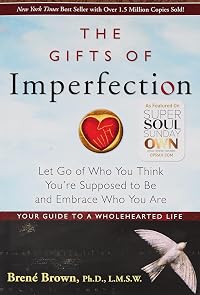
The Gifts of Imperfection: Let Go of Who You Think You're Supposed to Be and Embrace Who You Are
by Brené Brown
On This Page
Description
NEW YORK TIMES BESTSELLERFor over a decade, Brené Brown has found a special place in our hearts as a gifted mapmaker and a fellow traveler. She is both a social scientist and a kitchen-table friend whom you can always count on to tell the truth, make you laugh, and, on occasion, cry with you. And what's now become a movement all started with The
What transforms this book from words on a page to effective daily practices are the ten guideposts to wholehearted living. The guideposts not only help us understand the practices that will allow us to change our lives and families, they also walk us through the unattainable and sabotaging expectations that get in the way.
Brené writes, "This book is an invitation to join a wholehearted revolution. A small, quiet, grassroots movement that starts with each of us saying, 'My story matters because I matter.' Revolution might sound a little dramatic, but in this world, choosing authenticity and worthiness is an absolute act of resistance.". show less
Tags
Recommendations





Member Recommendations

Member Reviews
I got about 65% of the way through this one, plus the appendix on methodology, before I gave up.
a) I find it very odd that in a book about embracing imperfection and "who you are," there is so much emphasis on being grateful, joyful, spiritual, etc. What is a person who is naturally somewhat grouchy and devoutly non-spiritual to do? One can only assume that such persons are encouraged to change, to embrace the parts of themselves that are imperfect in other ways.
This is unfortunate. While there is nothing wrong with pursuing joy and/or happiness as a central goal of one's existence, there is also nothing wrong with choosing other goals--such as truth, justice, knowledge, etc.--instead, which may or may not be compatible with the values show more she outlines.
b) There is precious little acknowledgement of the position of relative privilege she is writing from. It is much easier to be (and preach) authentic when one's core self is not so far out of tune with what the culture demands. The worst that will happen to her if she tells a shaming anecdote about herself is that a talk will fall flat. Transgender kids, for instance, risk their lives--literally--when they tell the truth about who they are.
c) If shame had no adaptive value, we would not have evolved to feel it. Yet she writes as if shame were completely disposable, some kind of psychic trash we accidentally picked up over the past several millennia, without any value.
If shame is, as she writes, the fear of the loss of social connection tied to feeling intrinsically wrong or unlovable, it is not impossible to imagine scenarios in which this feeling would have been of very great use. When one's survival is dependent on belonging to a particular social group (family, tribe, etc.) undertaking behaviours that jeopardize that membership, whether or not they're legal, is a dangerous thing to do. (Just ask those transgender kids.) A feeling that keeps us in line, whether that line is defensible or not from a human rights perspective (and I know that in many cases it won't be), could keep someone alive in a pre-industrialized society. Even in an industrialized society.
There is no such thing as an emotion that it is never appropriate or healthy to feel. Negative feelings aren't bad or wrong; they're just uncomfortable. Shame along with the rest. It's just as inappropriate and unhealthy to feel joy when cutting off someone's head as it is to feel shame when accepting the Nobel prize, or actually probably moreso, now that I write it out that way. Every feeling has its healthy and appropriate context, yet she never discusses what it might be, for shame.
d) The research is unconvincing. She tells us about all of these surveys from all of these people who agreed with each other, but readers just have to take her word for it. There's not even quotes from any of the interviews. None of her subjects ever speak for themselves. That's if you accept the qualitative research basis for her work to begin with, which personally I find questionable.
This renders the book a large collection of just-so stories about what emotions mean and how to have more of the good ones and less of the nasty ones. It didn't hold my interest. I got about 60% of the way through and decided to skip to the methodology; the methodology chapter had no more of the details on the actual surveys and interviews that I was hoping for, so that was that. show less
a) I find it very odd that in a book about embracing imperfection and "who you are," there is so much emphasis on being grateful, joyful, spiritual, etc. What is a person who is naturally somewhat grouchy and devoutly non-spiritual to do? One can only assume that such persons are encouraged to change, to embrace the parts of themselves that are imperfect in other ways.
This is unfortunate. While there is nothing wrong with pursuing joy and/or happiness as a central goal of one's existence, there is also nothing wrong with choosing other goals--such as truth, justice, knowledge, etc.--instead, which may or may not be compatible with the values show more she outlines.
b) There is precious little acknowledgement of the position of relative privilege she is writing from. It is much easier to be (and preach) authentic when one's core self is not so far out of tune with what the culture demands. The worst that will happen to her if she tells a shaming anecdote about herself is that a talk will fall flat. Transgender kids, for instance, risk their lives--literally--when they tell the truth about who they are.
c) If shame had no adaptive value, we would not have evolved to feel it. Yet she writes as if shame were completely disposable, some kind of psychic trash we accidentally picked up over the past several millennia, without any value.
If shame is, as she writes, the fear of the loss of social connection tied to feeling intrinsically wrong or unlovable, it is not impossible to imagine scenarios in which this feeling would have been of very great use. When one's survival is dependent on belonging to a particular social group (family, tribe, etc.) undertaking behaviours that jeopardize that membership, whether or not they're legal, is a dangerous thing to do. (Just ask those transgender kids.) A feeling that keeps us in line, whether that line is defensible or not from a human rights perspective (and I know that in many cases it won't be), could keep someone alive in a pre-industrialized society. Even in an industrialized society.
There is no such thing as an emotion that it is never appropriate or healthy to feel. Negative feelings aren't bad or wrong; they're just uncomfortable. Shame along with the rest. It's just as inappropriate and unhealthy to feel joy when cutting off someone's head as it is to feel shame when accepting the Nobel prize, or actually probably moreso, now that I write it out that way. Every feeling has its healthy and appropriate context, yet she never discusses what it might be, for shame.
d) The research is unconvincing. She tells us about all of these surveys from all of these people who agreed with each other, but readers just have to take her word for it. There's not even quotes from any of the interviews. None of her subjects ever speak for themselves. That's if you accept the qualitative research basis for her work to begin with, which personally I find questionable.
This renders the book a large collection of just-so stories about what emotions mean and how to have more of the good ones and less of the nasty ones. It didn't hold my interest. I got about 60% of the way through and decided to skip to the methodology; the methodology chapter had no more of the details on the actual surveys and interviews that I was hoping for, so that was that. show less
The library copy I read showed signs of vigorous use -- the small paperback cover and pages curled. Working my way through in fits and starts -- not because the text is difficult or dry, but rather because it is honest, and fresh -- I soon realized why. Brené Brown presents her research findings and her life with simplicity and openness that pull readers in. She is not a dazzling writer, but she is a solid researcher and generous, whole-hearted companion. I have a literary crush on Brené. And yes, an new uncurled copy now graces my collection.
The second time through and it's still SO good! I cried my way through the first time I read it. So many ideas were new and deeply refreshing, but unsettling because I was coming to them after show more years of angst and not-enoughness.
This time I paused to nod and appreciate just how much who I am now has been informed by the insight & wisdom of Brené Brown. show less
The second time through and it's still SO good! I cried my way through the first time I read it. So many ideas were new and deeply refreshing, but unsettling because I was coming to them after show more years of angst and not-enoughness.
This time I paused to nod and appreciate just how much who I am now has been informed by the insight & wisdom of Brené Brown. show less
I don't normally read books found in the self-help category. Nothing against the category; I've just found that my path to self-knowledge needs a different process. Still, every few years I give one a try, and a friend's review of The Gifts of Imperfection happened to catch me at the right moment. It was serendipitous because I was just at the moment where this made a profound impact.
"Our stories are not meant for everyone. Hearing them is a privilege, and we should always ask ourselves this before we share: “Who has earned the right to hear my story?”
I'm a knowledge geek who definitely approaches everything head-first. This is often a very successful way to interact in the knowledge society, particularly those of academia and show more medicine, but lends itself to certain deficits that have become obvious as I work through some caregiver burnout and moral injury.
"Knowledge is important, but only if we’re being kind and gentle with ourselves as we work to discover who we are. Wholeheartedness is as much about embracing our tenderness and vulnerability as it is about developing knowledge and claiming power."
What exactly does Brown do in this book? She draws upon her history as a shame researcher to pinpoint trouble-spots in our individual and cultural psyche that can lead us to unhealthy mental pathways. One of the things I appreciated, particularly after reading a book like [b:Quiet: The Power of Introverts in a World That Can't Stop Talking|8520610|Quiet The Power of Introverts in a World That Can't Stop Talking|Susan Cain|https://i.gr-assets.com/images/S/compressed.photo.goodreads.com/books/1328562861l/8520610._SY75_.jpg|13387396], is that she takes care to define the terms she's working with. This is definitely the researcher at work: "I think it’s critically important to define the gauzy words that are tossed around every day but rarely explained. And I think good definitions should be accessible and actionable." That statement warmed my researcher heart--at least, if it could be warmed.
These are short little chapters that take a quick look at some of the different topics about living more fearlessly. The first couple of chapters are basically background material, and the rest are divided into 'Guideposts.' Each chapter begins with a quote, then follows with a mix of both research-based and anecdotal information. The chapters end with a few ideas or thought projects on how to integrate the concepts into the reader's own life.
Honestly, I had not thought much about the concept of shame in my life, but Brown provides some interesting insight. Based on the idea that shame "needs three things to grow out of control in our lives: secrecy, silence, and judgment," she offers a path to building 'shame resilience.' One piece is to work on self-awareness, identifying the feeling and practicing mindfulness by asking why that feeling would appear. Another piece is to let go of the silence/secrecy by owning our stories and not letting other people write the narrative. "From gangs to gossiping, we’ll do what it takes to fit in if we believe it will meet our need for belonging. But it doesn’t. We can only belong when we offer our most authentic selves and when we’re embraced for who we are." Another piece is to practice self-compassion, something I'm particularly deficient in. Compassion for others? No problem. But I'm an independent, highly self-reliant Gen-Xer that should be able to manage all by myself. Brown walks me through the process of understanding why that doesn't work for what she calls the wholehearted life.
Later in the book she shares a discussion with a researcher on hope:
"Hope is not an emotion; it’s a way of thinking or a cognitive process. Emotions play a supporting role, but hope is really a thought process made up of what Snyder calls a trilogy of goals, pathways, and agency. In very simple terms, hope happens when we have the ability to set realistic goals. (I know where I want to go.) We are able to figure out how to achieve those goals, including the ability to stay flexible and develop alternative routes."
As a health care professional, I've always struggled with the idea of 'hope' as most people apply it. I found her adopted definition appealing. On the other side, she quickly points out my strategy of planning for loss leaves something to be desired:
"We think if we can beat vulnerability to the punch by imagining loss, we’ll suffer less."
It's also worth noting that she often integrates gender-awareness, such as when she discusses authenticity: "I also found that men and women struggle when their opinions, feelings, and beliefs conflict with our culture's gender expectations. For example, research on the attributes taht we associate with 'being feminine' tells us that some of the most important qualities for women are thin, nice, and modest. That means if women want to play it totally safe, we have to be willing to stay as small, quiet, and attractive as possible.
When looking at the attributes associated with masculinity, the researchers identified these as important attributes for men: emotional control, primacy of work, control over women and pursuit of status. That means if men want to play it safe, they need to stop feeling, start earning, and give up on meaningful connection." (Aside: yes, I know this seems self-evident to many of us. But it's a point to consider when one is talking about the pressure to just 'get along' in a way that might result in inauthenticity, and it's validating to be reminded of that). At any rate, having done a mindfulness class that was gender-blind, it is refreshing to have that acknowledged. In regards to other inclusiveness, I can't speak to how it may relate to non-white, middle-class perspectives, but I think it's better at being economic-blind then ethnically blind.
There's a lot of good stuff in here. While she notes that many of her own issues come out of a 'perfectionist' approach to life, I think the concepts of shame, compassion, and vulnerability are ones we should all be able to relate to, as well as deep ideas of authenticity and life meaning. I also appreciate that Brown is also very open about her own mental/spiritual health work and doesn't take a top-down didactic approach.
TLDR; if any of the above resonates, buy it if you are ready to do some personal growth work. You'll find yourself referring to it again and again. I did. show less
"Our stories are not meant for everyone. Hearing them is a privilege, and we should always ask ourselves this before we share: “Who has earned the right to hear my story?”
I'm a knowledge geek who definitely approaches everything head-first. This is often a very successful way to interact in the knowledge society, particularly those of academia and show more medicine, but lends itself to certain deficits that have become obvious as I work through some caregiver burnout and moral injury.
"Knowledge is important, but only if we’re being kind and gentle with ourselves as we work to discover who we are. Wholeheartedness is as much about embracing our tenderness and vulnerability as it is about developing knowledge and claiming power."
What exactly does Brown do in this book? She draws upon her history as a shame researcher to pinpoint trouble-spots in our individual and cultural psyche that can lead us to unhealthy mental pathways. One of the things I appreciated, particularly after reading a book like [b:Quiet: The Power of Introverts in a World That Can't Stop Talking|8520610|Quiet The Power of Introverts in a World That Can't Stop Talking|Susan Cain|https://i.gr-assets.com/images/S/compressed.photo.goodreads.com/books/1328562861l/8520610._SY75_.jpg|13387396], is that she takes care to define the terms she's working with. This is definitely the researcher at work: "I think it’s critically important to define the gauzy words that are tossed around every day but rarely explained. And I think good definitions should be accessible and actionable." That statement warmed my researcher heart--at least, if it could be warmed.
These are short little chapters that take a quick look at some of the different topics about living more fearlessly. The first couple of chapters are basically background material, and the rest are divided into 'Guideposts.' Each chapter begins with a quote, then follows with a mix of both research-based and anecdotal information. The chapters end with a few ideas or thought projects on how to integrate the concepts into the reader's own life.
Honestly, I had not thought much about the concept of shame in my life, but Brown provides some interesting insight. Based on the idea that shame "needs three things to grow out of control in our lives: secrecy, silence, and judgment," she offers a path to building 'shame resilience.' One piece is to work on self-awareness, identifying the feeling and practicing mindfulness by asking why that feeling would appear. Another piece is to let go of the silence/secrecy by owning our stories and not letting other people write the narrative. "From gangs to gossiping, we’ll do what it takes to fit in if we believe it will meet our need for belonging. But it doesn’t. We can only belong when we offer our most authentic selves and when we’re embraced for who we are." Another piece is to practice self-compassion, something I'm particularly deficient in. Compassion for others? No problem. But I'm an independent, highly self-reliant Gen-Xer that should be able to manage all by myself. Brown walks me through the process of understanding why that doesn't work for what she calls the wholehearted life.
Later in the book she shares a discussion with a researcher on hope:
"Hope is not an emotion; it’s a way of thinking or a cognitive process. Emotions play a supporting role, but hope is really a thought process made up of what Snyder calls a trilogy of goals, pathways, and agency. In very simple terms, hope happens when we have the ability to set realistic goals. (I know where I want to go.) We are able to figure out how to achieve those goals, including the ability to stay flexible and develop alternative routes."
As a health care professional, I've always struggled with the idea of 'hope' as most people apply it. I found her adopted definition appealing. On the other side, she quickly points out my strategy of planning for loss leaves something to be desired:
"We think if we can beat vulnerability to the punch by imagining loss, we’ll suffer less."
It's also worth noting that she often integrates gender-awareness, such as when she discusses authenticity: "I also found that men and women struggle when their opinions, feelings, and beliefs conflict with our culture's gender expectations. For example, research on the attributes taht we associate with 'being feminine' tells us that some of the most important qualities for women are thin, nice, and modest. That means if women want to play it totally safe, we have to be willing to stay as small, quiet, and attractive as possible.
When looking at the attributes associated with masculinity, the researchers identified these as important attributes for men: emotional control, primacy of work, control over women and pursuit of status. That means if men want to play it safe, they need to stop feeling, start earning, and give up on meaningful connection." (Aside: yes, I know this seems self-evident to many of us. But it's a point to consider when one is talking about the pressure to just 'get along' in a way that might result in inauthenticity, and it's validating to be reminded of that). At any rate, having done a mindfulness class that was gender-blind, it is refreshing to have that acknowledged. In regards to other inclusiveness, I can't speak to how it may relate to non-white, middle-class perspectives, but I think it's better at being economic-blind then ethnically blind.
There's a lot of good stuff in here. While she notes that many of her own issues come out of a 'perfectionist' approach to life, I think the concepts of shame, compassion, and vulnerability are ones we should all be able to relate to, as well as deep ideas of authenticity and life meaning. I also appreciate that Brown is also very open about her own mental/spiritual health work and doesn't take a top-down didactic approach.
TLDR; if any of the above resonates, buy it if you are ready to do some personal growth work. You'll find yourself referring to it again and again. I did. show less
This is the second Brené Brown I‘ve read (after Atlas of the Heart) and I liked it enough to want my own copy. I like that the guideposts had a spectrum and that Brown emphasized that accepting yourself is not an item to check off the to-do list; it‘s an ongoing practice and some days it‘s easier than others. I like too that there's an inventory you can take to identify which guideposts you're doing well with and which ones you might want to focus on. I related particularly to the first guidepost, which talks about knowing that you are enough. It articulated the worry I have about it in a work setting: "even if I think I'm enough, what happens if others don't think I'm enough?" Even if there are no easy solutions, knowing that show more others have felt the same way helps a great deal. show less
Brene Brown was a new discovery. While I was reading The Gifts of Imperfection, I also listened to an episode of her podcast with Tim Ferriss and Dax Shepard. Her energy is amazing, and her message is personal but rooted in research. Let go of all the baggage, the priorities given to you by others, the expectations inherited from culture. She is a gifted storyteller with a strong, certain voice. She describes her own journey but also provides tools for strengthening your own sense of self. She is self-deprecating but not in the "humble brag" kind of way.
I initially picked up this book to read with a group of my closest girlfriends, I never having heard of Brené Brown or any of her books before. Brown’s writing style, raw authenticity, and openness drew me in right away and kept me hooked to her encouraging words to the very end.
The extended title says it all – this book is a guide to a living a wholehearted life but, even more so, learning to say: "No matter what gets done and how much is left undone, I am enough."
Brown opens up the book explaining her own journey (her “breakdown spiritual awakening”), her research on shame, and what led her to writing this book. What I appreciate most about this book is that the information she shares is not only based on her own research but show more the research of others. From the very beginning she sets out asking you, as the reader, to answer several questions to get you thinking about your own story and any shame you may be experiencing.
What follows is ten guideposts to help shape and build up your life covering topics such as intuition, trusting faith, and the importance of laughter, song, and dance. At the end of each guidepost she also offers the acronym DIG deep – Get deliberate, get inspired, and get going and how each apply to the different guideposts. At no point in this book does she insist that her opinion is the correct one or pressure the reader into a set of tasks that have to be accomplished but offers it openly and encourages the reader to take and shape it to their own life and understanding.
I found this book so encouraging, uplifting, and highly recommend it to anyone no matter where you are in life. show less
The extended title says it all – this book is a guide to a living a wholehearted life but, even more so, learning to say: "No matter what gets done and how much is left undone, I am enough."
Brown opens up the book explaining her own journey (her “breakdown spiritual awakening”), her research on shame, and what led her to writing this book. What I appreciate most about this book is that the information she shares is not only based on her own research but show more the research of others. From the very beginning she sets out asking you, as the reader, to answer several questions to get you thinking about your own story and any shame you may be experiencing.
What follows is ten guideposts to help shape and build up your life covering topics such as intuition, trusting faith, and the importance of laughter, song, and dance. At the end of each guidepost she also offers the acronym DIG deep – Get deliberate, get inspired, and get going and how each apply to the different guideposts. At no point in this book does she insist that her opinion is the correct one or pressure the reader into a set of tasks that have to be accomplished but offers it openly and encourages the reader to take and shape it to their own life and understanding.
I found this book so encouraging, uplifting, and highly recommend it to anyone no matter where you are in life. show less
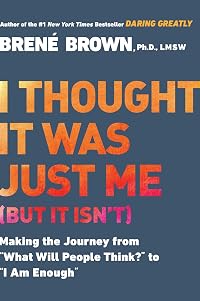
I was excited to read The Gifts of Imperfection: Let Go of Who You Think You're Supposed to Be and Embrace Who You Are by Brene Brown because I enjoy her work research quite a bit and because I've long struggled with perfectionism. I thought this book was going to expand on I Thought It Was Just Me (But It Isn't), but instead it read more like it was refresher course. There were a few points that I had real contention with. For example, I was so bothered by her assertion regarding spirituality being necessary for wholehearted living that I went to her website and emailed her team. She seemed to assert, or at least imply, that atheists, agnostics, and other nonspiritual/nonreligious people can't live wholehearted lives. I want to know if show more her research included these groups because if not it demonstrates a flaw in her research. Her team has yet to respond. This part of the book caused me to question other parts of the book because I know from my own experience that atheists, agnostics, and other nonspiritual/nonreligious people can and do live wholeheartedly. That aside, her research into wholehearted living offers much to ponder in regards to how we move through life, treat ourselves, and interact with others. Brown interweaves her personal reactions to what she found in her research with the research in a well written book that is approachable and relatable. show less
Members
- Recently Added By
Lists

Best Self Help Books
87 works; 18 members


Perspectives Book Club Picks
49 works; 3 members

wish list
61 works; 3 members

Books Read in 2017
4,249 works; 130 members

Spiritual Growth/Philosophy/Self-Help
15 works; 1 member

Mind Expanding Books by hackerkid
581 works; 8 members

Mo's Reading List
218 works; 1 member

Jen Dalton's Book Group
13 works; 1 member

Books recommended by Calgary Public Library staff
1,588 works; 4 members

Healing resources for women
588 works; 1 member
Author Information

29+ Works 23,442 Members
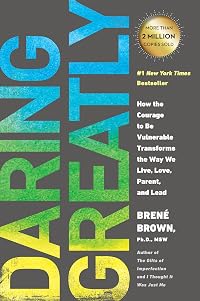
Brené Brown was born in San Antonio, Texas on November 18, 1965. She received a Bachelor of Social Work at University of Texas at Austin, a Master of Social Work and Ph.D. from the Graduate College of Social Work at the University of Houston. She is a research professor at the University of Houston Graduate College of Social Work. She is the show more author of I Thought It Was Just Me, The Gifts of Imperfection, and Daring Greatly: How the Courage to Be Vulnerable Transforms the Way We Live, Love, Parent, and Lead. (Bowker Author Biography) show less
Common Knowledge
- Original title
- The Gifts of Imperfection : Let Go of Who You Think You're Supposed to Be and Embrace Who You Are
- Alternate titles
- The Gifts of Imperfection
- Original publication date
- 2010
- Blurbers
- Lerner, Harriet; Pink, Daniel H.; Edwards, Ali
Classifications
Statistics
- Members
- 5,038
- Popularity
- 2,765
- Reviews
- 77
- Rating
- (3.95)
- Languages
- 18 — Dutch, English, Finnish, French, German, Hungarian, Italian, Japanese, Korean, Multiple languages, Norwegian (Bokmål), Polish, Romanian, Serbian, Spanish, Swedish, Turkish, Portuguese (Portugal)
- Media
- Paper, Audiobook, Ebook
- ISBNs
- 61
- UPCs
- 1
- ASINs
- 16