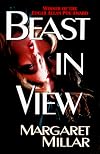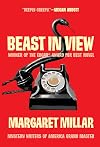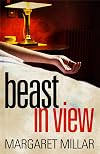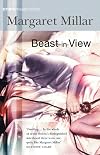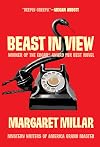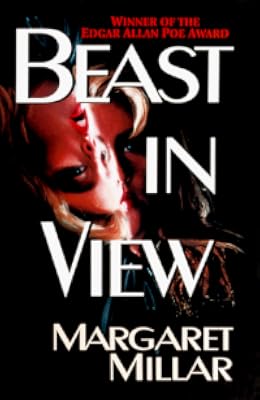
Beast in View
by Margaret Millar
On This Page
Description
"Thirty-year-old Helen Clarvoe is scared and all alone. The heiress of a small fortune, she is resented by her mother and, to a lesser degree, her brother. The only person who seemingly cares for her is the family's attorney, Paul Blackshear. A shut-in, Helen maintains her residence in upscale hotel downtown. But passive-aggressive resentment isn't the only thing hounding Helen Clarvoe. A string of bizarre and sometimes threatening prank phone calls has upended her spinster's routine. show more Increasingly threatened, she turns to a reluctant Mr. Blackshear to get to the bottom of these strange calls. Originally doubtful of their seriousness, Blackshear quickly realizes that he is in the midst of something far more nightmarish than he thought possible. As he unravels the mystery behind the calls the identity behind them slowly emerges, predatory and treacherous."--Back cover. show lessTags
Recommendations






















Member Recommendations

Member Reviews
Maybe if Margaret had used a pseudonym like her famous husband, she’s be remembered and read today. But since she was a woman, she’s forgotten. And there’s no reason she should be. This was a tight narrative full of intrigue and a terrific twist that some saw coming, but I didn’t and literally had to go back and re-read the reveal to make sure I got it. It’s sudden, but brilliant.
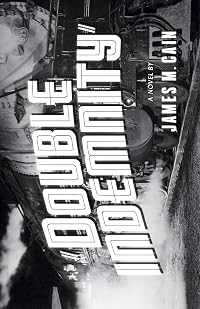
The next new-to-me author I encountered this week was Margaret Millar. Her book Beast in View (1955) had been recommended to me some time ago but I had put off reading it because I thought it would be similar to other books in the hard-boiled detective story genre. I had previously read The Big Sleep, Double Indemnity and The Maltese Falcon, and none of these worked for me. So, imagine my surprise when I instantly clicked with Millar’s story. Maybe it was that the story managed to create a level of suspense from the first page, but I was gripped from very early on and I finished the book the same day.
Maybe women noir writers were just so much more interested in characters and dark and twisted psychology than their male counterparts? show more Or rather, at least the ones I’ve read?
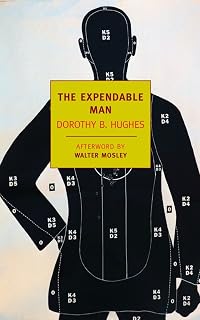
I’m open to being convinced that there is some worthwhile classic noir out there, but so far the Hammets and Chandlers are not what works for me. Also, step aside Dorothy B. Hughes!
Despite my excitement, the book was not perfect. It had problems…but given the 1950s publication date this was to be expected. In a way, I commend Millar for including some of these “aspects” even if they now read dated, such as the portrayal of LGBT characters and the description of mental health conditions. I much rather see these “aspects” portrayed in book in a well-meaning way than have them erased out or used as a cliche.
Anyway, Millar will be my new go-to author for gripping noir. show less
Maybe women noir writers were just so much more interested in characters and dark and twisted psychology than their male counterparts? show more Or rather, at least the ones I’ve read?
I’m open to being convinced that there is some worthwhile classic noir out there, but so far the Hammets and Chandlers are not what works for me. Also, step aside Dorothy B. Hughes!
Despite my excitement, the book was not perfect. It had problems…but given the 1950s publication date this was to be expected. In a way, I commend Millar for including some of these “aspects” even if they now read dated, such as the portrayal of LGBT characters and the description of mental health conditions. I much rather see these “aspects” portrayed in book in a well-meaning way than have them erased out or used as a cliche.
Anyway, Millar will be my new go-to author for gripping noir. show less
Let's call this one "evolution of a reader."
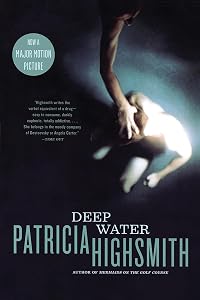
Nancy Drew was my girl back in the 80s. My maternal grandmother would send me the reprinted earlier titles for my birthdays, and I checked the rest out from the library. Then in middle school, I discovered [a:Christopher Pike|19954|Christopher Pike|https://s.gr-assets.com/assets/nophoto/user/u_50x66-632230dc9882b4352d753eedf9396530.png], [a:V.C. Andrews|1353301|V.C. Andrews|https://images.gr-assets.com/authors/1413410493p2/1353301.jpg], and, eventually, [a:Stephen King|3389|Stephen King|https://images.gr-assets.com/authors/1362814142p2/3389.jpg], all of whom made those vanilla ghostwritten mysteries seem boring in comparison. In my 30s, [a:Tana French|138825|Tana show more French|https://images.gr-assets.com/authors/1535655031p2/138825.jpg] and other modern writers rekindled my love of the mystery genre, and in my 40s, I've discovered the world of classic noir through [a:James M. Cain|14473|James M. Cain|https://images.gr-assets.com/authors/1214424417p2/14473.jpg] and [a:Patricia Highsmith|7622|Patricia Highsmith|https://images.gr-assets.com/authors/1418715271p2/7622.jpg]. Little did I know that while Nancy was getting a makeover to be less tomboyish (leave that to George) and more respectful of authority, Margaret Millar was creating "a blood-curdling novel of horror and suspense" that tied in mental illness, homosexuality, pornography, and a whole lot of Hollywood debauchery that would never take place in River Heights.
Like Nancy, Helen Clarvoe grew up affluent, but without any of the grace or self-confidence that made Nancy so beloved. Helen has never fit in with the crowd and felt what a disappointment she was to her pretty, vacuous mother (who prefers Helen's delicate younger brother, Douglas) and her stern father. When her father dies, apparently leaving most of his investments to Helen, she moves from her childhood home to a rather shady hotel, where she lives alone and seldom goes out, hoarding her ever-increasing financial treasure like a dragon. Then a nasty phone call, from a woman who claims to be an old friend, shakes up her world and she enlists her family's semi-retired financial advisor to help her find this mysterious woman.
Miss Clarvoe sat, stiff with terror. In the crystal ball of the mirror her face was unchanged, unmutilated. The forehead was smooth, the mouth prim and self-contained, the skin paper-white, as if there was no blood left to bleed. Miss Clarvoe's bleeding had been done, over the years, in silence, internally.
Overall, Ms. Millar's characters are a shady lot, flawed and full of secrets (with the exception of Mr. Blackshear, the investor turned detective, who seems to be a pretty decent man looking to cure his boredom). And as Evelyn Merrick, Helen's tormentor, works her way through the phone book, she seems to find everyone's secrets and weak spots, using their pain for her own pleasure.
At a quarter to ten Evelyn Merrick stepped out of a telephone booth, stretched her left arm to relieve the cramp and smoothed her skirt down over her hips. Usually, after making a series of telephone calls, she felt a certain relief and relaxation, but tonight she was still excited. The blood drummed double-time in her ears and behind her eyes, and she lurched a little as she made her way back to the bar.
I've read enough (probably by authors influenced by Millar) to see the plot twist coming early in the novel, but that didn't stop me from thoroughly enjoying the ride. Ms. Millar gets inside her characters' heads brilliantly and never wastes a sentence. I sped through in two sittings, enjoying the melodramatic ending that was more appropriate when it was written. Killing off both homosexual characters and the mentally ill woman was a simplistic way to deal with the problems. I don't think that approach would fly today. show less
Nancy Drew was my girl back in the 80s. My maternal grandmother would send me the reprinted earlier titles for my birthdays, and I checked the rest out from the library. Then in middle school, I discovered [a:Christopher Pike|19954|Christopher Pike|https://s.gr-assets.com/assets/nophoto/user/u_50x66-632230dc9882b4352d753eedf9396530.png], [a:V.C. Andrews|1353301|V.C. Andrews|https://images.gr-assets.com/authors/1413410493p2/1353301.jpg], and, eventually, [a:Stephen King|3389|Stephen King|https://images.gr-assets.com/authors/1362814142p2/3389.jpg], all of whom made those vanilla ghostwritten mysteries seem boring in comparison. In my 30s, [a:Tana French|138825|Tana show more French|https://images.gr-assets.com/authors/1535655031p2/138825.jpg] and other modern writers rekindled my love of the mystery genre, and in my 40s, I've discovered the world of classic noir through [a:James M. Cain|14473|James M. Cain|https://images.gr-assets.com/authors/1214424417p2/14473.jpg] and [a:Patricia Highsmith|7622|Patricia Highsmith|https://images.gr-assets.com/authors/1418715271p2/7622.jpg]. Little did I know that while Nancy was getting a makeover to be less tomboyish (leave that to George) and more respectful of authority, Margaret Millar was creating "a blood-curdling novel of horror and suspense" that tied in mental illness, homosexuality, pornography, and a whole lot of Hollywood debauchery that would never take place in River Heights.
Like Nancy, Helen Clarvoe grew up affluent, but without any of the grace or self-confidence that made Nancy so beloved. Helen has never fit in with the crowd and felt what a disappointment she was to her pretty, vacuous mother (who prefers Helen's delicate younger brother, Douglas) and her stern father. When her father dies, apparently leaving most of his investments to Helen, she moves from her childhood home to a rather shady hotel, where she lives alone and seldom goes out, hoarding her ever-increasing financial treasure like a dragon. Then a nasty phone call, from a woman who claims to be an old friend, shakes up her world and she enlists her family's semi-retired financial advisor to help her find this mysterious woman.
Miss Clarvoe sat, stiff with terror. In the crystal ball of the mirror her face was unchanged, unmutilated. The forehead was smooth, the mouth prim and self-contained, the skin paper-white, as if there was no blood left to bleed. Miss Clarvoe's bleeding had been done, over the years, in silence, internally.
Overall, Ms. Millar's characters are a shady lot, flawed and full of secrets (with the exception of Mr. Blackshear, the investor turned detective, who seems to be a pretty decent man looking to cure his boredom). And as Evelyn Merrick, Helen's tormentor, works her way through the phone book, she seems to find everyone's secrets and weak spots, using their pain for her own pleasure.
At a quarter to ten Evelyn Merrick stepped out of a telephone booth, stretched her left arm to relieve the cramp and smoothed her skirt down over her hips. Usually, after making a series of telephone calls, she felt a certain relief and relaxation, but tonight she was still excited. The blood drummed double-time in her ears and behind her eyes, and she lurched a little as she made her way back to the bar.
I've read enough (probably by authors influenced by Millar) to see the plot twist coming early in the novel, but that didn't stop me from thoroughly enjoying the ride. Ms. Millar gets inside her characters' heads brilliantly and never wastes a sentence. I sped through in two sittings, enjoying the melodramatic ending that was more appropriate when it was written.
Beast in View by Margaret Millar is a novel of psychological suspense that won the Edgar Award in 1956. The story involves the downward spiral into insanity of a woman.
When Helen Clarvoe, a quiet solitary yet rich woman, receives a disturbing phone call from a woman who seems to be threatening her, she becomes afraid and asks Paul Blackshear, her investment manager, for help. He, in turn, decides to play detective and hunt this woman, Evelyn Merrick down. Meanwhile disturbing phone calls are being made by Evelyn Merrick and the violence escalates until one person commits suicide and another is murdered.
I was glued to the pages of this book. The author give us a story full of damaged characters living broken lives with a few twists and show more turns along the way that helped to amp up the suspense. This story was adapted by Alfred Hitchcock for his TV show and also appears on the H.R. Keating’s List of 100 Best Crime Novels. show less
When Helen Clarvoe, a quiet solitary yet rich woman, receives a disturbing phone call from a woman who seems to be threatening her, she becomes afraid and asks Paul Blackshear, her investment manager, for help. He, in turn, decides to play detective and hunt this woman, Evelyn Merrick down. Meanwhile disturbing phone calls are being made by Evelyn Merrick and the violence escalates until one person commits suicide and another is murdered.
I was glued to the pages of this book. The author give us a story full of damaged characters living broken lives with a few twists and show more turns along the way that helped to amp up the suspense. This story was adapted by Alfred Hitchcock for his TV show and also appears on the H.R. Keating’s List of 100 Best Crime Novels. show less
I loved this book. It is excellently written and paced. Great turns of phrase and at times insightful with a tiny bit of humor. Overall tone is quite bleak and depressing when faced with people's situations in life. Highly, highly recommend this book and I am now reading another book by her.
Like a 3.75 rounded up. My first, but not last, novel by Margaret Millar, Beast in View is really more of a story of psychological suspense rather than a full-blown crime novel, set in Southern California of the 1950s.
Helen Clarvoe, a young woman now 30, lives alone in a small hotel in Hollywood. Her mother, with whom she only rarely communicates by mail, lives six miles away with her brother Douglas. Helen lived there in a self-imposed isolation from the rest of the world, "behind her wall of money and the iron bars of her egotism," never going out to see much of the world, although because of prudent investments, she certainly could have. She receives a phone call one day and the woman at the other end of the line claimed to one of show more her friends, calling herself Evelyn Merrick. As Helen listens, she is convinced the caller is mad, although the caller disagrees -- telling Helen that in fact, she is the one who is mad, calling her a "little coward," accusing her of being jealous, and saying that she can see everything about Helen in her crystal ball. After questioning the switchboard operator about the incoming call, Helen gets in contact with her family's former investment counselor, Mr. Blackshear, who comes to the hotel to meet with her. She talks to him about the call, then shows him a money clip which was missing quite a huge sum of cash, and explains that she feared that her caller, Evelyn Merrick, may have been the one who stole it. She wants Blackshear to find Merrick. The only clue that the caller left in her conversation with Helen was that someday she planned to be "immortal," that "her body would be in every art museum in the country." With that small hint in mind, Blackshear sets off on his quest in full-on private-investigator mode and begins to hear much more about Evelyn Merrick. Her forté, it seems, lies in discovering other people's deep-seated insecurities and using her knowledge to provoke her victims into a state of gut-wrenching despair,leaving a trail of desperation and devastation behind her as she goes. The story develops through the points of view of different characters, and through them Blackshear ultimately discovers a slowly-unfolding panorama of long-kept, long-buried secrets relevant to his investigations.
What comes out of this case goes far beyond the stuff of normal crime fare, as Millar takes her readers into middle-class Los Angeles of the 1950s, a place of societal constraints and, especially for this cast of characters, a number of unfulfilled expectations that have, over the years, remained dormant until finally germinating into crushing disappointments. Furthermore, while the central character, Helen Clarvoe, is a loner, Beast in View is a novel with a profound emphasis on human interactions and human failings at its core. While many reviews I've read have noted that the solution was easily grasped from the outset, I didn't figure it out until the end when all was revealed, and decided that I liked being artfully manipulated by the author throughout the entire story.
Don't let its age fool you. Beast in View is very dark, almost noirish in tone, and probes deeply into the human psyche, in many ways much more realistically than many modern offerings. This book will not be the last of Margaret Millar for me. Highly recommended, but beware -- there is little in the way of happiness to be found in the entire novel show less
Helen Clarvoe, a young woman now 30, lives alone in a small hotel in Hollywood. Her mother, with whom she only rarely communicates by mail, lives six miles away with her brother Douglas. Helen lived there in a self-imposed isolation from the rest of the world, "behind her wall of money and the iron bars of her egotism," never going out to see much of the world, although because of prudent investments, she certainly could have. She receives a phone call one day and the woman at the other end of the line claimed to one of show more her friends, calling herself Evelyn Merrick. As Helen listens, she is convinced the caller is mad, although the caller disagrees -- telling Helen that in fact, she is the one who is mad, calling her a "little coward," accusing her of being jealous, and saying that she can see everything about Helen in her crystal ball. After questioning the switchboard operator about the incoming call, Helen gets in contact with her family's former investment counselor, Mr. Blackshear, who comes to the hotel to meet with her. She talks to him about the call, then shows him a money clip which was missing quite a huge sum of cash, and explains that she feared that her caller, Evelyn Merrick, may have been the one who stole it. She wants Blackshear to find Merrick. The only clue that the caller left in her conversation with Helen was that someday she planned to be "immortal," that "her body would be in every art museum in the country." With that small hint in mind, Blackshear sets off on his quest in full-on private-investigator mode and begins to hear much more about Evelyn Merrick. Her forté, it seems, lies in discovering other people's deep-seated insecurities and using her knowledge to provoke her victims into a state of gut-wrenching despair,leaving a trail of desperation and devastation behind her as she goes. The story develops through the points of view of different characters, and through them Blackshear ultimately discovers a slowly-unfolding panorama of long-kept, long-buried secrets relevant to his investigations.
What comes out of this case goes far beyond the stuff of normal crime fare, as Millar takes her readers into middle-class Los Angeles of the 1950s, a place of societal constraints and, especially for this cast of characters, a number of unfulfilled expectations that have, over the years, remained dormant until finally germinating into crushing disappointments. Furthermore, while the central character, Helen Clarvoe, is a loner, Beast in View is a novel with a profound emphasis on human interactions and human failings at its core. While many reviews I've read have noted that the solution was easily grasped from the outset, I didn't figure it out until the end when all was revealed, and decided that I liked being artfully manipulated by the author throughout the entire story.
Don't let its age fool you. Beast in View is very dark, almost noirish in tone, and probes deeply into the human psyche, in many ways much more realistically than many modern offerings. This book will not be the last of Margaret Millar for me. Highly recommended, but beware -- there is little in the way of happiness to be found in the entire novel show less
There is so much ugliness and pain in Beast in View, which, granted, is essential to the book's plot, but still is so disturbing. Even understanding this and knowing that it was written during a different time than ours, I still have trouble with the novel's archaic attitudes about certain things. The writing is superb and I have a feeling the reader is not supposed to feel comfortable in any way at all, but, still, this is so unsettling I had to watch several episodes of Golden Girls afterwards.
Members
- Recently Added By
Lists

The Top 100 Crime Novels of All Time
100 works; 15 members

Top 100 Mystery Novels of All Time
98 works; 9 members

Anthony Boucher's Best Crime Fiction of the Year
115 works; 5 members

H.R.F. Keating's 100 Best Crime & Mystery Books
100 works; 8 members

Books mentioned in Julian Symons’ Bloody Murder
438 works; 6 members

Scary October reads
58 works; 3 members

Cheesy pleasures and odd lots!
119 works; 7 members

We all go a little mad sometimes
27 works; 2 members

Edgar Award
418 works; 15 members

Books Read in 2016
4,666 works; 199 members

Books Read in 2022
5,166 works; 112 members

The 100 Best Crime Novels and Thrillers since 1945
100 works; 6 members

Art Bourgeau's Favorites [Mystery Lovers Companion, 1986]
124 works; 2 members
Author Information

52+ Works 2,982 Members
Margaret Millar (1915-1994) was horn in Ontario, Canada and was educated at Kitchener-Waterloo Collegiate Institute and the University of Toronto, majoring in classics. In 1938 she married Kenneth Millar (who wrote under the name Ross Macdonald). She published her first novel, The Invisible Worm, in 1941 and she worked as a screenwriter for Warner show more Brothers. It was her 1955 novel, Beast in View, that won Millar the coveted Edgarsup/sup Award for Best Novel and the boob was later adapted for the Alfred Hitchcock Hour. She was active in the environmental conservation movement in California in the 1960s and was named a Woman of the Year by the Los Angeles Times in 1965, and in 1983 she became a Grand Master of the Mystery Writers of America. show less
Some Editions
Awards and Honors
Awards
Distinctions
Notable Lists
Series
Belongs to Publisher Series
Work Relationships
Is contained in
Common Knowledge
- Canonical title
- Beast in View
- Original title
- Beast in View
- Original publication date
- 1955
- People/Characters
- Helen Clarvoe; Evelyn Merrick; Paul Blackshear; Verna Clarvoe
- Important places
- Los Angeles, California, USA
- Related movies
- Beast in View (1964 | IMDb); Beast in View (1986 | IMDb)
- Dedication
- for
BETTY AND JOHN MERSEREAU
best friends and
unseverest critics - First words
- The voice was quiet, smiling.
- Quotations*
- Miss Clarvoe knew it was not an evening stroll, it was a chase and she was the beast in view.
- Last words
- (Click to show. Warning: May contain spoilers.)She felt no pain, only a little surprise at how pretty the blood looked, like bright and endless ribbons that would never again be tied.
*Some information comes from Common Knowledge in other languages. Click "Edit" for more information.
Classifications
Statistics
- Members
- 460
- Popularity
- 66,273
- Reviews
- 25
- Rating
- (3.49)
- Languages
- 10 — Chinese, Danish, English, French, German, Italian, Japanese, Portuguese, Spanish, Swedish
- Media
- Paper, Audiobook, Ebook
- ISBNs
- 26
- ASINs
- 8