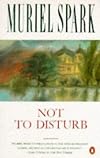
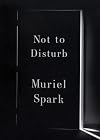
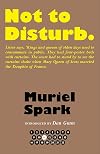
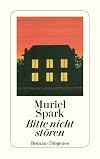
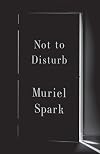
Not to Disturb
by Muriel Spark
On This Page
Description
Behind the locked doors of the library, the Baron, the Baroness and their handsome young secretary are not to be disturbed. In the attic, the Baron's lunatic brother howls and hurls plates at his keeper. But in the staff quarters, all is under control. The night is long, but morning will bring a crime passion. Set in Lake Geneva, Switzerland.Tags
Recommendations




















Member Reviews
Mozart's Don Giovanni ends, after the Don has been dragged down into the flames of Hell, with his faithful servant Leporello telling us that he's off to the inn to look for a better master. This typically eccentric Spark miniature takes more or less the same point of view, except that in this case the servants have already put in place their plans to profit from the situation well before anyone else knows that disaster is on its inevitable way for their employers. Spark obviously wants us to re-examine our role as readers of fiction in the light of these cynical observers of other people's tragedies.
The servants' hall setting and the dialogue-driven style that leaves you to work out for yourself who is who seem to be a conscious echo of show more Henry Green and Ivy Compton-Burnett, but the jokes are very much Spark's own, down to the running gag that none of the speakers ever gets quite the verb they're looking for. And the economy is pure Spark - a super-complex plot with far too many characters all crammed into 90 pages! Hectic, but fun. show less
The servants' hall setting and the dialogue-driven style that leaves you to work out for yourself who is who seem to be a conscious echo of show more Henry Green and Ivy Compton-Burnett, but the jokes are very much Spark's own, down to the running gag that none of the speakers ever gets quite the verb they're looking for. And the economy is pure Spark - a super-complex plot with far too many characters all crammed into 90 pages! Hectic, but fun. show less
This was an instant reread for me, for pleasure and necessity. The complete disregard to time and order threw me the first time around and it was only upon the reread that I could fully appreciate Spark 's deftness. She doesn't care about catering to her readers. If you're going to read her, the onus is on you. She doesn't have time to spell out everything for you but all the details are there as long as you take care to pick them out. The reader is dropped in to the middle of the story, the middle of a conversation, and must be willing to just be carried away by the current and grab onto any passing clues for an easier and more pleasurable journey. The most important thing I learnt from this book is to trust the (Spark) process.
A farce which could easily be imagined as a play or movie because of its emphasis on conversation and scene. The “below stairs” staff of the Chateau Klopstock plot survival strategies in light of an impending double murder/suicide over a love affair in the library “upstairs.” Witty and absurd in Spark’s masterful prose, I snickered and snorted through this quick read. More Spark is on the horizon.
A farce which could easily be imagined as a play or movie because of its emphasis on conversation and scene. The “below stairs” staff of the Chateau Klopstock plot survival strategies in light of an impending double murder/suicide over a love affair in the library “upstairs.” Witty and absurd in Spark’s masterful prose, I snickered and snorted through this quick read. More Spark is on the horizon.
This evening I went to a wonderful Edinburgh Book Festival event with Ali Smith, in which she talked about the many literary influences on the [b:Seasonal Quartet|40779293|Seasonal Quartet (2 Book Series)|Ali Smith|https://i.gr-assets.com/images/S/compressed.photo.goodreads.com/books/1544726092l/40779293._SX50_.jpg|63478184]. Specifically, she cited Muriel Spark as a force within [b:Spring|40545817|Spring|Ali Smith|https://i.gr-assets.com/images/S/compressed.photo.goodreads.com/books/1529267582l/40545817._SY75_.jpg|62958956], one of the best novels I’ve read in 2019. Now, how did Smith put it… Something like ‘Spark’s droll distant observation’. I love this feature of Muriel Spark novellas, as it gives them such a distinctive show more and appealing voice. ‘Not to Disturb’ extends the conceit to the point that I felt like the audience in a theatre. This feeling is compounded by the book's constrained timescale (one night) and setting (a mansion and its grounds). According to the introduction, though, ‘Not to Disturb’ has never been staged as a play! What a missed opportunity - or perhaps it is too obvious? In any event, the dialogue is notably witty even by Spark’s high standards and would surely be very suitable for theatre.
The setup is as follows: the Klopstock mansion has a large staff of servants, headed by Lister the butler, who have carefully prepared for their employers to kill each other one stormy night. Lister is a wonderful character who deploys his quasi-uncanny soothsaying and organisational powers to the benefit of fellow servants. A Jeeves who has chosen his own side in the class struggle, if you will. Also notable are the very pregnant Heloise, the youthful Hadrian and Pablo, and Clovis the chef. As ever with Spark, each character is conjured vividly to life in remarkably few lines. The night is filled with frenetic scheming, dreadful weather, loud noises from a madman in the attic, and a cavalcade of visitors. The Reverend is inveigled into Lister’s plans and Prince Eugene fobbed off. In terms of plot, there is little to it. Yet I found this a particularly pleasurable Spark experience for its sly strangeness, cheerful amorality, and allusive byplay. For example:
Spark’s genius is to totally ignore the apparent locus of events: the aristocrats arguing in the locked room. Instead the reader spends the night amid the penumbra of servants, who are far more interesting. The Baron and Baroness might think the narrative belongs to them, but their staff have firm control over it. show less
The setup is as follows: the Klopstock mansion has a large staff of servants, headed by Lister the butler, who have carefully prepared for their employers to kill each other one stormy night. Lister is a wonderful character who deploys his quasi-uncanny soothsaying and organisational powers to the benefit of fellow servants. A Jeeves who has chosen his own side in the class struggle, if you will. Also notable are the very pregnant Heloise, the youthful Hadrian and Pablo, and Clovis the chef. As ever with Spark, each character is conjured vividly to life in remarkably few lines. The night is filled with frenetic scheming, dreadful weather, loud noises from a madman in the attic, and a cavalcade of visitors. The Reverend is inveigled into Lister’s plans and Prince Eugene fobbed off. In terms of plot, there is little to it. Yet I found this a particularly pleasurable Spark experience for its sly strangeness, cheerful amorality, and allusive byplay. For example:
"Any break in the meeting might distract them from the quarrel and side-track the climax, wouldn’t you think?”
“The Baron said not to disturb,” says Lister, "as if to say, nobody leaves the room till we’ve had a clarification, let the tension mount as it may. And that’s final. She’ll never leave the library.”
“Well, they must be getting hungry. They’ve had nothing to eat.”
“Let them eat cake,” says Lister.
[...]
“There must have been some good in them,” Eleanor says. “They couldn’t have been all bad.”
“Oh, I agree. They did wrong well. And they were good for a purpose so long as they lasted,” Lister says. “As paper cups are suitable for occasions, you use them and throw them away. Who brought that fur coat in here?”
Spark’s genius is to totally ignore the apparent locus of events: the aristocrats arguing in the locked room. Instead the reader spends the night amid the penumbra of servants, who are far more interesting. The Baron and Baroness might think the narrative belongs to them, but their staff have firm control over it. show less
[Not to Disturb is a short, dark comedy - a pre-murder, murder mystery. Set in a grand estate in Switzerland, sometime in the 20th century (mid?), the story reads like a play to me, and one can almost see it being acted out.
The reader is thrown immediately into the story among the servants who are discussing the murder. Thing is, the murder not only hasn't happened yet, but the victims haven't even arrived on the scene. There's a lot of snappy dialogue and messing with verb tenses, and I think I detect just a touch of post-modernism in the banter. Here's a little sample from page 7:
"Suppose the Baron wants his dinner?"
"Of course he expected his dinner," Lister says. "But as things turned out he didn't live to eat it. He'll be arriving show more soon."
"There might be an unexpected turn of events," says Eleanor.
"There was sure to be something unexpected." says Lister. "But what's done is about to be done and the future has come to pass. My memoirs up to the funeral are as a matter of fact more or less complete. At all events, it's out of our hands. I place the event at about 3 a.m. so prepare to stay awake."
People come and go from the estate. There's all the servants, the Baron and Baroness, various visitors, and the lunatic relative in the attic and, wouldn't you know it, there's a horrible thunderstorm brewing outside the mansion. This is a very funny and brilliant short novel. show less
The reader is thrown immediately into the story among the servants who are discussing the murder. Thing is, the murder not only hasn't happened yet, but the victims haven't even arrived on the scene. There's a lot of snappy dialogue and messing with verb tenses, and I think I detect just a touch of post-modernism in the banter. Here's a little sample from page 7:
"Suppose the Baron wants his dinner?"
"Of course he expected his dinner," Lister says. "But as things turned out he didn't live to eat it. He'll be arriving show more soon."
"There might be an unexpected turn of events," says Eleanor.
"There was sure to be something unexpected." says Lister. "But what's done is about to be done and the future has come to pass. My memoirs up to the funeral are as a matter of fact more or less complete. At all events, it's out of our hands. I place the event at about 3 a.m. so prepare to stay awake."
People come and go from the estate. There's all the servants, the Baron and Baroness, various visitors, and the lunatic relative in the attic and, wouldn't you know it, there's a horrible thunderstorm brewing outside the mansion. This is a very funny and brilliant short novel. show less
A kind of debased "Upstairs, Downstairs." Satire on such topics as the fecklessness of the upper classes, the opportunism of the working classes and the sensation-mongering media were a bit long in the tooth, even in 1971. Entertaining enough, however. The wedding of the lunatic scion and housemaid is pretty funny.
Members
- Recently Added By
Published Reviews
The license of Gothic has its liberties, and countless writers from Walpole to Barthelme have taken them. Some, like Ann Radcliffe or Peacock, used Gothic convention to satirize realism and provide pleasures beyond those enjoyed by the light of common day. Others, like the Brontes or Hawthorne, used the fantastic machinery to explore submerged human impulses and the secrets of a universe not show more to be revealed by reason.
Mrs. Spark appears to have both traditions in mind. In one respect, her new novel is an agile send-up of different kinds of popular fiction: detective stories, the Jeeves novels, and realistic tales about the servant problem. Read with these parallels in mind, "Not to Disturb" offers fresh laughter and acerbic insight into conventional ways of writing about the hypocrisies of master-servant relationships. Occasionally, the parody extends to other Gothic novels. ... Like several of Mrs. Spark's recent stories, "Not to Disturb" has the cleverness to entertain and the intelligence to provoke thought; but, finally, its philosophical mysteries look suspiciously like pretenses, and the book leaves the annoying as well as the stimulating after-effects of legerdemain. show less
Mrs. Spark appears to have both traditions in mind. In one respect, her new novel is an agile send-up of different kinds of popular fiction: detective stories, the Jeeves novels, and realistic tales about the servant problem. Read with these parallels in mind, "Not to Disturb" offers fresh laughter and acerbic insight into conventional ways of writing about the hypocrisies of master-servant relationships. Occasionally, the parody extends to other Gothic novels. ... Like several of Mrs. Spark's recent stories, "Not to Disturb" has the cleverness to entertain and the intelligence to provoke thought; but, finally, its philosophical mysteries look suspiciously like pretenses, and the book leaves the annoying as well as the stimulating after-effects of legerdemain. show less
added by KayCliff
Lists

Novels set over the course of a single day (or less)
72 works; 8 members
Author Information

101+ Works 22,842 Members
Muriel Spark has been called "our most chillingly comic writer since Evelyn Waugh" by the London Spectator, and the New Yorker praised her novel Memento Mori ri (1959) as "flawless." Her fiction is marked by its remarkable diversity, wit, and craftsmanship. "She happens to be, by some rare concatenation of grace and talent, an artist, a show more serious---and most accomplished---writer, a moralist engaged with the human predicament, wildly entertaining, and a joy to read" (SRSR). She became widely known in the United States when the New Yorker devoted almost an entire issue to The Prime of Miss Jean Brodie (1961). Set in Edinburgh in the 1930s, this is the story of a schoolteacher, her unorthodox approach to life, and its effect on her select group of adolescent girls. Though their idol turns out to have feet of clay, she leaves an indelible mark on their lives. The Girls of Slender Means (1963), also warmly praised, is a sardonic look at the vivacity of youth and the anxieties of young womanhood. Reviewing The Mandelbaum Gate (1965) for the New Republic, Honor Tracy wrote: "There is an abundance here of invention, humor, poetry, wit, perception, that all but takes the breath away. . . . The story, in fact, is pure adventure, with the suspense as artfully maintained as anywhere by Graham Greene, but this is only one ingredient. There are memorable descriptions of the Holy Land, fascinating insights into the jumble of intrigue and piety surrounding the Holy Places, and penetrating studies of Arabs. . . . In each of [Spark's] novels heretofore one of her qualities has tended to predominate over the others. Here for the first time they are all impressively marshaled side by side, resulting in her best work so far." The daughter of an Englishwoman and a Scottish-Jewish father, Spark was born and educated in Edinburgh. After her marriage in 1938, she lived for some years in Central Africa, a period rarely reflected in her work. During World War II, she returned to Britain, where she worked in the Political Intelligence Department of the Foreign Office after the breakup of her marriage. She has been a magazine editor and written poetry and literary criticism. Spark has lived in London's Camberwell section, the setting of The Ballad of Peckham Rye (1960), but now makes her home in New York. Her novels reflect her conversion to Roman Catholicism. (Bowker Author Biography) Writer Muriel Spark was born in Edinburgh on February 1, 1918. In 1934-1935 she took a course in commercial correspondence and précis writing at Heriot-Watt College. After her marriage in 1937, she lived for some years in Central Africa. During World War II, she returned to Britain, where she worked in the Political Intelligence Department of the Foreign Office after the breakup of her marriage. After the war, she began her literary career. She became General Secretary of the Poetry Society, worked as an editor and wrote studies of Mary Shelley, John Masefield and the Brontë sisters. Her first book of poetry, The Fanfarlo and Other Verse, was published in 1952 and her first novel, The Comforters, was published in 1957. She wrote over twenty books including The Prime of Miss Jean Brodie and The Finishing School. She won numerous awards and honors including the 1965 James Tait Black Memorial Prize for The Mandelbaum Gate, the 1992 U. S. Ingersoll Foundation T. S. Eliot Award, the 1997 David Cohen British Literature Prize for Lifetime Achievement, and in 1993 she became Dame Commander of the Order of the British Empire in recognition of her services to literature. The Scottish Arts Council created the Muriel Spark International Fellowship in 2004. She died on April 13, 2006. (Bowker Author Biography) show less
Some Editions
Series
Belongs to Publisher Series
Work Relationships
Is contained in
Common Knowledge
- Original publication date
- 1971
- Important places
- Geneva, Geneva, Switzerland
- First words
- The other servants fall silent as Lister enters the room.
Classifications
Statistics
- Members
- 314
- Popularity
- 101,582
- Reviews
- 12
- Rating
- (3.34)
- Languages
- 5 — Dutch, English, French, German, Italian
- Media
- Paper, Ebook
- ISBNs
- 13
- ASINs
- 9