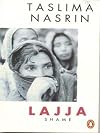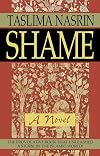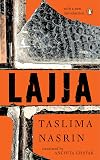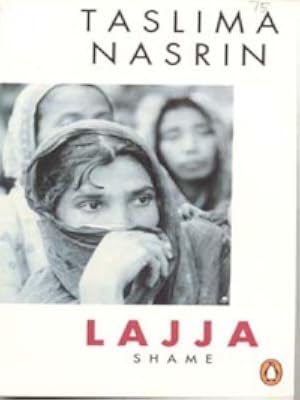
Shame
by Taslima Nasrin
On This Page
Description
A savage indictment of religious extremism and man's inhumanity to man, Lajja was banned in Bangladesh, but became a bestseller in the rest of the world. The Duttas-Sudhamoy and Kironmoyee, and their children, Suranjan and Maya- have lived in Bangladesh all their lives. Despite being members of a small, vulnerable Hindu community, they refuse to leave their country, unlike most of their friends and relatives. Sudhamoy believes with a naive mix of optimism and idealism that his motherland show more will not let him down. And then, on 6 December 1992, the Babri Masjid is demolished. The world condemns the incident, but its immediate fallout is felt most acutely in Bangladesh, where Muslim mobs begin to seek out and attack Hindus. The nightmare inevitably arrives at the Duttas' doorstep, and their world begins to fall apart. show lessTags
Recommendations




Member Reviews
This book describes the impact of religious intolerance and the persecution of minorities through the experiences of the (nominally Hindu) Dutta family in Bangladesh. The main focus of the story traces the life of the family through 13 days following the destruction of the Babri Masjid mosque in India by Hindu fundamentalists and the anti-Hindu violence which takes place in response in Bangladesh. Inter-weaved with this narrative are memories from the lives of the four main characters which describe individual and communal humiliations and give perspective on the movement away from a secular Bangladesh after independence in 1974 towards a state whose official religion is Islam,.
I have mixed feelings about this book hence only 3 stars. I show more was previously only vaguely aware of the events it describes and found it informative and at times powerful. After tragedy strikes the family, the different ways the family members respond is movingly portrayed. I however have reservations over the clumsy writing style which does make me wonder about the quality of the translation. More frustrating was the way the author often uses minor characters to present documentary information on cases of abuse and destruction in a didactic manner. These become extremely repetitive and are often just long lists of unfamiliar names and places (this is a problem more specific to a non-Bangladeshi reader) which continually interrupt the narrative. While I can see why the author has taken this approach, a greater focus on specific examples with more context and background would have been more effective to this reader. (Or the use of an appendix.) There are also a few examples where some of the statistics given seem to be contradictory although this may be the haphazard way they are sometimes presented.
One obviously cannot underestimate the bravery of the author in writing this book and her emotional honesty and empathy is striking. I have reservations about the execution but at the same time believe it is well worth reading to anybody with even only a passing interest in South Asia. show less
I have mixed feelings about this book hence only 3 stars. I show more was previously only vaguely aware of the events it describes and found it informative and at times powerful. After tragedy strikes the family, the different ways the family members respond is movingly portrayed. I however have reservations over the clumsy writing style which does make me wonder about the quality of the translation. More frustrating was the way the author often uses minor characters to present documentary information on cases of abuse and destruction in a didactic manner. These become extremely repetitive and are often just long lists of unfamiliar names and places (this is a problem more specific to a non-Bangladeshi reader) which continually interrupt the narrative. While I can see why the author has taken this approach, a greater focus on specific examples with more context and background would have been more effective to this reader. (Or the use of an appendix.) There are also a few examples where some of the statistics given seem to be contradictory although this may be the haphazard way they are sometimes presented.
One obviously cannot underestimate the bravery of the author in writing this book and her emotional honesty and empathy is striking. I have reservations about the execution but at the same time believe it is well worth reading to anybody with even only a passing interest in South Asia. show less
A screed about the extensive, extended anti-Hindu riots and persecution of the minority Hindu community in Bangladesh after the demolition of the Babri Masjid mosque in India in 1992. Page after page is either quoted directly from non-fiction sources or inserted into the mouths of her characters. And sadly, although everything she cites or quotes is horrifyingly factual, the book is so overdone, so one-sided, that it runs a real risk of alienating otherwise-sympathetic readers. The incidents she cites are all-too-real, all-too-numerous, and nauseatingly offensive. But as in any set of events like these, the truth is not black-and-white, the facts not so simple as Nasrin would suggest.
Nasrin is a contraversial figure, being accused by some of Islamophobia, while being held up by others as a heroine in the battle against communalism.She lives in exile in India and many of her books (though not Lajja) are banned in Bangladesh.
Lajja (subtitled as 'Shame') is the story of ten days in the lives of a Hindu family caught up in the communal violence that swept the Indian sub-continent following the destruction of the Babri Manjid, a Muslim mosque, by Hindu fundamentalists in India. In the predominantly Muslim Bangladesh there were reprisal attacks against Hindus, which forced many to flee to India. The family of Sudhamoy and his son Suranjan are secular atheists, refusing to see themselves as being 'Hindu', and refusing to show more leave their home country. In the days following the destruction of the Bari Masjid, their lives become precarious, as roaming gangs of Muslims attack Hindu homes and businesses, and attack Hindu women. The events force the family to re-evaluate their identities, and question whether they should indeed take sides in the communal debate.
Unfortunately, despite the undoubtedly fascinating subject, this was a really tough book to like. The prose was wooden and the characters a little thin. The writing is overly didactic, which lead to horribly unrealistic dialogue. Characters frequently produced long lists of communal atrocities, listing names, dates and places. Nobody talks like that. In addition, narin occassionally abandoned her prose form altogether, and actually listed atrocities using bullet points. Fine in a text book, a pain in a novel. The narrative, such as it was, largely involved Suranjan wandering around the riot torn streets having political discussions with the people he met. It was all very laboured and made the suspension of disbelief very difficult.It was a shame, because the subject matter and its effects deserve a good examination in literature, but, for me at least, this wasn't it. show less
Lajja (subtitled as 'Shame') is the story of ten days in the lives of a Hindu family caught up in the communal violence that swept the Indian sub-continent following the destruction of the Babri Manjid, a Muslim mosque, by Hindu fundamentalists in India. In the predominantly Muslim Bangladesh there were reprisal attacks against Hindus, which forced many to flee to India. The family of Sudhamoy and his son Suranjan are secular atheists, refusing to see themselves as being 'Hindu', and refusing to show more leave their home country. In the days following the destruction of the Bari Masjid, their lives become precarious, as roaming gangs of Muslims attack Hindu homes and businesses, and attack Hindu women. The events force the family to re-evaluate their identities, and question whether they should indeed take sides in the communal debate.
Unfortunately, despite the undoubtedly fascinating subject, this was a really tough book to like. The prose was wooden and the characters a little thin. The writing is overly didactic, which lead to horribly unrealistic dialogue. Characters frequently produced long lists of communal atrocities, listing names, dates and places. Nobody talks like that. In addition, narin occassionally abandoned her prose form altogether, and actually listed atrocities using bullet points. Fine in a text book, a pain in a novel. The narrative, such as it was, largely involved Suranjan wandering around the riot torn streets having political discussions with the people he met. It was all very laboured and made the suspension of disbelief very difficult.It was a shame, because the subject matter and its effects deserve a good examination in literature, but, for me at least, this wasn't it. show less
Whatever this book may be as a sociopolitical statement, it makes a remarkably poor novel. I basically skimmed through it after 50 pages or so. All the characters talked like newspapers. The story should have been suspenseful, especially after Maya's abduction, but I couldn't bring myself to care about either the fate of the Dutta family or the Hindu/Muslim problem at large. Frankly, I was bored stiff by this book. Maybe I am just not the right audience.
The book did not hook the readers. It looks like a collection of newspaper reports and facts screaming of communal violence, rapes, murders and collateral damage. The characters do not connect with the readers at all. Poor novel.
A novel written by the author when she saw Muslim fundamentalists in Bangladesh attack Hindus. Nasrin has been living in exile since 1994, with multiple fatwas calling for her death. After living more than a decade in Europe and the United States, she moved to India in 2004 and has been staying there on a resident permit long-term, multiple-entry or 'X' visa since. She now lives in New Delhi, India.
Ratings
Members
- Recently Added By
Lists

Books written in uncommon languages
97 works; 8 members
Author Information

65+ Works 731 Members
Some Editions
Awards and Honors
Series
Belongs to Publisher Series
Rainbow pocketboeken (244)
Work Relationships
Is contained in
Contains
Common Knowledge
- Canonical title
- Shame
- Original title
- Lajja; লজ্জা
- Original publication date
- 1994
- People/Characters
- Sudhamoy; Suranjan
- Important places
- Bangladesh
- Dedication*
- Ai popoli del subcontinente indiano. Affinché la religione si chiami umanesimo.
- First words
- Suranjan was lying still.
- Last words
- (Click to show. Warning: May contain spoilers.)The mountain that he had built up within him was crumbling day by day.
- Original language
- Bengali
*Some information comes from Common Knowledge in other languages. Click "Edit" for more information.
Classifications
- Genres
- Fiction and Literature, General Fiction
- DDC/MDS
- 813 — Literature & rhetoric American literature in English American fiction in English
- LCC
- PK1730.3 .A65 .L3513 — Language and Literature Indo-Iranian languages and literatures Indo-Iranian philology and literature Indo-Aryan languages Modern Indo-Aryan languages Particular languages and dialects Bengali
- BISAC
Statistics
- Members
- 459
- Popularity
- 66,752
- Reviews
- 6
- Rating
- (2.89)
- Languages
- 16 — Bengali, Dutch, English, Finnish, French, German, Gujarati, Indonesian, Italian, Malayalam, Marathi, Norwegian (Bokmål), Panjabi, Sinhalese, Spanish, Swedish
- Media
- Paper, Ebook
- ISBNs
- 29
- UPCs
- 1
- ASINs
- 9