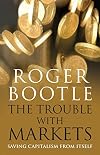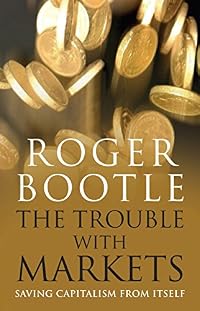
The Trouble with Markets: Saving Capitalism from Itself
by Roger Bootle
39 Members (3.50)
On This Page
Description
"Compelling prescriptions from an economist unusually able to speak with authority because unlike most of his peers, Bootle spotted that the boom was unsustainable."Robert Peston, BBC Business Editor and author of Who Runs Britain? "This book will stand out in the explosion of financial crisis literature. Roger Bootle is one of the top, practical economists in the financial world but he is not afraid to tackle the bigger, deeper questions around the future of capitalism, the role of markets show more and government."Vince Cable, MP, and author of The Storm: The World Economic Crisis and What it Means "Roger Bootle knows how markets work, and also when they don't work. Everyone who wants a real understanding of the strengths and weaknesses of the market economy should read this book."John Kay, leading economist, Financial Times columnist and author of The Long and The Short of It "A brilliant book that puts markets in stunning perspective. Once again, Roger Bootle tackles, head on, some of the toughest economic questions of our time.An extraordinarily penetrating and absorbing analysis."Sir Brian Pitman, Former Chairman, Lloyds TSB Group---------------- In the spirit of John Kenneth Galbraith and Paul Krugman, Roger Bootle challenges readers to look at the deep causes of the current financial crisis in his trenchant, topical and thought-provoking exploration of both our economic future and the future of the market system itself. The Trouble with Markets sets the crisis in an historical context, with fascinating material on the Great Depression and other periods of economic downturn. Although fiercely critical of bankers and regulators for their roles, Bootle blames the crisis not on them, but on the idea that financial markets can be left alone. Written in his distinctive, highly readable style, the book examines a host of critical questions, including what investors should do with their money in turbulent times, and calls for a contraction of the overfed financial services sector. Provocative, radical and thoroughly international in scope, The Trouble with Markets is sure to appeal to financial types and general readers alike. There were many causes of the crisis-greedy bankers and nai ve borrowers, mistaken central banks and inept regulators, insatiable Western consumers and over-thrifty Chinese savers. But underlying all these was a single super-cause-the idea that the markets are always right and consequently that they can be left alone. Belief in this idea not only explains the extreme risks that both banks and borrowers took, but also the passivity and carelessness of central banks and regulators in allowing it to continue. Indeed, the "Great Implosion" has revealed not only the markets' excessive risk-taking and how fragile the financial system is, but also how bloated the financial sector has become. It has demonstrated a failure of the market with regard to the setting of executive compensation in general, and pay in the financial sector in particular. The result has been the revelation of a financial sector hell-bent on pursuing its own profit, while imperiling instead of promoting the public good, and a system of corporate governance where managers have been pursuing either their own interests or the short-term performance of the share price-which was often one in the same. Bootle, one of London's best-known economists, not only offers a serious critique ofthe free-market mindset, but also a plan for radical reform of the system and a way out of the economic mess. Despite some signs of recovery, the economic outlook in the real economy is for an extended period of weakness amounting to a depression. And while so many people worry about a resurgence of inflation, the greatest threat is the emergence of sustained deflation. It will only be possible to get back to full employment and stability if China leads the super-saving countries by changing course to a policy of increased domestic demand. In order to persuade her to do this, China needs to be offered both a seat at the top table and a change in the international position of the dollar. Ironically, the excesses of cowboy capitalism could lead to the evolution of a global money and to the beginnings of global governance. With his trademark clarity and acerbic wit, Roger Bootle's new book lays out the pathway for saving capitalism from itself. show lessTags
Recommendations






Member Reviews
Members
- Recently Added By
Author Information
11 Works 172 Members
One of Britain's best-known economics, Roger Bootle runs Capital Economics, Europe's largest macro-economic consultancy, which he founded. Roger appears frequently on television and radio and is also a regular columnist for The Daily Telegraph. In the Comment Awards 2012 he was named Economic Commentator of the Year. He is the author of three show more widely acclaimed books - The Trouble with Markets, Money for Nothing and The Death of Inflation. show less
Classifications
Statistics
- Members
- 39
- Popularity
- 744,619
- Rating
- (3.50)
- Languages
- English
- Media
- Paper, Ebook
- ISBNs
- 8
- ASINs
- 1