Discourse on the Arts and Sciences
by Jean-Jacques Rousseau
On This Page
Description
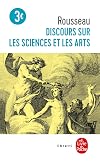
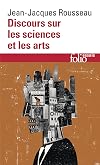
Discours Sur Les Scienc (Folio Essais) (English and French Edition) by J Rousseau (1997)Tags
Recommendations



















Member Reviews
http://www.susanhatedliterature.net/2019/04/discourse-on-the-arts-and-sciences/
So I decided to start an online course, on the spur of the moment, I may drop it. We’ll see. It is titled The Modern and the Postmodern, and starts with Kant and Rousseau. The first reading I did for it is this essay, by Jean-Jacques Rousseau, and I have to say I am unimpressed with his ideas. I do not wish to subscribe to his newsletter.
And it really feels like a proto-blog post. I guess that’s what people did before twitter and the internet, instead of threads and posts they wrote letters to the newspapers and published essays. In this essay Rousseau is all about how education destroys people. That civilisation and all the benefits that go along with show more that do nothing but destroy the true and simple man.
Damn, if it doesn’t sound like a self-entitled white dude moaning about how feminism is the end of women1 and we should look to the past, because wasn’t that better. Ugh, I disagree Mr. Rousseau, I disagree. show less
So I decided to start an online course, on the spur of the moment, I may drop it. We’ll see. It is titled The Modern and the Postmodern, and starts with Kant and Rousseau. The first reading I did for it is this essay, by Jean-Jacques Rousseau, and I have to say I am unimpressed with his ideas. I do not wish to subscribe to his newsletter.
And it really feels like a proto-blog post. I guess that’s what people did before twitter and the internet, instead of threads and posts they wrote letters to the newspapers and published essays. In this essay Rousseau is all about how education destroys people. That civilisation and all the benefits that go along with show more that do nothing but destroy the true and simple man.
Damn, if it doesn’t sound like a self-entitled white dude moaning about how feminism is the end of women1 and we should look to the past, because wasn’t that better. Ugh, I disagree Mr. Rousseau, I disagree. show less
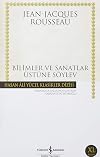
Bilimler ve Sanatlar Üzerine Söylev, Aydınlanma Çağı’nın ilerleme inancına indirilmiş en sarsıcı darbelerden biri olan ve medeniyetin insan ahlakını geliştirmek yerine yozlaştırdığını savunan kışkırtıcı bir eleştiridir. Eser, Dijon Akademisi'nin açtığı "Bilimlerin ve sanatların gelişmesi ahlakın düzelmesine katkıda bulunmuş mudur?" sorusuna Rousseau’nun verdiği "Hayır" cevabı üzerine kuruludur; yazar, lüksün, kibarlığın ve akademik bilginin insanın doğal erdemlerini maskeleyen birer vitrin olduğunu ileri sürer. Rousseau, antik toplumların sadeliği ve savaşçı dürüstlüğü ile modern toplumun yapay nezaketini kıyaslarken; bilimin ve sanatın ihtiyaçlardan değil, insanın show more kibri ve boş zaman öldürme arzusundan doğduğunu, dolayısıyla gerçek özgürlüğü zincirleyen "çiçekli çelenkler" olduğunu savunarak moderniteye karşı ilk büyük romantik başkaldırıyı başlatır. show less
Mar 19, 2026Turkish
En 1749, l'Académie de Dijon met au concours la question suivante : Si le rétablissement des sciences et des arts a contribué à épurer les mœurs. Alors qu'il va rendre visite à Diderot prisonnier à Vincennes, Rousseau feuillette le Mercure de France qui publie la question : " Si jamais quelque chose a ressemblé à une inspiration subite, écrira-t-il plus tard, c'est le mouvement qui se fit en moi à cette lecture ; tout à coup, je me sens l'esprit ébloui de mille lumières ; des foules d'idées vives s'y présentèrent à la fois avec une force et une confusion qui me jeta dans un trouble inexprimable. " À la question posée, il répond par la négative et l'Académie couronne son Discours qui connaît un succès show more foudroyant. Voilà Rousseau célèbre - et aussi attaqué. Mais Voltaire a beau dire que " Jean-Jacques n'est qu'un malheureux charlatan qui, ayant volé une petite bouteille d'élixir, l'a répandu dans un tonneau de vinaigre ", une force insoupçonnée et sincèrement rebelle apparaît dans ce Premier Discours, une pensée novatrice qui sonne juste et résiste aux sarcasmes. Et la lumière que Rousseau jette sur l'homme et sur le lien social va contribuer à remettre en cause une certaine idée du progrès. show less
Dec 16, 2010French
Ratings
Members
- Recently Added By
Lists

Philosophy, Politics and Economics
61 works; 1 member
Author Information

913+ Works 27,575 Members
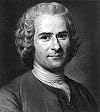
Jean Jacques Rousseau was a Swiss philosopher and political theorist who lived much of his life in France. Many reference books describe him as French, but he generally added "Citizen of Geneva" whenever he signed his name. He presented his theory of education in Emile (1762), a novel, the first book to link the educational process to a scientific show more understanding of children; Rousseau is thus regarded as the precursor, if not the founder, of child psychology. "The greatest good is not authority, but liberty," he wrote, and in The Social Contract (1762) Rousseau moved from a study of the individual to an analysis of the relationship of the individual to the state: "The art of politics consists of making each citizen extremely dependent upon the polis in order to free him from dependence upon other citizens." This doctrine of sovereignty, the absolute supremacy of the state over its members, has led many to accuse Rousseau of opening the doors to despotism, collectivism, and totalitarianism. Others say that this is the opposite of Rousseau's intent, that the surrender of rights is only apparent, and that in the end individuals retain the rights that they appear to have given up. In effect, these Rousseau supporters say, the social contract is designed to secure or to restore to individuals in the state of civilization the equivalent of the rights they enjoyed in the state of nature. Rousseau was a passionate man who lived in passionate times, and he still stirs passion in those who write about him today. (Bowker Author Biography) show less
Work Relationships
Is contained in
Common Knowledge
- Canonical title
- Discourse on the Arts and Sciences
- Alternate titles
- First Discourse
Classifications
Statistics
- Members
- 87
- Popularity
- 368,550
- Reviews
- 3
- Rating
- (3.25)
- Languages
- 5 — English, French, Portuguese, Spanish, Turkish
- Media
- Paper, Audiobook, Ebook
- ISBNs
- 15
- ASINs
- 4