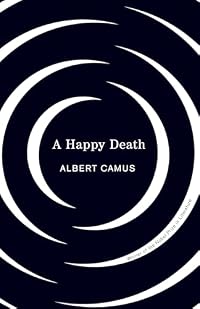
A Happy Death
by Albert Camus
On This Page
Description
In his first novel, A Happy Death, written when he was in his early twenties and retrieved from his private papers following his death in I960, Albert Camus laid the foundation for The Stranger, focusing in both works on an Algerian clerk who kills a man in cold blood. But he also revealed himself to an extent that he never would in his later fiction. For if A Happy Death is the study of a rule-bound being shattering the fetters of his existence, it is also a remarkably candid portrait of show more its author as a young man. As the novel follows the protagonist, Patrice Mersault, to his victim's house -- and then, fleeing, in a journey that takes him through stages of exile, hedonism, privation, and death -it gives us a glimpse into the imagination of one of the great writers of the twentieth century. For here is the young Camus himself, in love with the sea and sun, enraptured by women yet disdainful of romantic love, and already formulating the philosophy of action and moral responsibility that would make him central to the thought of our time. show lessTags
Recommendations

















Member Reviews
“It takes time to live. Like any work of art, life needs to be thought about” (74).
What is a happy death? That is, ostensibly, one of the main things that this book speaks to, and our hero, Patrice Mersault, spends the latter half of his life attempting to answer this question. One answer, it seems, is that a happy death is what results from a happy life, one spent living well. Just what it means to live well, however, can be tricky to discover and seems to be part of what drives Mersault’s existential concern. Meaning is elusive and contradictory.
The latter 2/3 of the book shows Mersault using his/Zagreus’s money to have the kinds of experiences that are commonly sold to us as happiness: travel, culture, marriage, show more homeownership, and generally acquiring possessions. None of it gives him a lasting sense of happiness because none of it really supplies meaning or understanding. Instead, the experiences make Mersault uneasy, irritated, and leave him unfulfilled. Zagreus’s money did help Mersault create the time needed for happiness by giving him the freedom from work, but the experiences the money bought only *filled* the time and drove Mersault to seek retreat and solitude, which does make him happy … for a while. It was those times when Mersault was between places (traveling on a train) and between experiences (time spent with friends at the House Above the World), interstitial places that are not destinations and where he was not chasing meaning that Mersault seemed most happy with life.
Maybe this reading of the book is coming about because I spent some time recently pondering epicurean ways to think about happiness as harmony with nature. The absurdity of existence, if we believe it to be absurd, seems to defy the possibility of recognizing such harmony because there is no hidden, discoverable meaning and direction that one can reason out and follow. Or maybe dwelling on absurdity is not inconsistent with happiness if recognizing and dwelling in the absurdity of existence becomes the defamiliarizing frame we need to recognize that the search for grand meaning is fruitless and perhaps unnecessary after all. show less
What is a happy death? That is, ostensibly, one of the main things that this book speaks to, and our hero, Patrice Mersault, spends the latter half of his life attempting to answer this question. One answer, it seems, is that a happy death is what results from a happy life, one spent living well. Just what it means to live well, however, can be tricky to discover and seems to be part of what drives Mersault’s existential concern. Meaning is elusive and contradictory.
The latter 2/3 of the book shows Mersault using his/Zagreus’s money to have the kinds of experiences that are commonly sold to us as happiness: travel, culture, marriage, show more homeownership, and generally acquiring possessions. None of it gives him a lasting sense of happiness because none of it really supplies meaning or understanding. Instead, the experiences make Mersault uneasy, irritated, and leave him unfulfilled. Zagreus’s money did help Mersault create the time needed for happiness by giving him the freedom from work, but the experiences the money bought only *filled* the time and drove Mersault to seek retreat and solitude, which does make him happy … for a while. It was those times when Mersault was between places (traveling on a train) and between experiences (time spent with friends at the House Above the World), interstitial places that are not destinations and where he was not chasing meaning that Mersault seemed most happy with life.
Maybe this reading of the book is coming about because I spent some time recently pondering epicurean ways to think about happiness as harmony with nature. The absurdity of existence, if we believe it to be absurd, seems to defy the possibility of recognizing such harmony because there is no hidden, discoverable meaning and direction that one can reason out and follow. Or maybe dwelling on absurdity is not inconsistent with happiness if recognizing and dwelling in the absurdity of existence becomes the defamiliarizing frame we need to recognize that the search for grand meaning is fruitless and perhaps unnecessary after all. show less
A Happy Death was Camus's first attempt at writing a novel, which he worked on from 1936-1938 when he was in his early to mid twenties. He (wisely) chose not to submit it for publication, but after his death in 1960, his widow (unwisely) decided to allow the unfinished manuscripts to be corrected and compiled into a book, which was published in 1971.
This book is based in part on Camus's early experiences, including his childhood in a blue collar neighborhood in Algiers, his early troubled marriage to Simone Hié, a heroin addict who was unfaithful to him, his travels to central Europe and Italy in 1936 and 1937, his confinement in a sanatorium for treatment of tuberculosis which he contracted as a teenager, and his return to Algeria in show more 1938.
The main character in A Happy Death is Patrice Mersault, a young office worker in Algiers who is bored and unsatisfied with his life. His current lover introduces him to Roland Zagreus, an slightly older man who has accumulated a large fortune but is unable to derive benefit from it due to an accident that led to the amputation of his legs. The two men become friends, and Zagreus shares his philosophy of life with the younger man. In his view, man is able to create personal happiness through money, which allows him time to achieve freedom from responsibility and the drudgery of everyday work:
Mersault decides to test Zagreus's theory, as he murders the invalid and takes his money. Soon afterward he becomes ill with fever and fatigue, but he decides to go to Warsaw. He is miserable there, due to his illness and to the squalid conditions that exist in the depressed city, and he leaves there to travel to Genoa, and eventually back to Algiers. He stays with three younger women in a house overlooking the city, which brings him some degree of pleasure but not contentment, and he marries a woman who he is physically attracted to but does not love. Later he purchases a house in a small village on the Algerian coast, which provides him with security and comfort, but he remains vaguely unsatisfied. His health worsens, and he realizes with the utmost dread that death is slowly creeping upon him:
For me, A Happy Death was difficult and, at times, painful to read despite its short length. I found Mersault to be largely inscrutable, and the female characters were poorly developed and portrayed as vain and shallow creatures. It is best viewed as a precursor for his first published novel The Stranger (whose main character is named Meursault) rather than a unique work in itself, and all but the most ardent Camus fans should avoid it, unlike The Plague. show less
This book is based in part on Camus's early experiences, including his childhood in a blue collar neighborhood in Algiers, his early troubled marriage to Simone Hié, a heroin addict who was unfaithful to him, his travels to central Europe and Italy in 1936 and 1937, his confinement in a sanatorium for treatment of tuberculosis which he contracted as a teenager, and his return to Algeria in show more 1938.
The main character in A Happy Death is Patrice Mersault, a young office worker in Algiers who is bored and unsatisfied with his life. His current lover introduces him to Roland Zagreus, an slightly older man who has accumulated a large fortune but is unable to derive benefit from it due to an accident that led to the amputation of his legs. The two men become friends, and Zagreus shares his philosophy of life with the younger man. In his view, man is able to create personal happiness through money, which allows him time to achieve freedom from responsibility and the drudgery of everyday work:
"You see, Mersault, for a man who is well born, being happy is never complicated. It's enough to take up the general fate, only not with the will for renunciation like so many fake great men, but with the will for happiness. Only it takes time to be happy. A lot of time. Happiness, too, is a long patience. And in almost every case, we use up our lives making money, when we should be using our money to gain time."
Mersault decides to test Zagreus's theory, as he murders the invalid and takes his money. Soon afterward he becomes ill with fever and fatigue, but he decides to go to Warsaw. He is miserable there, due to his illness and to the squalid conditions that exist in the depressed city, and he leaves there to travel to Genoa, and eventually back to Algiers. He stays with three younger women in a house overlooking the city, which brings him some degree of pleasure but not contentment, and he marries a woman who he is physically attracted to but does not love. Later he purchases a house in a small village on the Algerian coast, which provides him with security and comfort, but he remains vaguely unsatisfied. His health worsens, and he realizes with the utmost dread that death is slowly creeping upon him:
He realized now that to be afraid of this death he was staring at with animal terror meant to be afraid of life. Fear of dying justified a limitless attachment to what is alive in man. And all those who had not made the gestures necessary to live their lives, all those who feared and exalted impotence—they were afraid of death because of the sanction it gave to a life in which they had not been involved. They had not lived enough, never having lived at all.
For me, A Happy Death was difficult and, at times, painful to read despite its short length. I found Mersault to be largely inscrutable, and the female characters were poorly developed and portrayed as vain and shallow creatures. It is best viewed as a precursor for his first published novel The Stranger (whose main character is named Meursault) rather than a unique work in itself, and all but the most ardent Camus fans should avoid it, unlike The Plague. show less
A Happy Death & the Wrong Question
A Happy Death was the pre-cursor to The Stranger, and was written years before. Camus never intended to publish A Happy Death; it was ironically published after his sudden death from a car accident. The novels are duplicative in many ways; in both the protagonist is named Meursault who becomes an unrepentant murder due to his focus on being happy and authentic; he has lovers but are emotionally detached from them. Both are written in the Realist tradition. However, the philosophic focus is quite different; In A Happy Death, the idea is finding meaning within the search for happiness, while the Stranger is a much more robust analysis of the Nietzschean superman within the Absurd and hopeless life.
The show more parallels between both the Stranger and A Happy Death and Dostoevsky's first-person The Idiot are obvious (both are thought experiments on the Nietzschean superman, or in Dostoevsky's case the anti-Nietzschean Superman; the Saint), and Camus plagiarized much of the character development from The Adolescent's character Arkady Dolgoruky, just like Nietzsche ironically pilfered Dostoevsky's Nihilistic characters before Camus was born. Both novels plagiarized C&P for the structure, storyline and detailing. The theme of time developing happiness comes directly from Proust. I can't find any aspect of this novel that is unique; the literature and philosophic aspects are directly plagiarized from other well-known works.
The Meursault of A Happy Death is much more openly Nietzschean than the Meursault of The Stranger when it comes to the power of the self to will, but not as dethatched from hope and feelings. Zagreus tells Meursault "Not the will to renounce, but the will to happiness" is all that matters, in classic Nietzschean ethics. Absurdity is not as strong of a theme in A Happy Death and a few lines actually undermine the power of The Absurd, for instance "Man diminishes man's powers. The world leaves them intact" which is another example of Classical Romanticism woven into Camus' work. This Meursault is not as stoic and fully engulfed in the Absurd. In this way, he is more recognizably human. We see him become jealous, angry and greedy. The Meursault of The Stranger is completely cold and friendless.
-Camus and Hedonism-
Zagreus, the first Bodhisattva of the novel, tells Meursault "I don't like superficiality and I don't like romanticism. I like to be conscious... You see, Mersault, all the misery and cruelty of our civilization can be measured by this one stupid axiom: happy nations have no history."
Meursault tries to find meaning in his carnal depravity, and even in his last moments, his happiness is only based on the sensual, biological lust for his happiness. Would he have died happy is Lucienne was not next to him? To this day, secular society still finds a religious fervor in the negation of the sacred; consider the Hozier song "take me to church" which is wound into this similar theme of depravity generating spiritual meaning. This is all directly from Nietzsche, and has spread far and wide in Western Society. Camus writes:
"For Mersault, nothing mattered in those days... Mersault saw in her not the future but all the force of his desire focused upon her and satisfied by this appearance, this image. The lips she offered him seemed a message from a world without passion and swollen with desire, where his heart would find satisfaction. And this seemed a miracle to him."
The manner in which Camus' characters justify a life of self-worship, murder, rape and hate is the same across his fictional works. Consider these three lines:
"In the innocence of his heart Mersault accepted this green sky and this love-soaked earth with the same thrill of passion and desire as when he had killed Zagreus in the innocence of his heart." (A Happy Death)
"I opened myself to the gentle indifference of the world. Finding it so much like myself – so like a brother, really- I felt that I had been happy and that I was happy again." (The Stranger)
"I was happy... I felt rising within me a vast feeling of power and — I don't know how to express it — of completion, which cheered my heart." (The Fall)
Physiologically, Camus is correct here. Just like Raskolnikov, both Mersaults turn to a sensual focus on the present to justify their amoral actions. Dostoevsky says this is a bad thing because it leads to rape, murder, genocide etc. Camus argues there is no God therefor no right and wrong apart from individual opinion; and so it's okay if people kill each other at the end of the day morally. He doesn't say that the ends justify the means; he rejects Utilitarianism in true Dostoevskian form. But he keeps the Nihilistic premise that Goodness is not eternal or super-human. What matters is individual happiness over all else, or as Zagreus put it "Don't take anything seriously except happiness." While in real life, Camus opposed violence in Eastern Europe and North Africa, working to put a stop to it, his philosophy justifies everything.
-The House above the World and the Teleological Denial of Goodness-
Mersault's retreat from the world after he becomes wealthy through murder is a metaphor for a nearly Buddhist search for happiness through detachment. The narrator writes "Patrice knew it was true when night fell and they all accepted, with the last breeze on their faces, the human and dangerous temptation to be utterly unique."
Camus' entire point is that a type of happiness can be achieved by living an egotistical, amoral life by embracing a type of detached Aestheticism; sensuality tied to the material world that refuses existentialist processing and self-awareness. Camus' protagonist does not necessarily come to a meaningful death; he dies friendless and hopeless after living a life of murder and self-worship that deliberately keeps the blinders on to the painful reality of the world around him, but he has a brief flash of 'happiness' before he dies; "And stone among the stones, he returned in the joy of his heart to the truth of the motionless worlds".
The happiness Camus advocate for could easily be obtained by a quick sniff-snuff off of a coffee table. Happiness via depravity is the easiest thing to obtain. Goodness is not ready to obtain; it requires denying the darkness within the human soul.
Camus does not provide any insights into the human condition further than 'ignorance is bliss'; an acceptance of an extemporal fantasy is where happinees can be found. He simply takes Hedonism and gives it a poetic turn. He relies on the emotional resonance of words, a lyricism, and the friction of the bodily senses to create a sense of profundity that does not exist. And this is a universal sign of willful Sopilism. Camus is an illusionist; he uses poetic lines to give a sense of beauty and meaning to a profoundly empty and horrifying lifestyle. It is filled with colors that wash away at the first spring shower; lights that are only beautiful as emotional hedonism persists.
In his book Memories, Dreams, Reflections, Carl Jung wrote "“The decisive question for man is: Is he related to something infinite or not? That is the telling question of his life. Only if we know that the thing which truly matters is the infinite can we avoid fixing our interests upon futilities, and upon all kinds of goals which are not of real importance. Thus we demand that the world grant us recognition for qualities which we regard as personal possessions: our talent or our beauty. The more a man lays stress on false possessions, and the less sensitivity he has for what is essential, the less satisfying is his life. He feels limited because he has limited aims, and the result is envy and jealousy. If we understand and feel that here in this life we already have a link with the infinite, desires and attitudes change.”
Camus, in his stereotypical French Hedonism, does not ask this question. He uses presuppositional semi-Nihilism to assume there is no eternal, thus the only question that matters is how an individual can be happy. Plato said "The difficulty, my friends, is not to avoid death, but to avoid unrighteousness; for that runs faster than death." Camus disagrees and writes in A Happy Death:
"That was his whole happiness in living and dying. He realized now that to be afraid of this death he was staring at with animal terror meant to be afraid of life. Fear of dying justified a limitless attachment to what is alive in man. And all those who had not made the gestures necessary to live their lives, all those who feared and exalted impotence - they were afraid of death because of the sanction it gave to a life in which they had not been involved. They had not lived enough, never having lived at all. And death was a kind of gesture, forever withholding water from the traveler vainly seeking to slake his thirst."
Plato would have hated Camus. Camus is trying to un-do thousands of years of moral philosophy to justify him being a narcissistic Hedonist.
Camus admits that Dostoevsky's point that a truly "self-chosen life" is not functionally possible. All worship something and submit to something else. For Meursault, his Happiness becomes his god; a fearful and brutal deity that leads him to a situational happiness with no meaning. Despite his desire to find a way through Nihilism to a life of meaning, he practically comes to the same conclusion as Dostoevsky did in his experiment The Idiot, but he is to dogmatic to change his beliefs, even when he proves himself wrong. 'How can I be happy' is the fundamentally wrong question for the human soul to be asking.
I not-so-respectfully disagree with his Moral Nihilism. Camus knows Dostoevsky was right about the end state of the human consciousness under Agnostic Nihilism, he just does not have the intellectual honesty and courage to face the music. There is no truth in the motionless worlds; only an Absurd lack of meaning.
The Absurdist search for happiness is one that severs the human soul from the eternal in order to ignore the real questions by a focus on the sensual present until one does, never more alive than an animal. Consider this poetic trash Camus writes: "Beyond the curve of the days he glimpsed neither superhuman happiness nor eternity - happiness was human, eternity ordinary. What mattered was to humble himself, to organize his heart to match the rhythm of the days instead of submitting their rhythm to the curve of human hopes." This is nonsensical, emotional lyricism not philosophy. It's cheap emotional thrills at the expense of the human soul. He relies on the emotional resonance of words to create a sense of profundity or meaning; he uses a romanization of friction of the conscious, sensual, temporal experience with the material surrounds of humankind to generate emotional triggers. But there is nothing eternal or transcendent here; only poorly intellectualized Hedonism.
Camus leaves us with little more an all pervasive moral cynicism fully realized by the solipsistic paralysis of the human soul. show less
A Happy Death was the pre-cursor to The Stranger, and was written years before. Camus never intended to publish A Happy Death; it was ironically published after his sudden death from a car accident. The novels are duplicative in many ways; in both the protagonist is named Meursault who becomes an unrepentant murder due to his focus on being happy and authentic; he has lovers but are emotionally detached from them. Both are written in the Realist tradition. However, the philosophic focus is quite different; In A Happy Death, the idea is finding meaning within the search for happiness, while the Stranger is a much more robust analysis of the Nietzschean superman within the Absurd and hopeless life.
The show more parallels between both the Stranger and A Happy Death and Dostoevsky's first-person The Idiot are obvious (both are thought experiments on the Nietzschean superman, or in Dostoevsky's case the anti-Nietzschean Superman; the Saint), and Camus plagiarized much of the character development from The Adolescent's character Arkady Dolgoruky, just like Nietzsche ironically pilfered Dostoevsky's Nihilistic characters before Camus was born. Both novels plagiarized C&P for the structure, storyline and detailing. The theme of time developing happiness comes directly from Proust. I can't find any aspect of this novel that is unique; the literature and philosophic aspects are directly plagiarized from other well-known works.
The Meursault of A Happy Death is much more openly Nietzschean than the Meursault of The Stranger when it comes to the power of the self to will, but not as dethatched from hope and feelings. Zagreus tells Meursault "Not the will to renounce, but the will to happiness" is all that matters, in classic Nietzschean ethics. Absurdity is not as strong of a theme in A Happy Death and a few lines actually undermine the power of The Absurd, for instance "Man diminishes man's powers. The world leaves them intact" which is another example of Classical Romanticism woven into Camus' work. This Meursault is not as stoic and fully engulfed in the Absurd. In this way, he is more recognizably human. We see him become jealous, angry and greedy. The Meursault of The Stranger is completely cold and friendless.
-Camus and Hedonism-
Zagreus, the first Bodhisattva of the novel, tells Meursault "I don't like superficiality and I don't like romanticism. I like to be conscious... You see, Mersault, all the misery and cruelty of our civilization can be measured by this one stupid axiom: happy nations have no history."
Meursault tries to find meaning in his carnal depravity, and even in his last moments, his happiness is only based on the sensual, biological lust for his happiness. Would he have died happy is Lucienne was not next to him? To this day, secular society still finds a religious fervor in the negation of the sacred; consider the Hozier song "take me to church" which is wound into this similar theme of depravity generating spiritual meaning. This is all directly from Nietzsche, and has spread far and wide in Western Society. Camus writes:
"For Mersault, nothing mattered in those days... Mersault saw in her not the future but all the force of his desire focused upon her and satisfied by this appearance, this image. The lips she offered him seemed a message from a world without passion and swollen with desire, where his heart would find satisfaction. And this seemed a miracle to him."
The manner in which Camus' characters justify a life of self-worship, murder, rape and hate is the same across his fictional works. Consider these three lines:
"In the innocence of his heart Mersault accepted this green sky and this love-soaked earth with the same thrill of passion and desire as when he had killed Zagreus in the innocence of his heart." (A Happy Death)
"I opened myself to the gentle indifference of the world. Finding it so much like myself – so like a brother, really- I felt that I had been happy and that I was happy again." (The Stranger)
"I was happy... I felt rising within me a vast feeling of power and — I don't know how to express it — of completion, which cheered my heart." (The Fall)
Physiologically, Camus is correct here. Just like Raskolnikov, both Mersaults turn to a sensual focus on the present to justify their amoral actions. Dostoevsky says this is a bad thing because it leads to rape, murder, genocide etc. Camus argues there is no God therefor no right and wrong apart from individual opinion; and so it's okay if people kill each other at the end of the day morally. He doesn't say that the ends justify the means; he rejects Utilitarianism in true Dostoevskian form. But he keeps the Nihilistic premise that Goodness is not eternal or super-human. What matters is individual happiness over all else, or as Zagreus put it "Don't take anything seriously except happiness." While in real life, Camus opposed violence in Eastern Europe and North Africa, working to put a stop to it, his philosophy justifies everything.
-The House above the World and the Teleological Denial of Goodness-
Mersault's retreat from the world after he becomes wealthy through murder is a metaphor for a nearly Buddhist search for happiness through detachment. The narrator writes "Patrice knew it was true when night fell and they all accepted, with the last breeze on their faces, the human and dangerous temptation to be utterly unique."
Camus' entire point is that a type of happiness can be achieved by living an egotistical, amoral life by embracing a type of detached Aestheticism; sensuality tied to the material world that refuses existentialist processing and self-awareness. Camus' protagonist does not necessarily come to a meaningful death; he dies friendless and hopeless after living a life of murder and self-worship that deliberately keeps the blinders on to the painful reality of the world around him, but he has a brief flash of 'happiness' before he dies; "And stone among the stones, he returned in the joy of his heart to the truth of the motionless worlds".
The happiness Camus advocate for could easily be obtained by a quick sniff-snuff off of a coffee table. Happiness via depravity is the easiest thing to obtain. Goodness is not ready to obtain; it requires denying the darkness within the human soul.
Camus does not provide any insights into the human condition further than 'ignorance is bliss'; an acceptance of an extemporal fantasy is where happinees can be found. He simply takes Hedonism and gives it a poetic turn. He relies on the emotional resonance of words, a lyricism, and the friction of the bodily senses to create a sense of profundity that does not exist. And this is a universal sign of willful Sopilism. Camus is an illusionist; he uses poetic lines to give a sense of beauty and meaning to a profoundly empty and horrifying lifestyle. It is filled with colors that wash away at the first spring shower; lights that are only beautiful as emotional hedonism persists.
In his book Memories, Dreams, Reflections, Carl Jung wrote "“The decisive question for man is: Is he related to something infinite or not? That is the telling question of his life. Only if we know that the thing which truly matters is the infinite can we avoid fixing our interests upon futilities, and upon all kinds of goals which are not of real importance. Thus we demand that the world grant us recognition for qualities which we regard as personal possessions: our talent or our beauty. The more a man lays stress on false possessions, and the less sensitivity he has for what is essential, the less satisfying is his life. He feels limited because he has limited aims, and the result is envy and jealousy. If we understand and feel that here in this life we already have a link with the infinite, desires and attitudes change.”
Camus, in his stereotypical French Hedonism, does not ask this question. He uses presuppositional semi-Nihilism to assume there is no eternal, thus the only question that matters is how an individual can be happy. Plato said "The difficulty, my friends, is not to avoid death, but to avoid unrighteousness; for that runs faster than death." Camus disagrees and writes in A Happy Death:
"That was his whole happiness in living and dying. He realized now that to be afraid of this death he was staring at with animal terror meant to be afraid of life. Fear of dying justified a limitless attachment to what is alive in man. And all those who had not made the gestures necessary to live their lives, all those who feared and exalted impotence - they were afraid of death because of the sanction it gave to a life in which they had not been involved. They had not lived enough, never having lived at all. And death was a kind of gesture, forever withholding water from the traveler vainly seeking to slake his thirst."
Plato would have hated Camus. Camus is trying to un-do thousands of years of moral philosophy to justify him being a narcissistic Hedonist.
Camus admits that Dostoevsky's point that a truly "self-chosen life" is not functionally possible. All worship something and submit to something else. For Meursault, his Happiness becomes his god; a fearful and brutal deity that leads him to a situational happiness with no meaning. Despite his desire to find a way through Nihilism to a life of meaning, he practically comes to the same conclusion as Dostoevsky did in his experiment The Idiot, but he is to dogmatic to change his beliefs, even when he proves himself wrong. 'How can I be happy' is the fundamentally wrong question for the human soul to be asking.
I not-so-respectfully disagree with his Moral Nihilism. Camus knows Dostoevsky was right about the end state of the human consciousness under Agnostic Nihilism, he just does not have the intellectual honesty and courage to face the music. There is no truth in the motionless worlds; only an Absurd lack of meaning.
The Absurdist search for happiness is one that severs the human soul from the eternal in order to ignore the real questions by a focus on the sensual present until one does, never more alive than an animal. Consider this poetic trash Camus writes: "Beyond the curve of the days he glimpsed neither superhuman happiness nor eternity - happiness was human, eternity ordinary. What mattered was to humble himself, to organize his heart to match the rhythm of the days instead of submitting their rhythm to the curve of human hopes." This is nonsensical, emotional lyricism not philosophy. It's cheap emotional thrills at the expense of the human soul. He relies on the emotional resonance of words to create a sense of profundity or meaning; he uses a romanization of friction of the conscious, sensual, temporal experience with the material surrounds of humankind to generate emotional triggers. But there is nothing eternal or transcendent here; only poorly intellectualized Hedonism.
Camus leaves us with little more an all pervasive moral cynicism fully realized by the solipsistic paralysis of the human soul. show less
Combined reviews of A HAPPY DEATH and THE STRANGER
French journalist, author, and philosopher Albert Camus wrote several novels which illustrate his philosophy of Absurdism. Akin to Existentialism, Absurdism espouses that it is up to each individual to find some kind of meaning in life: To live according to one’s own personal goals and expectations in a life that is otherwise irrational and meaningless. Additionally, Absurdism is a philosophy where there is no God or spiritual connection to anything or anyone.
"The Stranger"- a novella that takes place in France in the 1930s- is narrated by a simple working man- Monsieur Meursault- who tells the story of his involvement in a murder, awaiting his trial in a jail cell, Scenes include the show more trial, the verdict and sentencing. With a minimum cast of characters, the author presents a very bleak image of life.
Camus provides however, an interesting anecdote. Monsieur Meursault lives in the moment. He has acute observation skills and speaks with dispassionate clarity. He has passionate sensual feelings, but feels no intense need for commitment or long-term relationships. He has no spiritual connection to life. He has no curiosity, no expectations, no ambitions, no goals. And he shows very little emotion. It’s like he is drifting through life half awake, or perhaps only half alive. An extremely passive person, Meursault is introverted and generally minds his own business. So, how did he end up on such a preposterous situation? Life can indeed be absurd.
Deep down, the reader suspects Meursault has feelings which never reveals. That his life means something more than is revealed in this simple tale. It is just too depressing to think anyone would intentionally be that indifferent to the entire universe. And there is a lesson to be learned… it’s the truth in Karma. Meursault’s indifference is reciprocated. And surprisingly, that shocks him. "The Stranger" is rated 5 Stars.
"A Happy Death" was suggested reading as a parable to Camus’s novel "The Stranger" further illustrating and clarifying the authors philosophy. In this particular novella, Camus certainly pointed out the absurdity of his philosophy. Once again, the story revolves around Patrice Meursault’s search for meaning and his conclusion that happiness is the ultimate goal in life… at any cost. He shrugs off “spiritual snobbism in certain superior beings who think money isn’t necessary for happiness”. With no hesitation and no guilty conscious Patrice commits murder for the sole purpose of acquiring money. His self-justification is that it takes lots of free time to be happy, and free time requires financial independence.
The murder occurs early in the story, with the remainder following Patrice through various phases of his search for how to best make use of his free time and money. Patrice appears to be a likable man. He minds his own business and seeks a peaceful serene existence. But he exhibits his own spiritual snobbism by presuming to be an authority on life. He lectures his girlfriend (with whom he refuses to establish a long-term commitment), “There is no such thing as great suffering, great regret, great memory… Everything is forgotten, even a great love. That’s what’s sad about life, and also what’s wonderful about it… That’s why it’s good to have had love in your life after all, to have had an unhappy passion- it gives you an alibi for the vague despairs we all suffer from.” Meursault’s final conclusion is that nothing in life matters because in the end we all die.
Although Albert Camus was a known womanizer- unlike his character Patrice Meursault- he did not live his life in detached isolation. He was a political activist- anti communism-pro socialism. Camus participated in the French Underground during World War II, and founded a Revolutionary Union Movement in Europe. In 1957 he received the Nobel Prize in Literature for his outstanding contribution in novels, non-fiction, plays, essays, and short stories.
Perhaps Camus’s philosophy worked for him in his own life, but both novellas were a poor example of finding one’s own meaning to existence. And reading "A Happy Death" as suggested, along with "The Stranger" only confirmed my original opinion that I am so glad Absurdism is not my own personal philosophy. In fact, I’m not so sure these two novellas illustrated any solid philosophy or merely portrayed a man who was a sociopath. His personality traits and actions certainly fit the description of a sociopath as defined in "The Sociopath Next Door" written by Martha Stout, a leading clinical psychologist and Harvard Medical School faculty member. show less
French journalist, author, and philosopher Albert Camus wrote several novels which illustrate his philosophy of Absurdism. Akin to Existentialism, Absurdism espouses that it is up to each individual to find some kind of meaning in life: To live according to one’s own personal goals and expectations in a life that is otherwise irrational and meaningless. Additionally, Absurdism is a philosophy where there is no God or spiritual connection to anything or anyone.
"The Stranger"- a novella that takes place in France in the 1930s- is narrated by a simple working man- Monsieur Meursault- who tells the story of his involvement in a murder, awaiting his trial in a jail cell, Scenes include the show more trial, the verdict and sentencing. With a minimum cast of characters, the author presents a very bleak image of life.
Camus provides however, an interesting anecdote. Monsieur Meursault lives in the moment. He has acute observation skills and speaks with dispassionate clarity. He has passionate sensual feelings, but feels no intense need for commitment or long-term relationships. He has no spiritual connection to life. He has no curiosity, no expectations, no ambitions, no goals. And he shows very little emotion. It’s like he is drifting through life half awake, or perhaps only half alive. An extremely passive person, Meursault is introverted and generally minds his own business. So, how did he end up on such a preposterous situation? Life can indeed be absurd.
Deep down, the reader suspects Meursault has feelings which never reveals. That his life means something more than is revealed in this simple tale. It is just too depressing to think anyone would intentionally be that indifferent to the entire universe. And there is a lesson to be learned… it’s the truth in Karma. Meursault’s indifference is reciprocated. And surprisingly, that shocks him. "The Stranger" is rated 5 Stars.
"A Happy Death" was suggested reading as a parable to Camus’s novel "The Stranger" further illustrating and clarifying the authors philosophy. In this particular novella, Camus certainly pointed out the absurdity of his philosophy. Once again, the story revolves around Patrice Meursault’s search for meaning and his conclusion that happiness is the ultimate goal in life… at any cost. He shrugs off “spiritual snobbism in certain superior beings who think money isn’t necessary for happiness”. With no hesitation and no guilty conscious Patrice commits murder for the sole purpose of acquiring money. His self-justification is that it takes lots of free time to be happy, and free time requires financial independence.
The murder occurs early in the story, with the remainder following Patrice through various phases of his search for how to best make use of his free time and money. Patrice appears to be a likable man. He minds his own business and seeks a peaceful serene existence. But he exhibits his own spiritual snobbism by presuming to be an authority on life. He lectures his girlfriend (with whom he refuses to establish a long-term commitment), “There is no such thing as great suffering, great regret, great memory… Everything is forgotten, even a great love. That’s what’s sad about life, and also what’s wonderful about it… That’s why it’s good to have had love in your life after all, to have had an unhappy passion- it gives you an alibi for the vague despairs we all suffer from.” Meursault’s final conclusion is that nothing in life matters because in the end we all die.
Although Albert Camus was a known womanizer- unlike his character Patrice Meursault- he did not live his life in detached isolation. He was a political activist- anti communism-pro socialism. Camus participated in the French Underground during World War II, and founded a Revolutionary Union Movement in Europe. In 1957 he received the Nobel Prize in Literature for his outstanding contribution in novels, non-fiction, plays, essays, and short stories.
Perhaps Camus’s philosophy worked for him in his own life, but both novellas were a poor example of finding one’s own meaning to existence. And reading "A Happy Death" as suggested, along with "The Stranger" only confirmed my original opinion that I am so glad Absurdism is not my own personal philosophy. In fact, I’m not so sure these two novellas illustrated any solid philosophy or merely portrayed a man who was a sociopath. His personality traits and actions certainly fit the description of a sociopath as defined in "The Sociopath Next Door" written by Martha Stout, a leading clinical psychologist and Harvard Medical School faculty member. show less
I love Camus & his writings, so ....
He wrote about an unusual man with a stunning story the beginning of which is on the first page. This novel was published long after his death from numerous version & notes that he had made 30 years prior. It was fascinating, but then I love Camus.
He wrote about an unusual man with a stunning story the beginning of which is on the first page. This novel was published long after his death from numerous version & notes that he had made 30 years prior. It was fascinating, but then I love Camus.
⏳ El protagonista explora diferentes formas de ser feliz y ser libre pero solo después de que tiene el poder adquisitivo para hacerlo.
Primo romanzo di Camus, scritto tra il 1936 e il 1938 e pubblicato postumo poiché abbandonato dall'autore per dedicarsi a Lo Straniero. È un crescendo di sensazioni che, dopo una partenza durissima, procedono dalla quotidianità alla progressiva rarefazione, con la concentrazione su sé che diventa apertura verso il mondo e la natura, con una lettura sempre più alta e astratta anche delle relazioni personali, fino ad arrivare alla morte felice cui allude il titolo. Alcune descrizioni toccano davvero nel profondo, mentre la sensazione generale è quella di un percorso ineluttabile verso la fine, come già compagni del protagonista nelle allucinazioni sul letto di morte.
Members
- Recently Added By
Lists

philosophy
28 works; 2 members
Talk Discussions
Past Discussions
Camus - A Happy Death - discussion in Literary Centennials (January 2013)
Author Information

359+ Works 107,954 Members
Born in 1913 in Algeria, Albert Camus was a French novelist, dramatist, and essayist. He was deeply affected by the plight of the French during the Nazi occupation of World War II, who were subject to the military's arbitrary whims. He explored the existential human condition in such works as L'Etranger (The Outsider, 1942) and Le Mythe de Sisyphe show more (The Myth of Sisyphus, 1942), which propagated the philosophical notion of the "absurd" that was being given dramatic expression by other Theatre of the Absurd dramatists of the 1950s and 1960s. Camus also wrote a number of plays, including Caligula (1944). Much of his work was translated into English. He was awarded the Nobel Prize for Literature in 1957. Camus died in an automobile accident in 1960. (Bowker Author Biography) show less
Some Editions
Awards and Honors
Distinctions
Series
Belongs to Publisher Series
Work Relationships
Is contained in
Common Knowledge
- Canonical title
- A Happy Death
- Original title
- La mort heureuse
- Original publication date
- 1971 (French) (French); 1972 (English) (English)
- People/Characters
- Patrice Mersault; Roland Zagreus
- Important places
- Algiers, Algeria; Algeria; Mediterranean Sea
- First words
- It was ten in the morning, and Patrice Mersault was walking steadily toward Zagreus' villa.
- Last words
- (Click to show. Warning: May contain spoilers.)And stone among the stones, he returned in the joy of his heart to the truth of the motionless worlds.
- Original language
- French
Classifications
Statistics
- Members
- 2,155
- Popularity
- 9,427
- Reviews
- 24
- Rating
- (3.62)
- Languages
- 22 — Chinese, Czech, Danish, Dutch, English, Estonian, Finnish, French, German, Greek, Hungarian, Italian, Japanese, Lithuanian, Polish, Portuguese, Russian, Serbian, Slovak, Spanish, Swedish, Turkish
- Media
- Paper, Audiobook, Ebook
- ISBNs
- 61
- ASINs
- 31