Running Anatomy
by Joseph Puleo
On This Page
Description
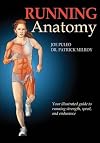
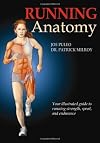
See how to improve your running strength, speed, and endurance with Running Anatomy, Second Edition. This new edition of the best-selling running guide delivers more exercises, more insight, and more illustrations to show you how to increase your muscle strength, optimize the efficiency of your running motion, and minimize your risk of injury.Running Anatomy features 48 of the most effective strength exercises for runners, each with clear step-by-step descriptions and full-color anatomical show more illustrations highlighting the muscles in action. Each illustration helps you better understand how muscles, ligaments, and tendons all work together as your body moves.
Running Anatomy clearly links each exercise to running performance. You'll see how to strengthen specific muscles and improve gait efficiency for faster times and more fluid runs. Plus you'll learn how to eliminate anatomical imbalances that can lead to the most common injuries that runners face, including plantar fasciitis, lower-back pain, knee aches and strains, and torn muscles and tendons.
Feel prepared for any challenge that comes your way. You'll find variations to train for every condition and competition—for various terrains, speeds, elevations, and distances, from sprint to marathon. You'll also learn how new gear and technology-enhanced equipment can maximize your training and performance.
Whether you're a fitness runner looking to conquer hills with more speed and strength or a competitive runner looking for that extra edge in performance and a finishing kick, Running Anatomy will ensure that you're ready to achieve your personal best.
Earn continuing education credits/units! A continuing education exam that uses this book is also available. It may be purchased separately or as part of a package that includes both the book and exam.
. Sports & Recreations. Nonfiction. show less
Tags
Recommendations



Member Reviews
Running anatomy : Your illustrated guide to running strength, speed, and endurance / Joe Puleo and Dr. Patrick Milroy. Champaign, IL : Human Kinetics, c2010
Disclosure: I got a copy of this book for free via the LibraryThing Early Reviewers program.
My qualifications to review this book: Back in the day I was an Army Master Fitness Trainer and was also certified by the American College of Sports Medicine (ACSM) as a fitness trainer. I have been an on again, off again distance runner for over 35 years.
Review: Simply stated, this is an excellent book. Back when I was actively engaged in fitness training and acquiring resources I would have paid really good money for this book, assuming I had been able to peruse it beforehand.
The authors show more claim 3 goals:
1. "[T]he illustrations … are meant to aid the runner in understanding the anatomy impacted when the runner is in motion" and "to further the runner's understanding of how" the anatomy "work[s] to move the body." (vii)
2. Show the significance of strengthening the body via strength training. (vii)
3. Provide exercises that "will improve running performance and help to keep the runner injury-free by eliminating anatomical imbalances …." (vii).
The book does exactly what it claims and does it in a clear, comprehensive, and understandable way. The illustrations are excellent and support the text.
The opening chapters discuss "The Evolution of the Human Runner," "Cardiovascular and Cardiorespiratory Components," "The Runner in Motion," and "Adaptations for Speed and Terrain." Some resources spend more time on these topics but the presentation by the authors of this book are fully detailed, while being concise enough to leave more room for the heart of the work, which follows.
The next 5 chapters cover the "Upper Torso," "Arms and Shoulders," "Core," "Upper Legs," and "Lower Legs and Feet." Each chapter begins with a discussion of the appropriate anatomy, to include illustrations, moves into a discussion of why this area is important to a runner and what can go wrong, and then focuses on specific training recommendations. The core of each chapter is then comprised of recommended strength training exercises for the area. Each exercise includes discussion of proper execution, the primary and secondary muscles involved, the running focus, any safety tips, and any exercise variations.
The authors have done an amazing job of bringing together all of the important and relevant knowledge about a specific exercise via their accompanying descriptions and illustrations, and they have done so clearly and concisely. Back when I was actively pursuing this field I had to synthesize this sort of knowledge from many sources and could never find it all in one source, unless it was one that was poorly arranged and inconvenient to use.
The remaining chapters cover "Common Running Injuries," "Anatomy of Running Footwear," and "Full-Body Conditioning." These chapters, while also short, adequately serve as an introduction to the topics.
The one thing that I feel is seriously missing from the text are recommended sources, especially for the opening and closing chapters which are only able to serve as introductions to their topics. The authors must be familiar with quality sources to address these areas in more detail. Human Kinetics certainly publishes many fine books which should serve the purpose adequately.
I see that this book is one of many in Human Kinetics Anatomy Series. Other books include Yoga, Stretching, Dance, Cycling, Swimming, and so on. If these books are of the same quality as this one then they ought to serve as excellent introductions to the anatomy of, and strength training for, these endeavors.
Overall I highly recommend this book to any runner interested in the anatomy of their sport and a clear and concise description of how to incorporate strength training to improve their performance. show less
Disclosure: I got a copy of this book for free via the LibraryThing Early Reviewers program.
My qualifications to review this book: Back in the day I was an Army Master Fitness Trainer and was also certified by the American College of Sports Medicine (ACSM) as a fitness trainer. I have been an on again, off again distance runner for over 35 years.
Review: Simply stated, this is an excellent book. Back when I was actively engaged in fitness training and acquiring resources I would have paid really good money for this book, assuming I had been able to peruse it beforehand.
The authors show more claim 3 goals:
1. "[T]he illustrations … are meant to aid the runner in understanding the anatomy impacted when the runner is in motion" and "to further the runner's understanding of how" the anatomy "work[s] to move the body." (vii)
2. Show the significance of strengthening the body via strength training. (vii)
3. Provide exercises that "will improve running performance and help to keep the runner injury-free by eliminating anatomical imbalances …." (vii).
The book does exactly what it claims and does it in a clear, comprehensive, and understandable way. The illustrations are excellent and support the text.
The opening chapters discuss "The Evolution of the Human Runner," "Cardiovascular and Cardiorespiratory Components," "The Runner in Motion," and "Adaptations for Speed and Terrain." Some resources spend more time on these topics but the presentation by the authors of this book are fully detailed, while being concise enough to leave more room for the heart of the work, which follows.
The next 5 chapters cover the "Upper Torso," "Arms and Shoulders," "Core," "Upper Legs," and "Lower Legs and Feet." Each chapter begins with a discussion of the appropriate anatomy, to include illustrations, moves into a discussion of why this area is important to a runner and what can go wrong, and then focuses on specific training recommendations. The core of each chapter is then comprised of recommended strength training exercises for the area. Each exercise includes discussion of proper execution, the primary and secondary muscles involved, the running focus, any safety tips, and any exercise variations.
The authors have done an amazing job of bringing together all of the important and relevant knowledge about a specific exercise via their accompanying descriptions and illustrations, and they have done so clearly and concisely. Back when I was actively pursuing this field I had to synthesize this sort of knowledge from many sources and could never find it all in one source, unless it was one that was poorly arranged and inconvenient to use.
The remaining chapters cover "Common Running Injuries," "Anatomy of Running Footwear," and "Full-Body Conditioning." These chapters, while also short, adequately serve as an introduction to the topics.
The one thing that I feel is seriously missing from the text are recommended sources, especially for the opening and closing chapters which are only able to serve as introductions to their topics. The authors must be familiar with quality sources to address these areas in more detail. Human Kinetics certainly publishes many fine books which should serve the purpose adequately.
I see that this book is one of many in Human Kinetics Anatomy Series. Other books include Yoga, Stretching, Dance, Cycling, Swimming, and so on. If these books are of the same quality as this one then they ought to serve as excellent introductions to the anatomy of, and strength training for, these endeavors.
Overall I highly recommend this book to any runner interested in the anatomy of their sport and a clear and concise description of how to incorporate strength training to improve their performance. show less
 This review was written for LibraryThing Early Reviewers.
This book will be helpful for runners who are interested in learning more about the human body and how it runs. There are clear diagrams of muscles, connective tissue, and bones along with descriptions of their functions and how they support each other as the body runs.
The bulk of the book is made up of strength training exercises. The authors detail how to do each exercise, what muscles are being strengthened, and how those muscles support the runner. They point out how weaknesses in some muscles not typically associated with running can throw the body out of balance, causing runners to be inefficient and/or injure themselves.
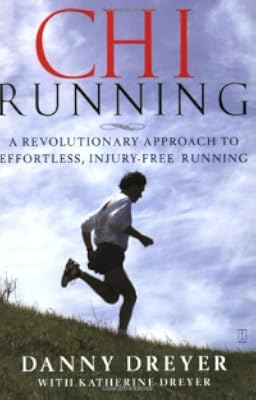
I only have a couple minor quibbles with the book. First, the authors don't get into proper running form and show more mention heel-striking as the normal way of running. As someone who has benefited from ending heel-striking and moving to a ChiRunning/Pose Method-type of running form, I was disappointed to see this.
Second, I have been through physical therapy for running injuries a few times and have been taught to focus mostly on upper-body workouts that rely on body weight to build strength for endurance. The vast majority of strength-training exercises in this book are with weights and seem targeted towards sprinters rather than distance-runners. The authors nicely explain how distance runners should focus the exercises for endurance, but I wish they had chosen to detail more exercises specifically for distance runners. After all, the vast majority of runners are casual amateurs who run long distances and are looking to prevent injuries and become more efficient--not sprinters who are trying to increase their power. show less
The bulk of the book is made up of strength training exercises. The authors detail how to do each exercise, what muscles are being strengthened, and how those muscles support the runner. They point out how weaknesses in some muscles not typically associated with running can throw the body out of balance, causing runners to be inefficient and/or injure themselves.
I only have a couple minor quibbles with the book. First, the authors don't get into proper running form and show more mention heel-striking as the normal way of running. As someone who has benefited from ending heel-striking and moving to a ChiRunning/Pose Method-type of running form, I was disappointed to see this.
Second, I have been through physical therapy for running injuries a few times and have been taught to focus mostly on upper-body workouts that rely on body weight to build strength for endurance. The vast majority of strength-training exercises in this book are with weights and seem targeted towards sprinters rather than distance-runners. The authors nicely explain how distance runners should focus the exercises for endurance, but I wish they had chosen to detail more exercises specifically for distance runners. After all, the vast majority of runners are casual amateurs who run long distances and are looking to prevent injuries and become more efficient--not sprinters who are trying to increase their power. show less
This review was written for LibraryThing Early Reviewers.Running Anatomy by Joe Puleo and Dr. Patrick Milroy
This is a marvelous book for anyone interested in running.
Beautifully illustrated, it explains the science of running in
ways I'd never seen before. From training regimens to shoes and
orthotics it scientifically explains how things work.
The biggest portion of the book goes into detail about which muscles
are involved in every aspect of running, from the push-off of your
foot to how you carry your arms. Then for each area it gives specific
exercises to build strength and balance, along with wonderful illustrations.
I wish I'd had this book when I was younger and still trying to improve my
performances. Anyone who's interested in improving their performace, avoiding
injuries or even figuring show more out which type of shoe last they should look for
should pick up a copy of this book! show less
This is a marvelous book for anyone interested in running.
Beautifully illustrated, it explains the science of running in
ways I'd never seen before. From training regimens to shoes and
orthotics it scientifically explains how things work.
The biggest portion of the book goes into detail about which muscles
are involved in every aspect of running, from the push-off of your
foot to how you carry your arms. Then for each area it gives specific
exercises to build strength and balance, along with wonderful illustrations.
I wish I'd had this book when I was younger and still trying to improve my
performances. Anyone who's interested in improving their performace, avoiding
injuries or even figuring show more out which type of shoe last they should look for
should pick up a copy of this book! show less
This review was written for LibraryThing Early Reviewers.Running Anatomy offers a valuable reference work to anyone interested in running, ranging from beginners to serious athletes.
Introductory chapters present basics of exercise physiology, performance training, and kinetics, and discuss various issues that affect running performance.
However, the bulk of the book is devoted to 50 exercises designed to strengthen particular muscle groups. Here is where the book excels; the large color diagrams that accompany each exercise illustrate (using separate colors) the primary and secondary muscles trained by each. The exercises are not confined to lower limbs; on the contrary, they offer a full body workout, with separate ones devoted to upper torso, arms & shoulders, "core" (back and abdomen), show more upper legs, and lower legs & feet. Readers who are uncertain how particular regions of arms, upper torso, and abdomen constribute to running performance will find explanation under each exercise in special sections labelledd "Running Focus". The book also discusses running injuries and how to prevent them, as well as footwear and overall body conditioning.
The text is clear and straightforward; the diagrams are beautifully rendered; and as a whole, the work is full of accurate and useful information. Newcomers to running will find this work an invaluable resource. Although experienced runners and readers of Runner's World may be familiar with much of the basic information, they will benefit from having all this information in one place, along with the 50 exercises presented herein.
Running Anatomy is one of an extensive series of reference works published by Human Kinetics, which bills itself as "The Premier Publisher for Sports & Fitness". Others in the series focus include Swimming Anatomy, Cycling Anatomy, Dance Anatomy, Bodybuilding Anatomy, Yoga Anatomy, and others. show less
Introductory chapters present basics of exercise physiology, performance training, and kinetics, and discuss various issues that affect running performance.
However, the bulk of the book is devoted to 50 exercises designed to strengthen particular muscle groups. Here is where the book excels; the large color diagrams that accompany each exercise illustrate (using separate colors) the primary and secondary muscles trained by each. The exercises are not confined to lower limbs; on the contrary, they offer a full body workout, with separate ones devoted to upper torso, arms & shoulders, "core" (back and abdomen), show more upper legs, and lower legs & feet. Readers who are uncertain how particular regions of arms, upper torso, and abdomen constribute to running performance will find explanation under each exercise in special sections labelledd "Running Focus". The book also discusses running injuries and how to prevent them, as well as footwear and overall body conditioning.
The text is clear and straightforward; the diagrams are beautifully rendered; and as a whole, the work is full of accurate and useful information. Newcomers to running will find this work an invaluable resource. Although experienced runners and readers of Runner's World may be familiar with much of the basic information, they will benefit from having all this information in one place, along with the 50 exercises presented herein.
Running Anatomy is one of an extensive series of reference works published by Human Kinetics, which bills itself as "The Premier Publisher for Sports & Fitness". Others in the series focus include Swimming Anatomy, Cycling Anatomy, Dance Anatomy, Bodybuilding Anatomy, Yoga Anatomy, and others. show less
This review was written for LibraryThing Early Reviewers.I was super excited to get this one. I’ve been a somewhat serious runner since 1994, running moderate distances (anywhere from three to seven miles at a clip) and have recently returned to a regular running schedule after a six month hiatus. I figured a more technical text would give me the edge to improve my speed and distances.
Unfortunately, this one is a bit too technical for my taste.
While it does include a lot of weight training routines designed to build the muscles needed for strength, speed and general good running form, I feel as if I’ve seen all this information elsewhere - like Runner’s World or Women’s Fitness magazines. It’s nice to have it all in one place, I suppose, but it feels a bit redundant to me. As far show more as the opening chapters of the book, this was where I kind of zoned out. I imagine a coach or seriously competitive runner might find a lot of really great stuff here, but I was having a difficult time concentrating on sections with titles like, "Results of the Training Progression Model," and "Event Specific Body Characteristics."
I think this is a great resource for dedicated athletes interested in serious training, but I’m not really qualified to review it from that perspective. For a casual runner like myself, I’d recommend skipping the first third of the book, which is a bit intimidating, and focusing on the weight training information in the back, particularly the butt-kicking core and lower body workouts, which I’ve begun to incorporate into my new, tougher, regimen. Hopefully, this will be just the thing to get me back in top form. show less
Unfortunately, this one is a bit too technical for my taste.
While it does include a lot of weight training routines designed to build the muscles needed for strength, speed and general good running form, I feel as if I’ve seen all this information elsewhere - like Runner’s World or Women’s Fitness magazines. It’s nice to have it all in one place, I suppose, but it feels a bit redundant to me. As far show more as the opening chapters of the book, this was where I kind of zoned out. I imagine a coach or seriously competitive runner might find a lot of really great stuff here, but I was having a difficult time concentrating on sections with titles like, "Results of the Training Progression Model," and "Event Specific Body Characteristics."
I think this is a great resource for dedicated athletes interested in serious training, but I’m not really qualified to review it from that perspective. For a casual runner like myself, I’d recommend skipping the first third of the book, which is a bit intimidating, and focusing on the weight training information in the back, particularly the butt-kicking core and lower body workouts, which I’ve begun to incorporate into my new, tougher, regimen. Hopefully, this will be just the thing to get me back in top form. show less
This review was written for LibraryThing Early Reviewers.It's tough to write something different about the sport of running. The beauty of this book is in the illustrations that rival some medical books. This is especially important in the sections on strength exercises. The illustrations are much better than any photos. From their impressive bios the authors Joe Puleo and Dr. Patrick Milroy are well qualified to write on the subject. Their message is that to improve your running you must gain specific muscular strength. Muscle inbalance is a problem and as they quote you are only as strong as your weakest link. Being a runner for more than 25 years and a veteren marathoner myself I didn't think I would find anything new but I did find the complete muscular skeletal system and how the bodys show more muscles works together very interesting. Any beginning runner would certianly benefit from all the exercises that are well illustrated and explained. Each exercise also explains how it specifically benefits running form. show less
This review was written for LibraryThing Early Reviewers.A deceptively simple book, Running Anatomy is a resource that all runners should have on their shelves. The premise of the book is that, in order to run most effectively, athletes should have a sense of how the body functions when running, and should partake in exercises designed to enhance the whole body.
As such, it's not a book of running exercises, but rather exercises to be done with weights and resistance, either in a gym or at home. A non-runner would probably find them useful as well, as all of them are clearly illustrated (with the affected muscle groups highlighted) and most require at most minimal equipment.
The book is well-illustrated, with drawings of anatomy and of runners of both genders (this is, in fact, one of the show more more balanced treatments of female athletes I've seen). Most of them are white, but there are a couple of runners that lend a small amount of diversity to the images.
At the end of the book is a discussion about equipment - which pretty much just means shoes - but it contains something that I, as a casual minimalist runner, appreciate - a short mention of barefoot running, and the benefits of doing so. (Someone should tell the authors about Vibram's Five Fingers line, however.)
The only thing that the book lacks is a good index. There is a list of exercises at the back of the book, but, speaking as an indexer-in-training, that's not at all the same thing. show less
As such, it's not a book of running exercises, but rather exercises to be done with weights and resistance, either in a gym or at home. A non-runner would probably find them useful as well, as all of them are clearly illustrated (with the affected muscle groups highlighted) and most require at most minimal equipment.
The book is well-illustrated, with drawings of anatomy and of runners of both genders (this is, in fact, one of the show more more balanced treatments of female athletes I've seen). Most of them are white, but there are a couple of runners that lend a small amount of diversity to the images.
At the end of the book is a discussion about equipment - which pretty much just means shoes - but it contains something that I, as a casual minimalist runner, appreciate - a short mention of barefoot running, and the benefits of doing so. (Someone should tell the authors about Vibram's Five Fingers line, however.)
The only thing that the book lacks is a good index. There is a list of exercises at the back of the book, but, speaking as an indexer-in-training, that's not at all the same thing. show less
This review was written for LibraryThing Early Reviewers.Members
- Recently Added By
Lists

Human Kinetics
45 works; 1 member
Author Information

1 Work 88 Members
Classifications
- Genres
- Sports and Leisure, Nonfiction, Health & Wellness, General Nonfiction
- DDC/MDS
- 796.42 — Arts & recreation Recreation, sports, and performing arts Athletic and outdoor sports and games Olympic sports Track events, running; General track and field
- LCC
- GV1061.5 .P85 — Geography, Anthropology and Recreation Recreation. Leisure Recreation. Leisure Sports Track and field athletics
- BISAC
Statistics
- Members
- 87
- Popularity
- 363,994
- Reviews
- 12
- Rating
- (3.57)
- Languages
- Chinese, English, Italian
- Media
- Paper, Ebook
- ISBNs
- 14
- ASINs
- 1