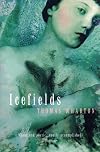
Icefields
by Thomas Wharton
On This Page
Description
On an expedition in the Canadian Rockies at the end of the nineteenth century, Dr Edward Byrne slips and falls almost 60 feet into a crevasse on the Arcturus Glacier. While trapped, hanging upside down and wary that the slightest movement could send him plunging deeper into the abyss, Byrne notices a mysterious winged figure embedded in the ice wall. The vision shakes his sanity, and after his recovery continues to haunt him until he abandons his fiancee and his medical practice in England show more and returns to a lonely vigil in a shack near the spot on the ice where he almost lost his life. His spirit trapped, he seeks the truth by questioning closely the strange characters that cross his path and meticulously recording the advance and decline of the myths and legends of an early settlement and is transformed by the coming of the railroad into a thriving tourist centre - with an impact as far away as the battlefields for the First World War.. show less
Tags
Recommendations




















Member Recommendations

Member Reviews
That's what he called himself once, the summer her left for the war, and I'd laughed. Glaciologist. I'd never heard the word before. I'd never considered there might be others like him, scientists who studied only glaciers. I thought he was the one man on earth who bothered that much with them, that this science was his alone, that he had invented it. Arcturology. The science of being distant, and receding a little every year.
The book takes place during the first two decades of the last century in what was to become Jasper National Park in Alberta, Canada. Byrne, a doctor, was exploring the region when he falls into into a crevasse on the Arcturus glacier. In the time it takes his group to notice his absence and haul him out, he sees show more something in the ice; a pale figure with huge wings. The image haunts him, even as he is rescued, revived and returned to London. Years later he is drawn back to the glacier and the book chronicles his life studying the ice and the other people who live for awhile at the hot springs hotel built at its foot. Evocative, poetic and strange, this is one of the most interesting books I've read this year.
I will admit to a bias; I spent almost every childhood holiday in the area and have been up on the Athabasca glacier. Every place name was resonant with memory. It's a spectacularly beautiful, fragile area and Wharton's descriptions of the first residents of the region and the conditions under which they lived, a peculiar mixture of Victorian gentility and wilderness was fascinating. Alongside Byrne, Icefields tells the story of a poet come west to be a guide, a servant girl who takes charge of the running of a hotel and develops a relationship of sorts with Byrne, an intrepid female explorer and a tracker turned entrepreneur who sees opportunity in the coming railway. show less
The book takes place during the first two decades of the last century in what was to become Jasper National Park in Alberta, Canada. Byrne, a doctor, was exploring the region when he falls into into a crevasse on the Arcturus glacier. In the time it takes his group to notice his absence and haul him out, he sees show more something in the ice; a pale figure with huge wings. The image haunts him, even as he is rescued, revived and returned to London. Years later he is drawn back to the glacier and the book chronicles his life studying the ice and the other people who live for awhile at the hot springs hotel built at its foot. Evocative, poetic and strange, this is one of the most interesting books I've read this year.
I will admit to a bias; I spent almost every childhood holiday in the area and have been up on the Athabasca glacier. Every place name was resonant with memory. It's a spectacularly beautiful, fragile area and Wharton's descriptions of the first residents of the region and the conditions under which they lived, a peculiar mixture of Victorian gentility and wilderness was fascinating. Alongside Byrne, Icefields tells the story of a poet come west to be a guide, a servant girl who takes charge of the running of a hotel and develops a relationship of sorts with Byrne, an intrepid female explorer and a tracker turned entrepreneur who sees opportunity in the coming railway. show less
At the end of the nineteenth century, a British doctor falls down a crevasse in a glacier in the Canadian north. Before he is rescued, he thinks that he sees an angel trapped in the ice. After he returns to the UK, he finds it hard to get the image out of his head, and returns to Jasper, the town below the glacier. At this point the story widens out to the lives of the other people who live in Jasper - and what they seek in the desolate landscape.
There are some things I loved about this book. For example, the first few sections of the book mirror Dr Byrne's mental state - short, choppy pieces in section one as if he is drifting in and out of consciousness, and the surreal beauties when he is first drawn back - a hotel keeper making it show more snow inside her glasshouse, or the statue of a saint lodged upright on a sandbar after a flood. Like many books set in icy environments, the deceptive, treacherous landscape is a metaphor for the psychology of the characters, but this book also truly brings out the beauty of the ice, the imperceptibly changing landscape - frost needles and ice flowers, or the lake that forms briefly of meltwater on top of the glacier.
However, I found the structure a bit disconcerting, with the focus on Byrne opening out to an ensemble piece. It was an enjoyable, easy read, but I didn't feel that I got enough inside the heads of any of the characters.
Sample sentence: When the sun breaks through cloud, the cathedral fills with light. The warmer air hollows it into a more baroque, flamboyant shape. Spires, archways, gargoyles begin to flow. Waterfalls set festive ice bells ringing. Then, slowly, the delicate balance that kept it aloft is undermined. Even as light glorifies it, the cathedral is diminished, beings almost imperceptibly to collapse. Sepulchral booms and crashes attest to hidden vaults and hollows, the shifting instability of the foundation. show less
There are some things I loved about this book. For example, the first few sections of the book mirror Dr Byrne's mental state - short, choppy pieces in section one as if he is drifting in and out of consciousness, and the surreal beauties when he is first drawn back - a hotel keeper making it show more snow inside her glasshouse, or the statue of a saint lodged upright on a sandbar after a flood. Like many books set in icy environments, the deceptive, treacherous landscape is a metaphor for the psychology of the characters, but this book also truly brings out the beauty of the ice, the imperceptibly changing landscape - frost needles and ice flowers, or the lake that forms briefly of meltwater on top of the glacier.
However, I found the structure a bit disconcerting, with the focus on Byrne opening out to an ensemble piece. It was an enjoyable, easy read, but I didn't feel that I got enough inside the heads of any of the characters.
Sample sentence: When the sun breaks through cloud, the cathedral fills with light. The warmer air hollows it into a more baroque, flamboyant shape. Spires, archways, gargoyles begin to flow. Waterfalls set festive ice bells ringing. Then, slowly, the delicate balance that kept it aloft is undermined. Even as light glorifies it, the cathedral is diminished, beings almost imperceptibly to collapse. Sepulchral booms and crashes attest to hidden vaults and hollows, the shifting instability of the foundation. show less
[Icefields] is a beautiful book—a beautifully written book—a literary expedition into the wondrous and the mysterious: the glassy Arcturus Glacier and the human soul.
The book begins in 1898,. The English medical doctor Edward Byrne, part of an expedition exploring the icefields, falls into a chasm and is pinned upside down. As he edges near unconsciousness he sees something in the blue ice that will forever connect him to this mountain and glacier in the Canadian Rockies of Alberta (near Jasper). Edward is rescued by the other expedition members and is brought to the cabin of the dark-skinned Sara, a “woman with stories,” to recover.
Edward is quiet and thoughtful, a man of science. His medical training provides him with the show more means to support himself on the frontier, while he pursues his other interests. The story follows Edward’s life while it also paints a rich portrait of the wider landscape: the settlements of the area and the interesting characters who populate it—all of which Edward is a part of.
This is an immensely satisfying story. There is an intense sense of place and Edward is the everyman connecting us to it. There is also something dreamlike, ethereal, or spiritual about it, both in tale and tone. The descriptions of the icefields have a kind of reverence or wonderment in them, and there is a great sense of history, both tangible and intangible, perhaps best expressed in the book’s epigraph: “As if everything in the world is the history of ice.” (Michael Ondaatje in Coming Through the Slaughter) But, I don’t mean to suggest the story floats off the pages, it’s wonderfully balanced, the ethereal tethered to the leathery stories of fur-trading, frontier subsistence, immerging settlements, “iron horses,” and World War I.
Above the dark slope of the valley rose the mountains. Byrne raised a hand to shade his eyes, grown accustomed to the cabin’s cave-like gloom, against their painful brilliance. For a moment he could not believe in these hard, unfathomable masses of rock. They seemed to hang suspended in the sky. A quick, cold breath might shatter them like an illusion of ice crystals and light.
Squinting, he picked out the crevasses and icefalls of Arcturus glacier. From this distance they seemed only delicate, spidery wrinkles in pale blue silk. Above them gleamed the white rim of the névé, where the glacier spilled from a gap between the flanking peaks. A slender curve of burning snow.
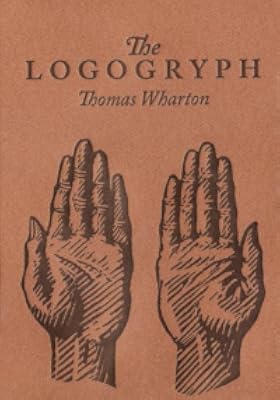
I chased down this book after I read Wharton’s The Logograph in 2006. I started it back then but set it aside after a few chapters, perhaps it was not the right book for the moment, or perhaps I was distracted by something else. Icefields is a very different kind of book than The Logogryph, but equally enjoyable. I’m sorry it took so long for me to get back to it. show less
The book begins in 1898,. The English medical doctor Edward Byrne, part of an expedition exploring the icefields, falls into a chasm and is pinned upside down. As he edges near unconsciousness he sees something in the blue ice that will forever connect him to this mountain and glacier in the Canadian Rockies of Alberta (near Jasper). Edward is rescued by the other expedition members and is brought to the cabin of the dark-skinned Sara, a “woman with stories,” to recover.
Edward is quiet and thoughtful, a man of science. His medical training provides him with the show more means to support himself on the frontier, while he pursues his other interests. The story follows Edward’s life while it also paints a rich portrait of the wider landscape: the settlements of the area and the interesting characters who populate it—all of which Edward is a part of.
This is an immensely satisfying story. There is an intense sense of place and Edward is the everyman connecting us to it. There is also something dreamlike, ethereal, or spiritual about it, both in tale and tone. The descriptions of the icefields have a kind of reverence or wonderment in them, and there is a great sense of history, both tangible and intangible, perhaps best expressed in the book’s epigraph: “As if everything in the world is the history of ice.” (Michael Ondaatje in Coming Through the Slaughter) But, I don’t mean to suggest the story floats off the pages, it’s wonderfully balanced, the ethereal tethered to the leathery stories of fur-trading, frontier subsistence, immerging settlements, “iron horses,” and World War I.
Above the dark slope of the valley rose the mountains. Byrne raised a hand to shade his eyes, grown accustomed to the cabin’s cave-like gloom, against their painful brilliance. For a moment he could not believe in these hard, unfathomable masses of rock. They seemed to hang suspended in the sky. A quick, cold breath might shatter them like an illusion of ice crystals and light.
Squinting, he picked out the crevasses and icefalls of Arcturus glacier. From this distance they seemed only delicate, spidery wrinkles in pale blue silk. Above them gleamed the white rim of the névé, where the glacier spilled from a gap between the flanking peaks. A slender curve of burning snow.
I chased down this book after I read Wharton’s The Logograph in 2006. I started it back then but set it aside after a few chapters, perhaps it was not the right book for the moment, or perhaps I was distracted by something else. Icefields is a very different kind of book than The Logogryph, but equally enjoyable. I’m sorry it took so long for me to get back to it. show less
In 1898 Dr. Edward Byrne fell into a crevass on a glacier in the Canadian Rockies. As he dangled head down he glimpsed in the blue-green ice what appeared to be a human figure with wings. He is rescued and, haunted by this vision, spends the rest of his life seeking to solve the mystery of what he saw.
This book is beautifully and poetically written, and tells the story of Edward's life and quest in a non-chronological way. A wide array of characters cross paths with Edward in the remote area in which Edward studies the glacier. (The area is based on the Jasper National Park in Alberta). With its location and central event, this could have been treated as an action or true-adventure story. Instead, the author has quietly conveyed one show more man's search for meaning in his life.
This book won the Commonwealth Best First Novel Prize (Caribbean and Canada Region). show less
This book is beautifully and poetically written, and tells the story of Edward's life and quest in a non-chronological way. A wide array of characters cross paths with Edward in the remote area in which Edward studies the glacier. (The area is based on the Jasper National Park in Alberta). With its location and central event, this could have been treated as an action or true-adventure story. Instead, the author has quietly conveyed one show more man's search for meaning in his life.
This book won the Commonwealth Best First Novel Prize (Caribbean and Canada Region). show less
During a glacial expedition, Dr. Byrne has an accident which lands him upside down in a crevasse, where he thinks he sees something trapped in the ice. Rescued, his life then goes on, yet he obsesses over the image.
Immense pressure, coupled with extreme cold. Combining to produce hitherto unknown effects on matter. Or upon spirit. The possibility of a spiritual entity trapped, frozen, in ice. Enmeshed somehow in physical forces, immobilized, and thus rendered physical and solid itself. … And when it melted out of the ice, would it then just sublimate back into metaphysical space, leaving human time and scientific measurement behind? If I could be there, observe it, at the moment of escape.
Eventually dropping everything else, he show more becomes a glaciologist, spending summers encamped at the terminus of 'his' glacier. Because, Glaciers are rivers. During his years awaiting the moment of escape, he keeps a journal of his activities around the icefield. The reader learns a great deal about glaciers and some history of Canada. The story contains relationships, anecdotes of remote tourism, and beautifully told descriptions of wild Canada.
I enjoyed the story, the writing, the characters, and especially the setting. (3.8 stars) show less
Immense pressure, coupled with extreme cold. Combining to produce hitherto unknown effects on matter. Or upon spirit. The possibility of a spiritual entity trapped, frozen, in ice. Enmeshed somehow in physical forces, immobilized, and thus rendered physical and solid itself. … And when it melted out of the ice, would it then just sublimate back into metaphysical space, leaving human time and scientific measurement behind? If I could be there, observe it, at the moment of escape.
Eventually dropping everything else, he show more becomes a glaciologist, spending summers encamped at the terminus of 'his' glacier. Because, Glaciers are rivers. During his years awaiting the moment of escape, he keeps a journal of his activities around the icefield. The reader learns a great deal about glaciers and some history of Canada. The story contains relationships, anecdotes of remote tourism, and beautifully told descriptions of wild Canada.
I enjoyed the story, the writing, the characters, and especially the setting. (3.8 stars) show less
A lyrical story of obsession, exploration, and, most centrally, glaciers. A young British doctor, Ned Byrne, takes part in an 1898 expedition to a glacier in Alberta (Canada), during which he falls into a crevasse and sees what he thinks is an angel embedded in the ice. He spends part of each of the next 25 years trying to determine when the ice around the now-closed crevasse (and angel) will reach the end of the glacier and melt. The story interweaves Byrne's life with those of other characters from around the glacier: a young Indian woman who tells him tales of the past while he recovers from his injuries in her cabin; an ex-guide turned guesthouse entrepreneur who wants to encourage tourism to the glacier; the guesthouse's manager, show more with whom Byrne begins an ongoing relationship; and a world famous female alpinist and the young guide who becomes infatuated with her.
None of the characters are revealed deeply to the reader, and the author uses dashes rather than quotes to indicate dialogue, increasing the sense of distance. The glacier is the main character. The writing is gorgeous, especially the voice used for Byrne's private notebooks, although one of my favorite passages is from Hal, the young guide, discussing his lover: "She travels like the meandering heroine of a novel for children, shrugging off the entanglements of one chapter and moving on to the next, never stopping long enough in one place for it habits of defeat and cynicism to cling to her." show less
None of the characters are revealed deeply to the reader, and the author uses dashes rather than quotes to indicate dialogue, increasing the sense of distance. The glacier is the main character. The writing is gorgeous, especially the voice used for Byrne's private notebooks, although one of my favorite passages is from Hal, the young guide, discussing his lover: "She travels like the meandering heroine of a novel for children, shrugging off the entanglements of one chapter and moving on to the next, never stopping long enough in one place for it habits of defeat and cynicism to cling to her." show less
This really is the story of the Arcturus Glacier, one of the glaciers in the Columbia Icefields. The story starts in 1898 when a climbing party from England decides to ascend the glacier. Dr. Edward Byrne slips into a crevasse but is caught part way down. While down in the crevasse waiting for rescue he believes he sees an angel in the ice. This experience haunts him so he continues to return to Jasper to study the glacier. Another person haunted by the glacier is Freya Becker, daughter of a rich man, who travels the world looking for new experiences to write magazine articles about. She also returns year after year and one person who anticipates her arrival is Hal Rawson, a guide at the Hot Springs Chalet. Hal is a poet but he can't show more write about Freya or the Icefields. The most grounded of the main characters is Elspeth Fletcher, a Scotswoman who also works at the Chalet. She loves Byrne but realizes the glacier is his main passion and she seems content to receive the bit he is able to give her.
Having travelled the Icefields Parkway a number of times I had a constant picture of the landscape in my mind as I read. However, I know that the surroundings must have been considerably different at the time this book takes place. Nevertheless I can see becoming bewitched by the area like Byrne and Freya. Wharton has conveyed the magical impression left by viewing those fields of ice perfectly.
I would recommend this book highly and even if it doesn't win the Canada Reads competition it is a winner in my mind. The great thing about Canada Reads is that it brings to my attention books I might never have heard of otherwise.
I will pass this on to my sister after my book club meeting and then maybe it will be released during the Canada Day release challenge. show less
Having travelled the Icefields Parkway a number of times I had a constant picture of the landscape in my mind as I read. However, I know that the surroundings must have been considerably different at the time this book takes place. Nevertheless I can see becoming bewitched by the area like Byrne and Freya. Wharton has conveyed the magical impression left by viewing those fields of ice perfectly.
I would recommend this book highly and even if it doesn't win the Canada Reads competition it is a winner in my mind. The great thing about Canada Reads is that it brings to my attention books I might never have heard of otherwise.
I will pass this on to my sister after my book club meeting and then maybe it will be released during the Canada Day release challenge. show less
Members
- Recently Added By
Lists

Top Five Books of 2013
1,562 works; 715 members

Boarding House and Hotel Fiction
73 works; 25 members

Canada Reads Winners and Nominees
129 works; 9 members
Author Information

Awards and Honors
Awards
Series
Belongs to Publisher Series
Common Knowledge
- Canonical title
- Icefields
- Original title
- Icefields
- Original publication date
- 1995
- People/Characters
- Ned Byrne; Freya; Elspeth; Trask; Hal Rawson; Sara
- Important places
- Jasper, Alberta, Canada; Alberta, Canada; Arcturus Glacier, Alberta, Canada
- Epigraph
- As if everything in the world is the history of ice.
------Michael Ondaatje (Coming Through Slaughter) - Dedication
- For my family
- First words
- At a quarter past three in the afternoon, on August 17, 1898, Doctor Edward Byrne slipped on the ice of Arcturus glacier in the Canadian Rockies and slid into a crevasse.
- Quotations
- I'll be a ghost to her. A lesser shade, haunting some room in her memory she hardly ever enters.
Glaciologist. I'd never heard the word before. . . . I thought he was the one man on earth who bothered that much with the, that this science was his alone, that he had invented it. Arcturology. The science of being dista... (show all)nt, and receding a little every year.
The terminus of the glacier is an instructive place. Ceaselessly changing, and yet always the same, like the seashore. Ice streams becoming rivers, mountains wearing down into valleys. The transition zone between two world... (show all)s.
But ice floats, he thought at the time. Where did it go? - Last words
- (Click to show. Warning: May contain spoilers.)I want to show you something rather extraordinary.
- Publisher's editor
- Wiebe, Rudy
- Blurbers
- Hodgins, Jack
- Original language
- English
Classifications
- Genres
- General Fiction, Fiction and Literature, Historical Fiction
- DDC/MDS
- 813.54 — Literature & rhetoric American literature in English American fiction in English 1900-1999 1945-1999
- LCC
- PR9199.3 .W4277 .I28 — Language and Literature English English Literature English literature: Provincial, local, etc.
- BISAC
Statistics
- Members
- 375
- Popularity
- 83,535
- Reviews
- 17
- Rating
- (3.72)
- Languages
- Dutch, English, French, German
- Media
- Paper, Audiobook, Ebook
- ISBNs
- 15
- ASINs
- 5