On This Page
Description
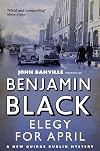
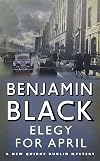
Quirke, a hard-drinking, insatiably curious Dublin pathologist is determined to find his daughter's best friend, a well-connected young doctor. Sober again after intensive treatment for alcoholism, Quirke enlists his old sparring partner, Detective Inspector Hackett, in the search for the missing young woman. Set in Dublin, circa 1950.Tags
Recommendations





























Member Reviews
April Lavery has vanished. A junior doctor at a local hospital, she is something of a trail-blazer in the deeply conservative and highly patriarchal society of 1950s Dublin. Though her family is one of the most respected in the city, she is known for being independent-minded; her taste in men, for instance, is decidedly unconventional, as evidenced by her current boyfriend, a handsome and charismatic medical student from Nigeria.
Then April disappears, and Phoebe Griffin, her best friend, immediately suspects the worst. Frantic, Phoebe seeks out Quirke, her brilliant but erratic father, and asks him for help. Sober again after intensive treatment for alcoholism, Quirke soon learns that his old sparring partner, Detective Inspector show more Hackett, has been assigned to the high-profile case. This time, Hackett welcomes Quirke’s help—the pathologist’s knowledge of the darker byways of the city may allow him to uncover crucial information about April’s whereabouts. And as Quirke becomes deeply involved in April’s murky story, he encounters complicated and ugly truths about race-hatred, Catholic ruthlessness, and family savagery.
Both an absorbing crime novel and a brilliant portrait of the difficult and relentless love between a father and his daughter, this is Benjamin Black at his sparkling best. show less
Then April disappears, and Phoebe Griffin, her best friend, immediately suspects the worst. Frantic, Phoebe seeks out Quirke, her brilliant but erratic father, and asks him for help. Sober again after intensive treatment for alcoholism, Quirke soon learns that his old sparring partner, Detective Inspector show more Hackett, has been assigned to the high-profile case. This time, Hackett welcomes Quirke’s help—the pathologist’s knowledge of the darker byways of the city may allow him to uncover crucial information about April’s whereabouts. And as Quirke becomes deeply involved in April’s murky story, he encounters complicated and ugly truths about race-hatred, Catholic ruthlessness, and family savagery.
Both an absorbing crime novel and a brilliant portrait of the difficult and relentless love between a father and his daughter, this is Benjamin Black at his sparkling best. show less
“Elegy for April” (2010), the third Quirke novel by Benjamin Black (John Banville), once again flawlessly blends literary fiction with genre fiction.
Set in Dublin in the 1950s, the story opens with Quirke, who conducts autopsies by profession, drying out in a clinic. His job is not the only thing that drives him to drink. In Christine Falls, the first book in this series, Quirke finally admits that Phoebe, a young woman raised by someone else, is actually his daughter.
Now Phoebe is worried about a friend, Dr. April Latimer, a member of a prominent Irish family, who has not been seen for several days. She worries that something serious may have happened to her, even though April's own family doesn't seem concerned. In fact, they show more complain when Phoebe tells Quirke, who then tells a friend in the police force. Traces of blood are found in April's flat, suggesting she may have had a miscarriage or an abortion.
No missing-person case is ever formally opened, yet Quirke and Phoebe continue to ask questions, while raising the ire of the Latimer family, more worried about bad publicity than April.
This is hardly a typical murder mystery -- in fact, there is no murder -- yet the tension builds progressively just the same. Some of that tension results from Quirke's relentless struggle with strong drink and his romantic involvement with another of his daughter's friends. There's a hint of comedy, too, mostly involving his purchase of an expensive car even though he lacks both insurance and a driver's license.
Banville once described crime novels as "cheap fiction," implying that he didn't think much of his Benjamin Black novels and wrote them only because they were easy to write and more profitable than his serious fiction. Yet there's nothing cheap about “Elegy for April.“ show less
Set in Dublin in the 1950s, the story opens with Quirke, who conducts autopsies by profession, drying out in a clinic. His job is not the only thing that drives him to drink. In Christine Falls, the first book in this series, Quirke finally admits that Phoebe, a young woman raised by someone else, is actually his daughter.
Now Phoebe is worried about a friend, Dr. April Latimer, a member of a prominent Irish family, who has not been seen for several days. She worries that something serious may have happened to her, even though April's own family doesn't seem concerned. In fact, they show more complain when Phoebe tells Quirke, who then tells a friend in the police force. Traces of blood are found in April's flat, suggesting she may have had a miscarriage or an abortion.
No missing-person case is ever formally opened, yet Quirke and Phoebe continue to ask questions, while raising the ire of the Latimer family, more worried about bad publicity than April.
This is hardly a typical murder mystery -- in fact, there is no murder -- yet the tension builds progressively just the same. Some of that tension results from Quirke's relentless struggle with strong drink and his romantic involvement with another of his daughter's friends. There's a hint of comedy, too, mostly involving his purchase of an expensive car even though he lacks both insurance and a driver's license.
Banville once described crime novels as "cheap fiction," implying that he didn't think much of his Benjamin Black novels and wrote them only because they were easy to write and more profitable than his serious fiction. Yet there's nothing cheap about “Elegy for April.“ show less
The novel is less of a conventional whodunit and more of an atmospheric character study, with a focus on the relationships between the characters, particularly the fragile one between the protagonist, Dr. Quirke, and his recently discovered daughter, Phoebe.
The author has an ability to evoke the mood of 1950s Dublin, with its foggy streets, repressed society, and underlying tensions. His writing is elegant, precise, and beautiful, elevating the book beyond a typical crime novel. While the characters, especially Quirke, are complex and well-developed. The novel delves into Quirke's personal struggles with alcoholism and his difficult relationship with Phoebe, which adds a powerful emotional layer to the story.
Overall, I recommend "Elegy show more for April" for its literary quality and its atmospheric portrayal of a city and its people. show less
The author has an ability to evoke the mood of 1950s Dublin, with its foggy streets, repressed society, and underlying tensions. His writing is elegant, precise, and beautiful, elevating the book beyond a typical crime novel. While the characters, especially Quirke, are complex and well-developed. The novel delves into Quirke's personal struggles with alcoholism and his difficult relationship with Phoebe, which adds a powerful emotional layer to the story.
Overall, I recommend "Elegy show more for April" for its literary quality and its atmospheric portrayal of a city and its people. show less
Benjamin Black's _Elegy for April_ is a well-written, atmospheric mystery. Dublin pathologist Dr. Quirke, at the behest of his daughter Phoebe, has begun to look into the disappearance of a young woman, April. While the mystery aspect of the story is compelling, what makes the book truly shine are the characters, intricately and believably crafted and interconnected. It's very easy to become wrapped up in their lives and care about what happens to them. The setting of Dublin in the 1950s is a character unto itself. A great book, and I'll definitely seek out others in the series. Four stars.
 This review was written for LibraryThing Early Reviewers.
April Lavery has vanished. A junior doctor at a local hospital, she is something of a trail-blazer in the deeply conservative and highly patriarchal society of 1950s Dublin. Though her family is one of the most respected in the city, she is known for being independent-minded; her taste in men, for instance, is decidedly unconventional, as evidenced by her current boyfriend, a handsome and charismatic medical student from Nigeria.
Then April disappears, and Phoebe Griffin, her best friend, immediately suspects the worst. Frantic, Phoebe seeks out Quirke, her brilliant but erratic father, and asks him for help. Sober again after intensive treatment for alcoholism, Quirke soon learns that his old sparring partner, Detective Inspector show more Hackett, has been assigned to the high-profile case. This time, Hackett welcomes Quirke’s help—the pathologist’s knowledge of the darker byways of the city may allow him to uncover crucial information about April’s whereabouts. And as Quirke becomes deeply involved in April’s murky story, he encounters complicated and ugly truths about race-hatred, Catholic ruthlessness, and family savagery.
Both an absorbing crime novel and a brilliant portrait of the difficult and relentless love between a father and his daughter, this is Benjamin Black at his sparkling best. show less
Then April disappears, and Phoebe Griffin, her best friend, immediately suspects the worst. Frantic, Phoebe seeks out Quirke, her brilliant but erratic father, and asks him for help. Sober again after intensive treatment for alcoholism, Quirke soon learns that his old sparring partner, Detective Inspector show more Hackett, has been assigned to the high-profile case. This time, Hackett welcomes Quirke’s help—the pathologist’s knowledge of the darker byways of the city may allow him to uncover crucial information about April’s whereabouts. And as Quirke becomes deeply involved in April’s murky story, he encounters complicated and ugly truths about race-hatred, Catholic ruthlessness, and family savagery.
Both an absorbing crime novel and a brilliant portrait of the difficult and relentless love between a father and his daughter, this is Benjamin Black at his sparkling best. show less
This was my first Quirke (indeed, my first Banville), and perhaps for that reason, it took a while for the setting to establish itself in my mind's eye. But once I realised this was 1950s Dublin, all came into focus and began to make much more sense. Perhaps I should have started at the beginning.
Anyway, although I concede that the plot is rather gentle for this genre, at least for the 2013 reader, the writing is beautiful, far superior to that of most of the crime novels with which I spend my time, and Quirke is a pleasure to meet.
As long as you know you're getting a crime mystery, rather than a police procedural thriller, you won't be disappointed by this. A whole world is convincingly presented, and I'll certainly be heading back show more there soon ... show less
Anyway, although I concede that the plot is rather gentle for this genre, at least for the 2013 reader, the writing is beautiful, far superior to that of most of the crime novels with which I spend my time, and Quirke is a pleasure to meet.
As long as you know you're getting a crime mystery, rather than a police procedural thriller, you won't be disappointed by this. A whole world is convincingly presented, and I'll certainly be heading back show more there soon ... show less
Anything John Banville writes is worth our attention and Elegy for April, the fourth novel published under the pen name Benjamin Black, satisfies on many levels. Ostensibly a who-done-it, the book features a cast of indelibly drawn characters led by troubled pathologist Quirke, who at the behest of his daughter Phoebe reluctantly pokes his nose into a young woman's suspicious disappearance in 1950s Dublin. The mystery is absorbing, but Banville's novel is also about friendship and family and the lengths to which we will go to protect ourselves and those we love from unpleasant truths. Quirke--amiable, inquisitive and impulsive, with a fondness for drink and an abhorrance of unseemly displays of emotion--literally gropes his way through show more the fog as he searches for answers, struggles to control his intake of booze, and tries to repair the strained relationship with his daughter. Perhaps the solution to the puzzle is a bit obvious, but getting there is great fun. show less
Members
- Recently Added By
Published Reviews
ThingScore 75
Mr. Black continues his in depth exploration in the mind of his protagonist Quirke.
In both CHRISTINE FALLS and THE SILVER SWAN it has taken the mind of one whom knows about the darkest sides of life to bring truth and finally conviction and closure to his cases.
This time around his 'daughter' Phoebe in a round about way asks him to check into the vanishing of her friend April a nurse at a show more local hospital...
The deeper Quirke allows his instincts to unravel the mystery....the more the reader feels 'dont venture past the light into the darkness'.
Briskly written with quiet red herrings that become lethal I found myself not wanting to close the book and do something else...
It was like I was privy to a long buried family secret that under no circumstances could be divulged....or unearthed..
Mr. Black's real name minus his non de plume is John Banville, a very talented storyteller and weaver of tomes... show less
In both CHRISTINE FALLS and THE SILVER SWAN it has taken the mind of one whom knows about the darkest sides of life to bring truth and finally conviction and closure to his cases.
This time around his 'daughter' Phoebe in a round about way asks him to check into the vanishing of her friend April a nurse at a show more local hospital...
The deeper Quirke allows his instincts to unravel the mystery....the more the reader feels 'dont venture past the light into the darkness'.
Briskly written with quiet red herrings that become lethal I found myself not wanting to close the book and do something else...
It was like I was privy to a long buried family secret that under no circumstances could be divulged....or unearthed..
Mr. Black's real name minus his non de plume is John Banville, a very talented storyteller and weaver of tomes... show less
added by LelandGaunt
Lists

Llibres que he llegit el 2013
47 works; 1 member

Books Read in 2015
3,299 works; 129 members
Author Information

17 Works 7,590 Members
Series

Work Relationships
Common Knowledge
- Canonical title
- Elegy for April
- Original publication date
- 2010-04-13
- People/Characters
- Quirke; Phoebe Griffin; April Latimer; Jimmy Minor; Patrick Ojukwu; Isabel Galloway (show all 11); Inspector Hackett; Mal Griffin; Oscar Latimer; William Latimer; Celia Latimer
- Important places
- Dublin, Ireland
- First words
- It was the worst of winter weather, and April Latimer was missing.
- Last words
- (Click to show. Warning: May contain spoilers.)"Portobello," Quirke said.
Classifications
Statistics
- Members
- 739
- Popularity
- 38,184
- Reviews
- 54
- Rating
- (3.52)
- Languages
- 7 — Catalan, English, French, German, Italian, Portuguese (Portugal), Spanish
- Media
- Paper, Audiobook, Ebook
- ISBNs
- 38
- ASINs
- 15