On This Page
Tags
Recommendations























Member Reviews
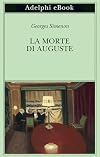
Antoine and his father Auguste have worked hard for twenty years to build up what was just a market-workers' bistro outside Les Halles into a profitable and fashionable restaurant with two stars in Michelin. But when Auguste has a stroke and dies unexpectedly, Antoine realises that he has never talked to his father - still a suspicious old peasant at heart, even after more than sixty years in Paris - about wills or inheritance, and he doesn't even know what his father has done with his share of the earnings from the business. A question that Antoine's two impecunious brothers would like to have answered fairly promptly, and which even leads them to suspect Antoine of cheating them...
This counts as one of Simenon's "straight" novels, not show more a Maigret or even really a crime story in the usual sense, and it's not the technical question of "where's the money?" that drives the plot, but the way in which Antoine has to find a way to handle this annoying (but potentially crucial) irrelevance at the same time as coming face to face with the arbitrary brutality of death and dealing with the normal emotional stresses of the loss of a parent. And, of course, it being Simenon, we get some brief but very telling little glimpses into the restaurant trade, the mentality of Auvergnats who migrated to Paris, and into the lost world of Les Halles, already designated for relocation and redevelopment at the time of writing (it actually happened in 1971). show less
This counts as one of Simenon's "straight" novels, not show more a Maigret or even really a crime story in the usual sense, and it's not the technical question of "where's the money?" that drives the plot, but the way in which Antoine has to find a way to handle this annoying (but potentially crucial) irrelevance at the same time as coming face to face with the arbitrary brutality of death and dealing with the normal emotional stresses of the loss of a parent. And, of course, it being Simenon, we get some brief but very telling little glimpses into the restaurant trade, the mentality of Auvergnats who migrated to Paris, and into the lost world of Les Halles, already designated for relocation and redevelopment at the time of writing (it actually happened in 1971). show less
Simenon paints an arresting picture of a segment of Parisian life about to disappear. The setting is a restaurant at Les Halles, Paris's central market that brings together urban and rural life. Auguste brought to the city the tenacious working habits of the peasant, his cunning and reticence in money matters. When he suddenly dies, an atmosphere of suspicion arises among the heirs, tearing the veil from so-called family feelings. Everyone knows that he lived like a poor man and must have died rich. The secret is solved, dramatically and convincingly. But in the process, not only is Auguste buried but also love and trust between brothers. From the book dustjacket.
Personne ne s’entend vraiment bien, ni mal non plus d’ailleurs. Ils ont été enfants ensemble, ils sont restés frères et… Maintenant que le père est mort ? Les petits sous, les biens, et sous le matelas, et le petit coffre, la banque, le restaurant… ? Ça fait combien tout ça ?
Surpris par le décès du père, mort sans laisser de testament, trois frères se retrouvent (accompagnés de leurs femmes à qui Simenon fait tenir des rôles caricaturaux et guère flatteurs) … à se partager le magot autour d’un corps encore tiède.
La mort d’Auguste, l’occasion d’une photographie de la cupidité familiale
Surpris par le décès du père, mort sans laisser de testament, trois frères se retrouvent (accompagnés de leurs femmes à qui Simenon fait tenir des rôles caricaturaux et guère flatteurs) … à se partager le magot autour d’un corps encore tiède.
La mort d’Auguste, l’occasion d’une photographie de la cupidité familiale
Jun 12, 2025French
Le vieil Auguste, patron du restaurant « Chez l'Auvergnat », s'écroule un soir parmi ses clients, frappé à mort. Il a trois fils : avec Antoine, le second, il s'est associé pour gérer son établissement, un ancien bistrot des Halles qu'il a transformé et qui connaît une vogue sans cesse accrue. Prévenus et bientôt arrivés, les deux autres fils d'Auguste se préoccupent avant tout de l'héritage. Ils soupçonnent Antoine d'avoir dérobé l'argent du père, parce qu'on n'en trouve aucune trace dans la maison. Or, Antoine, qui vit avec le vieil homme depuis de nombreuses années, n'était pas au courant de ses affaires. L'atmosphère se dégrade quand les femmes s'en mêlent et le ton monte avec le troisième fils, Bernard, un show more raté agressif et toujours en mal d'argent. Ferdinand, lui, quand il évalue à un million de nouveaux francs les économies qu'Auguste, peu dépensier, a dû mettre de côté, sent s'éveiller en lui, dans le magistrat sourcilleux, un héritier avide de pouvoir enfin combler ses besoins. Quant à Antoine, il se montre juste et désireux de régler cette épineuse question le plus calmement possible : sa part de bénéfice lui suffit. La découverte fortuite d'une clé numérotée, puis de l'adresse d'une banque, va permettre aux trois frères l'accès à un coffre qu'avait leur père au Comptoir d'Escompte. Son ouverture les met en présence d'un amas de titres qui sont dépourvus de valeur négociable. C'est l'effondrement des espérances. Auguste avait confié la gestion de son avoir à un homme d'affaires louche, mort en prison deux ans plus tôt. Ferdinand et Bernard se partagent le peu d'argent liquide qui se trouve dans le coffre. Le lendemain matin, ils suivent, indifférents, le corbillard de leur père, tandis qu'Antoine, auprès d'eux, songe à la vicissitude des choses... show less
Nov 12, 2010French
L'héritage sous toute sa méfiance
May 16, 2006 (Edited)French
Ratings
Members
- Recently Added By
Author Information

1,315+ Works 62,765 Members
The prolific Belgian-born writer Georges Simenon produced hundreds of fictional works under his own name and 17 pseudonyms, in addition to more than 70 books about Inspector Maigret, long "the favorite sleuth of highbrow detective-story readers" (SR). More than 50 "Simenons" have been made into films. In addition to his mystery stories, he wrote show more what he called "hard" books, the serious psychological novels numbering well over 100. The autobiographical Pedigree, set in his native town of Liege, is perhaps his finest work. The publication of Simenon's intimate memoirs also attracted considerable attention. Simenon himself once said that he would never write a "great novel." Yet Gide called him "a great novelist, perhaps the greatest and truest novelist we have in French literature today," and Thornton Wilder (see Vol. 1) found that Simenon's narrative gift extends "to the tips of his fingers." The following are some of Simenon's novels, exclusive of the Maigret detective stories, that are in print. (Bowker Author Biography) Georges Simenon was born on February 13, 1903 in Liege, Belgium. He wrote more than 200 fiction works under 16 different pseudonyms. His first book, The Case of Peter the Lent led to 80 more of the like including the main character, Inspector Maigret. He published over 400 books that were translated into 50 different languages and sold by the millions. He also wrote psychological novels, including The Man Who Watched the Train Go By. He died on September 4, 1989 in Lausanne. (Bowker Author Biography) show less
Some Editions
Series

Belongs to Publisher Series
Zwarte Beertjes (1057)
Work Relationships
Common Knowledge
- Canonical title
- The Old Man Dies
- Original publication date
- 1966
- First words*
- De la caisse où elle était assise, sereine et vaguement souriante, Fernande avait vu entrer le couple et elle avait compris tout de suite qu'ils venaient pour la première fois.
*Some information comes from Common Knowledge in other languages. Click "Edit" for more information.
Classifications
Statistics
- Members
- 77
- Popularity
- 409,461
- Reviews
- 5
- Rating
- (4.00)
- Languages
- 6 — Dutch, English, French, German, Italian, Polish
- Media
- Paper, Ebook
- ISBNs
- 12
- ASINs
- 3