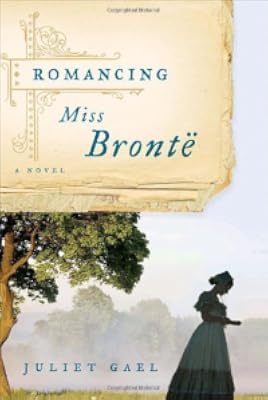
Romancing Miss Brontë
by Juliet Gael
On This Page
Description
During the two years that she studied in Brussels, Charlotte had a taste of life's splendors - travel, literature, and art. Now, back home in the Yorkshire moors, duty-bound to a blind father and an alcoholic brother, an ambitious Charlotte refuses to sink into hopelessness. With her sisters, Emily and Anne, Charlotte conceives a plan to earn money and pursue a dream: The Bront͡s will publish. In childhood the Bront͡ children created fantastical imaginary worlds; now the sisters craft show more novels quite unlike anything written before. Transforming her loneliness and personal sorrow into a triumph of literary art, Charlotte pens her 1847 masterpiece, Jane Eyre. Charlotte's novel becomes an overwhelming literary success, catapulting the shy and awkward young woman into the spotlight of London's fashionable literary scene - and into the arms of her new publisher, George Smith, an irresistibly handsome young man whose interest in his fiercely intelligent and spirited new author seems to go beyond professional duty. But just as life begins to hold new promise, unspeakable tragedy descends on the Bront͡ household, throwing London and George into the background and leaving Charlotte to fear that the only romance she will ever find is at the tip of her pen. But another man waits in the Bront͡s' Haworth parsonage - the quiet but determined curate Arthur Nicholls. After secretly pining for Charlotte since he first came to work for her father, Arthur suddenly reveals his heart to her. show lessTags
Recommendations






Member Recommendations
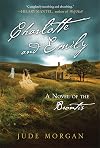
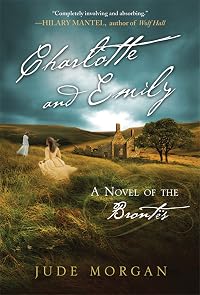
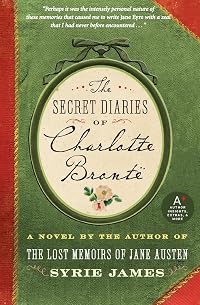
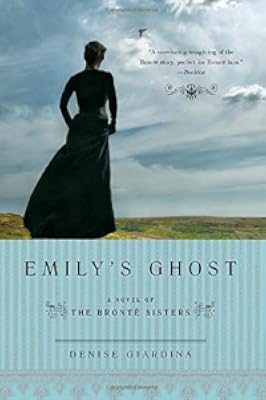
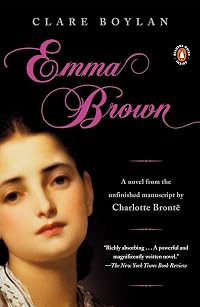
Shuffy2 Both books are about the lives of the Bronte sisters- the ups and downs on the road to publishing their now famous works.
Member Reviews
This was a story that will stick with me for a really long time and has claimed a high place on my list of best books ever. I was reluctant to read it as Charlotte was always my least favorite of the sisters, but this story brought her to life in a way that made me sympathetic to her. I can't say that I'm endeared to her, but I think I get her better now and don't hold as many grudges as I did before.
At first, I wasn't sure about the writing style. Sometimes the story would go into deep detail; other times it would summarize more sterilely, like a nonfiction biography type. The author would zoom in to rich description and intimate dialogue, but then all the way out to the point of addressing the reader about the characters as if we were show more watching them together through a window.
All that changes half way through or so and the author does address the issue in her afterward. She had a lot of ground to cover in bringing readers up to date with the Brontes past and lifestyle so her choice makes sense and was not badly done.
I got lost in this sad story many times and found myself putting aside other important things to keep reading. The Brontes' story has always been one of the most tragic I've known. When I went to Haworth in 2016, I wept at the desolateness of the area and the sorrow that household had felt. However, being there and knowing the town and "neighborhood" featured in the story brought it to life dramatically. I was able to see it all in my mind's eye---so thankful for that.
My husband and I have a northern England trip planned for 2020 or so. I hope to return to Haworth and see Charlotte's legacy there with a fresh perspective. show less
At first, I wasn't sure about the writing style. Sometimes the story would go into deep detail; other times it would summarize more sterilely, like a nonfiction biography type. The author would zoom in to rich description and intimate dialogue, but then all the way out to the point of addressing the reader about the characters as if we were show more watching them together through a window.
All that changes half way through or so and the author does address the issue in her afterward. She had a lot of ground to cover in bringing readers up to date with the Brontes past and lifestyle so her choice makes sense and was not badly done.
I got lost in this sad story many times and found myself putting aside other important things to keep reading. The Brontes' story has always been one of the most tragic I've known. When I went to Haworth in 2016, I wept at the desolateness of the area and the sorrow that household had felt. However, being there and knowing the town and "neighborhood" featured in the story brought it to life dramatically. I was able to see it all in my mind's eye---so thankful for that.
My husband and I have a northern England trip planned for 2020 or so. I hope to return to Haworth and see Charlotte's legacy there with a fresh perspective. show less
Though the title would suggest a fanciful romance, Romancing Miss Brontë by Juliet Gael is a mostly somber historical fiction about the life - and eventual love interest - of Charlotte Brontë. The book opens on the younger life of Charlotte, with sisters Emily and Anne and brother Branwell, and their father the Reverend Patrick Brontë.
Assuming the pen names Currer, Ellis, and Acton Bell, the three sisters encourage each other in literary pursuits and all succeed in publishing novels but keep their endeavors hidden from family and friends. As tragedy repeatedly strikes the family, the novel takes a tearful turn but is slightly brightened by the courtship between Charlotte and her father's curate Arthur Bell Nichols.
I really enjoyed show more this book. Though I previously knew very little about the lives of the Brontë sisters, Gael stayed close to fact. The everyday scenes and conversations that she wove for the now-famous authors were entirely believable and worked to transpose the reader into Charlotte's life. I certainly would have preferred a happier story, but the true joy of Brontë's life was in the legacy of literature that she left for future generations. show less
Assuming the pen names Currer, Ellis, and Acton Bell, the three sisters encourage each other in literary pursuits and all succeed in publishing novels but keep their endeavors hidden from family and friends. As tragedy repeatedly strikes the family, the novel takes a tearful turn but is slightly brightened by the courtship between Charlotte and her father's curate Arthur Bell Nichols.
I really enjoyed show more this book. Though I previously knew very little about the lives of the Brontë sisters, Gael stayed close to fact. The everyday scenes and conversations that she wove for the now-famous authors were entirely believable and worked to transpose the reader into Charlotte's life. I certainly would have preferred a happier story, but the true joy of Brontë's life was in the legacy of literature that she left for future generations. show less
Romancing Miss Brontë is a fictionalized account of the lives of the Brontë family, particularly during the period of time Arthur Nicholls worked for the patriarch, Patrick. Charlotte, Emily, Anne and Branwell were living at the parsonage, all having suffered disappointments professionally and most of them heartbroken as well.
Gael used surviving letters and biographies of known friends and associates to map out the framework of their lives and to base herself in the flavor of their speech. She then weaves dialogue and scenery together to create living, breathing characters that feel true.
I was expecting some light, frothy chick-lit but that's not what I found at all. I've always had this notion in my head that Charlotte had a rather show more good life. She survived to adulthood, she was famous, she married. Certainly she had a "better" life than her siblings, right? This book destroyed that perception. It made me feel the pathos of Charlotte's life. One by one she lost her mother, all four sisters and her brother. Her father lost his sight (twice) and she took on the responsibility of running his household. She escaped briefly to the literary scene in London but suffered from social anxiety. When she finally, at the age of 38, decided to pursue a romance, her father railed against it - after all she had done for him! She stuck it out and married Arthur, went on a honeymoon tour and conceived a child but died before giving birth. It just makes me incredibly sad.
Of the whole book only this one line warmed my heart:
"Egads, man, she's Currer Bell. How do you write a love letter to Currer Bell? I should be quite terrified."
So true. Could you imagine trying to woo a woman like Charlotte Brontë (or say, Jane Austen)? A strong, opinionated, romantic woman who you admired greatly. A woman whose books you had read over and again when you were deprived of her company, just to feel as though you were in her presence.
I guess I got my dose of Chick-lit after all... show less
Gael used surviving letters and biographies of known friends and associates to map out the framework of their lives and to base herself in the flavor of their speech. She then weaves dialogue and scenery together to create living, breathing characters that feel true.
I was expecting some light, frothy chick-lit but that's not what I found at all. I've always had this notion in my head that Charlotte had a rather show more good life. She survived to adulthood, she was famous, she married. Certainly she had a "better" life than her siblings, right? This book destroyed that perception. It made me feel the pathos of Charlotte's life. One by one she lost her mother, all four sisters and her brother. Her father lost his sight (twice) and she took on the responsibility of running his household. She escaped briefly to the literary scene in London but suffered from social anxiety. When she finally, at the age of 38, decided to pursue a romance, her father railed against it - after all she had done for him! She stuck it out and married Arthur, went on a honeymoon tour and conceived a child but died before giving birth. It just makes me incredibly sad.
Of the whole book only this one line warmed my heart:
"Egads, man, she's Currer Bell. How do you write a love letter to Currer Bell? I should be quite terrified."
So true. Could you imagine trying to woo a woman like Charlotte Brontë (or say, Jane Austen)? A strong, opinionated, romantic woman who you admired greatly. A woman whose books you had read over and again when you were deprived of her company, just to feel as though you were in her presence.
I guess I got my dose of Chick-lit after all... show less
3.5 stars, rounded up.
I confess I am a kind of stupid fan of the Brontes and tend to want to read anything that happens to have their names associated with it. So, when I saw this book on the shelf at my local library, I picked it up on a whim and brought it home. Not how I generally choose a book, but sometimes stepping away from the plan is fun. And, this was.
Juliet Gael makes a real effort to stick to the facts, where known, about Charlotte Bronte, which I always appreciate in an author writing about a historical figure. Where she embellishes, I sometimes think she may not have guessed correctly, but then her guess is as good as mine. I did enjoy the fictitious parts of the story, the love interest, and the idea that maybe Charlotte show more found some marital happiness at the end. After all, don’t we all hope the real lives of those we admire are better than we suppose?
While I like Charlotte very much, and I did enjoy reading Mrs. Gaskell’s account of her, which might not be one bit more accurate than this imagining except in those parts where Elizabeth Gaskell was actually present for an event, I confess that it is Emily who really captures my imagination, and she was not present enough in this novel to please me. It certainly makes me ache to think of Charlotte Bronte watching the deaths of all of her siblings and being left to cope alone with her cantankerous father.
Among the best books ever written are those penned by the Bronte sisters. That so much talent could exist in one family is amazing. That Branwell might have had the same richness of mind and imagination and wasted it is also sad. I have several other volumes on my TBR that deal with the Brontes and that I hope to get to this year. I am glad I stopped for this one now, though, because the impulse was justified and the timing just right. It was not too serious, nor too light, and much needed while I sat in a hospital room with my husband over the last several days. show less
I confess I am a kind of stupid fan of the Brontes and tend to want to read anything that happens to have their names associated with it. So, when I saw this book on the shelf at my local library, I picked it up on a whim and brought it home. Not how I generally choose a book, but sometimes stepping away from the plan is fun. And, this was.
Juliet Gael makes a real effort to stick to the facts, where known, about Charlotte Bronte, which I always appreciate in an author writing about a historical figure. Where she embellishes, I sometimes think she may not have guessed correctly, but then her guess is as good as mine. I did enjoy the fictitious parts of the story, the love interest, and the idea that maybe Charlotte show more found some marital happiness at the end. After all, don’t we all hope the real lives of those we admire are better than we suppose?
While I like Charlotte very much, and I did enjoy reading Mrs. Gaskell’s account of her, which might not be one bit more accurate than this imagining except in those parts where Elizabeth Gaskell was actually present for an event, I confess that it is Emily who really captures my imagination, and she was not present enough in this novel to please me. It certainly makes me ache to think of Charlotte Bronte watching the deaths of all of her siblings and being left to cope alone with her cantankerous father.
Among the best books ever written are those penned by the Bronte sisters. That so much talent could exist in one family is amazing. That Branwell might have had the same richness of mind and imagination and wasted it is also sad. I have several other volumes on my TBR that deal with the Brontes and that I hope to get to this year. I am glad I stopped for this one now, though, because the impulse was justified and the timing just right. It was not too serious, nor too light, and much needed while I sat in a hospital room with my husband over the last several days. show less
This review was written for LibraryThing Early Reviewers.
For the life of me I cannot understand why I was so hesitant to read this novel in the historical fiction genre. Perhaps I was expecting more fiction than fact, more fluff than substance. What a pleasant surprise to discover that Romancing Miss Bronte was nothing like that at all.
Ms. Gael's prose is somewhat Austenesque although her subject matter is nowhere near Ms. Austen's well to do, charming, close-knit family with suitors stumbling over each other. This is the story of the family Bronte headed by a patriarch who is curate of the little Yorkshire town of Haworth and perhaps living through his own grief he pays little attention to his lonely, tragic brood who resort to show more creating their own imaginary worlds through stories and poetry. Though their brother, Branwell struggles with his own demons, the girls, Emily, Anne and Charlotte devise a plan to publish their works under pseudonyms. The rest is literary history which Ms. Gael relates with a well researched eye. Many a reader is sure to see the love that Ms. Gael holds for her subjects as it comes through in a tender and almost sorrowful and sympathetic manner while still being truthful.
I struggle giving this novel 4.5 stars when I know I should give 5, yet that would place it in the realm of Wolf Hall and perhaps it is not quite there, but so very, very close – as close as Charlotte was to a life of happiness and contentment. show less
For the life of me I cannot understand why I was so hesitant to read this novel in the historical fiction genre. Perhaps I was expecting more fiction than fact, more fluff than substance. What a pleasant surprise to discover that Romancing Miss Bronte was nothing like that at all.
Ms. Gael's prose is somewhat Austenesque although her subject matter is nowhere near Ms. Austen's well to do, charming, close-knit family with suitors stumbling over each other. This is the story of the family Bronte headed by a patriarch who is curate of the little Yorkshire town of Haworth and perhaps living through his own grief he pays little attention to his lonely, tragic brood who resort to show more creating their own imaginary worlds through stories and poetry. Though their brother, Branwell struggles with his own demons, the girls, Emily, Anne and Charlotte devise a plan to publish their works under pseudonyms. The rest is literary history which Ms. Gael relates with a well researched eye. Many a reader is sure to see the love that Ms. Gael holds for her subjects as it comes through in a tender and almost sorrowful and sympathetic manner while still being truthful.
I struggle giving this novel 4.5 stars when I know I should give 5, yet that would place it in the realm of Wolf Hall and perhaps it is not quite there, but so very, very close – as close as Charlotte was to a life of happiness and contentment. show less
 This review was written for LibraryThing Early Reviewers.
I must mention now: I'm not the kind of person who would be seen reading a book with "romancing" in the title. But for "Miss Brontë", I shall read! Anything for the Brontës. Other writers during the Brontës time were mainly concerned about money and marriage, but the Brontës were more more more. That is what I love about them. A lot of women of the day would have seen Arthur as a marriage opportunity the second they met him. But even after Arthur proposed, Charlotte remained unconvinced. At almost age forty Charlotte thought of herself as a stunted, spinsterish, poor parson's daughter. Knowing how rare it would be to ever receive another proposal, still she did not immediately accept. She wanted to marry for love and did not love show more Arthur... yet.
I was worried 'Romancing Miss Brontë' would take everything that happened within Charlotte's life, and make it simply about her marriage. It did not. The devastating deaths of the siblings occur about halfway through the book. I think this is the perfect amount of time for the relationship between Charlotte and Arthur to develop, while also letting the reader get to know Emily, Anne and Branwell, though I must admit I liked reading about the interactions between the siblings more, especially their walks along the moors. That simply may be due to the sort of reader I am. The closest (and only) thing I've read in the "romance" genre are the Brontë novels. For all the freedom women have in 2010, there is another sort of freedom women had in the 1840s. Women in those days could walk around any moorland they wanted to. These days, if there is anything resembling moorland in America, you would be hard pressed not to find 'private property' signs everywhere you looked (and risk getting shot if you ignore said signs). That, for me, is the ultimate "romance" in the time of the Brontës. Freedom has been gained but so much has been lost.
The Brontës mainly wrote about their own past experiences, but it was surprising to see how their books also eerily predicted their futures. Charlotte wrote of the Mr. Rochester fires in Jane Eyre long before her brother Branwell was saved from a fire by Anne and Emily. Arthur's personality reminded me of Jane Eyre's cousin, John Rivers, who discovers Jane near death on the moor, long before Arthur himself mentions the same comparison to Charlotte in 'Romancing Miss Brontë'. Sure, it is a charming and excellent bit of this book, but did Arthur really say this in real life? I'm always skeptical of historical fiction. I don't like things to be made up just to make a better plot about real people that once had their own integrity to protect, rather than a fictional character. After all, Charlotte can not defend herself now. I was wary that a novel about the Brontës could sensationalize their lives (which is funny, seeing as how if anyone can find a fault with the Brontës, it is their penchant for gothic drama...but I happen to love that sort of thing.) Even just writing something that Charlotte would have never really said would bother me. I'm not very knowledgeable about the Brontës, but I don't believe 'Romancing Miss Brontë' takes any liberties: I believe Gael's writing sticks close to the truth. This book is perfect if you'd like to know more about the Brontës (especially if you'd rather read about them in novel form, rather than a biography). It is also a great read if you already know a ton about the them. If you are a fan of anything Brontë, read this. If you want to get a better understanding of why the Brontës were so loved, in their time and ours, read this. The Brontës are amazing. You could probably write anything about them and I would be pleased that they are being remembered.
Sometimes I think of the possibilities of a life. What if Anne, Emily and Charlotte had died the same age as their sisters, Maria and Elizabeth? It makes me sad to wonder what would have happened to literature if the world did not have their books. What amazing novels are we missing that Maria and Elizabeth could have written? And what if Anne, Emily and Charlotte had lived longer? What else may they have written? Imagine if they knew their books were still being read 150 years later! It seems as though the Brontës are fiction themselves, so it would make sense to write a first novel about them. Juliet Gael does a lovely job of it. I'm looking forward to seeing what Gael delivers next. Gael's prose alone tells me I'd be interested in her next book, even if it isn't about a topic as captivating as the Brontës. show less
I was worried 'Romancing Miss Brontë' would take everything that happened within Charlotte's life, and make it simply about her marriage. It did not. The devastating deaths of the siblings occur about halfway through the book. I think this is the perfect amount of time for the relationship between Charlotte and Arthur to develop, while also letting the reader get to know Emily, Anne and Branwell, though I must admit I liked reading about the interactions between the siblings more, especially their walks along the moors. That simply may be due to the sort of reader I am. The closest (and only) thing I've read in the "romance" genre are the Brontë novels. For all the freedom women have in 2010, there is another sort of freedom women had in the 1840s. Women in those days could walk around any moorland they wanted to. These days, if there is anything resembling moorland in America, you would be hard pressed not to find 'private property' signs everywhere you looked (and risk getting shot if you ignore said signs). That, for me, is the ultimate "romance" in the time of the Brontës. Freedom has been gained but so much has been lost.
The Brontës mainly wrote about their own past experiences, but it was surprising to see how their books also eerily predicted their futures. Charlotte wrote of the Mr. Rochester fires in Jane Eyre long before her brother Branwell was saved from a fire by Anne and Emily. Arthur's personality reminded me of Jane Eyre's cousin, John Rivers, who discovers Jane near death on the moor, long before Arthur himself mentions the same comparison to Charlotte in 'Romancing Miss Brontë'. Sure, it is a charming and excellent bit of this book, but did Arthur really say this in real life? I'm always skeptical of historical fiction. I don't like things to be made up just to make a better plot about real people that once had their own integrity to protect, rather than a fictional character. After all, Charlotte can not defend herself now. I was wary that a novel about the Brontës could sensationalize their lives (which is funny, seeing as how if anyone can find a fault with the Brontës, it is their penchant for gothic drama...but I happen to love that sort of thing.) Even just writing something that Charlotte would have never really said would bother me. I'm not very knowledgeable about the Brontës, but I don't believe 'Romancing Miss Brontë' takes any liberties: I believe Gael's writing sticks close to the truth. This book is perfect if you'd like to know more about the Brontës (especially if you'd rather read about them in novel form, rather than a biography). It is also a great read if you already know a ton about the them. If you are a fan of anything Brontë, read this. If you want to get a better understanding of why the Brontës were so loved, in their time and ours, read this. The Brontës are amazing. You could probably write anything about them and I would be pleased that they are being remembered.
Sometimes I think of the possibilities of a life. What if Anne, Emily and Charlotte had died the same age as their sisters, Maria and Elizabeth? It makes me sad to wonder what would have happened to literature if the world did not have their books. What amazing novels are we missing that Maria and Elizabeth could have written? And what if Anne, Emily and Charlotte had lived longer? What else may they have written? Imagine if they knew their books were still being read 150 years later! It seems as though the Brontës are fiction themselves, so it would make sense to write a first novel about them. Juliet Gael does a lovely job of it. I'm looking forward to seeing what Gael delivers next. Gael's prose alone tells me I'd be interested in her next book, even if it isn't about a topic as captivating as the Brontës. show less
This review was written for LibraryThing Early Reviewers.I probably shouldn't even be reviewing this book right now, since I'm still feeling choked with emotion, but the number one thing I require in a book is that it make me feel something. Indeed, Romancing Miss Bronte made me feel something.
In all honesty, it is a bit of an odd book, with a bit of an identity crisis. Is it a novel? Is it fictionalized history? Is it a biography? It seems to bounce back and forth between these genres, sometimes lapsing into lyrical, descriptive prose and other times presenting facts in a clinical manner. I thought these inconsistencies would bother me, but the truth is, they didn't. At the end I felt like I knew Charlotte Bronte. The real Charlotte Bronte. I felt like she was represented as a real woman, show more and not just as a character in this book. I wanted her to succeed, I wanted her to be happy, I wanted her to be in love. And most of all, I wanted to read Jane Eyre! (Which is now waiting on my bedside table.)
Overall, I found the time spent with Miss Bronte and her family to be well worth the rather substantial investment. It certainly made me feel something and despite the differences between us in time, space, and situation, I found myself relating to Charlotte in a personal way via some universally transcendent themes - a difficult parental relationship, an unrequited love, an inconvenient dream and passion. Thank you, Ms. Gael, for introducing me to Charlotte and Emily Bronte, I look forward to getting to know them both a little better. show less
In all honesty, it is a bit of an odd book, with a bit of an identity crisis. Is it a novel? Is it fictionalized history? Is it a biography? It seems to bounce back and forth between these genres, sometimes lapsing into lyrical, descriptive prose and other times presenting facts in a clinical manner. I thought these inconsistencies would bother me, but the truth is, they didn't. At the end I felt like I knew Charlotte Bronte. The real Charlotte Bronte. I felt like she was represented as a real woman, show more and not just as a character in this book. I wanted her to succeed, I wanted her to be happy, I wanted her to be in love. And most of all, I wanted to read Jane Eyre! (Which is now waiting on my bedside table.)
Overall, I found the time spent with Miss Bronte and her family to be well worth the rather substantial investment. It certainly made me feel something and despite the differences between us in time, space, and situation, I found myself relating to Charlotte in a personal way via some universally transcendent themes - a difficult parental relationship, an unrequited love, an inconvenient dream and passion. Thank you, Ms. Gael, for introducing me to Charlotte and Emily Bronte, I look forward to getting to know them both a little better. show less
This review was written for LibraryThing Early Reviewers.Members
- Recently Added By
Author Information

2 Works 318 Members
Common Knowledge
- Canonical title
- Romancing Miss Brontë
- Original publication date
- 2010-04-27
- People/Characters
- Charlotte Brontë; Emily Brontë; Anne Brontë; Arthur Nicholls; Branwell Brontë; Patrick Brontë
- Important places
- England, UK; Brussels, Belgium; Yorkshire, England, UK
- Epigraph
- Certainly, at some hour, through perhaps not your hour, the waiting waters will stir; in some shape, though perhaps not the shape you dreamed, which your heart loved, and for which it bled, the healing herald wi... (show all)ll descend.
Charlotte Brontë, Villette - First words
- He rode in on the back of a wagon loaded with crates of chickens and bales of hay, driven by a brutish farmer who had not uttered a word throughout the journey except to curse his horse.
Classifications
Statistics
- Members
- 317
- Popularity
- 100,648
- Reviews
- 57
- Rating
- (3.83)
- Languages
- English, Italian, Portuguese
- Media
- Paper, Audiobook, Ebook
- ISBNs
- 9
- UPCs
- 1
- ASINs
- 5