Fannie in the Kitchen: The Whole Story from Soup to Nuts of How Fannie Farmer Invented Recipes with Precise Measurements
by Deborah Hopkinson
On This Page
Description
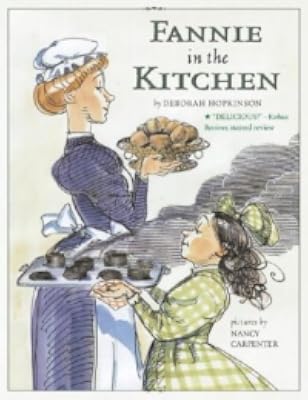
Fannie Farmer is a mother's helper in the Shaw house, where the daughter gives her the idea of writing down precise instructions for measuring and cooking, which eventually became one of the first modern cookbooks.Tags
Recommendations




























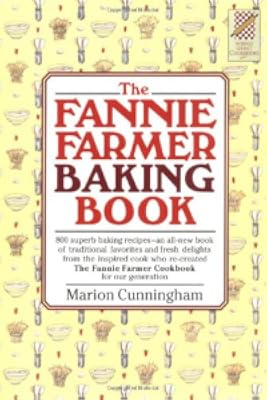

Member Recommendations
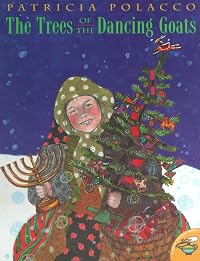
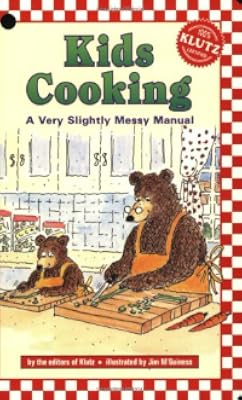
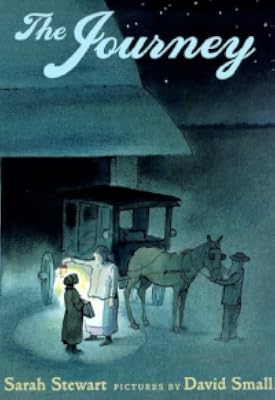
AbigailAdams26 If you enjoyed this biography of Fannie Farmer, you might enjoy another picture book devoted to the same subject.
Member Reviews
One of five titles chosen for our June theme of "Culinary Delights," over in the Picture-Book Club to which I belong, Fannie in the Kitchen is a creative recreation of what Fannie Merritt Farmer's experiences as a "mother's helper" in the Boston home of Mr. and Mrs. Charles Shaw might have been like. Narrated by young Marcia Shaw, it follows Fannie as she gradually wins over the initially resentful young daughter of the house, and - in the process of teaching her to cook - realizes that her method, with its use of formal recipes and precise measurements, would be helpful to others seeking to master the culinary arts.
I enjoyed Deborah Hopkinson's tale, which seems to be based on the basic facts of Farmer's life - she did indeed work as a show more mother's helper for the Shaws, before becoming a teacher at the Boston Cooking School and publishing her famous cookbook - but has the added narrative interest of a young girl and her own culinary growth. The illustrations by Nancy Carpenter have a wonderful vintage feeling to them, something explained in the little illustrator's blurb at the rear, which mentions that nineteenth-century etchings and engravings were used by the artist, who added colorful accents of her own. All in all, a very appealing picture-book - sure to please young would-be cooks and gourmands! show less
I enjoyed Deborah Hopkinson's tale, which seems to be based on the basic facts of Farmer's life - she did indeed work as a show more mother's helper for the Shaws, before becoming a teacher at the Boston Cooking School and publishing her famous cookbook - but has the added narrative interest of a young girl and her own culinary growth. The illustrations by Nancy Carpenter have a wonderful vintage feeling to them, something explained in the little illustrator's blurb at the rear, which mentions that nineteenth-century etchings and engravings were used by the artist, who added colorful accents of her own. All in all, a very appealing picture-book - sure to please young would-be cooks and gourmands! show less
Fannie in the Kitchen is told from the perspective of Marcia, the young daughter of the Shaws, who hire Fannie Farmer as a "mother's helper" to help out in the kitchen now that Mrs. Shaw is expecting her second child. Young Marcia is at first bummed about being replaced as her mother's helper, but she quickly shines to Fannie when she realizes how good her food is and that Fannie is more than willing to teach Marcia how to become a good chef also. It is these impromptu cooking lessons that inspire Fannie to write down her recipes with their exact measurements, eventually leading to her publishing the first cookbook to do so.
The story is lively, with Marcia presented as an identifiable character for young children (despite the show more difference of many, many years from her childhood to now) and Fannie as a sweet and likable character as well. Each short section is presented as a "course," as in a fancy multi-part meal. The illustrations are delightful, full of color and fun details. As a cat owner, I particularly loved finding what the family cat was up to each in part, whether it was curled up cozily at Fannie's feet or looking glum with an errant griddle cake landing on his head.
The book ends with a note explaining the historical basis for the story as well as an actual recipe from Fannie Farmer - for her griddle cakes (aka pancakes). show less
The story is lively, with Marcia presented as an identifiable character for young children (despite the show more difference of many, many years from her childhood to now) and Fannie as a sweet and likable character as well. Each short section is presented as a "course," as in a fancy multi-part meal. The illustrations are delightful, full of color and fun details. As a cat owner, I particularly loved finding what the family cat was up to each in part, whether it was curled up cozily at Fannie's feet or looking glum with an errant griddle cake landing on his head.
The book ends with a note explaining the historical basis for the story as well as an actual recipe from Fannie Farmer - for her griddle cakes (aka pancakes). show less
Young Marcia Shaw is growing up in a wealthy family in 19th century America - and she thinks she's talented at everything. She’s always wanting to bestow her gifts on her family. When Fannie Farmer comes to work for her family, Marcia is at first jealous of Fannie’s cooking skills. That is, until Fannie develops a cookbook with written instructions that Marcia uses to make really good food. Charmingly illustrated to depict 19th century life and inspired by the real Fannie Farmer, who is sometimes considered the inventor of the modern recipe.
I had mixed feelings about this book after reading it. I liked the book because the characters were believable. For example, Marcia was brought to life well and a young girl who is having a new person come into her life as well as a new siblings may react like Marcia did in the beginning. Also Marcia was believable because when there is a new siblings in a family, the parents usually are more focused on the newborn leaving the other child to do things on their own, like Marcia and learning to cook. I also liked the illustrations in this book because they went with the story to enhance the writing. For example, when Marcia was cooking, the illustrations did a good job at showing what she would have been doing, either burning the food or show more having it come out just right. I did not like this book because of the plot. The plot of the story was not very interesting and did not make me want to keep reading because there was nothing pulling me into the story. The author could have found different ways to help keep the reader engaged by adding more suspense to the story or adding to the story to make it more engaging and entertaining. The main idea of this story is to not give up on something you enjoy doing because after practice and help, you can make something great. show less
Good for K-3. This book is cute because it talks about a pregnant woman who has a young daughter that is used to helping around the house but she needs extra help in the kitchen so when a new page begins it is labeled as a 'course' like a meal would be labeled. It gives a history if an important historical character, Fannie Farmer, who came up with a format to what is now called a recipe.
I remember making Fannie Farmer's Fudge for Christmas as a child... this book took me right back to those happy days.
An introduction to the life of Fannie Farmer, the author of a cookbook well-known even today.
Pair with books on other chefs:
the Adventurous Chef: Alexis Soyer by Ann Arnold
Pair with books on other chefs:
the Adventurous Chef: Alexis Soyer by Ann Arnold
Members
- Recently Added By
Published Reviews
ThingScore 100
CCBC (Cooperative Children's Book Center Choices, 2002)
Young Marcia Shaw enjoys helping her mother with household tasks and looks forward to more responsibility after the new baby is born. So Marcia is initially disappointed when her parents hire Fannie Farmer to assist with the cooking. Fannie proves to be a skillful cook and an excellent teacher, and she quickly wins Marcia over by sharing show more her knowledge of cookery, something the young girl thinks of as magic. "Preparing food well isn't magic. It's an art and a science that anyone can learn," Fannie assures her. But when Marcia has trouble keeping everything in her head, Fannie begins to write it down for her, leading to the invention of the modern recipe. Hopkinson's spirited story is based on real events in Fannie Farmer's life before she took a position at the Boston Cooking School, as an author's note reveals. Hopkinson cleverly breaks the story into sections named after a seven-course meal. The details she chooses to illustrate Farmer's culinary savvy are likely to interest children -- how to know when to flip a pancake, for example -- and three ways to tell if an egg is fresh. Nancy Carpenter's whimsical illustrations are an excellent match for the author's tone, as they successfully blend detailed Victorian line art for background objects such as stoves and oil lamps (and even Marcia's parents), with light-hearted cartoon-style renditions of Fannie and Marcia. CCBC categories: Historical People, Places, and Events; Picture Books for Older Children; Biography and Autobiography. 2001, An Anne Schwartz Book / Atheneum, 32 pages, $16.00. Ages 7-10. show less
Young Marcia Shaw enjoys helping her mother with household tasks and looks forward to more responsibility after the new baby is born. So Marcia is initially disappointed when her parents hire Fannie Farmer to assist with the cooking. Fannie proves to be a skillful cook and an excellent teacher, and she quickly wins Marcia over by sharing show more her knowledge of cookery, something the young girl thinks of as magic. "Preparing food well isn't magic. It's an art and a science that anyone can learn," Fannie assures her. But when Marcia has trouble keeping everything in her head, Fannie begins to write it down for her, leading to the invention of the modern recipe. Hopkinson's spirited story is based on real events in Fannie Farmer's life before she took a position at the Boston Cooking School, as an author's note reveals. Hopkinson cleverly breaks the story into sections named after a seven-course meal. The details she chooses to illustrate Farmer's culinary savvy are likely to interest children -- how to know when to flip a pancake, for example -- and three ways to tell if an egg is fresh. Nancy Carpenter's whimsical illustrations are an excellent match for the author's tone, as they successfully blend detailed Victorian line art for background objects such as stoves and oil lamps (and even Marcia's parents), with light-hearted cartoon-style renditions of Fannie and Marcia. CCBC categories: Historical People, Places, and Events; Picture Books for Older Children; Biography and Autobiography. 2001, An Anne Schwartz Book / Atheneum, 32 pages, $16.00. Ages 7-10. show less
added by kthomp25
Susie Wilde (Children's Literature)
Deborah Hopkinson takes a lively, child-centered approach in Fannie in the Kitchen. Illustrator, Nancy Carpenter, plays along by incorporating vintage engravings in her exuberant pen and ink and watercolor pictures. The young heroine, Marcia Shaw, feels displaced when her very pregnant mother announces she's hiring a mother's helper. Marcia intends to be a show more pill, but Fanny appeals to the child's ego and pulls her into the fun of cooking. Fanny asks for Marcia's help in making biscuits, adding "make them nice and small. Small biscuits are more dainty, don't you think?" Fanny is judicious with her tips, attuned to Marcia's curiosity and provides a path to learning. She gives Marcia ample opportunities to fail and waits for her questions, which lead to eventual success. Hopkinson's skills with dialogue animate the biography, celebrate Fanny's spirit, wisdom and passion for cooking, and convincingly depict the growing relationship between Fanny and Marcia. Hopkinson and Carpenter's descriptions and detailing invite readers into this amazing kitchen where there are "mashed potatoes fluffier than clouds" and "blueberry pies sweeter than a summer sky." Just desserts come at the end when the reader is rewarded with a recipe for Fannie Farmer's Famous Griddle Cakes. 2001, Atheneum, $16.00. Ages 6 to 9. show less
Deborah Hopkinson takes a lively, child-centered approach in Fannie in the Kitchen. Illustrator, Nancy Carpenter, plays along by incorporating vintage engravings in her exuberant pen and ink and watercolor pictures. The young heroine, Marcia Shaw, feels displaced when her very pregnant mother announces she's hiring a mother's helper. Marcia intends to be a show more pill, but Fanny appeals to the child's ego and pulls her into the fun of cooking. Fanny asks for Marcia's help in making biscuits, adding "make them nice and small. Small biscuits are more dainty, don't you think?" Fanny is judicious with her tips, attuned to Marcia's curiosity and provides a path to learning. She gives Marcia ample opportunities to fail and waits for her questions, which lead to eventual success. Hopkinson's skills with dialogue animate the biography, celebrate Fanny's spirit, wisdom and passion for cooking, and convincingly depict the growing relationship between Fanny and Marcia. Hopkinson and Carpenter's descriptions and detailing invite readers into this amazing kitchen where there are "mashed potatoes fluffier than clouds" and "blueberry pies sweeter than a summer sky." Just desserts come at the end when the reader is rewarded with a recipe for Fannie Farmer's Famous Griddle Cakes. 2001, Atheneum, $16.00. Ages 6 to 9. show less
added by kthomp25
Author Information

91+ Works 16,000 Members
Deborah Hopkinson is the author of over 40 highly acclaimed nonfiction books, including NCTE Orbis Pictus Honor and Jane Addams Honor Book Shutting Out the Sky: Carter G. Woodson Honor Book UP Before Daybreak; Sibert Honor Book and YALSA Award for Excellence in Nonfiction Finalist Titanic: Voices from the Disaster: Sydney Taylor Notable Book show more Courage Defiance: Dive!; D-Day; Sydney Taylor Notable Book We Has to Be Brave; and We Must Not Forget. Deborah lives with her family near Portland, Oregon. show less
All Editions
Awards and Honors
Common Knowledge
- Important places
- Boston Cooking School
Classifications
Statistics
- Members
- 318
- Popularity
- 100,033
- Reviews
- 8
- Rating
- (3.85)
- Languages
- English
- Media
- Paper
- ISBNs
- 4
- ASINs
- 1