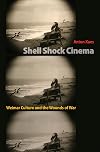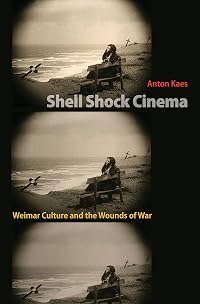
Shell Shock Cinema: Weimar Culture and the Wounds of War
by Anton Kaes
On This Page
Description
Shell Shock Cinema explores how the classical German cinema of the Weimar Republic was haunted by the horrors of World War I and the the devastating effects of the nation's defeat. In this exciting new book, Anton Kaes argues that masterworks such as The Cabinet of Dr. Caligari, Nosferatu, The Nibelungen, and Metropolis, even though they do not depict battle scenes or soldiers in combat, engaged the war and registered its tragic aftermath. These films reveal a wounded nation in show more post-traumatic shock, reeling from a devastating defeat that it never officially acknowledged, let alone accepted. Kaes uses the term "shell shock"--coined during World War I to describe soldiers suffering from nervous breakdowns--as a metaphor for the psychological wounds that found expression in Weimar cinema. Directors like Robert Wiene, F. W. Murnau, and Fritz Lang portrayed paranoia, panic, and fear of invasion in films peopled with serial killers, mad scientists, and troubled young men. Combining original close textual analysis with extensive archival research, Kaes shows how this post-traumatic cinema of shell shock transformed extreme psychological states into visual expression; how it pushed the limits of cinematic representation with its fragmented story lines, distorted perspectives, and stark lighting; and how it helped create a modernist film language that anticipated film noir and remains incredibly influential today. A compelling contribution to the cultural history of trauma, Shell Shock Cinema exposes how German film gave expression to the loss and acute grief that lay behind Weimar's sleek faøade. show lessTags
Recommendations

















Member Reviews
Shell Shock Cinema explores how the classical German cinema of the Weimar Republic was haunted by the horrors of World War I and the the devastating effects of the nation's defeat. In this exciting new book, Anton Kaes argues that masterworks such as The Cabinet of Dr. Caligari, Nosferatu, The Nibelungen, and Metropolis, even though they do not depict battle scenes or soldiers in combat, engaged the war and registered its tragic aftermath. These films reveal a wounded nation in post-traumatic shock, reeling from a devastating defeat that it never officially acknowledged, let alone accepted.
Kaes uses the term "shell shock"―coined during World War I to describe soldiers suffering from nervous breakdowns―as a metaphor for the show more psychological wounds that found expression in Weimar cinema. Directors like Robert Wiene, F. W. Murnau, and Fritz Lang portrayed paranoia, panic, and fear of invasion in films peopled with serial killers, mad scientists, and troubled young men. Combining original close textual analysis with extensive archival research, Kaes shows how this post-traumatic cinema of shell shock transformed extreme psychological states into visual expression; how it pushed the limits of cinematic representation with its fragmented story lines, distorted perspectives, and stark lighting; and how it helped create a modernist film language that anticipated film noir and remains incredibly influential today.
A compelling contribution to the cultural history of trauma, Shell Shock Cinema exposes how German film gave expression to the loss and acute grief that lay behind Weimar's sleek façade. show less
Kaes uses the term "shell shock"―coined during World War I to describe soldiers suffering from nervous breakdowns―as a metaphor for the show more psychological wounds that found expression in Weimar cinema. Directors like Robert Wiene, F. W. Murnau, and Fritz Lang portrayed paranoia, panic, and fear of invasion in films peopled with serial killers, mad scientists, and troubled young men. Combining original close textual analysis with extensive archival research, Kaes shows how this post-traumatic cinema of shell shock transformed extreme psychological states into visual expression; how it pushed the limits of cinematic representation with its fragmented story lines, distorted perspectives, and stark lighting; and how it helped create a modernist film language that anticipated film noir and remains incredibly influential today.
A compelling contribution to the cultural history of trauma, Shell Shock Cinema exposes how German film gave expression to the loss and acute grief that lay behind Weimar's sleek façade. show less
Ratings
Members
- Recently Added By
Lists

Books Cited in Wasteland by W. Scott Poole
120 works; 1 member
Author Information
17+ Works 411 Members
Anton Kaes is Class of 1939 Professor of German and Film Media at the University of California, Berkeley, USA. His books include From Hitler to Heimat: The Return of History as Film (1989) and Shell Shock Cinema: Weimar Culture and the Wounds of War (2009). He is also the co-editor of The Weimar Republic Sourcebook (1994) and The Promise of show more Cinema: German Film Theory, 1907-1933 (2016). show less
Awards and Honors
Classifications
Statistics
- Members
- 38
- Popularity
- 763,166
- Reviews
- 1
- Rating
- (3.75)
- Languages
- English
- Media
- Paper, Ebook
- ISBNs
- 3
- ASINs
- 1