On This Page
Description
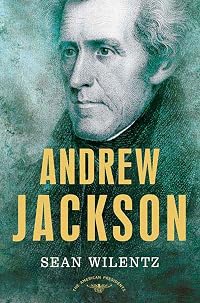
Examines the life and presidency of Andrew Jackson, including his early days in South Carolina, his military exploits, and his contributions to the cause of democracy and Manifest Destiny.Tags
Recommendations





Member Reviews
A short, but informative and comprehensive biography of a very controversial but highly significant president. The book gives a fair and objective analysis, detailing the basis for Jackson’s beliefs and actions. As the author makes clear, love him or hate him, unquestionably Jackson was a towering figure.
I would have given the work a higher rating except that, in my opinion, too much emphasis was placed on Jackson’s politics and the context surrounding his politics, and not enough on Jackson’s life and exploits before the presidency.
I would have given the work a higher rating except that, in my opinion, too much emphasis was placed on Jackson’s politics and the context surrounding his politics, and not enough on Jackson’s life and exploits before the presidency.
Being a short, moderately analytical biography of Old Hickory, emphasizing, as the series title might suggest, his presidency. Wilentz's opening chapter is a brilliant exposition of the approach-avoidance problems the politically-minded of our own day have with the Jackson legacy, be they conservatives or liberals. I wish that there had been more such musings; it's always a little sad when the best stuff in your book is in the first ten pages. Wilentz is a talented enough writer to make such snoozes as the kerfluffle over the Second Bank halfway interesting, so the narrative portions of the book are readable enough, but this is one book which could have used a lot more authorial voice.
This volume is a short, quick read that provides what seems to be a good overview of the current (as of 2005) scholarly views on Jackson's life and legacy. I don't know how balanced it is though. The author seems to be rather fond of his subject, and yet struggles with the need to find positive things about him, and frequently resorts to saying that the President must be judged by the standard of his times, and he meant well in ways that don't just make sense to us today even if his actions caused huge problems later... That said, there are plenty of direct quotes from relevant souces and balanced context setting. The volume does a good job of presenting the basic contours of Jackson's life story, what he said about his own actions, and show more objectives.
I picked up this volume in order to learn more about the President after deciding I needed to learn more specifically about him and his presidency (all in the context of the arguments about his role following the announced changed in art on the US $20 bill). After reading this volume, I feel like I have a better understanding of the man than I had from the broader historical surveys I've read about this period. I also believe I have a better sense of what his current apologists are tyring to get at by stressing his importance.
NOTE: Borrowed from the Anne Arundel County Library
(2016 Review #9) show less
I picked up this volume in order to learn more about the President after deciding I needed to learn more specifically about him and his presidency (all in the context of the arguments about his role following the announced changed in art on the US $20 bill). After reading this volume, I feel like I have a better understanding of the man than I had from the broader historical surveys I've read about this period. I also believe I have a better sense of what his current apologists are tyring to get at by stressing his importance.
NOTE: Borrowed from the Anne Arundel County Library
(2016 Review #9) show less
Sean Wilentz submits his mostly positive take on Andrew Jackson for the American Presidents series edited by Arthur M. Schlesinger, Jr. Jackson's reputation and ranking among US presidents has fallen in recent decades, mostly due to his treatment of Indians, his stance on slavery, and misunderstanding of his economic policies. Wilentz argues, and I concur, that any attempt judge Andrew Jackson by standards of other time periods is doomed to failure.
In his time, Jackson was considered the great champion of democracy. As set forth in his first annual message, `the majority is to govern' was his emblem. New York editor William Leggett considered him the `leader and champion of the people'. While these words sound like 4th of July show more political platitudes to our ear, in his time Jackson faced opponents who still believed in a `natural aristocracy' and who feared `mob rule' as they saw democracy. The anti-Jacksonsonian William Henry Seward summarized the Jacksonian principle: `That principle is democracy....the poor against the rich; and it is not to be disguised.'
Jackson stood against what he called the `few monied Capitalists' as represented by Nicholas Biddle and 2nd Bank of the US. Again, in the modern view the necessity of a national central bank seems obvious, but Biddle's bank used its power to grant `special privileges to unaccountable monied men on the make as well as those already well established.'(Wilentz at p. 83) In his words, Jackson wanted to get the wealthy off the backs of the `humble members of society'.
In one his major feats, Jackson defeated the `nullifiers' led by John C. Calhoun. The theory of state nullification of federal laws undermined national unity and indeed the survival of the Union.
Jackson also considered the removal of the southeastern Indian tribes, the Creeks, Cherokee, Choctaws, and Chickasaws, as one of the greatest accomplishments of his administration. Jackson professed, and Wilentz accepts, that his intent was to remove the Indians from the harm they would suffer at the hands of local whites especially in Georgia. The removal also served Jackson's aim of US western expansion. And whatever Jackson's intent, the Indians generally opposed the removals and suffered tremendously from the policy (Note: The Trail of Tears actually occurred during the presidency of Jackson's protégé, Matty Van Buren).
Jackson also vigorously opposed the nascent abolitionist movement. Wilentz asserts that Jackson believed that anti-slavery politicians were `ambitious demagogues' (Wilentz at p. 164) who simply used the issue for personal gain. His great desire was to suppress the slavery issue because he accurately saw it as the greatest threat of disunion. The effort to suppress the debate was foredoomed to failure.
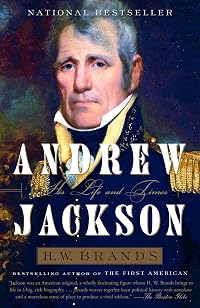
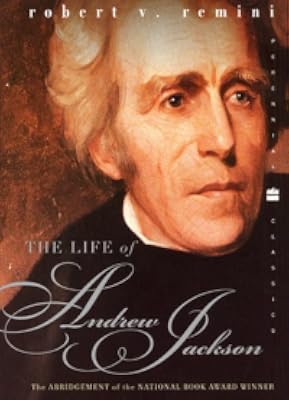
This book is well worth a read for anyone interested in American history generally or Jackson specifically. It meets Schlesinger's goal of being compact, lucid, and authoritative. For those who want a fuller consideration Wilentz suggests Robert Remini's Andrew Jackson and notes the newer (and acclaimed) biography by HW Brands, Andrew Jackson: His Life and Times. show less
In his time, Jackson was considered the great champion of democracy. As set forth in his first annual message, `the majority is to govern' was his emblem. New York editor William Leggett considered him the `leader and champion of the people'. While these words sound like 4th of July show more political platitudes to our ear, in his time Jackson faced opponents who still believed in a `natural aristocracy' and who feared `mob rule' as they saw democracy. The anti-Jacksonsonian William Henry Seward summarized the Jacksonian principle: `That principle is democracy....the poor against the rich; and it is not to be disguised.'
Jackson stood against what he called the `few monied Capitalists' as represented by Nicholas Biddle and 2nd Bank of the US. Again, in the modern view the necessity of a national central bank seems obvious, but Biddle's bank used its power to grant `special privileges to unaccountable monied men on the make as well as those already well established.'(Wilentz at p. 83) In his words, Jackson wanted to get the wealthy off the backs of the `humble members of society'.
In one his major feats, Jackson defeated the `nullifiers' led by John C. Calhoun. The theory of state nullification of federal laws undermined national unity and indeed the survival of the Union.
Jackson also considered the removal of the southeastern Indian tribes, the Creeks, Cherokee, Choctaws, and Chickasaws, as one of the greatest accomplishments of his administration. Jackson professed, and Wilentz accepts, that his intent was to remove the Indians from the harm they would suffer at the hands of local whites especially in Georgia. The removal also served Jackson's aim of US western expansion. And whatever Jackson's intent, the Indians generally opposed the removals and suffered tremendously from the policy (Note: The Trail of Tears actually occurred during the presidency of Jackson's protégé, Matty Van Buren).
Jackson also vigorously opposed the nascent abolitionist movement. Wilentz asserts that Jackson believed that anti-slavery politicians were `ambitious demagogues' (Wilentz at p. 164) who simply used the issue for personal gain. His great desire was to suppress the slavery issue because he accurately saw it as the greatest threat of disunion. The effort to suppress the debate was foredoomed to failure.
This book is well worth a read for anyone interested in American history generally or Jackson specifically. It meets Schlesinger's goal of being compact, lucid, and authoritative. For those who want a fuller consideration Wilentz suggests Robert Remini's Andrew Jackson and notes the newer (and acclaimed) biography by HW Brands, Andrew Jackson: His Life and Times. show less
This book, part of a Presidential series, is short, sweet, and an excellent primer for more reading. Wilentz does emphasize that judging Jackson, or any historical personage, on conditions outside their period, is not fair, and thus, modern reassessment of Jackson's failures is not truly indicative of the man or his times.
A short biography concentrating on Jackson's presidency but also giving good coverage of the War of 1812 and the Battle of New Orleans. The author is fair and even handed on Jackson's accomplishments and flaws. The American Presidents Series is a fine collection of these short biographies.
Andrew Jackson was quite a character for a man on his time. Rank definitely for the common man in opposing the monied people and the aristocractic attitudes of those with wealth and breaking up of the Second Bank that thought they are above the government. They could use someone of that calibur today in fighting for the common people and breaking up monopolies and big businesses and those with wealth who are walking over the lowly born and treating them as slaves in their enterprise.
Members
- Recently Added By
Author Information

22+ Works 3,262 Members
Robert sean Wilentz was born in 1951 in New York City. He earned his first B.A. from Colunbia University in 1972 and his second from Oxford University in 1974 on a Kellett Fellowship. He continued his education at Yale University where he earned his M.A. degree in 1975 and his PhD. in 1980. His writings are focused on the importance of class and show more race in the early national period. He has also co-authored books on nineteenth-century religion and working class life. His book The Rise of American Democracy: Jefferson to Lincoln, won the Bancroft Prize. He has also written about modern U.S. history in his book, The Age of Reagan: A History, 1974-2008. He has been the Sidney and Ruth Lapidus Professor of History at Princeton University since 1979. Robert Wilentz is also a contributing editor at The New Republic. He writes on music, the arts, history and politics. He received a Grammy nomination and a 2005 ASCAP Deems Taylor Award for musical commentary on the musician Bob Dylan. (Bowker Author Biography) show less
Series

Common Knowledge
- Canonical title
- Andrew Jackson
- Original publication date
- 2005
- People/Characters
- Andrew Jackson; John Quincy Adams; Nicholas Biddle; Francis P. Blair; John C. Calhoun; Henry Clay (show all 8); Roger Brooke Taney; Martin van Buren
- Important places
- The Hermitage, Nashville, Tennessee, USA
- Important events
- Cherokee genocide; Missouri Compromise; Battle of New Orleans; Panic of 1819; Second Bank of the United States; War of 1812
- Epigraph
- Bear me out in it, thou great democratic God! who didst not
refuse to the swart convict, Bunyan, the pale, poetic pearl;
Thou who didst clothe with doubly hammered leaves of
finest gold, the stumped and paupered a... (show all)rm of old Cervantes;
Thou who didst pick up Andrew Jackson from the pebbles;
who didst hurl him upon a war-horse; who didst thunder him
higher than a throne! Thou who, in all Thy mighty, earthly
marchings, ever cullest Thy selectest champions from the
kingly commons; bear me out in it, O God!
-Herman Melville,
Moby-Dick; or, The Whale
1851 - Dedication
- To S. B.
- First words
- 1
A Roaring Fellow
Jackson's rise to fortune and then fame was unparalleled among the major political leaders of his generation. (Chapter 1) - Last words
- (Click to show. Warning: May contain spoilers.)So are his triumphs and his greatness.
Classifications
- Genres
- History, Nonfiction, Biography & Memoir, General Nonfiction
- DDC/MDS
- 973.5 — History & geography History of North America United States Jacksonian Era (1809-1837)
- LCC
- E382 .W74 — History of the United States United States Revolution to the Civil War, 1775/1783-1861 By period Early nineteenth century, 1801/1809-1845 Jackson's administrations, 1829-1837
- BISAC
Statistics
- Members
- 229
- Popularity
- 142,843
- Reviews
- 7
- Rating
- (3.50)
- Languages
- English
- Media
- Paper, Ebook
- ISBNs
- 3
- ASINs
- 2