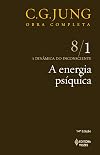
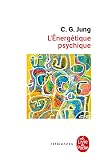
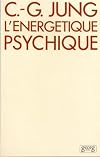
L'énergétique psychique
by Carl Gustav Jung
On This Page
Description
Dans ces essais publi s diff rentes p riodes de sa vie, le grand psychanalyste suisse, auteur de M tamorphoses de l' me et ses symboles, convaincu que la th orie de Freud ne rend pas compte de toute la richesse des ph nom nes psychiques, explore quelques-unes des pistes de recherches les plus f condes de son oeuvre.La notion d' nergie, qu'il est assez t t amen substituer la libido freudienne, fait l'objet de la premi re partie. Li e l'instinct, la volont , l' motion, etc., elle appara t show more comme un potentiel dans lequel nous puisons sans cesse et qui pourtant se conserve durant toute notre existence, dans ses prolongements conscients ou inconscients.Dans la seconde partie, C. G. Jung aborde diverses manifestations psychiques universelles telles que la symbolique du r ve, les ph nom nes dits occultes, la croyance l'immortalit de l' me ou aux esprits. Elles font l'objet d'une investigation appuy e sur l'observation, sans jamais inciter le lecteur adopter une quelconque croyance, ce que moi-m me, pr cise-t-il, je n'ai jamais pu faire . show lessTags
Recommendations





















Member Reviews
> C. G. Jung, L’énergétique psychique, préface et traduction d’Yves Le Lay, 1 vol. 14 x 23 de 256 p., Genève, 1956, Georg. Excl. : L’Arche. Prix : 1 200 francs.
Se reporter au compte rendu de Isabelle MOURRAL
In: Les Études philosophiques, Nouvelle Série, 12e Année, No. 2, Hamelin (Avril/Juin 1957), pp. 253-254… ; (en ligne),
URL : https://drive.google.com/file/d/1uw573PRNV0_7hQHWUU3dG4wDvIq4E9H1/view?usp=shari...
Se reporter au compte rendu de Isabelle MOURRAL
In: Les Études philosophiques, Nouvelle Série, 12e Année, No. 2, Hamelin (Avril/Juin 1957), pp. 253-254… ; (en ligne),
URL : https://drive.google.com/file/d/1uw573PRNV0_7hQHWUU3dG4wDvIq4E9H1/view?usp=shari...
Jan 2, 2021French
Ratings
Members
- Recently Added By
Author Information

902+ Works 42,880 Members
Carl Gustav Jung was born in Switzerland on July 26, 1875. He originally set out to study archaeology, but switched to medicine and began practicing psychiatry in Basel after receiving his degree from the University of Basel in 1902. He became one of the most famous of modern psychologists and psychiatrists. Jung first met Sigmund Freud in 1907 show more when he became his foremost associate and disciple. The break came with the publication of Jung's Psychology of the Unconscious (1912), which did not follow Freud's theories of the libido and the unconscious. Jung eventually rejected Freud's system of psychoanalysis for his own "analytic psychology." This emphasizes present conflicts rather than those from childhood; it also takes into account the conflict arising from what Jung called the "collective unconscious"---evolutionary and cultural factors determining individual development. Jung invented the association word test and contributed the word complex to psychology, and first described the "introvert" and "extrovert" types. His interest in the human psyche, past and present, led him to study mythology, alchemy, oriental religions and philosophies, and traditional peoples. Later he became interested in parapsychology and the occult. He thought that unidentified flying objects (UFOs) might be a psychological projection of modern people's anxieties. He wrote several books including Studies in Word Association, Flying Saucers: A Modern Myth of Things Seen in the Skies, and Psychology and Alchemy. He died on June 6, 1961 after a short illness. (Bowker Author Biography) show less
Series
Belongs to Publisher Series
Common Knowledge
- Canonical title*
- A Energia Psíquica
- Original publication date
- 1928
*Some information comes from Common Knowledge in other languages. Click "Edit" for more information.
Classifications
- Genres
- Nonfiction, Philosophy
- DDC/MDS
- 150.1954 — Philosophy & psychology Psychology Emotions, Relationships, & Family Theory And Instruction Systems, schools, viewpoints Psychoanalytic systems Jungian system
- LCC
- BF1078 .J8618 — Philosophy, Psychology and Religion Psychology Parapsychology Hallucinations. Sleep. Dreaming. Visions
- BISAC
Statistics
- Members
- 45
- Popularity
- 663,720
- Reviews
- 1
- Rating
- (3.00)
- Languages
- 7 — Danish, English, French, Italian, Norwegian (Bokmål), Portuguese (Brazil), Spanish
- Media
- Paper
- ISBNs
- 6
- ASINs
- 2