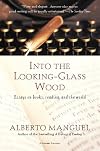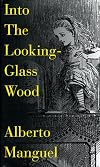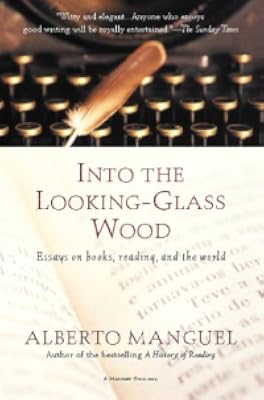
Into the Looking-Glass Wood: Essays on Books, Reading, and the World
by Alberto Manguel
On This Page
Description
A collection of essays that addresses the nature of books and literature as a moral imperative and explores the consequences of society's betrayal of its readers and writers. It features such writers as Jorge Luis Borges, Julio Cortazar, G K Chesterton, St Augustine and Goethe.Tags
Recommendations






Member Reviews
Disclaimer: Alberto Manguel is probably my favourite non-fiction author, ergo this review will inevitably take a rather gushing tone.
I put off eating supper for two hours because I wanted to finish this book, an anthology of his essays. The book's framing device of quotations from 'Alice in Wonderland' and 'Through the Looking Glass' is subtly effective; it reminded me of how wonderful both books are and now I want to reread them. (As an aside, the Alice books are one of only two volumes that I have in duplicate, as I love both the famous Tenniel illustrations and the beautiful set done by Mervyn Peake.)
Manguel's essays are universally humane, beautifully composed, and richly intelligent. He brings together reminisces (he read aloud show more for Borges!), literary criticism, historical reflections, and philosophical musings. I was particularly moved and engrossed by section seven, titled 'Crime and Punishment'. The meditations on Argentina's violent, horrific, and unresolved political past were only more painful for their lucidity. In a more general piece in the same section, Manguel addresses the difficult issue of appreciating writers and writing, when either or both are tainted by racism, misogyny, and/or anti-Semitism. This is a very tricky subject to write about without seeming patronising, insensitive, or just awkward, but Manguel manages it. Somehow we must come to terms with the prejudice inherent in (much) historic literature, without glossing over the terrible oppression it represents nor refusing to read all such literature. I was especially pleased that Manguel quoted Alice Walker here.
Another section contemplates the future of reading, incidentally seeming to predict the development of kindles and iPads; the book was published in 1999. Manguel discusses and analyses the work of his favourite writers, all the while conveying a visceral sense of the joy he finds in reading. I've read a little bit of Mario Vargas Llosa, GK Chesterton, and Cynthia Ozick, so found context and interpretation of their novels fascinating. On the other hand, I've not read any Richard Outram or Julio Cortázar, so was intrigued to discover them. I trust Manguel's taste and greatly enjoy the way he skilfully draws quotes and references from disparate books. It's lovely to travel towards new literary interests on a path of trusted favourites. Other topics covered include the role of the editor, the death of Che Guevara, and the nature of museums. The latter I particularly enjoyed, as it managed to cover such wide ground so elegantly in a mere eight pages.
I could continue in this vein for a while, but, apart from anything else, will soon run out of suitable adverbs of praise. As to why Alberto Manguel is my favourite: he comes closest of any writer to articulating why I so love books, reading, and libraries. I could quote many beautiful, profound, and funny passages from 'Into the Looking-Glass Wood', but this from the final paragraph seems to me best of all:
I find it both terrifying and wonderful that I will not live long enough to finish reading everything that I want to. But I don't need to, books and the reading thereof will continue on. show less
I put off eating supper for two hours because I wanted to finish this book, an anthology of his essays. The book's framing device of quotations from 'Alice in Wonderland' and 'Through the Looking Glass' is subtly effective; it reminded me of how wonderful both books are and now I want to reread them. (As an aside, the Alice books are one of only two volumes that I have in duplicate, as I love both the famous Tenniel illustrations and the beautiful set done by Mervyn Peake.)
Manguel's essays are universally humane, beautifully composed, and richly intelligent. He brings together reminisces (he read aloud show more for Borges!), literary criticism, historical reflections, and philosophical musings. I was particularly moved and engrossed by section seven, titled 'Crime and Punishment'. The meditations on Argentina's violent, horrific, and unresolved political past were only more painful for their lucidity. In a more general piece in the same section, Manguel addresses the difficult issue of appreciating writers and writing, when either or both are tainted by racism, misogyny, and/or anti-Semitism. This is a very tricky subject to write about without seeming patronising, insensitive, or just awkward, but Manguel manages it. Somehow we must come to terms with the prejudice inherent in (much) historic literature, without glossing over the terrible oppression it represents nor refusing to read all such literature. I was especially pleased that Manguel quoted Alice Walker here.
Another section contemplates the future of reading, incidentally seeming to predict the development of kindles and iPads; the book was published in 1999. Manguel discusses and analyses the work of his favourite writers, all the while conveying a visceral sense of the joy he finds in reading. I've read a little bit of Mario Vargas Llosa, GK Chesterton, and Cynthia Ozick, so found context and interpretation of their novels fascinating. On the other hand, I've not read any Richard Outram or Julio Cortázar, so was intrigued to discover them. I trust Manguel's taste and greatly enjoy the way he skilfully draws quotes and references from disparate books. It's lovely to travel towards new literary interests on a path of trusted favourites. Other topics covered include the role of the editor, the death of Che Guevara, and the nature of museums. The latter I particularly enjoyed, as it managed to cover such wide ground so elegantly in a mere eight pages.
I could continue in this vein for a while, but, apart from anything else, will soon run out of suitable adverbs of praise. As to why Alberto Manguel is my favourite: he comes closest of any writer to articulating why I so love books, reading, and libraries. I could quote many beautiful, profound, and funny passages from 'Into the Looking-Glass Wood', but this from the final paragraph seems to me best of all:
'...the point, the essential quality of the act of reading, now and always, is that it tends to no foreseeable end, to no conclusion. Every reading prolongs another, begun in some afternoon thousands of years ago and of which we know nothing; every reading projects its shadow onto the following page, lending it content and context. In this way, the story grows, layer after layer, like the skin of the society whose history this act preserves.'
I find it both terrifying and wonderful that I will not live long enough to finish reading everything that I want to. But I don't need to, books and the reading thereof will continue on. show less
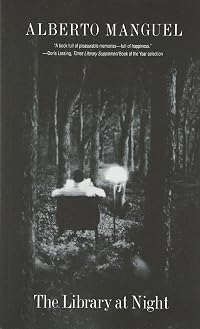
I was first introduced to Alberto Manguel's essays through The Library at Night, an homage to libraries private and public, and a rumination on reading including philosophy, history and literary criticism. Into the Looking-Glass Wood is similar in erudition and style but, much like the book from which he takes its name, its topics are all over the place. In this, you will see more of the man and perhaps a little less of the reader.
Libraries and books are my passion, so naturally I feel more drawn to a book where every essay is about that, and one theme builds on another in a natural progression. That's not to say that I didn't enjoy this collection: "St. Augustine's Computer," a rumination on the tension between books and technology, is show more worth the price of the book alone, and "Taking Chesterton at His Word" caused me to download a few of that author's books on my e-reader to rectify the fact that I've read nothing by him. It simply means that, as a different person with different interests, I was less than enthralled with some essays that had very little meaning or interest for me, personally. Another reader may appreciate more the essay on erotic literature or would have read Richard Outram to more ably connect with what Manguel had to say about him. So though I found it to be a mixed bag, I can fairly confidently recommend it to readers of books about books with the suggestion that there's something for everyone, and it's worthy of thought and discussion long after reading. show less
Libraries and books are my passion, so naturally I feel more drawn to a book where every essay is about that, and one theme builds on another in a natural progression. That's not to say that I didn't enjoy this collection: "St. Augustine's Computer," a rumination on the tension between books and technology, is show more worth the price of the book alone, and "Taking Chesterton at His Word" caused me to download a few of that author's books on my e-reader to rectify the fact that I've read nothing by him. It simply means that, as a different person with different interests, I was less than enthralled with some essays that had very little meaning or interest for me, personally. Another reader may appreciate more the essay on erotic literature or would have read Richard Outram to more ably connect with what Manguel had to say about him. So though I found it to be a mixed bag, I can fairly confidently recommend it to readers of books about books with the suggestion that there's something for everyone, and it's worthy of thought and discussion long after reading. show less
A collection of Manguel’s essays on books, reading, and the world.
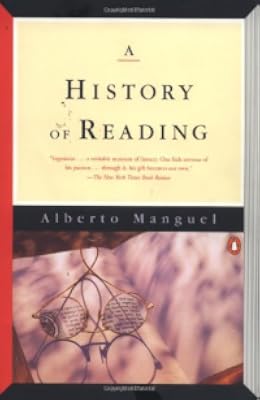
I’m a big fan of Manguel. He is the consummate bibliophile and makes his living writing about books, book spaces, and book history. Every one of his titles is a gem from [The History of Reading] to [The Library at Night]. Comparatively, [Into the Looking-Glass Wood] is a much more fragmented work because it is an anthology, loosely connected together by quotes and themes from [Alice in Wonderland] (in case you couldn’t tell by the title).
In these essays Manguel talks about such things as the difference between terror and horror (“terror, which dilates the soul and excites an intense activity in all our senses, and horror, which contracts them, freezes them, show more somehow destroys them”), the future of books and computers, the state of gay literature, a retelling of the Book of Jonah as artistic parable, meditations on various South American writers and poets, the love life of Borges (who Manguel knew personally), the experience of having the teacher who taught him how to read well and also love books turn out to be a government spy who collaborated with the deaths of Manguel’s classmates, and also this:
“There is no doubt that more oppressed voices should and must be heard. There is no doubt that more Alice Walkers, James Baldwins, Mudrooroos need to come to the surface. But unless there is a whole new breed of readers to take those texts upon themselves, to read them in “new visions of how to live,” not much will change. It is on the readers that we must concentrate, not on the writers, on the readers who will make use of the text and “make something happen.” Unless this education of the reader occurs, no number of new voices will change anything…and if these readers learn to seek out, to interpret, to translate, to put texts into a variety of contexts, to transform the texts through multiple layers of meaning — if we, readers, train ourselves to do this — then we won’t need any voices to be silenced, because we will be able to make choices. A silenced voice, whether silenced voluntarily or not, never disappears.”
It’s an overly idealistic sentiment, I think, that ignores the structures of publishing and the publisher’s interests, but still. It’s a sentiment I can get behind. show less
I’m a big fan of Manguel. He is the consummate bibliophile and makes his living writing about books, book spaces, and book history. Every one of his titles is a gem from [The History of Reading] to [The Library at Night]. Comparatively, [Into the Looking-Glass Wood] is a much more fragmented work because it is an anthology, loosely connected together by quotes and themes from [Alice in Wonderland] (in case you couldn’t tell by the title).
In these essays Manguel talks about such things as the difference between terror and horror (“terror, which dilates the soul and excites an intense activity in all our senses, and horror, which contracts them, freezes them, show more somehow destroys them”), the future of books and computers, the state of gay literature, a retelling of the Book of Jonah as artistic parable, meditations on various South American writers and poets, the love life of Borges (who Manguel knew personally), the experience of having the teacher who taught him how to read well and also love books turn out to be a government spy who collaborated with the deaths of Manguel’s classmates, and also this:
“There is no doubt that more oppressed voices should and must be heard. There is no doubt that more Alice Walkers, James Baldwins, Mudrooroos need to come to the surface. But unless there is a whole new breed of readers to take those texts upon themselves, to read them in “new visions of how to live,” not much will change. It is on the readers that we must concentrate, not on the writers, on the readers who will make use of the text and “make something happen.” Unless this education of the reader occurs, no number of new voices will change anything…and if these readers learn to seek out, to interpret, to translate, to put texts into a variety of contexts, to transform the texts through multiple layers of meaning — if we, readers, train ourselves to do this — then we won’t need any voices to be silenced, because we will be able to make choices. A silenced voice, whether silenced voluntarily or not, never disappears.”
It’s an overly idealistic sentiment, I think, that ignores the structures of publishing and the publisher’s interests, but still. It’s a sentiment I can get behind. show less
A collection of older essays from my absolute favorite writer of nonfiction about reading and libraries. The topics range broadly, and some will be found to be more appealing than others, but all reflect the deep scholarly reflection coupled with wide life experiences that put that abstract information into meaningful context. All of his works are immense pleasures to read and contemplate, and this one (despite being a tad dated: the final essay talks about CD-ROMs, for goodness sakes) is no exception. Particular standouts are the chapters discussing his first-hand experiences with the Argentinean political turmoil.
Some writers are so well-read, so erudite, so in love with the act and the meaning of writing and reading, so well-able to make the links between greatly different books, and so compassionate out of both personal experience and the experience of a lifetime of reading and thinking, that it almost makes one despair about one's own abilities, or maybe it acts as a goal, as a model to strive towards. Manguel is one of those people, and this book shows it.
The book is a collection of essays ranging across a broad range of topics from his appreciation of G.K.Chesterton, to his experiences as a teenager reading to Borges, to the human complexities of betrayal (a teacher whom he revered and who really opened to him the love of literature turns show more out, years later, to have been a spy and informer for the military regime in Argentina), to meditations on the power of prejudice, and thoughts on the value, the complexity, and the brilliance of Alice in Wonderland and Through the Looking Glass.
Here is Manguel on prejudice:
Once a prejudice is set up, it traps within its boundaries a heterogeneous group of individuals whose single common denominator is determined by the prejudice itself. The colour of one's skin, one's varying degrees of alliance to a certain faith, a certain aspect of one's sexual preferences, can and do become the obverse of an object of desire--an object of hatred. No logic governs these choices...
The group created by prejudice comes into existence not by the choice of the individuals forming it, but by the reaction of those outside it....Once limited and defined by this grouping, the quarry can be taunted, excluded from certain areas of society, deprived of certain rights, sometimes arrested, beaten, killed.
There are also, woven throughout the various essays, meditations and thoughts on the power of the written word, and the meaning of these words, these vocabularies that we use to describe the external world and our relationships to it, and to other people, and the limitations of those words. As Manguel notes:
A text allows in itself more freedom than we usually think possible, which is why governments are never really keen on literacy, and why it is usually writers and seldom deep-sea divers or stockbrokers who are imprisoned, tortured, and killed for political reasons. show less
The book is a collection of essays ranging across a broad range of topics from his appreciation of G.K.Chesterton, to his experiences as a teenager reading to Borges, to the human complexities of betrayal (a teacher whom he revered and who really opened to him the love of literature turns show more out, years later, to have been a spy and informer for the military regime in Argentina), to meditations on the power of prejudice, and thoughts on the value, the complexity, and the brilliance of Alice in Wonderland and Through the Looking Glass.
Here is Manguel on prejudice:
Once a prejudice is set up, it traps within its boundaries a heterogeneous group of individuals whose single common denominator is determined by the prejudice itself. The colour of one's skin, one's varying degrees of alliance to a certain faith, a certain aspect of one's sexual preferences, can and do become the obverse of an object of desire--an object of hatred. No logic governs these choices...
The group created by prejudice comes into existence not by the choice of the individuals forming it, but by the reaction of those outside it....Once limited and defined by this grouping, the quarry can be taunted, excluded from certain areas of society, deprived of certain rights, sometimes arrested, beaten, killed.
There are also, woven throughout the various essays, meditations and thoughts on the power of the written word, and the meaning of these words, these vocabularies that we use to describe the external world and our relationships to it, and to other people, and the limitations of those words. As Manguel notes:
A text allows in itself more freedom than we usually think possible, which is why governments are never really keen on literacy, and why it is usually writers and seldom deep-sea divers or stockbrokers who are imprisoned, tortured, and killed for political reasons. show less
No bosque do espelho é mais um livro típico de Alberto Manguel onde cruza as suas próprias experiências literárias com trechos de livros que leu e que dá a conhecer. Ao longo das suas deambulações literárias parte de géneros literários para opiniões políticas ou sociais, falando de vários autores e do seu papel na sociedade.
Bem diferente destes textos iniciais que falam sobre a mutabilidada da experiência da leitura, é o texto que se segue sobre as categorias da leitura, como por exemplo a literatura gay. O autor disserta aqui de forma interessante, mostrando que a categorização pode reduzir os leitores possíveis, sem que na realidade o livro possa ser apreciado por tão curto grupo de leitores:
Manguel reúne, show more também, neste livro, textos literários com alguns detalhes políticos. Não falta um texto apaixonado sobre o papel de Che, ou de Córtazar (cujas deambulações directamente políticas não tiveram grande sucesso), nem exemplos do que alguns autores transmitem sob o papel da mulher
Este é um livro bem diverso. Fala-se do contexto da obra (tal como um quadro que não consegue ser dissociado da sala de exposição onde é exposto), assim como do contexto forçado na obra (a tal etiqueta), e o contexto do próprio leitor:
Manguel aproveita os livros e a escrita para falar de humanidade, dissertando, portanto, sobre a sociedade e o que a obra transparece em determinados contextos. Por vezes, afasta-se, neste conjunto de textos, do que é a literatura e aproveita para falar de aspectos como a tolerância (uma opinião que se assemelha à minha para o conceito de pena – algo que diminui o objecto alvo dessa pena):
Este “belo” exemplo foi recolhido por Manguel de The Red Redmaynes, um romance britânico de detectives. Mas não é o único. Se Padre Brown de Chesterton consegue ter boas ideias e sentimentos, consegue, também, cair nestas ideias (o que não é totalmente de estranhar, considerando os ideais vigentes na época).
Depois de uma panóplia de ideias, Manguel termina com um pesadelo – ficções em que a leitura é castrada, falando de The Martian Chronicles (e no formidável conto There will come soft rains, Usher II de Poe e de Fahrenheit 451. show less
Bem diferente destes textos iniciais que falam sobre a mutabilidada da experiência da leitura, é o texto que se segue sobre as categorias da leitura, como por exemplo a literatura gay. O autor disserta aqui de forma interessante, mostrando que a categorização pode reduzir os leitores possíveis, sem que na realidade o livro possa ser apreciado por tão curto grupo de leitores:
Manguel reúne, show more também, neste livro, textos literários com alguns detalhes políticos. Não falta um texto apaixonado sobre o papel de Che, ou de Córtazar (cujas deambulações directamente políticas não tiveram grande sucesso), nem exemplos do que alguns autores transmitem sob o papel da mulher
Este é um livro bem diverso. Fala-se do contexto da obra (tal como um quadro que não consegue ser dissociado da sala de exposição onde é exposto), assim como do contexto forçado na obra (a tal etiqueta), e o contexto do próprio leitor:
Manguel aproveita os livros e a escrita para falar de humanidade, dissertando, portanto, sobre a sociedade e o que a obra transparece em determinados contextos. Por vezes, afasta-se, neste conjunto de textos, do que é a literatura e aproveita para falar de aspectos como a tolerância (uma opinião que se assemelha à minha para o conceito de pena – algo que diminui o objecto alvo dessa pena):
Este “belo” exemplo foi recolhido por Manguel de The Red Redmaynes, um romance britânico de detectives. Mas não é o único. Se Padre Brown de Chesterton consegue ter boas ideias e sentimentos, consegue, também, cair nestas ideias (o que não é totalmente de estranhar, considerando os ideais vigentes na época).
Depois de uma panóplia de ideias, Manguel termina com um pesadelo – ficções em que a leitura é castrada, falando de The Martian Chronicles (e no formidável conto There will come soft rains, Usher II de Poe e de Fahrenheit 451. show less
“Alberto Manguel is one of my favorite authors, both for his ability to recognize great literature and his deft hand at assembling anthologies. In this collection of his essays he writes gracefully about some of my favorite authors including Jorge Luis Borges, G. K. Chesterton and Cynthia Ozick. But other topics are covered in this wide-ranging collection including "wordplay", aesthetics, and personal memories of reading - of these I especially enjoyed his comments on his childhood reading. All the essays share a love of reading and words that is the hallmark of Manguel's work. In doing so they provide a guide and commentary to fine literature and life. Good reading!”
Members
- Recently Added By
Published Reviews
ThingScore 75
Mit weicher Hand dreht hier ein streitbarer, aber auch sehr nachdenklicher und warmherziger Büchermensch am Kaleidoskop seiner Lese- und Lebensgeschichten; Buch und Welt zerrieseln sich zu immer neuen Mustern.
added by Indy133
Author Information

127+ Works 16,348 Members
Alberto Manguel is a Canadian writer, translator, editor, and critic. Born in Buenos Aires, he has since resided in Israel, Argentina, Europe, the South Pacific, and Canada.
Common Knowledge
- Canonical title
- Into the Looking-Glass Wood: Essays on Books, Reading, and the World
- Original publication date
- 1998
- Epigraph
- "But what happens when you come to the beginning again?" Alice ventured to ask.
Alice's Adventures in Wonderland, Chapter VII - Dedication
- To Larry Fagin, best of friends, who was there in the very beginning.
- First words
- When I was eight or nine, in a house that no longer stands, someone gave me a copy of Alice's Adventures in Wonderland & Through the Looking Glass.
- Last words
- (Click to show. Warning: May contain spoilers.)The waiting continues.
- Blurbers
- Steiner, George
Classifications
Statistics
- Members
- 439
- Popularity
- 69,960
- Reviews
- 11
- Rating
- (3.94)
- Languages
- 7 — English, French, German, Hebrew, Portuguese, Romanian, Spanish
- Media
- Paper, Ebook
- ISBNs
- 18
- ASINs
- 2