On This Page
Description
In book forty-six of the new Penguin Maigret series, Maigret finds himself drawn into an unsavoury world of political corruption, scandal and cover ups when he is summoned to a clandestine meeting by a desperate government minister one evening. 'Once alone in his office, he went over and opened the window as if being in charge of this case made him gasp for a breath of fresh air... It made him feel almost fond of the petty thieves, maniacs, swindlers and offenders of all kinds that he show more usually had to deal with. show lessTags
Recommendations














































Member Reviews
The squeaky-clean minister of public works finds himself being scapegoated by unseen politic forces and calls in Detective Chief Inspector Maigret. The mystery is a wonderfully plotted one, but the aspect that will long remain with me is the argument proffered that politics is a business too dirty for decent men. Clearly, by the end of the novel Minister Auguste Point has joined Maigret — and, presumably, author Georges Simenon — in that conclusion; however, that leaves the obvious point. If upright, honest men like Point all scurry away, that leaves the government in the hands of scurrilous, deceitful operators like Parliamentary Deputy Joseph Mascoulin. Very unsettling.
An excellent Maigret novel. It revolves around a report, the Calame Report, that will expose a scandal around the collapse of a sanatorium killing children. The report is never physically found during the investigation but it does exist and possibly in more than one copy. On page 155, a copying device is revealed, 'a Photostat machine...The machine made a gentle humming sound and he inserted the sheets of paper one at a time...the damp sheets emerged from a slit and the secretary spread them out to dry on the table'. This is described as a 'wonderful invention' and is critical to the outcome of this story of murky corruption involving politicians, companies and rogues. The book was first published in 1955.
The author and his inspector look back together over four of their greatest cases. Where is the vital report that holds the key to the fate of the French government? What is the secret behind the sudden disappearance of one of Paris' best known solicitors? And will the demented double murderer strike again?
Loved this as much as all of them. Fav character: the minister.
Le commissaire Maigret est ici confronté à une sombre affaire politique - un monde qu'il n'a jamais aimé. Un sanatorium pour enfants s'est écroulé par suite d'un glissement de terrain, causant des dizaines de morts. Peu de temps après le drame, la rumeur court qu'un rapport technique avait nettement mis en garde les pouvoirs publics contre le danger. Ce rapport a été remis à Auguste Point, nouveau ministre des Travaux publics, mais le document lui a été volé la nuit suivante. Ses adversaires politiques l'accusent déjà de l'avoir fait disparaître afin de protéger les responsables du désastre. Il fait officieusement appel à Maigret pour retrouver le rapport. Parlementaires corrompus, presse de chantage, cynisme des show more puissants... Le commissaire explore de sinistres coulisses. Ce tableau de moeurs n'a pas vieilli, et le drame d'Auguste Point - un homme intègre, dévoué à son pays, légèrement naïf et piégé - rappellera aux lecteurs des affaires plus récentes. show less
Jun 26, 2007French
Appelé au secours en toute discrétion par un ministre pris dans un traquenard, Maigret va devoir se mêler des jeux de pouvoirs au milieu des journalistes et sous la pression de l’impatiente opinion publique.
Et il aime pas ça, le Jules ! Mais voilà, il va bien falloir qu’il s’y coltine !
Un bon Maigret, sans mort (tiens, c’est plutôt rare) dans lequel on apprend que le réveil du commissaire, c’est Madame et son café
Et il aime pas ça, le Jules ! Mais voilà, il va bien falloir qu’il s’y coltine !
Un bon Maigret, sans mort (tiens, c’est plutôt rare) dans lequel on apprend que le réveil du commissaire, c’est Madame et son café
Feb 13, 2023 (Edited)French
Paris, 1950'erne?
Et ret nyopført sanatorie for fattige børn ved Clairfond er styrtet sammen pgra oversvømmelser. 128 børn døde. En rapport af en hr Calame har efter sigende forudsagt katastrofen. Rapporten er forsvundet, men et eksemplar - måske det eneste - bliver afleveret til ministeren for offentlige arbejder, Auguste Point. Den forsvinder fra hans lejlighed og fortvivlet søger han hjælp ved Maigret personligt.
Maigret får hjælp af sine betroede medarbejdere og de opsporer stille og roligt sandheden. Undervejs opdager de hurtigt at de tramper på de samme stier som sikkerhedspolitiet.
En hr Mascoulin er blevet kontaktet af en idealist Piquemal. Mascoulin henviser Piquemal til at henvende sig til ministeren for offentlige show more arbejder, men Mascoulin får i hemmelighed taget en fotokopi af rapporten først.
I ministeriet får Auguste Point rapporten og læser den, men Mascoulin får via en kontakt, Fleury, på ministerens kontor en til at stjæle rapporten, hvilket selvfølgeligt miskrediterer ministeren.
Maigret finder ud af hvem der har stjålet rapporten: Eugène Benoît, men denne vil ikke afsløre hvem der hyrede ham til opgaven. Det er nok til at redde ministeren fra beskyldningen om at have destrueret rapporten for at hjælpe de skyldige i katastrofen, men det forhindrer ikke at Mascoulin vinder stort på affæren.
Glimrende krimi med eksempler på hvor komplicerede politiske affærer kan være. Der er også glimrende skildringer af Maigrets forhold til sine ansatte og til sin kone. show less
Et ret nyopført sanatorie for fattige børn ved Clairfond er styrtet sammen pgra oversvømmelser. 128 børn døde. En rapport af en hr Calame har efter sigende forudsagt katastrofen. Rapporten er forsvundet, men et eksemplar - måske det eneste - bliver afleveret til ministeren for offentlige arbejder, Auguste Point. Den forsvinder fra hans lejlighed og fortvivlet søger han hjælp ved Maigret personligt.
Maigret får hjælp af sine betroede medarbejdere og de opsporer stille og roligt sandheden. Undervejs opdager de hurtigt at de tramper på de samme stier som sikkerhedspolitiet.
En hr Mascoulin er blevet kontaktet af en idealist Piquemal. Mascoulin henviser Piquemal til at henvende sig til ministeren for offentlige show more arbejder, men Mascoulin får i hemmelighed taget en fotokopi af rapporten først.
I ministeriet får Auguste Point rapporten og læser den, men Mascoulin får via en kontakt, Fleury, på ministerens kontor en til at stjæle rapporten, hvilket selvfølgeligt miskrediterer ministeren.
Maigret finder ud af hvem der har stjålet rapporten: Eugène Benoît, men denne vil ikke afsløre hvem der hyrede ham til opgaven. Det er nok til at redde ministeren fra beskyldningen om at have destrueret rapporten for at hjælpe de skyldige i katastrofen, men det forhindrer ikke at Mascoulin vinder stort på affæren.
Glimrende krimi med eksempler på hvor komplicerede politiske affærer kan være. Der er også glimrende skildringer af Maigrets forhold til sine ansatte og til sin kone. show less
Sep 30, 2011 (Edited)Danish
Members
- Recently Added By
Lists

EU Fiction: 1950-2022
223 works; 68 members

Huxley's Reading Log 2018
37 works; 1 member

Reading LIst
648 works; 1 member
Author Information

1,336+ Works 63,275 Members
The prolific Belgian-born writer Georges Simenon produced hundreds of fictional works under his own name and 17 pseudonyms, in addition to more than 70 books about Inspector Maigret, long "the favorite sleuth of highbrow detective-story readers" (SR). More than 50 "Simenons" have been made into films. In addition to his mystery stories, he wrote show more what he called "hard" books, the serious psychological novels numbering well over 100. The autobiographical Pedigree, set in his native town of Liege, is perhaps his finest work. The publication of Simenon's intimate memoirs also attracted considerable attention. Simenon himself once said that he would never write a "great novel." Yet Gide called him "a great novelist, perhaps the greatest and truest novelist we have in French literature today," and Thornton Wilder (see Vol. 1) found that Simenon's narrative gift extends "to the tips of his fingers." The following are some of Simenon's novels, exclusive of the Maigret detective stories, that are in print. (Bowker Author Biography) Georges Simenon was born on February 13, 1903 in Liege, Belgium. He wrote more than 200 fiction works under 16 different pseudonyms. His first book, The Case of Peter the Lent led to 80 more of the like including the main character, Inspector Maigret. He published over 400 books that were translated into 50 different languages and sold by the millions. He also wrote psychological novels, including The Man Who Watched the Train Go By. He died on September 4, 1989 in Lausanne. (Bowker Author Biography) show less
Some Editions
Series

Belongs to Publisher Series
Work Relationships
Common Knowledge
- Canonical title
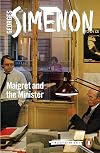
- Maigret and the Minister
- Original title
- Maigret chez le ministre, 1954
- Alternate titles
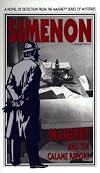
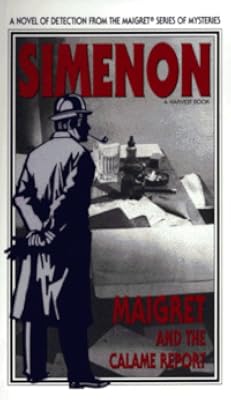
- Maigret and the Calame Report
- Original publication date
- 1954
- People/Characters
- Jules Maigret; Auguste Point; Julien Calame; Athur Nicoud; Piquemal; Melle Blanche (show all 11); Jacques Fleury; Mascoulin; Albert Janvier; Albert Lapointe; André Lucas
- Important places*
- Parigi, Francia; Francia
- Related movies*
- High Politics (1962 | IMDb); Maigret chez le ministre (1987 | IMDb); Maigret chez le ministre (2002 | IMDb); Maigret at the Minister (1987 | IMDb); Maigret and the Minister (1993 | IMDb)
- First words
- As always when he returned home at night, Maigret paused at the same place, just past the gas lamp, and looked up at the lit windows of his apartment.
- Last words
- (Click to show. Warning: May contain spoilers.)"He'll get what's coming to him one day . . ."
- Original language*
- Francese
- Disambiguation notice*
- In the French original, Maigret chez le ministre (1954).
Published variously in English as:
(i) Maigret and the Calame Report (trans. Moura Budberg) (1969);
(ii) Maigret ... (show all)and the Minister (trans. Moura Budberg) (1969);
(iii) Maigret and the Minister (trans. Ros Schwartz) (2017).
*Some information comes from Common Knowledge in other languages. Click "Edit" for more information.
Classifications
Statistics
- Members
- 456
- Popularity
- 67,392
- Reviews
- 10
- Rating
- (3.53)
- Languages
- 13 — Catalan, Danish, Dutch, English, Finnish, French, German, Hungarian, Italian, Norwegian, Portuguese, Spanish, Swedish
- Media
- Paper, Audiobook, Ebook
- ISBNs
- 36
- ASINs
- 17