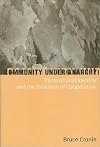
Community Under Anarchy
by Bruce Cronin
On This Page
Description
How do states distinguish friends from enemies, partners from competitors, and communities from outsiders? Community Under Anarchy shows how the development of common social identities among political elites can lead to deeper, more cohesive forms of cooperation than what has been previously envisioned by traditional theories of international relations. Drawing from recent advances in social theory and constructivist approaches, Bruce Cronin demonstrates how these cohesive structures evolve show more from a series of discrete events and processes that help to diminish the conceptual boundaries dividing societies. Community Under Anarchy supports this thesis through a new and original interpretation of the Concert of Europe, the Holy Alliance, and the political integration of Italy and Germany. In the wake of the upheavals created by the French Revolution and the revolutions of 1848, political elites helped to validate new forms of governance by creating transnational reference groups from which they could draw legitimacy. As a result, European states were able to overcome the polarizing effects of anarchy and create a concert system, a common security association, and two amalgamated security communities. The empirical cases demonstrate how socially derived identities can shape state preferences and create new roles for state leaders. show lessMembers
- Recently Added By
Author Information

4 Works 20 Members
Bruce Cronin is Professor of Political Science at the City College of New York and the Graduate Center of the City University of New York. He is also the author of Institutions for the Common Good and Community Under Anarchy.
Classifications
- Genres
- Nonfiction, Politics and Government
- DDC/MDS
- 327.1 — Society, government, & culture Political science International Relations: Spies Foreign policy and specific topics in international relations
- LCC
- JZ1318 .C76 — Political Science International relations International relations Scope of international relations. Political theory.
- BISAC
Statistics
- Members
- 7
- Popularity
- 2,749,932
- Languages
- English
- Media
- Paper
- ISBNs
- 2