On This Page
Description
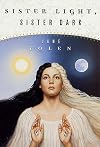
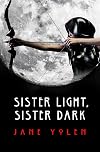
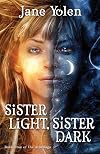
The first book of a thought-provoking fantasy trilogy about a warrior woman who, together with her dark twin, is destined to remake the world Legend foretold the child named Jenna, who was three-times orphaned before she could crawl, a fate that would leave her in the hands of women who worshipped the benevolent goddess Great Alta. In this world without men, Jenna comes of age, learning quickly the skills of close combat. But her most powerful gift lies elsewhere: a mirror sister who emerges show more only in the darkness-a twin named Skada-and shares the soul of the young, white-haired warrior who might well be the goddess reborn. But if Jenna is, in truth, the one whose coming is awaited, there is cause for great alarm among those who rule the Dales, for the prophecy speaks of upheaval and change, and a devastating end of all things. An incomparable world-builder and one of America's premier fantasists, the remarkable Jane Yolen begins a three-part saga as inventive, intelligent, and exciting as anything that has ever been produced in the literature of the fantastic. Brilliantly contrasting the "true" story of Jenna with the later myths, poetry, and so-called scholarship that her coming engendered, Yolen creates a culture as richly imagined as those found in the acclaimed novels of Ursula K. Le Guin. A truly magnificent work, Sister Light, Sister Dark takes fantasy fiction to wondrous places it has never gone before. show lessTags
Recommendations















Member Recommendations

sandstone78 Both have poems and songs of the story world used to give the narrative a wider backdrop- Sister Light, Sister Dark gives these equal status to the narrative and cuts between the story, the myth, and the legend, whereas The Broken Citadel places them at the end of each chapter, reflecting back on the thoughts or actions of characters both onscreen and off.

sandstone78 The short story Sister Light, Sister Dark in Heroic Visions was later rewritten/expanded to the novel Sister Light, Sister Dark. It's been a while since I read the novel, so unfortunately I can't say the exact relationship between them scene-wise.
Member Reviews
I'm a sucker for young adult books, for fantasy, and for history, and this book hit all three kinks nicely.
Sister Light, Sister Dark is not actually a fairy tale or myth, but it has that feel to it. Yolen creates a rich and interesting world that has a history of undervaluing its female babies. A folk hero began the tradition of 'Hames', women-only communities composed largely of babies taken in after being found left on hillsides, and then later of orphans or unwanted children taken to them.
These women worship a figure called Alta, who is composed of light and dark, and they have the ability to call forth shadow sisters - twins who exist only in the light of the moon or certain lamps, and who mirror and yet don't mirror their light show more sisters. This ability is legend even in their own time - the one important character we meet from outside the Hame believes it to be entirely myth and is dumbfounded to find that the girls he meets not only believe the legends, but treat them as matter of fact day to day truths.
The main trend of the story here follows Joanna, a girl brought to the Hame after her mother dies in childbirth, and a prophecy that suggests she may be the girl who changes everything.
What makes it stand out among from other books of this nature is the fantastic world building Yolen does. Her Hames are interesting and believable. Yolen employs a fascinating trick of beginning each chapter with a brief myth, legend, ballad or out and out history which tells the story we have just heard, or are just about to hear, differently. I found it absolutely fascinating to see the myths and histories set down side by side with the 'true story', and in fact found it to be a fantastic commentary on what we can ever really know about historical events so far removed - and how different (or not different) history really is from myth and legend. It helped that Yolen had the tone of a particular sort of historian down pat, right down to the academic squabbles mid-text.
The other thing that sets this book apart are the richly drawn characters. Jenna is a wonderful heroine, and her struggles are interesting.
I was horrified to turn the last page and realize that this is the first in a trilogy - and it's the sort where you want to have the next on hand - but I can't say I'm disappointed to have two more to look forward to! show less
Sister Light, Sister Dark is not actually a fairy tale or myth, but it has that feel to it. Yolen creates a rich and interesting world that has a history of undervaluing its female babies. A folk hero began the tradition of 'Hames', women-only communities composed largely of babies taken in after being found left on hillsides, and then later of orphans or unwanted children taken to them.
These women worship a figure called Alta, who is composed of light and dark, and they have the ability to call forth shadow sisters - twins who exist only in the light of the moon or certain lamps, and who mirror and yet don't mirror their light show more sisters. This ability is legend even in their own time - the one important character we meet from outside the Hame believes it to be entirely myth and is dumbfounded to find that the girls he meets not only believe the legends, but treat them as matter of fact day to day truths.
The main trend of the story here follows Joanna, a girl brought to the Hame after her mother dies in childbirth, and a prophecy that suggests she may be the girl who changes everything.
What makes it stand out among from other books of this nature is the fantastic world building Yolen does. Her Hames are interesting and believable. Yolen employs a fascinating trick of beginning each chapter with a brief myth, legend, ballad or out and out history which tells the story we have just heard, or are just about to hear, differently. I found it absolutely fascinating to see the myths and histories set down side by side with the 'true story', and in fact found it to be a fantastic commentary on what we can ever really know about historical events so far removed - and how different (or not different) history really is from myth and legend. It helped that Yolen had the tone of a particular sort of historian down pat, right down to the academic squabbles mid-text.
The other thing that sets this book apart are the richly drawn characters. Jenna is a wonderful heroine, and her struggles are interesting.
I was horrified to turn the last page and realize that this is the first in a trilogy - and it's the sort where you want to have the next on hand - but I can't say I'm disappointed to have two more to look forward to! show less
(3.5)
Jenna, a white-haired babe orphaned three times, is taken in and raised by an all-women community who worships a white-haired goddess named Alta. There, she learns about dark sisters - shadow women called out from a great mirror who only appear during the night. She also discovers that she might be the subject of a prophecy that foretells the goddess's rebirth on earth.
Folktales, ballads, and history lessons interrupt each chapter, told from sometime in the future looking back. It really reveals how corrupt history can become with each retelling and from who's telling it (the historians are all men, lecturing about what they thought they knew about the all-women communities, while what's shown to the readers real-time in the show more chapters tend to differ).
I ended up enjoying the book, but it took until halfway for the story to really get moving. And I felt the entire book was written up to set up its sequel, which bummed me out. I wished the book had a complete beginning, middle, and ending. I might pick up the sequel, but we'll see . . . show less
Jenna, a white-haired babe orphaned three times, is taken in and raised by an all-women community who worships a white-haired goddess named Alta. There, she learns about dark sisters - shadow women called out from a great mirror who only appear during the night. She also discovers that she might be the subject of a prophecy that foretells the goddess's rebirth on earth.
Folktales, ballads, and history lessons interrupt each chapter, told from sometime in the future looking back. It really reveals how corrupt history can become with each retelling and from who's telling it (the historians are all men, lecturing about what they thought they knew about the all-women communities, while what's shown to the readers real-time in the show more chapters tend to differ).
I ended up enjoying the book, but it took until halfway for the story to really get moving. And I felt the entire book was written up to set up its sequel, which bummed me out. I wished the book had a complete beginning, middle, and ending. I might pick up the sequel, but we'll see . . . show less
I really liked this book, though the story did have its problems. I think my favorite part was seeing the difference between the happenings of the story and the later interpretations of historians, musicians, and poets of the society long after it took place. The religion of Jenna's people reminds me of the religion of the people in the Dragon Age games in that it has a vague, female Jesus feel to it, but it also has a hearty helping of reconstructed ancient European religion in there too. Unfortunately, even though I really enjoyed the sections about the future interpretations and the songs, I can see what other reviewers have said about them jarring the reader out of the plot. I did have a hard time keeping my attention on the story, show more though that may have also been because I have had a lot going on in my life to think about the past few weeks, or because the story was geared towards much younger readers. I was also a little thrown by the obvious subplot that the least academic historian writing about the subject was the one most right about what actually happened. While that may be true in this fantasy world, I'm leery of people taking that message back to our real world and doubting historians/archaeologists about their research. I've seen a little of what's on the real world side of that profession and I know that the pickiness of the field is there to ensure that no one is led astray and that spiritually or politically motivated ideologies are not warping the academic sources being produced, though that's happened in the past.
Tl;dr This book is beautiful, and I really enjoyed a look into a fantasy world that felt real because of the layers, but I would caution people not to take it to heart as a commentary on our world. This would be best for young readers and those who have good concentration skills. show less
Tl;dr This book is beautiful, and I really enjoyed a look into a fantasy world that felt real because of the layers, but I would caution people not to take it to heart as a commentary on our world. This would be best for young readers and those who have good concentration skills. show less
I remember reading Sister Light, Sister Dark and White Jenna when they first came out way back in the late 1980's. I was out of college but reading young adult fiction voraciously. Yes, I read almost everything voraciously but I didn't really have access to modern YA books when I was growing up. We rarely bought books from major bookstores though my family frequented a book exchange several times a year. I always had access to private libraries (I never went to a public library until I was in college) but they were limited by their focus. Several of the libraries belonged to private christian schools and in one there was no science fiction or fantasy other than Tolkein and C.S. Lewis. The books were more reliable for research than for show more fun reading.
Anyway, I loved Light Sister, Dark Sister and the year of waiting for White Jenna seemed impassable. Rereading these books I felt less of the thrill and some chafing at the structure of Myth, Legend, History, Story. I did find the differences in the tellings interesting and let my mind follow how these differences could happen but I felt like they broke the story into less flowing parts.
They are complicated books to try to summarize. The worshippers of Alta are set apart communities of women. They practice religion and life that follow the sayings of Great Alta and their warriors are well known and respected. One of their great secrets is their practice of calling shadow sisters from a mirror to join them in this world. Jenna seems to fulfill an ancient prophecy through her unusual birth and mothers but she and her hame leader are not sure and ask for greater signs. When Jenna and her friend unknowingly become tangled in political intrigue, the fury of the reigning king and his 4 lords are brought against the communities of women. Whether or not she wasnts to be involved, Jenna is central to both the beginning and the end. Priestesses keep reminging everyone to read the prophecies "on the slant".
An added bonus for those of you who are musically inclined, each book has the words and music for the songs in the story.
I recommend this book, I guess to people in 5th grade through high school. show less
Anyway, I loved Light Sister, Dark Sister and the year of waiting for White Jenna seemed impassable. Rereading these books I felt less of the thrill and some chafing at the structure of Myth, Legend, History, Story. I did find the differences in the tellings interesting and let my mind follow how these differences could happen but I felt like they broke the story into less flowing parts.
They are complicated books to try to summarize. The worshippers of Alta are set apart communities of women. They practice religion and life that follow the sayings of Great Alta and their warriors are well known and respected. One of their great secrets is their practice of calling shadow sisters from a mirror to join them in this world. Jenna seems to fulfill an ancient prophecy through her unusual birth and mothers but she and her hame leader are not sure and ask for greater signs. When Jenna and her friend unknowingly become tangled in political intrigue, the fury of the reigning king and his 4 lords are brought against the communities of women. Whether or not she wasnts to be involved, Jenna is central to both the beginning and the end. Priestesses keep reminging everyone to read the prophecies "on the slant".
An added bonus for those of you who are musically inclined, each book has the words and music for the songs in the story.
I recommend this book, I guess to people in 5th grade through high school. show less
I decided to go back and re-read my favorites from childhood and this one remained good, but not as great as I had remembered. The world-building is good and the contrast between modern and mythology great, but some of the plot devices bothered me, especially having the main characters skip ahead years through magical intervention.
Sister Light, Sister Dark is the beginning to a YA fantasy trilogy. And let me emphasize that it is very much a beginning and not at all a complete story. Sister Light, Sister Dark intermingles songs, legends, and historical analysis with the story of Jenna, a girl who’s birth was prophesied by the followers of Alta, a cult of women warriors. When they’re fourteen, the followers of Alta first call up their dark sisters, who can appear only in shadow.
Sister Light, Sister Dark being a beginning and not a complete story on it’s own should not be a problem. Isn’t this the case for many fantasy series? However, Sister Light, Sister Dark is not strong enough to compel me to read the sequel. Upon finishing the book, my overall feeling show more was confusion that I’d reached the end.
Sister Light, Sister Dark felt like an older fantasy novel, which would be accurate since it was published in 1988. It’s YA and includes elements of coming of age, but it doesn’t follow the typical path of modern YA fantasy novels (it’s not so focused on romance, for one). Something that also felt older, although you could debate if this narrative trend has really decreased, was the heavy reliance on prophecy. There wouldn’t be much of a story at all to Sister Light, Sister Dark if it weren’t for Jenna being the child of prophecy.
While I didn’t care much about the songs or legends inter spaced with the main story, I did like the parts written by presumed future historians. They don’t add to the plot of the book, but it does provide commentary on how historians can see the past through their own cultural assumptions. The historians don’t believe that the characters and warrior women could really have existed and dismiss the characters and events of Sister Light, Sister Dark has folklore. It reminds of reading about how females have been identified as male because they were buried with weapons. This examination of how the narrative of history is shaped and relates to the truth was my favorite part of Sister Light, Sister Dark.
Themes surrounding gender can also be found within the main story line. Besides the obvious focus on sisterhood, the followers of Alta dwell in a land that’s implied to have been formally matriarchal but is now patriarchal. The followers of Alta are an exception and remnant of an older way.
While there was ultimately not enough about Sister Light, Sister Dark to get me to read the sequel, it seems a decent enough classic fantasy novel. If you’re looking for 1980s fantasy novels dealing with gender, it might be a good one to pick up.
Originally posted on The Illustrated Page.
I received a free ARC copy of this book from Netgalley in exchange for an honest review. show less
Sister Light, Sister Dark being a beginning and not a complete story on it’s own should not be a problem. Isn’t this the case for many fantasy series? However, Sister Light, Sister Dark is not strong enough to compel me to read the sequel. Upon finishing the book, my overall feeling show more was confusion that I’d reached the end.
Sister Light, Sister Dark felt like an older fantasy novel, which would be accurate since it was published in 1988. It’s YA and includes elements of coming of age, but it doesn’t follow the typical path of modern YA fantasy novels (it’s not so focused on romance, for one). Something that also felt older, although you could debate if this narrative trend has really decreased, was the heavy reliance on prophecy. There wouldn’t be much of a story at all to Sister Light, Sister Dark if it weren’t for Jenna being the child of prophecy.
While I didn’t care much about the songs or legends inter spaced with the main story, I did like the parts written by presumed future historians. They don’t add to the plot of the book, but it does provide commentary on how historians can see the past through their own cultural assumptions. The historians don’t believe that the characters and warrior women could really have existed and dismiss the characters and events of Sister Light, Sister Dark has folklore. It reminds of reading about how females have been identified as male because they were buried with weapons. This examination of how the narrative of history is shaped and relates to the truth was my favorite part of Sister Light, Sister Dark.
Themes surrounding gender can also be found within the main story line. Besides the obvious focus on sisterhood, the followers of Alta dwell in a land that’s implied to have been formally matriarchal but is now patriarchal. The followers of Alta are an exception and remnant of an older way.
While there was ultimately not enough about Sister Light, Sister Dark to get me to read the sequel, it seems a decent enough classic fantasy novel. If you’re looking for 1980s fantasy novels dealing with gender, it might be a good one to pick up.
Originally posted on The Illustrated Page.
I received a free ARC copy of this book from Netgalley in exchange for an honest review. show less
Such an interesting format! Love the world building, love the characters, love the scientific explanations. I’m curious and interested to see where this story goes next.
Members
- Recently Added By
Lists

Best Feminist Science Fiction
188 works; 35 members
Author Information

665+ Works 104,676 Members
Jane Yolen was born February 11, 1939 in New York City. She received a bachelor's degree from Smith College in 1960 and a master's degree in education from the University of Massachusetts in 1976. After college, she became an editor in New York City and wrote during her lunch break. She sold her first children's book, Pirates in Petticoats, at the show more age of 22. Since then, she has written over 300 books for children, young adults, and adults. Her other works include the Emperor and the Kite, Owl Moon, How Do Dinosaurs Say Goodnight? and The Devil's Arithmetic. She has won numerous awards including the Kerlan Award, the Regina Medal, the Keene State Children's Literature Award, the Caldecott Medal, two Nebula Awards, two Christopher Medals, the World Fantasy Award, three Mythopoeic Fantasy Awards, the Golden Kite Award, the Jewish Book Award, the World Fantasy Association's Lifetime Achievement Award, and the Association of Jewish Libraries Award. (Bowker Author Biography) show less
Some Editions
Awards and Honors
Awards
Series

Belongs to Publisher Series
Work Relationships
Is contained in
Common Knowledge
- Canonical title
- Sister Light, Sister Dark
- Original title
- Sister Light, Sister Dark
- Original publication date
- 1988
- People/Characters
- Jenna; Pynt; Skada
- Dedication
- For Jessica who mothered the book and for Patty, Ann, Shulamith, Zane, and Kara who nursed it along the way
Special thanks to Joyce Rankin, who helped me write down the music of the Dales - First words
- Then Great Alta plaited the left side of her hair, the golden side, and let it fall into the sinkhole of night.
- Last words
- (Click to show. Warning: May contain spoilers.)So it was and so it will be. Blessed be.
- Original language
- English
Classifications
Statistics
- Members
- 881
- Popularity
- 30,935
- Reviews
- 19
- Rating
- (3.83)
- Languages
- English, Spanish
- Media
- Paper, Ebook
- ISBNs
- 11
- ASINs
- 4