On This Page
Description
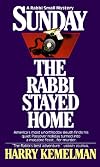
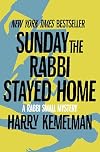
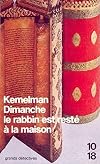
HTML:As Passover approaches, Rabbi Small contends with infighting, backstabbing, and an actual murder in this New York Times bestseller As Rabbi David Small's 5-year contract winds down at the synagogue in Barnard's Crossing, Massachusetts, some members of the congregation are plotting to remove him; others are whispering about starting a new temple of their own across the street. When the rabbi gets an invitation to perform Passover services at a local university, he's eager to get away show more from the bickering and spend a few days on campus. But instead of peace and enlightenment, he finds a murder wrapped up in drug deals and racial tensions. From tuned-out hippies to political zealots, the college is full of potential suspects. Once again it's up to the rabbi to draw on his deductive skills to solve the case—and avoid getting sucked into the bitter culture war—before the killer strikes again. Literature. Fiction. Mystery. show lessTags
Recommendations



















Member Reviews
The rabbi becomes involved in murder and marijuana in the midst of even more synagogue politics. The formula is set by now but the characters are comfortable although each book introduces a new set of synagogue idiots who don't appreciate the rabbi but will learn better by book's end. Like all the other entries, however, this is very dated in its attitude about just about everything.
This mystery is a product of its time and does show its age. However, if you are willing to step back in time, then it is a good mystery with a few red herrings. I admit that those pulled me off track sometimes.
One of the things I like about this series is that the murders don't happen so fast that you wonder how the town remains populated. It has been a few years since we last visited with the rabbi; he's in his sixth year in the town. Suspicion in the murder of a young man falls upon some of the younger members of the congregation, so the rabbi gets involved. Add in drugs (marijuana, oh, the horror) and civil rights and you get a picture of the society in the late 1960s.
The author again plays fair with the audience and the mystery is show more solvable with the information the reader gets. While written in 1969, I think the book could appeal to readers who enjoy period mysteries or cozy mysteries. show less
One of the things I like about this series is that the murders don't happen so fast that you wonder how the town remains populated. It has been a few years since we last visited with the rabbi; he's in his sixth year in the town. Suspicion in the murder of a young man falls upon some of the younger members of the congregation, so the rabbi gets involved. Add in drugs (marijuana, oh, the horror) and civil rights and you get a picture of the society in the late 1960s.
The author again plays fair with the audience and the mystery is show more solvable with the information the reader gets. While written in 1969, I think the book could appeal to readers who enjoy period mysteries or cozy mysteries. show less
3.5*
I thought that this 3rd book in the Rabbi Small series was more dated than the previous books, though the late 1960's suburban perspectives on marijuana and the civil rights movement was thought-provoking. I still like Rabbi Small and the police chief Hugh Lanigan. Perhaps one reason why I didn't think that this book was quite as good as the first two was the amount of time spent on the internal politics of the synagogue - my mother would have enjoyed it more than I did!
I thought that this 3rd book in the Rabbi Small series was more dated than the previous books, though the late 1960's suburban perspectives on marijuana and the civil rights movement was thought-provoking. I still like Rabbi Small and the police chief Hugh Lanigan. Perhaps one reason why I didn't think that this book was quite as good as the first two was the amount of time spent on the internal politics of the synagogue - my mother would have enjoyed it more than I did!
I thought that this 3rd book in the Rabbi Small series was more dated than the previous books, though the late 1960's suburban perspectives on marijuana and the civil rights movement was thought-provoking. I still like Rabbi Small and the police chief Hugh Lanigan. Perhaps one reason why I didn't think that this book was quite as good as the first two was the amount of time spent on the internal politics of the synagogue - my mother would have enjoyed it more than I did!
Also in the third story of Rabbi Small his job in the community is at stake. He has been working as a rabbi for six years now. Since the community leaders change annually, he always has an opposition first, before he sits firmly in the saddle again. This time the offsprings of his opponents are involved in a murder. Rabbi Small quickly realizes that they have nothing to do with it and is trying to get them out of the investigation as quickly as possible. These young Jewish parishioners stand by their Rabbi and the close bond with their mothers they can convince the board members of the community that they have a good rabbi.
This story is again amusingly written and it was a fast reading.
This story is again amusingly written and it was a fast reading.
amateur-sleuth, law-enforcement, small-town, Jewish, Jewish-law, murder, murder-investigation, suspicion*****
I think that the publisher's blurb should be rewritten after all these years. Originally published June 1, 1969, this story is timely for 2021 just as it was then. The attitude of the Jewish and non-Jewish people of Barnard's Crossing, Massachusetts might just surprise some of the current protesters.
The story begins with synagogue politics near Passover and moves into murder and marijuana sales with local college students in the middle. The local police tend toward a nonresident, but Rabbi Small has no such agenda. Good story and particularly apt.
George Guidall is well suited as narrator.
I think that the publisher's blurb should be rewritten after all these years. Originally published June 1, 1969, this story is timely for 2021 just as it was then. The attitude of the Jewish and non-Jewish people of Barnard's Crossing, Massachusetts might just surprise some of the current protesters.
The story begins with synagogue politics near Passover and moves into murder and marijuana sales with local college students in the middle. The local police tend toward a nonresident, but Rabbi Small has no such agenda. Good story and particularly apt.
George Guidall is well suited as narrator.
This was enjoyable. The mystery was pretty easy, but I like it for all the little insights into Jewish ethics and culture. Rabbi Small is my kind of guy. Little bits of wisdom amongst tons of common sense.
Members
- Recently Added By
Lists

Books Read in 2014
2,341 works; 86 members

Books Read in 2016
4,666 works; 197 members
Author Information

30+ Works 7,602 Members
Harry Kemelman was born in Boston, Massachusetts in 1908. After studying English Literature at Boston University and earning an M.A. from Harvard University in 1931, Kemelman worked as a teacher in several Boston high schools, and later became a private businessman. During this time, he also pursued a career as a freelance writer. Kemelman is best show more known for his mystery-based rabbi books about David Small, a rabbi who solves murder cases. His early stories appeared in Ellery Queen's Mystery Magazine. His first rabbi novel, Friday the Rabbi Slept Late, received the Edgar Allan Poe Award from the Mystery Writers of America in 1964. Some of Kemelman's other novels in the rabbi series include Saturday the Rabbi Went Hungry, Sunday the Rabbi Stayed Home, Monday the Rabbi Took Off, and Conversations with Rabbi Small. He died in 1996, at the age of 88. (Bowker Author Biography) show less
Awards and Honors
Distinctions
Notable Lists
Series

Work Relationships
Is contained in
Common Knowledge
- Canonical title
- Sunday the Rabbi Stayed Home
- Original publication date
- 1969
- People/Characters
- Rabbi David Small
- Important places
- Barnard's Crossing, Massachusetts, USA; Massachusetts, USA
- Dedication
- To my children - Ruth and George, Arthur, Diane and Stanley
- First words
- "Now, that's what I call praying, Rabbi," said Harvey Andelman.
- Last words
- (Click to show. Warning: May contain spoilers.)"By God, I think this time you really hit the nail on the head."
Classifications
Statistics
- Members
- 680
- Popularity
- 41,706
- Reviews
- 13
- Rating
- (3.59)
- Languages
- 9 — Danish, Dutch, English, French, German, Hungarian, Norwegian (Bokmål), Portuguese, Spanish
- Media
- Paper, Audiobook, Ebook
- ISBNs
- 30
- ASINs
- 24