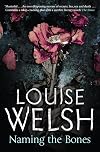
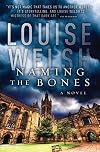
Naming the Bones
by Louise Welsh
On This Page
Description
Some secrets are best left buried... Knee-deep in the mud of an ancient burial ground, a winter storm raging around him and at least one person intent on his death- how did Murray Watson end up here? His quiet life researching the lives of writers in university libraries seems a world away. And yet it is because of the mysterious poet Archie Lunan, dead for thirty years, that Murray now finds himself scrabbling in the dirt on the remote island of Lismore. Loaded with Welsh's trademark wit, show more insight and gothic charisma, Naming the Bonesweaves the lives of Murray and Archie together in a tale of literature, obsession and dark magic. show lessTags
Recommendations
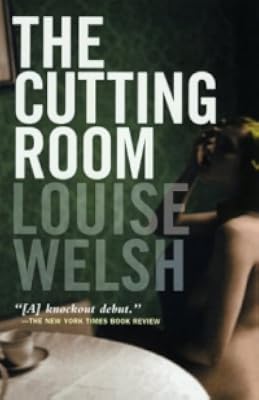
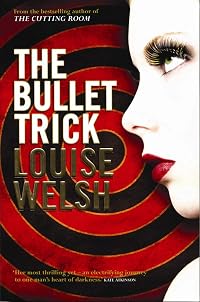












Member Recommendations
pattimeg Louise Welsh's first book, a dark mystery with a hint of typical Glasgow humour.
Member Reviews
From the back cover, this novel seemed a bespoke fit to my own preoccupations. The story moves initially between Glasgow and Edinburgh, two cities I spent the better part of twenty years toing-and-froing between. Then, as things gain speed, it moves to a remote Scottish island. The main character is an academic, at Glasgow Uni, who is overly involved with his subject - the life and work of a dead poet. As a postgrad at Glasgow uni I spent several years walking in much the same footsteps as Murray, albeit with far less havoc unraveling around me.
The core strand of the book, which is played out with great philosophical and, crucially, narrative success, is the question of whether or not our understanding of a writer's work is enhanced by show more knowing more about his life. It's a question I find endlessly fascinating, and never have I seen it developed so astutely in fiction.
There's so much to admire and enjoy here, that I was quite surprised I'd not heard more about this book until now. It confirms everything her earlier novels promised would be the case. Louise Welsh consistently delivers intelligent, challenging, and ultimately highly satisfying work. More please, Louise! show less
The core strand of the book, which is played out with great philosophical and, crucially, narrative success, is the question of whether or not our understanding of a writer's work is enhanced by show more knowing more about his life. It's a question I find endlessly fascinating, and never have I seen it developed so astutely in fiction.
There's so much to admire and enjoy here, that I was quite surprised I'd not heard more about this book until now. It confirms everything her earlier novels promised would be the case. Louise Welsh consistently delivers intelligent, challenging, and ultimately highly satisfying work. More please, Louise! show less
Perhaps I should warn readers of this review that Louise Welsh is one of my all time favourite authors. NAMING THE BONES was therefore greeted with some excited anticipation in these parts. One of the things that I really like about Welsh's books is the dark, introspective nature of her characters and the settings, as well as irresistible Gothic quirkiness.
NAMING THE BONES is the story of Dr Murray Watson; academic, guilty lover, conflicted brother, writer of a poet's biography. Murray's love affair with Archie Lunan's writing had started with a slim paperback collection of poems. Lunan wasn't a very prolific poet, but who knows what he could have produced had he not died strangely, so young.
Murray's research into Lunan's life is show more fuelled by a small, cryptic collection of papers stored in a cardboard box. An odd mixture of rambling jottings, memento's, an old address book, there's not a lot for Murray to go on. Small clues however do set him off on what is really a detecting job - finding out more about Lunan's life and his friends in a series of small steps, revealing very complicated and intertwined lives. Meanwhile Murray struggles with his failing relationship with his brother - an art installation which Murray feels is highly exploitative starts to create a rift between the brothers, which is exacerbated as Murray finds his brother is being unfaithful.
Welsh's earlier books have always had a bit of a twist, a touch of quirky and an elaborately Gothic feel to them. NAMING THE BONES doesn't quite start out like those earlier books, and Murray seems, particularly in this day and age, strangely normal. Including the lustful affair with his Head of Department's wife, Murray has relationship difficulties all over the place and he just seems somewhat naive and disconnected from the realities of life. Certainly his admiration of Lunan is a little odd to start off with, one short volume of poetry too insignificant to have had such a profound and long-lasting affect on such a renowned academic.
Given that NAMING THE BONES started off with less of the Gothic than normally expected, I was taken by how quickly the book become difficult to put down. This reader found herself increasingly involved in Murray's telling of his own tale, increasingly taken by his bafflement over Lunan's own relationships and why this man killed himself. Add to that Murray's own hamfisted methods of handling obsession, confrontation and disappointment and the story quickly becomes a less about researching a biography and a lot more about the mystery of Lunan and those around him.
Ultimately Murray takes himself off to the dreary, mysterious, damp, windy, threatening and even vaguely odd island of Archie's early life and death, and the resolution of the book takes place on this bleak, geographically and technologically isolated little island, with a good sprinkling of odd and normal locals, and a lot of rain, mud, wind and dark tracts of land.
This is exactly the sort of book that I just love. Cunningly witty, NAMING THE BONES is a mystery that's not immediately a mystery. A death that was explained, a sprinkling of odd clues and hints, and a whole lot more hidden under the surface of a lot lives. show less
NAMING THE BONES is the story of Dr Murray Watson; academic, guilty lover, conflicted brother, writer of a poet's biography. Murray's love affair with Archie Lunan's writing had started with a slim paperback collection of poems. Lunan wasn't a very prolific poet, but who knows what he could have produced had he not died strangely, so young.
Murray's research into Lunan's life is show more fuelled by a small, cryptic collection of papers stored in a cardboard box. An odd mixture of rambling jottings, memento's, an old address book, there's not a lot for Murray to go on. Small clues however do set him off on what is really a detecting job - finding out more about Lunan's life and his friends in a series of small steps, revealing very complicated and intertwined lives. Meanwhile Murray struggles with his failing relationship with his brother - an art installation which Murray feels is highly exploitative starts to create a rift between the brothers, which is exacerbated as Murray finds his brother is being unfaithful.
Welsh's earlier books have always had a bit of a twist, a touch of quirky and an elaborately Gothic feel to them. NAMING THE BONES doesn't quite start out like those earlier books, and Murray seems, particularly in this day and age, strangely normal. Including the lustful affair with his Head of Department's wife, Murray has relationship difficulties all over the place and he just seems somewhat naive and disconnected from the realities of life. Certainly his admiration of Lunan is a little odd to start off with, one short volume of poetry too insignificant to have had such a profound and long-lasting affect on such a renowned academic.
Given that NAMING THE BONES started off with less of the Gothic than normally expected, I was taken by how quickly the book become difficult to put down. This reader found herself increasingly involved in Murray's telling of his own tale, increasingly taken by his bafflement over Lunan's own relationships and why this man killed himself. Add to that Murray's own hamfisted methods of handling obsession, confrontation and disappointment and the story quickly becomes a less about researching a biography and a lot more about the mystery of Lunan and those around him.
Ultimately Murray takes himself off to the dreary, mysterious, damp, windy, threatening and even vaguely odd island of Archie's early life and death, and the resolution of the book takes place on this bleak, geographically and technologically isolated little island, with a good sprinkling of odd and normal locals, and a lot of rain, mud, wind and dark tracts of land.
This is exactly the sort of book that I just love. Cunningly witty, NAMING THE BONES is a mystery that's not immediately a mystery. A death that was explained, a sprinkling of odd clues and hints, and a whole lot more hidden under the surface of a lot lives. show less
I really liked this novel. It was fascinating to follow Murray Watsons´s detective work trying to get to know the dead poet Archie Lunan. Murray Watson is an easy person to like even though he messes things up now and then. I liked the setting in Scotland - Glasgow, Edinburgh and the remote island Lismore. It´s a mystery novel more than a thriller and it has a dark gothic element which makes it a bit creepy, but it is also at times very sad. It is a novel about love and loss, and how our lives come to be what they are.
 This review was written for LibraryThing Early Reviewers.
This book led me to wonder what publishers put on the back of some books. The blurb to this one says:
"Knee-deep in the mud of an ancient burial ground, a winter strom raging around him, and at least one person intent on his death: how did Murray Watson end up here?"
Promising, isn't it? Maybe like me you expected a fast-paced thriller with action, conspiracy and a lot of gradually revealled secrets? Only, that's not what you get.
Dr. Murray Watson, doctor of English literature, is on a sabbatical researching the poet Archie Lunan who died in his late twenties after publishing only one volume of poetry. Sources on Archie are scarce - his one-time girlfriend Christie won't give Murray an interview, and other acquaintances seem superficial show more or evade his questions.
The first 190 pages set in Edinburgh and Glasgow trail Murray on his research endeavours. Or rather we follow his life - an affair with his head of department's wife and a fall-out with his artist brother included. It's a character study of a man in his thirties without much sense of direction; that makes him cling to his research project even though the results are meager.
This was very well written, Murray comes distinctly to life as a flawed but likeable character. His life is ordinary, but the everyday-quality of his story makes it easy to relate to. We are drawn slowly into Murray's life, and Welsh's writing is so good it makes you hang on despite your disappointed expectations.
But still, I wasn't particularly interested in this character study. Suspense? Nil. And the blurb had coloured my reading - whenever something slightly unexpected happend I waited for the sinister turn that surely had to come. Of course, it didn't.
Maybe you sense the slightest bit of frustration here. It's actually with the publishers, not the book. Their blurb lured me into reading (Point for them) but unfortunately destroyed my reading experience along the way.
In the second half, Murray travels to the remote Scottish island of Lismore where Archie died and which is still home of his erstwhile girlfriend Christie. Here, the pace steps up a bit, and Murray ends up making contact with Christie and learning her - and Archies - secret.
This makes it sound a bit more like a thriller, but again- it isn't. This book is about Murray and his growth of character, his process of coming to terms with the problems in his life. He emerges more mature and with a direction for his future.
When I first read the ending it completely satisfied me, it simply seemed the appropriate denouement. But when I started thinking about it (while I was ironing, great time to revisit your last book) I noticed what are in my opinion two major flaws.
Firstly, the secret that's finally revealled could not have rested undetected all these years. Not on a small island, where everybody talks about everyone else, where people watch each other closely. I just can't believe it. Sorry I can't say more here but of course I don't want to spoil the book for you.
Secondly, there is a thread about a young sociologist who researched suicide among artists and also worked on Archie Lunan and his death. This sociologist dies himself on Lismore under suspicious circumstances. Welsh introduces him quite early and keeps our interest alive by haphazard mentionings throughout the book. But a solution doesn't come forward, only a lukewarm theory that maybe living on edge and doing this suicide stuff made him toying with his life. Pfff.
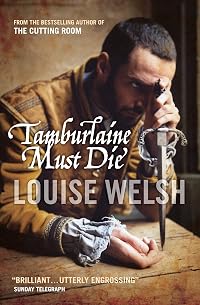
So, in the end, a good book, but not a superb one. If you haven't read a book by Louise Welsh before try "Tamburlaine must die" - a solid five star book.
And last not least - shame on you, publishers. show less
"Knee-deep in the mud of an ancient burial ground, a winter strom raging around him, and at least one person intent on his death: how did Murray Watson end up here?"
Promising, isn't it? Maybe like me you expected a fast-paced thriller with action, conspiracy and a lot of gradually revealled secrets? Only, that's not what you get.
Dr. Murray Watson, doctor of English literature, is on a sabbatical researching the poet Archie Lunan who died in his late twenties after publishing only one volume of poetry. Sources on Archie are scarce - his one-time girlfriend Christie won't give Murray an interview, and other acquaintances seem superficial show more or evade his questions.
The first 190 pages set in Edinburgh and Glasgow trail Murray on his research endeavours. Or rather we follow his life - an affair with his head of department's wife and a fall-out with his artist brother included. It's a character study of a man in his thirties without much sense of direction; that makes him cling to his research project even though the results are meager.
This was very well written, Murray comes distinctly to life as a flawed but likeable character. His life is ordinary, but the everyday-quality of his story makes it easy to relate to. We are drawn slowly into Murray's life, and Welsh's writing is so good it makes you hang on despite your disappointed expectations.
But still, I wasn't particularly interested in this character study. Suspense? Nil. And the blurb had coloured my reading - whenever something slightly unexpected happend I waited for the sinister turn that surely had to come. Of course, it didn't.
Maybe you sense the slightest bit of frustration here. It's actually with the publishers, not the book. Their blurb lured me into reading (Point for them) but unfortunately destroyed my reading experience along the way.
In the second half, Murray travels to the remote Scottish island of Lismore where Archie died and which is still home of his erstwhile girlfriend Christie. Here, the pace steps up a bit, and Murray ends up making contact with Christie and learning her - and Archies - secret.
This makes it sound a bit more like a thriller, but again- it isn't. This book is about Murray and his growth of character, his process of coming to terms with the problems in his life. He emerges more mature and with a direction for his future.
When I first read the ending it completely satisfied me, it simply seemed the appropriate denouement. But when I started thinking about it (while I was ironing, great time to revisit your last book) I noticed what are in my opinion two major flaws.
Firstly, the secret that's finally revealled could not have rested undetected all these years. Not on a small island, where everybody talks about everyone else, where people watch each other closely. I just can't believe it. Sorry I can't say more here but of course I don't want to spoil the book for you.
Secondly, there is a thread about a young sociologist who researched suicide among artists and also worked on Archie Lunan and his death. This sociologist dies himself on Lismore under suspicious circumstances. Welsh introduces him quite early and keeps our interest alive by haphazard mentionings throughout the book. But a solution doesn't come forward, only a lukewarm theory that maybe living on edge and doing this suicide stuff made him toying with his life. Pfff.
So, in the end, a good book, but not a superb one. If you haven't read a book by Louise Welsh before try "Tamburlaine must die" - a solid five star book.
And last not least - shame on you, publishers. show less
This is the story of a brief time in Dr Murray Watson's life. He's a professor of English Literature at Glasgow University, and has been obsessed with poet, Archie Lunan, since he found a copy of his only book of poetry in a charity shop when he was 16. Now, Murray is taking a sabbatical to write Archie's biography. However, Archie died years ago and Murray has a hard slog ahead of him to find out anything about his life.
The book starts off in Glasgow and Edinburgh, and then the action moves to the Isle of Lismore. I particularly enjoyed this section, as I find island life fascinating.
I thought this was an excellent read, even though it was nothing like how I imagined it would be (the very brief blurb doesn't exactly give any clues to show more what the story is about). I enjoyed Murray's amateur detective work, as he traced people who had known Archie. Nothing ever went to plan though, and I did find myself smiling at his haplessness at times. I found myself pulled into the story, and think the author did a great job of bringing the characters and locations to life. I did find it needed a fair amount of concentration, I think because there's a lot of information in the story and people on the periphery of the action who needed to be recalled later on.
I really wouldn't call it a crime or thriller book. I think maybe it's a literary detective novel. Either way, I thought it was very well written and an intriguing story, and I look forward to reading more of Louise Welsh's work. show less
The book starts off in Glasgow and Edinburgh, and then the action moves to the Isle of Lismore. I particularly enjoyed this section, as I find island life fascinating.
I thought this was an excellent read, even though it was nothing like how I imagined it would be (the very brief blurb doesn't exactly give any clues to show more what the story is about). I enjoyed Murray's amateur detective work, as he traced people who had known Archie. Nothing ever went to plan though, and I did find myself smiling at his haplessness at times. I found myself pulled into the story, and think the author did a great job of bringing the characters and locations to life. I did find it needed a fair amount of concentration, I think because there's a lot of information in the story and people on the periphery of the action who needed to be recalled later on.
I really wouldn't call it a crime or thriller book. I think maybe it's a literary detective novel. Either way, I thought it was very well written and an intriguing story, and I look forward to reading more of Louise Welsh's work. show less
This review was written for LibraryThing Early Reviewers.Murray Watson, university lecturer on sabatical, is planning to write a book on a poet, Archie Lunan, whose single work he fell in love with as an undergraduate. Lunan, following his untimely death in a yachting accident in the 70's has started to disappear into obscurity and Murray wants to revive interest in his hero.
Finding out about Lunan's mysterious life and death, however, proves much harder than Murray anticipated. Why is it so hard to find anyone who remembers him that will talk?
A very enjoyable thriller, with a suitably depressed and haunted lead character (I would expect nothing less - but then I don't read very many thrillers!). I found this a gripping read and thought that Welsh dealt particularly well with the difficulties show more of unreliable sources - we're as much in the dark as Murray is as he struggles with the different versions of the truth presented to him, whilst dealing with the same thing, to a lesser extent in his own life and relationships.
I will say that I found the book become less plausible as it progressed towards the end, to the point that I wasn't completely satisfied with the denoument, however, it certainly doesn't end badly and it was a good swift read. show less
Finding out about Lunan's mysterious life and death, however, proves much harder than Murray anticipated. Why is it so hard to find anyone who remembers him that will talk?
A very enjoyable thriller, with a suitably depressed and haunted lead character (I would expect nothing less - but then I don't read very many thrillers!). I found this a gripping read and thought that Welsh dealt particularly well with the difficulties show more of unreliable sources - we're as much in the dark as Murray is as he struggles with the different versions of the truth presented to him, whilst dealing with the same thing, to a lesser extent in his own life and relationships.
I will say that I found the book become less plausible as it progressed towards the end, to the point that I wasn't completely satisfied with the denoument, however, it certainly doesn't end badly and it was a good swift read. show less
This review was written for LibraryThing Early Reviewers.SOME SECRETS ARE BEST LEFT BURIED - Knee-deep in the mud of an ancient burial ground, a winter storm raging around him, and at least one person intent on his death: how did Murray Watson end up here? His quiet life in university libraries researching the lives of writers seems a world away, and yet it is because of the mysterious writer, Archie Lunan, dead for thirty years, that Murray now finds himself scrabbling in the dirt on the remote island of Lismore. Loaded with Welsh's trademark wit, insight and gothic charisma, this adventure novel weaves the lives of Murray and Archie together in a tale of literature, obsession and dark magic.
My Thoughts:
This book is as good as it sounds. I had read ‘The Bullet Trick’ before and thought show more it was ok, but this book was really good.
It is a dark brooding thriller, a little slow to start but the story picks up when Murray goes to the island of Lismore. I can’t help thinking that when characters go to these small islands that they are going to encounter something similar to ‘The Wicker Man’. Not in this case though ! What Murray does find is not what I thought he was going to and one aspect of the story there is no solid conclusion.
A worthy read which is perfect when you are snuggled up on a cold winters afternoon. show less
My Thoughts:
This book is as good as it sounds. I had read ‘The Bullet Trick’ before and thought show more it was ok, but this book was really good.
It is a dark brooding thriller, a little slow to start but the story picks up when Murray goes to the island of Lismore. I can’t help thinking that when characters go to these small islands that they are going to encounter something similar to ‘The Wicker Man’. Not in this case though ! What Murray does find is not what I thought he was going to and one aspect of the story there is no solid conclusion.
A worthy read which is perfect when you are snuggled up on a cold winters afternoon. show less
Members
- Recently Added By
Lists

Books Read in 2021
5,361 works; 114 members

Books Read in 2012
816 works; 34 members
Author Information

Louise Welsh has published a wide range of short stories and articles. She was chosen as one of Britain's Best First Novelists of 2002 by the Guardian newspaper. The Cutting Room won The Crime Writers Association Creasey Dagger for the best first crime novel as well as The Saltire First Book of the Year Award
Common Knowledge
- Canonical title
- Naming the Bones
- Original title
- Naming the Bones
- Original publication date
- 2010-03-04
- People/Characters
- Murray Watson; Archie Lunan
- Important places
- Scotland, UK
- Dedication
- For Clare Connelly and Lauchlin Bell
- First words
- Murray Watson slit the seal on the cardboard box in front of him and started to sort through the remnants of a life.
- Blurbers
- McDermid, Val
Classifications
Statistics
- Members
- 218
- Popularity
- 150,124
- Reviews
- 25
- Rating
- (3.37)
- Languages
- 5 — Czech, English, French, German, Portuguese
- Media
- Paper, Audiobook, Ebook
- ISBNs
- 22
- UPCs
- 1
- ASINs
- 1