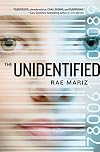
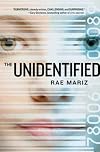
The Unidentified
by Rae Mariz
On This Page
Description
In a futuristic alternative school set in a shopping mall where video game-playing students are observed and used by corporate sponsors for market research, Katey "Kid" Dade struggles to figure out where she fits in and whether she even wants to.Tags
Recommendations























Member Reviews
An engaging, thought-provoking read about a future America that seems increasingly probable. Corporate America has taken over education and renamed schools as Game sites, largely using them as marketing test sites. Privacy is nonexistent as hand-held devices are used for communicating, networking, and locating everyone. Kid is fascinated by a prank by an underground group called the Unidentified. As she starts to investigate, she is noticed by sponsors and other students, forcing her to fight for what she values.
The dystopian vision of The Unidentified is restricted primarily to education and the impulse to materialism. While some aspects of the Game are hard for me to imagine as a realistic path a society might take, they are made more convincing by their interweaving with current technologies.
Every student in the Game carries an intouch®, on which they update their network. The network page has the functionality of Facebook: chat, information about interests and friendships. In addition to the importance of this, there are also the streams, based upon Twitter. Everyone communicates via these modes of communication and a whole culture has developed around following people's streams; for example, it is rude to comment on a conversation not show more directed your way and it is a big deal to be @ed by a branded person.
I found Katey to be a very likable a and realistic character. She is mostly a loner, preferring the company of a select few to popularity. Still, she can be led astray and make bad choices. Even so, I forgave her for her errors and transgressions, because they are so high school. I can remember feeling the way she does in the book, feeling like maybe it would be worth sacrificing some parts of yourself to be popular. Just because she falls into that trap does not make her any less clever, it just makes her human.
I really loved this book. It manages to make a dystopian society that really isn't terrifying or violent. It's mass consumerism, popularity contests, and connection without closeness. Very well done. I hope to see more from Rae Mariz! show less
Every student in the Game carries an intouch®, on which they update their network. The network page has the functionality of Facebook: chat, information about interests and friendships. In addition to the importance of this, there are also the streams, based upon Twitter. Everyone communicates via these modes of communication and a whole culture has developed around following people's streams; for example, it is rude to comment on a conversation not show more directed your way and it is a big deal to be @ed by a branded person.
I found Katey to be a very likable a and realistic character. She is mostly a loner, preferring the company of a select few to popularity. Still, she can be led astray and make bad choices. Even so, I forgave her for her errors and transgressions, because they are so high school. I can remember feeling the way she does in the book, feeling like maybe it would be worth sacrificing some parts of yourself to be popular. Just because she falls into that trap does not make her any less clever, it just makes her human.
I really loved this book. It manages to make a dystopian society that really isn't terrifying or violent. It's mass consumerism, popularity contests, and connection without closeness. Very well done. I hope to see more from Rae Mariz! show less
The Unidentified cuts deep because it’s sharply observed. It’s subtle. It’s convincing. It’s the scariest kind of dystopian novel – one that seems like a plausible projection of how our world works today. If you were asked to sum up the exact problem with Mariz’s school of the future, you’d struggle. After all, what could be wrong with freedom of choice, instantaneous communication, expressing individuality, listening to young people and motivating them to learn on their own terms? And yet, the feeling of wrongness is unshakeable. Mariz’s novel is a deft exploration of the implications of being constantly connected, hooked up, linked in. Every ‘Generation Triple-A’ student has an intouch® – a handheld device that show more enables them to write and subscribe to twitter-like streams – and the rules of intouch® etiquette seem to go without saying. It is OK to read updates while talking with someone else, but rude to butt in on a friend’s ‘private’ conversation. It never appears to strike our narrator, Kid, that all the conversations take place in a public forum; a great reflection of Generation Y’s attitude to privacy.
The language hits you in the face from the first chapter; an absorbing representation of what it’s like to be continuously bombarded and overstimulated. The characters are real – I’ve met them, and you probably have too. The dialogue is convincing – cool, quick, flippant – communication that isn’t really communication. Mariz captures an essential teenage paradox: these kids share everything with each other, and yet they share hardly anything. Technology can make us feel so close to our friends, and yet so distant. The leader of the Unidentified – the rebel group that Kid becomes involved with – asks the burning question: ‘Who are you when you’re alone? When no one is watching? What’s left then?’ It’s not until you’re fully immersed in this novel that you realise just how much Mariz has bitten off. The Unidentified isn’t just about the Internet revolution. It gets right to the heart of the enduring issues of adolescence – identity, choice, boundaries, safety, responsibility – as well as tackling themes such as consumerism and privacy.
It isn’t perfect; the ending comes across a bit corny, and there are moments when the authenticity slips. Then there’s the irony of Mariz writing about a world where sponsors and businesspeople spend all their time trying to decode kids, to figure out how they interact, what they’ll go for, how to get them interested – when that’s precisely what she aims to do in her novel. Occasionally, we can feel how hard she’s trying. But as whole, The Unidentified is a success – engrossing, incisive and stimulating. It’s guaranteed to make you think, and sure to spark plenty of discussion. show less
The language hits you in the face from the first chapter; an absorbing representation of what it’s like to be continuously bombarded and overstimulated. The characters are real – I’ve met them, and you probably have too. The dialogue is convincing – cool, quick, flippant – communication that isn’t really communication. Mariz captures an essential teenage paradox: these kids share everything with each other, and yet they share hardly anything. Technology can make us feel so close to our friends, and yet so distant. The leader of the Unidentified – the rebel group that Kid becomes involved with – asks the burning question: ‘Who are you when you’re alone? When no one is watching? What’s left then?’ It’s not until you’re fully immersed in this novel that you realise just how much Mariz has bitten off. The Unidentified isn’t just about the Internet revolution. It gets right to the heart of the enduring issues of adolescence – identity, choice, boundaries, safety, responsibility – as well as tackling themes such as consumerism and privacy.
It isn’t perfect; the ending comes across a bit corny, and there are moments when the authenticity slips. Then there’s the irony of Mariz writing about a world where sponsors and businesspeople spend all their time trying to decode kids, to figure out how they interact, what they’ll go for, how to get them interested – when that’s precisely what she aims to do in her novel. Occasionally, we can feel how hard she’s trying. But as whole, The Unidentified is a success – engrossing, incisive and stimulating. It’s guaranteed to make you think, and sure to spark plenty of discussion. show less
Katey “Kid” Dade feels out of place in the Game, the futuristic school run by Corporations that observe everyone for market research. While her best friend embraces the hectic, consumerist, public lifestyle, Kid isn’t as concerned that she doesn’t have a large number of people subscribing to her stream, or that she is absolutely mediocre by Game standards.
Then Kid witnesses an unauthorized act of rebellion by a mysterious group called the Unidentified and gets pulled into a type of game of its own. What does this group want from the Corporations? Will Kid get played by these groups, or will she and her friends find a way to overthrow the organizations that have an eye, ear, and hand on them at all times?
It’s been a while since show more I’ve read a book that has impressed me, and so when I picked up and got instantly sucked into THE UNIDENTIFIED’s riveting and eerily familiar world, I was beside myself with happiness. THE UNIDENTIFIED is smart, well-written, and suspenseful, the perfect example of what dystopian literature should be: a fully realized and recognizable world without forgoing characterization and plot.
Rae Mariz impressively introduces us to a shocking and complex futuristic world, one in which privacy has no meaning thanks to the constant flow of information and technological interconnection. With Facebook’s recent introduction of the disconcertingly stalker-like “See Friendship” button, the issues regarding privacy that THE UNIDENTIFIED explores in such an entertaining and intelligent fashion are so much more immediately relevant. Rae Mariz succeeds in crafting for us a scarily plausible world that is possibly an inevitable extrapolation of the already network-filled world of Facebook and Twitter that we live in.
THE UNIDENTIFIED is smart, but it’s also hardly boring. Kid’s voice is fresh, with just the right amount of quippy attitude. She’s the perfect balance of the observant outsider with the propensity to create change, and the gullible market to which the Corporations are pandering. And Kid’s not the only interesting and well-developed characters. Her two best friends, Ari and Mikey, light up the page with their very different personalities whenever they appear in a scene. Even more minor characters are fully realized with their limited “on-page” time. The characterization is really an incredible accomplishment for a 300-something page book, which most might even consider short for modern dystopian novel standards.
I really wish I had the capacity to speak more about THE UNIDENTIFIED’s marvelous critique of the infiltration of networking websites in our lives. But I’ll leave that to the academics, and just let you know that this book does it, along with providing us a highly unputdownable adventure. I don’t think I can recommend this book enough. READ IT if you’re looking for smart and snappy dystopian literature. show less
Then Kid witnesses an unauthorized act of rebellion by a mysterious group called the Unidentified and gets pulled into a type of game of its own. What does this group want from the Corporations? Will Kid get played by these groups, or will she and her friends find a way to overthrow the organizations that have an eye, ear, and hand on them at all times?
It’s been a while since show more I’ve read a book that has impressed me, and so when I picked up and got instantly sucked into THE UNIDENTIFIED’s riveting and eerily familiar world, I was beside myself with happiness. THE UNIDENTIFIED is smart, well-written, and suspenseful, the perfect example of what dystopian literature should be: a fully realized and recognizable world without forgoing characterization and plot.
Rae Mariz impressively introduces us to a shocking and complex futuristic world, one in which privacy has no meaning thanks to the constant flow of information and technological interconnection. With Facebook’s recent introduction of the disconcertingly stalker-like “See Friendship” button, the issues regarding privacy that THE UNIDENTIFIED explores in such an entertaining and intelligent fashion are so much more immediately relevant. Rae Mariz succeeds in crafting for us a scarily plausible world that is possibly an inevitable extrapolation of the already network-filled world of Facebook and Twitter that we live in.
THE UNIDENTIFIED is smart, but it’s also hardly boring. Kid’s voice is fresh, with just the right amount of quippy attitude. She’s the perfect balance of the observant outsider with the propensity to create change, and the gullible market to which the Corporations are pandering. And Kid’s not the only interesting and well-developed characters. Her two best friends, Ari and Mikey, light up the page with their very different personalities whenever they appear in a scene. Even more minor characters are fully realized with their limited “on-page” time. The characterization is really an incredible accomplishment for a 300-something page book, which most might even consider short for modern dystopian novel standards.
I really wish I had the capacity to speak more about THE UNIDENTIFIED’s marvelous critique of the infiltration of networking websites in our lives. But I’ll leave that to the academics, and just let you know that this book does it, along with providing us a highly unputdownable adventure. I don’t think I can recommend this book enough. READ IT if you’re looking for smart and snappy dystopian literature. show less
The government can no longer afford to run schools, so now corporations have taken over. Katey, nicknamed Kid, goes to a school in a former mall, called simply the Game. It’s not the type of school you and I know: grades are described as levels, and classes are played like video games. Students update their status and communicate with friends constantly via Game-supplied laptops and handhelds, all under the watchful eye of corporate sponsors. These sponsors continuously monitor everyone’s feeds, to spot the latest trends to exploit and students to “brand” with their merchandise—or spot potential trouble. At first a dummy tossed over a fifth floor railing, with the sign “UNIDENTIFIED. CHOOSE YOUR SUICIDE” on its back, seems show more to everyone like another corporate marketing stunt. But Kid’s curiosity and unease cause her to investigate the prank’s origins—starting with an uploaded video she finds of the event—and she draws attention from sponsors, particularly the Game’s security firm, Protecht. What happens is previously-unknown Kid is now plunged into the middle of an obsessive media culture, where status and popularity fluctuate not just day-by-day, but minute-by-minute; and endless co-opting and rebranding has Kid questioning everyone else’s motives, including her own and the Unidentified’s. This book reminded me of Scott Westerfeld’s Uglies series, but without the plastic surgery and a whole lot of media savvy and high-tech. If you didn’t think much before about your Facebook page, Twitter feed, or the targeted internet banners that follow you everywhere you surf, you will after reading this. I give this a definite thumbs-up. show less
I first heard about this book on Presenting Lenore where it caught my attention for two reasons: 1) it's a ya dystopia about consumerism (win!) and 2) the cover (for the ARC, at least) reminded me of Kazuo Ishiguro's Never Let Me Go, which meant they needed to be in a Face Off. (The cover has since changed to the one you see up there ^, but the ARC cover -- which is what I have -- can be found below.) I had a feeling this was something I needed to read, so I requested a copy from Balzer and Bray (an imprint of Harper Collins). I never heard anything back (which is not unusual, whether a review copy is coming or not), and so I figured I'd just have to wait the long, tortuous months until it came out -- except that when I got back from show more ALA, there it was, waiting impatiently for me to read it. And man, am I glad I did.
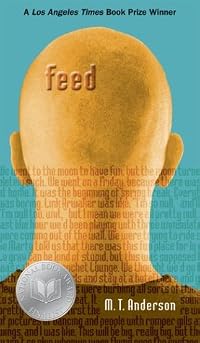
As I said, The Unidentified is about consumerism gone mad, but I was pleasantly surprised to find that the bigger picture here is really personal freedoms. Kid lives in a very programmed world that is maybe a hairsbreadth away from our own. This is no far-distant dystopia that gives you shivers but makes you secretly glad our world isn't like this. Kid's world is very current, very of the moment, and incredibly relevant to the lives we live now. It reminded me of a mix of MT Anderson's Feed and Cory Doctorow's Little Brother, though it's not as hard-hitting as either of those. And I don't mean that in a bad way. The Unidentified is, I think, more easily accessible to general audiences, and girls in particular, as the book centers around a very relatable girl. I loved reading through Kid's journey as she became stronger and more analytical.
There's a good balance of typical YA fare (friend drama, boy drama, who-am-I drama) blended seamlessly with the tech and dystopian elements, and it all works together to make this a light-but-compelling read for die-hard dystopianites, as well as a good introduction to the genre for those who don't normally read such things. Mariz is great at that gray area that exists in dystopias -- those questions and impressions you get that make 1/2 of you say "Well, this totally makes sense. Kinda cool, actually" and the other 1/2 say "This is wrong; this is bad." I think it's great for discussion, about and beyond the book, but even if you're not going to run out and discuss this with someone, it's still completely unputdownable. So pick it up. ;p show less
As I said, The Unidentified is about consumerism gone mad, but I was pleasantly surprised to find that the bigger picture here is really personal freedoms. Kid lives in a very programmed world that is maybe a hairsbreadth away from our own. This is no far-distant dystopia that gives you shivers but makes you secretly glad our world isn't like this. Kid's world is very current, very of the moment, and incredibly relevant to the lives we live now. It reminded me of a mix of MT Anderson's Feed and Cory Doctorow's Little Brother, though it's not as hard-hitting as either of those. And I don't mean that in a bad way. The Unidentified is, I think, more easily accessible to general audiences, and girls in particular, as the book centers around a very relatable girl. I loved reading through Kid's journey as she became stronger and more analytical.
There's a good balance of typical YA fare (friend drama, boy drama, who-am-I drama) blended seamlessly with the tech and dystopian elements, and it all works together to make this a light-but-compelling read for die-hard dystopianites, as well as a good introduction to the genre for those who don't normally read such things. Mariz is great at that gray area that exists in dystopias -- those questions and impressions you get that make 1/2 of you say "Well, this totally makes sense. Kinda cool, actually" and the other 1/2 say "This is wrong; this is bad." I think it's great for discussion, about and beyond the book, but even if you're not going to run out and discuss this with someone, it's still completely unputdownable. So pick it up. ;p show less
You know what’s really needed in order for a Dystopian novel such as this one to succeed? Something has to be at stake, preferably something beyond shallow happiness. And I’m not even sure that was at stake in The Unidentified. This book just fell flat for me. The pace was all right, but the plot didn’t capture me and I felt a heart was missing from this book. Even after finishing, I could barely tell you what happened. Perhaps forgettable is a good word.
The Unidentified group is just sorta. . . there. I mean, the story is named after them, but Kid spends most of her time doing normal teenage things in the game. I think this was for the point of world-building, but it got tiring after a while. All the trademarks and the speech show more patterns may have lended themselves to a touch of authenticity, but they were also quite annoying after the first twenty pages. If I never see the word Intouch again, it will be too soon. Kid herself is just a pretty bland character, and I think that’s a good way to describe the book on the whole.
The premise is interesting, but the way the world is set up seems so far-fetched to me. Now, it takes a lot for me to say that about Dystopian stories. I didn’t say that about Divergent when many people did, or The Hunger Games, or even The Maze Runner. Normally, I’m willing to suspend my disbelief for quite a while. It doesn’t take much to make me happy in way of world-building. It’s honestly not normally that important to me– I’d rather focus on things like plot or characterization. However, in The Unidentified, I just couldn’t suspend my disbelief for that long. The entire point of schools is market research? Sponsorship? I just couldn’t buy it.
The ending to this book was also quite unsatisfactory. Things are changed ( a little bit), a celebration occurs, and then. . . nothing. The point of kids coming together is to throw off the whole idea of popularity and sponsorship, but it all just seemed so shallow. There was precious little at stake, so the “triumphant” ending just seemed kind of silly.
I started writing this review thinking this would be a 2 star book, but the more I write, the more I realized I didn’t like The Unidentified, mainly because the point and premise all seemed shallow. I felt the book could have gone a lot deeper with its theme of marketing, advertisement, and how it effects teenagers. Instead, what happens it an artificial story where I couldn’t bring myself to care about any of the characters or their eventual fates.
Final Impression: The Unidentified had an unique and engaging premise, but failed to deliver in the actual story. I found the entire reading experience rather bland, and have to say I was not a fan. I wished the themes and story had been handled with more depth and less artificiality, much like what the book seems to be trying to fight against. 1/5 stars. show less
The Unidentified group is just sorta. . . there. I mean, the story is named after them, but Kid spends most of her time doing normal teenage things in the game. I think this was for the point of world-building, but it got tiring after a while. All the trademarks and the speech show more patterns may have lended themselves to a touch of authenticity, but they were also quite annoying after the first twenty pages. If I never see the word Intouch again, it will be too soon. Kid herself is just a pretty bland character, and I think that’s a good way to describe the book on the whole.
The premise is interesting, but the way the world is set up seems so far-fetched to me. Now, it takes a lot for me to say that about Dystopian stories. I didn’t say that about Divergent when many people did, or The Hunger Games, or even The Maze Runner. Normally, I’m willing to suspend my disbelief for quite a while. It doesn’t take much to make me happy in way of world-building. It’s honestly not normally that important to me– I’d rather focus on things like plot or characterization. However, in The Unidentified, I just couldn’t suspend my disbelief for that long. The entire point of schools is market research? Sponsorship? I just couldn’t buy it.
The ending to this book was also quite unsatisfactory. Things are changed ( a little bit), a celebration occurs, and then. . . nothing. The point of kids coming together is to throw off the whole idea of popularity and sponsorship, but it all just seemed so shallow. There was precious little at stake, so the “triumphant” ending just seemed kind of silly.
I started writing this review thinking this would be a 2 star book, but the more I write, the more I realized I didn’t like The Unidentified, mainly because the point and premise all seemed shallow. I felt the book could have gone a lot deeper with its theme of marketing, advertisement, and how it effects teenagers. Instead, what happens it an artificial story where I couldn’t bring myself to care about any of the characters or their eventual fates.
Final Impression: The Unidentified had an unique and engaging premise, but failed to deliver in the actual story. I found the entire reading experience rather bland, and have to say I was not a fan. I wished the themes and story had been handled with more depth and less artificiality, much like what the book seems to be trying to fight against. 1/5 stars. show less
Members
- Recently Added By
Lists

Books Read in 2014
2,341 works; 86 members
Author Information

Awards and Honors
Awards
Common Knowledge
- People/Characters
- Katey "Kid"; Mikey; Aria
- Dedication
- For AK
- First words
- If reality TV cameras were installed in my high school, they would be focused directly on the Pit.
- Last words
- (Click to show. Warning: May contain spoilers.)With the hope of one day beating the Game.
- Blurbers
- Doctorow, Cory; Vizzini, Ned
Classifications
- Genres
- Teen, Fiction and Literature, Young Adult, Science Fiction
- DDC/MDS
- 813.6 — Literature & rhetoric American literature in English American fiction in English 2000-
- LCC
- PZ7 .M33913 .U — Language and Literature Fiction and juvenile belles lettres Fiction and juvenile belles lettres Juvenile belles lettres
- BISAC
Statistics
- Members
- 390
- Popularity
- 79,589
- Reviews
- 39
- Rating
- (3.37)
- Languages
- English
- Media
- Paper, Ebook
- ISBNs
- 7
- ASINs
- 4