On This Page
Description
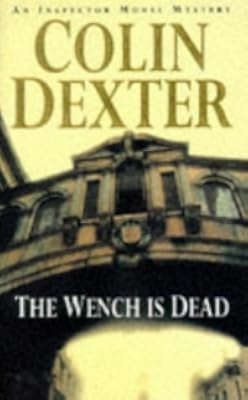
Inspector Morse, recovering from an ulcer in Oxford's Radcliffe Hospital, comes across an old book recounting a sensational murder case that took place in Oxford 100 years earlier. Convinced that the two men hanged for the crime were innocent, Morse sets out from the confines of his bed to prove it.Tags
Recommendations

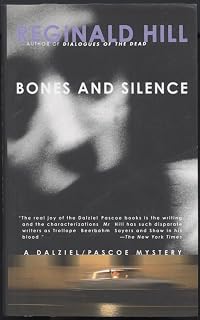
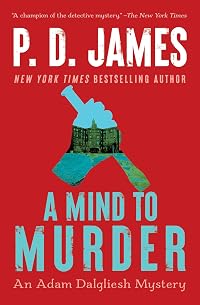
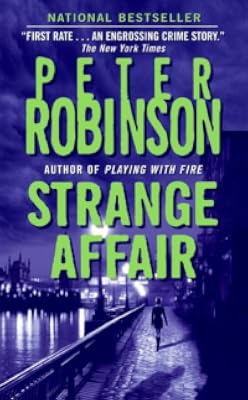
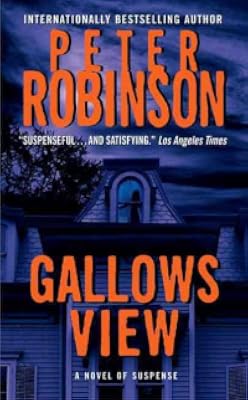






Member Recommendations
Cynara Two hospitalised detectives work through historical mysteries, investigating from their cots. Tey's is the more famous work, and will give you a good education on the ins and outs of the rehabilitation of Richard III, but to my mind, Dexter's book is better.
Member Reviews
I approached this one with some trepidation. See, I read all the Morse books several times in my early to mid teens. I remember them quite affectionately in general, as clever, intricate works. But I also remember several really, ummm, dated details. Morse making some important inferences from the colour of victim’s knickers. Morse sussing out that the Rastafarian at college dinner was actually a white man in black face, due to his crucial mistake of eating the pork. And so forth. So, two related grounds for trepidation: what if they don’t deserve the affection in general? And what if there’s a lot more of that kind of thing specifically?
The affection turns out to be justified, more or less. The reservations might stand. This show more novel is kind of the opposite of the Dibdin one just past. Where that was unobtrusively fine, this is both good and irritating in noticeable, showy ways.
Irritating: Morse himself is really quite pervy. He spends most of this one in hospital. Within 35 pages, two different women in the orbit of his ward have been blandly described as “slimly attractive”, and halfway through all the nurses have epithets. Yet somehow, perhaps because he hides his salacious thoughts behind a diffident exterior, all these women end up eating out of the palm of his hand, and one of them at least ends up in his bed (I’ve moved to generics; so far as I remember, this happens in every single Morse book). What’s worse, you don’t get the impression that the author is standing too far behind the character here. After all, who wrote “slimly attractive” twice? There’s a little whiff of wish fulfilment about it all. (interesting question: at what point in this sequence do I stop giving books a partial pass on the basis that those were different times? Tempting to say quite soon, but apparently 1989 really was quite a while ago)
Besides the character, there’s the writing. Now, I’ll come to its good elements in a minute, but my, there are some irritating things about the writing. It’s deliberately, insistently stylish, often in the worst way: packed with literary allusions and alliterations and intrusive authoring (was this once my idea of smart? Oooof). There’s abundant overuse of italics, in a way that seems to belie a little anxiety, either that one’s own sentences don’t direct the emphasis to just the right place on their own, or, instead, that the reader might turn out to be a little slow and thus need a little help in appreciating the sheer quality of the prose. The literary epigraphs prefacing every chapter seal the impression that the author is both very pleased with himself and also trying a little too hard.
Alright, that’s what’s irritating. What’s good? Well, many of the good things are cousins of the bad. For all that Morse is a perv, he’s also a properly drawn character, not just an assembly of traits. For all that the prose is sometimes irritating, it’s also properly stylish, sentences clearly refined, nicely weighted.
Moving to content, the plot is excellently done, executed as a proper puzzle. It’s a very cold case, the murder of a young woman in the 1800s, which Morse pursues from his hospital bed by doing a bunch of reading and getting some of those slimly attractive women to do research for him. This allows Dexter to present subtle clues in the stuff Morse is reading, then alert you that a clue has been presented in the course of Morse’s musings without actually telling you what it is, thus sending you back a couple of pages to work it out. It’s a really neat trick, giving the novel the feel of a crossword (one of Morse’s preoccupations). Morse’s reading also allows Dexter to have fun, and show off, by presenting pastiches of various forms of writing, including stultifying academic prose.
Add a dash of humour that just skirts the right side of inappropriate, and you have a novel that’s fun, whatever its evident flaws. My teenage self was right in this case: this is really well made, clever, enjoyable stuff. show less
The affection turns out to be justified, more or less. The reservations might stand. This show more novel is kind of the opposite of the Dibdin one just past. Where that was unobtrusively fine, this is both good and irritating in noticeable, showy ways.
Irritating: Morse himself is really quite pervy. He spends most of this one in hospital. Within 35 pages, two different women in the orbit of his ward have been blandly described as “slimly attractive”, and halfway through all the nurses have epithets. Yet somehow, perhaps because he hides his salacious thoughts behind a diffident exterior, all these women end up eating out of the palm of his hand, and one of them at least ends up in his bed (I’ve moved to generics; so far as I remember, this happens in every single Morse book). What’s worse, you don’t get the impression that the author is standing too far behind the character here. After all, who wrote “slimly attractive” twice? There’s a little whiff of wish fulfilment about it all. (interesting question: at what point in this sequence do I stop giving books a partial pass on the basis that those were different times? Tempting to say quite soon, but apparently 1989 really was quite a while ago)
Besides the character, there’s the writing. Now, I’ll come to its good elements in a minute, but my, there are some irritating things about the writing. It’s deliberately, insistently stylish, often in the worst way: packed with literary allusions and alliterations and intrusive authoring (was this once my idea of smart? Oooof). There’s abundant overuse of italics, in a way that seems to belie a little anxiety, either that one’s own sentences don’t direct the emphasis to just the right place on their own, or, instead, that the reader might turn out to be a little slow and thus need a little help in appreciating the sheer quality of the prose. The literary epigraphs prefacing every chapter seal the impression that the author is both very pleased with himself and also trying a little too hard.
Alright, that’s what’s irritating. What’s good? Well, many of the good things are cousins of the bad. For all that Morse is a perv, he’s also a properly drawn character, not just an assembly of traits. For all that the prose is sometimes irritating, it’s also properly stylish, sentences clearly refined, nicely weighted.
Moving to content, the plot is excellently done, executed as a proper puzzle. It’s a very cold case, the murder of a young woman in the 1800s, which Morse pursues from his hospital bed by doing a bunch of reading and getting some of those slimly attractive women to do research for him. This allows Dexter to present subtle clues in the stuff Morse is reading, then alert you that a clue has been presented in the course of Morse’s musings without actually telling you what it is, thus sending you back a couple of pages to work it out. It’s a really neat trick, giving the novel the feel of a crossword (one of Morse’s preoccupations). Morse’s reading also allows Dexter to have fun, and show off, by presenting pastiches of various forms of writing, including stultifying academic prose.
Add a dash of humour that just skirts the right side of inappropriate, and you have a novel that’s fun, whatever its evident flaws. My teenage self was right in this case: this is really well made, clever, enjoyable stuff. show less
Talk about adopting a different conceit! Inspector Morse is hospitalized for a dangerous ulcer, and during his recuperation reads an account of a murder on the Oxford Canal in 1859. Something doesn’t jibe right with the murder record and Inspector Morse sets out to re-investigate the century-old murder from his hospital bed. Oddly this may be the most entertaining and well-written Morse novel I’ve yet read!
“He was somewhat of a loner by temperament – because though never wholly happy when alone he was usually slightly more miserable when with other people.” -p. 154
“He was somewhat of a loner by temperament – because though never wholly happy when alone he was usually slightly more miserable when with other people.” -p. 154
The 8th book in Colin Dexter’s Inspector Morse series, and in my opinion, the best so far - given that it was the first of the series to be awarded the British Crime Writers’ Association Gold Dagger award, I am clearly not alone in this opinion.
It’s a bit of a departure from the usual Morse novel, in that rather than investigating a recent murder, Morse, while convalescing in hospital, becomes intrigued by the tale of a murder on the Oxford canal 130 years earlier, and, enlisting the help of the ever-faithful Lewis, and the daughter of a fellow patient, who just happens to be a librarian at the Bodleian, sets out to discover more about the case, believing that the wrong people were hanged.
The story unfolds well, Dexter describing show more the processes that Morse’s brain goes through to reach his conclusions, as well as introducing a little more of Morse’s backstory.
One of my only criticisms are the same as for any Morse novel so far - the Morse of the books is in some ways quite an unsavoury character - call me a prude but his obsession with porn is off-putting, and he is such a lecherous old sod. Having said that, he does seem to be reforming slightly on the porn at least; this book was first published when the TV version had run for three series, so perhaps TV Morse was starting to influence book Morse a little.
The other criticism is that Dexter could have at least acknowledged the debt owed to Josephine Tey, whose Daughter of Time used the concept of an invalided detective solving an historical crime some 38 years before Dexter. show less
It’s a bit of a departure from the usual Morse novel, in that rather than investigating a recent murder, Morse, while convalescing in hospital, becomes intrigued by the tale of a murder on the Oxford canal 130 years earlier, and, enlisting the help of the ever-faithful Lewis, and the daughter of a fellow patient, who just happens to be a librarian at the Bodleian, sets out to discover more about the case, believing that the wrong people were hanged.
The story unfolds well, Dexter describing show more the processes that Morse’s brain goes through to reach his conclusions, as well as introducing a little more of Morse’s backstory.
One of my only criticisms are the same as for any Morse novel so far - the Morse of the books is in some ways quite an unsavoury character - call me a prude but his obsession with porn is off-putting, and he is such a lecherous old sod. Having said that, he does seem to be reforming slightly on the porn at least; this book was first published when the TV version had run for three series, so perhaps TV Morse was starting to influence book Morse a little.
The other criticism is that Dexter could have at least acknowledged the debt owed to Josephine Tey, whose Daughter of Time used the concept of an invalided detective solving an historical crime some 38 years before Dexter. show less
Morse, hospitalized with an ulcer, diverts himself by investigating an 1860 murder. Lewis and the daughter of one of the other patients do the legwork, and we get to see the evidence pretty much simultaneously with the characters. An interesting book, conceptually; not sure what I think, though, of the mystery. I'm probably convinced that the "murderers" were framed, but less convinced that Morse's version is correct. We've seen him get things wrong before....
The nurses flirt with Morse, Morse flirts with the nurses (and the fellow-patient's daughter). That part's lots of fun. As is the interplay with Lewis.
==========
Slightly related comment: Some of the Morse books are available as ebooks. Some are only available as paper. This one is show more apparently not available in an American version; I had to buy it from a London bookseller (Blackwells, as it happens). I expect all this can be explained by contractual issues, but it's a mystery. And a pain. show less
The nurses flirt with Morse, Morse flirts with the nurses (and the fellow-patient's daughter). That part's lots of fun. As is the interplay with Lewis.
==========
Slightly related comment: Some of the Morse books are available as ebooks. Some are only available as paper. This one is show more apparently not available in an American version; I had to buy it from a London bookseller (Blackwells, as it happens). I expect all this can be explained by contractual issues, but it's a mystery. And a pain. show less
The book begins with poor Morse in the hospital suffering from a bleeding ulcer and enlarged liver, the result of all those pints. It's so different from the usual Morse in command; now he's forced to undergo the indignities of the hospital and completely at the mercy of others. He is given a copy of a book detailing the results of the murder of Joanna Franks who had been raped and murdered in 1859. The perpetrators had been arrested and hung. With nothing better to do, Morse reads the book but soon begins to have doubts about the original prosecution. So we have a book within a book. Soon Morse is deep into locating materials from the original investigation.
There are some really charming scenes. Lewis brings Morse a soft-porn novel, show more The Blue Ticket, a paperback with a titillating cover. One night, after waking up following lights out, he notices that the officious nurse who runs the ward is absent, and he turns his light on -- what harm could it do -- to read this little erotic diversion. Nurse "Cratchett" catches him at it, chastises him for turning the light on and then notices the cover of the book.
Needless to say, Morse solves the century-old crime, much to his satisfaction. The usual excellent language is present. Delightful. show less
There are some really charming scenes. Lewis brings Morse a soft-porn novel, show more The Blue Ticket, a paperback with a titillating cover. One night, after waking up following lights out, he notices that the officious nurse who runs the ward is absent, and he turns his light on -- what harm could it do -- to read this little erotic diversion. Nurse "Cratchett" catches him at it, chastises him for turning the light on and then notices the cover of the book.
Needless to say, Morse solves the century-old crime, much to his satisfaction. The usual excellent language is present. Delightful. show less
A good book by Dexter, though certain elements were perhaps done better in the TV episode of this book. Morse solves an 1800s crime from his bed, with all his surliness, lucklessness in love, and erudition.
Morse moves from crosswords to (very) cold cases to exercise his brain whilst in hospital; a little like Josephine Tey's Daughter of Time. The mystery is intriguing enough, but the investigation is contrived to say the least - a series of coincidences, from helpful books to surviving clues in half-demolished houses (not least that so many women would find Morse attractive!), fall into Morse's lap whenever he has a 'Eureka!' moment. That said, the story does move ahead in leaps and bounds because of his uncanny luck, and Morse's introspection after a brush with death is alone worth reading. Perhaps a poor introduction to Dexter's novels, but I was hoping that the author had been influenced by the wonderful actors on screen by this point, show more and I would be able to read about the Morse and Lewis I know and love! show less
Members
- Recently Added By
Published Reviews
ThingScore 75
Morse's interpretation of the events is cunning, plausible, and persuasive, though the denouement is curiously flat compared to the investigative nit-picking that precedes it.
added by rretzler
A surprising and inspired solution concludes a jolly good read that juxtaposes past and present Oxford with imagination and finesse
added by rretzler
Lists

British Mystery
469 works; 14 members

Crime Writers' Association Daggers
76 works; 4 members

Detective Stories
343 works; 5 members

Books Bought & Received as Gifts in 2014
81 works; 1 member

Blue Pyramid 1,276 Best Books of All Time
1,248 works; 32 members

Books Read in 2019
4,052 works; 110 members
Must Read Detective Stories (Nick Fuller)
278 works; 2 members

Fiction With Familiar Settings
280 works; 93 members
Author Information

124+ Works 18,831 Members
Norman Colin Dexter was born in Stamford, Lincolnshire, England on September 29, 1930. He received a bachelor's degree in classics in 1953 and a master's degree in 1958 at from Christ's College, Cambridge University. He taught classics for many years, but growing deafness forced him to retire in 1966. For the next two decades, he was the senior show more assistant secretary at the Oxford Delegacy of Local Examinations. He retired in 1988 to become a full-time writer. He was best known for creating the character Chief Inspector Morse. The Inspector Morse series began in 1975 with Last Bus to Woodstock and ended in 1999 with The Remorseful Day. The books were adapted into the television series Inspector Morse, which ran from 1987 to 2000. Dexter won the British Crime Writers' Gold Dagger Award for The Wench is Dead in 1989 and again in 1992 for The Way Through the Woods. He received the organization's lifetime achievement award, the Diamond Dagger, in 1997. He also wrote Cracking Cryptic Crosswords: A Guide to Solving Cryptic Crosswords in 2010. He died on March 21, 2017 at the age of 86. (Bowker Author Biography) show less
Some Editions
Awards and Honors
Awards
Series

Belongs to Publisher Series
Work Relationships
Is contained in
Has the adaptation
Common Knowledge
- Canonical title
- The Wench is Dead
- Original title
- The Wench is Dead
- Original publication date
- 1989
- People/Characters
- Endeavour Morse (Inspector); Robert Lewis (Sergeant)
- Important places
- Oxford, Oxfordshire, England, UK; Oxfordshire, England, UK
- Related movies
- Inspector Morse: The Wench is Dead (1998 | s11e1 | IMDb)
- Epigraph
- Thou hast committed - Fornication; but that was in another country, And besides, the wench is dead (Christopher Marlowe, The Jew of Malta)
- Dedication
- For Harry Judge, lover of canals, who introduced me to The Murder of Christine Collins, a fascinating account of an early Victorian murder, by John Godwin. To both I am deeply indebted. (Copies of John Godwin's publication ar... (show all)e obtainable through the Divisional Librarian, Stafford Borouggh Library.)
- First words
- Intermittently, on the Tuesday, he felt sick.
- Last words
- (Click to show. Warning: May contain spoilers.)Morse wrote out those letters D-O-N-F-A-V-A-N-T along the bottom margin of The Oxford Times; and then, below them, the name of which they were the staggering anagram: the name of F T DONAVAN—the greatest man in all the world.
Classifications
Statistics
- Members
- 1,288
- Popularity
- 18,883
- Reviews
- 28
- Rating
- (3.85)
- Languages
- 12 — Danish, Dutch, English, Estonian, Finnish, French, German, Italian, Norwegian (Bokmål), Slovenian, Spanish, Swedish
- Media
- Paper, Audiobook, Ebook
- ISBNs
- 53
- ASINs
- 16