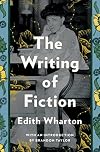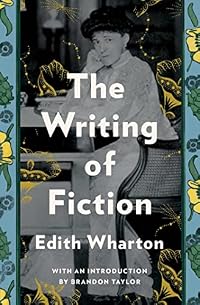
The Writing of Fiction
by Edith Wharton
On This Page
Description
Essays on the craft of fiction writing from the first woman to win the Pulitzer Prize, for her novel The Age of Innocence. In The Writing of Fiction, Edith Wharton, a prolific writer and one of the twentieth century's greatest authors, shares her thoughts on fiction writing, devoting individual chapters to short stories and novels. She stresses the importance of writers putting thought into how they build their story, from selecting subject matter and fashioning characters to crafting show more situations and settings. She explores the history of modern fiction and the contributions of Honore de Balzac and Stendhal. She even examines the difference between literary and commercial fiction, as well as the work of Marcel Proust. Although Wharton passed away in 1937, her advice here endures and is bound to inspire writers for ages to come. "In The Writing of Fiction Edith Wharton gives us not only a period-appropriate glimpse into the mind of an exceptionally creative writer but also an appreciation for the thoughtfulness and discipline she brought to her craft. We are fortunate she was willing to share her observations." -Ralph White, author of Litchfield show lessTags
Recommendations


Member Reviews
Admittedly, I loved this more as Wharton-writing than as instruction manual. Her analyses of trends of a hundred years ago was wonderful to compare to today’s (at one point she talks about parallel narratives, similar to today’s dual timelines, that have “thankfully” fallen from fashion)…
Since Balzac and Stendhal, fiction has reached out in many new directions, and made all sorts of experiments; but it has never ceased to cultivate the ground they cleared for it, or gone back to the realm of abstractions. It is still, however, an art in the making, fluent and dirigible, and combining a past full enough for the deduction of certain general principles with a future rich in untried possibilities. – from The Writing of Fiction, page 10 -
Edith Wharton was the first woman to win the Pulitzer Prize for her very first novel – The Age of Innocence. The Writing of Fiction is a glimpse into her view of the craft of writing…an expose which looks at the history of the novel and the authors who most influenced Wharton, as well show more as her theories on writing. In this slim book, Wharton examines the art of the short story and how it differs from writing a novel, the development of character, the difference between the novel of situation and that of the novel of character, and finishes with a short chapter on the brilliance of Proust.
I was impressed by how current Wharton’s theories and observations are more than 80 years after she penned them. It is not unusual to have writers voice the fear that what they are writing may have already been done before. And it is this common fear which Wharton first addresses in her guide:
Another unsettling element in modern art is that common symptom of immaturity, the dread of doing what has been done before; for though one of the instincts of youth is imitation, another, equally imperious, is that of fiercely guarding against it. - from The Writing of Fiction, page 17 -
She then goes on to define her concept of originality:
True originality consists not in a new manner but in a new vision. That new, that personal, vision is attained only by looking long enough at the object represented to make it the writer’s own; and the mind which would bring this secret germ to fruition must be able to nourish it with accumulated wealth of knowledge and experience. – from The Writing of Fiction, page 17 -
I found many of Wharton’s observations to be truths I have experienced not only as a writer, but as a reader, as evidenced by the following quotes:
The moment the reader loses faith in the author’s sureness of foot the chasm of improbability gapes. – from The Writing of Fiction, page 31 -
Quiet iteration is far more racking than diversified assaults; the expected is more frightful than the unforeseen. - from The Writing of Fiction, page 32 -
The use of dialogue in fiction seems to be one of the few things about which a fairly definite rule may be laid down. It should be reserved for the culminating moments, and regarded as the spray into which the great wave of narrative breaks in curving toward the watcher on the shore. - from The Writing of Fiction, page 55 -
It is obvious that a mediocre book is always too long, and that a great one usually seems too short. – from The Writing of Fiction, page 74 -
A novelist who does not know when his story is finished, but goes on stringing episode to episode after it is over, not only weakens the effect of the conclusion, but robs of significance all that has gone before. – from The Writing of Fiction, page 78 -
I especially enjoyed Wharton’s advice regarding point of view: ‘One thing more is needful for the ultimate effect of probability; and that is, never to let the character who serves as reflector record anything not naturally within his register.‘ She goes on to caution the writer against shifting point of view too often, and when using multiple points of view to take care that each character provides a piece of the whole history in order to provide a unity of impression. Wharton’s philosophy was that the novel writer should tell his or her story from not more than two or three different perspectives.
Wharton also address the plot driven novel vs. the character driven novel – and notes that ‘the novel of character and manners may seem superior in richness, variety and play of light and shade‘ and ‘…so far the greatest novels have undoubtedly dealt with character and manners rather than with mere situation.‘ Lest one think Wharton is being self-serving in this observation, she quickly points out the danger of too much focus on character:
In the inevitable reaction against the arbitrary “plot” many novelists have gone too far in the other direction, either swamping themselves in the tedious “stream of consciousness,” or else – another frequent error – giving an exaggerated importance to trivial incidents when the tale is concerned with trivial lives. – from The Writing of Fiction, page 102 -
If there is a weakness in Wharton’s book about writing fiction, it is her abrupt last chapter which extols the brilliance of Proust. Since up to this point, The Writing of Fiction focused almost entirely on the history and craft of the art of writing, her switch to discussing Proust and his work felt out of place. Perhaps she desired to profile an author who exhibited what she felt were the best attributes of a writer. Indeed, in reference to Proust, she states:
Out of all the flux of judgments and theories which have darkened counsel in respect of novel-writing, one stable fact seems always to emerge; the quality the greatest novelist have always had in common is that of making their people live. - from The Writing of Fiction, page 111 -
In this quote, Wharton could almost have been writing of herself.
The Writing of Fiction is a gem of a book, allowing readers to glimpse the brilliance of a great female writer whose work still resonates with truth in today’s world. Writers in all stages of their development would do themselves a favor to pick up Wharton’s acutely observed guide to writing. show less
Edith Wharton was the first woman to win the Pulitzer Prize for her very first novel – The Age of Innocence. The Writing of Fiction is a glimpse into her view of the craft of writing…an expose which looks at the history of the novel and the authors who most influenced Wharton, as well show more as her theories on writing. In this slim book, Wharton examines the art of the short story and how it differs from writing a novel, the development of character, the difference between the novel of situation and that of the novel of character, and finishes with a short chapter on the brilliance of Proust.
I was impressed by how current Wharton’s theories and observations are more than 80 years after she penned them. It is not unusual to have writers voice the fear that what they are writing may have already been done before. And it is this common fear which Wharton first addresses in her guide:
Another unsettling element in modern art is that common symptom of immaturity, the dread of doing what has been done before; for though one of the instincts of youth is imitation, another, equally imperious, is that of fiercely guarding against it. - from The Writing of Fiction, page 17 -
She then goes on to define her concept of originality:
True originality consists not in a new manner but in a new vision. That new, that personal, vision is attained only by looking long enough at the object represented to make it the writer’s own; and the mind which would bring this secret germ to fruition must be able to nourish it with accumulated wealth of knowledge and experience. – from The Writing of Fiction, page 17 -
I found many of Wharton’s observations to be truths I have experienced not only as a writer, but as a reader, as evidenced by the following quotes:
The moment the reader loses faith in the author’s sureness of foot the chasm of improbability gapes. – from The Writing of Fiction, page 31 -
Quiet iteration is far more racking than diversified assaults; the expected is more frightful than the unforeseen. - from The Writing of Fiction, page 32 -
The use of dialogue in fiction seems to be one of the few things about which a fairly definite rule may be laid down. It should be reserved for the culminating moments, and regarded as the spray into which the great wave of narrative breaks in curving toward the watcher on the shore. - from The Writing of Fiction, page 55 -
It is obvious that a mediocre book is always too long, and that a great one usually seems too short. – from The Writing of Fiction, page 74 -
A novelist who does not know when his story is finished, but goes on stringing episode to episode after it is over, not only weakens the effect of the conclusion, but robs of significance all that has gone before. – from The Writing of Fiction, page 78 -
I especially enjoyed Wharton’s advice regarding point of view: ‘One thing more is needful for the ultimate effect of probability; and that is, never to let the character who serves as reflector record anything not naturally within his register.‘ She goes on to caution the writer against shifting point of view too often, and when using multiple points of view to take care that each character provides a piece of the whole history in order to provide a unity of impression. Wharton’s philosophy was that the novel writer should tell his or her story from not more than two or three different perspectives.
Wharton also address the plot driven novel vs. the character driven novel – and notes that ‘the novel of character and manners may seem superior in richness, variety and play of light and shade‘ and ‘…so far the greatest novels have undoubtedly dealt with character and manners rather than with mere situation.‘ Lest one think Wharton is being self-serving in this observation, she quickly points out the danger of too much focus on character:
In the inevitable reaction against the arbitrary “plot” many novelists have gone too far in the other direction, either swamping themselves in the tedious “stream of consciousness,” or else – another frequent error – giving an exaggerated importance to trivial incidents when the tale is concerned with trivial lives. – from The Writing of Fiction, page 102 -
If there is a weakness in Wharton’s book about writing fiction, it is her abrupt last chapter which extols the brilliance of Proust. Since up to this point, The Writing of Fiction focused almost entirely on the history and craft of the art of writing, her switch to discussing Proust and his work felt out of place. Perhaps she desired to profile an author who exhibited what she felt were the best attributes of a writer. Indeed, in reference to Proust, she states:
Out of all the flux of judgments and theories which have darkened counsel in respect of novel-writing, one stable fact seems always to emerge; the quality the greatest novelist have always had in common is that of making their people live. - from The Writing of Fiction, page 111 -
In this quote, Wharton could almost have been writing of herself.
The Writing of Fiction is a gem of a book, allowing readers to glimpse the brilliance of a great female writer whose work still resonates with truth in today’s world. Writers in all stages of their development would do themselves a favor to pick up Wharton’s acutely observed guide to writing. show less
Edith Wharton was the first woman to win the Pulitzer Prize for fiction. She won for The Age of Innocence in 1920; it was her twelfth novel. First published in 1925, her advice is still current today and will interest readers as well as writers of fiction.
Part literary analysis, part writing recommendations, this is not an indexed guide on how to write but more Wharton’s thoughts on writing fiction. At the beginning she reviews the development of ‘modern fiction’ that she says began when the action of the novel was ‘transferred from the street to the soul’; moving through the trend for providing a ‘slice of life’ via the French realists to the early twentieth century ‘stream of consciousness’. The early chapter is a show more little dry but the meat of this book is in three chapters: ‘Telling a Short Story’, ‘Constructing a Novel’, and ‘Character and Situation in the Novel’.
Wharton’s main points have lasted the test of time. Dialogue should be used sparingly. Originality is about vision, not about technique. Minor characters should all serve a purpose, or be cut. All novelists will to a degree write the autobiographical, Wharton says, but to be a truly creative novelist one must see the story as a whole and not as revolving solely around one central character [ie the novelist himself]. There is sound advice about the length of a novel, which she says needs to be determined by the subject. “The novelist should not concern himself beforehand with the abstract question of length, he should not decide in advance whether he is going to write a long or a short novel; but in the act of composition he must never cease to bear in mind that one should always be able to say of a novel: ‘It might have been longer,’ never: ‘It need not have been so long.’
This is a slim book that made me consider my own writing. It also left me determined to finally tackle the classics I have never read, including War and Peace and Père Goriot.
Read more of my book reviews at http://www.sandradanby.com/book-reviews-a-z/ show less
Part literary analysis, part writing recommendations, this is not an indexed guide on how to write but more Wharton’s thoughts on writing fiction. At the beginning she reviews the development of ‘modern fiction’ that she says began when the action of the novel was ‘transferred from the street to the soul’; moving through the trend for providing a ‘slice of life’ via the French realists to the early twentieth century ‘stream of consciousness’. The early chapter is a show more little dry but the meat of this book is in three chapters: ‘Telling a Short Story’, ‘Constructing a Novel’, and ‘Character and Situation in the Novel’.
Wharton’s main points have lasted the test of time. Dialogue should be used sparingly. Originality is about vision, not about technique. Minor characters should all serve a purpose, or be cut. All novelists will to a degree write the autobiographical, Wharton says, but to be a truly creative novelist one must see the story as a whole and not as revolving solely around one central character [ie the novelist himself]. There is sound advice about the length of a novel, which she says needs to be determined by the subject. “The novelist should not concern himself beforehand with the abstract question of length, he should not decide in advance whether he is going to write a long or a short novel; but in the act of composition he must never cease to bear in mind that one should always be able to say of a novel: ‘It might have been longer,’ never: ‘It need not have been so long.’
This is a slim book that made me consider my own writing. It also left me determined to finally tackle the classics I have never read, including War and Peace and Père Goriot.
Read more of my book reviews at http://www.sandradanby.com/book-reviews-a-z/ show less
The Writing of Fiction is a series of essays about the author's craft. She begins with a general discussion on the writing of fiction and then moves to several essays on short stories, more essays on constructing a novel, a good discussion on character and situation and concludes with a section on Marcel Proust.
I'm not going to cover all of the points in these essays. Rather I'd like to share some of the highlights I found interesting, plus share some quotes from the book so you will have a little taste for her writing.
I found her discussion of the difference between the short story and novels to be most interesting. According to Ms. Wharton, a novel, because of its length, allows for the development of characters and can better show show more the passing of time. The writer of the short story should emphasize what she calls, the situation or predicament.
"The chief technical difference between the short story and the novel may therefore be summed up by saying that situation is the main concern of the short story, character of the novel; and it follows that the effect produced by the short story depends almost entirely on its form, or presentation."
Short stories must be vivid and grab the reader from the very beginning. Good novels do the same but they have the luxury of length to develop the various aspects of the story to a great depth.
". . . the typical novel usually deals with the gradual unfolding of a succession of events divided by intervals of time, and in which many people, in addition to the principal characters, play more or less subordinate parts. No need now to take in sail and clear the decks; the novelist must carry as much canvas and as many passengers as his subject requires and his seamanship permits."
I could keep going in my comments and quotes of this slim little volume. It served my original objective of learning how this particular writer viewed her craft. It took me quite a few pages before I got into the rhythm and style of her writing. It was worth hanging in there until I understood her writing. One thing Ms. Wharton did was to fill me with a desire to read more short stories. show less
I'm not going to cover all of the points in these essays. Rather I'd like to share some of the highlights I found interesting, plus share some quotes from the book so you will have a little taste for her writing.
I found her discussion of the difference between the short story and novels to be most interesting. According to Ms. Wharton, a novel, because of its length, allows for the development of characters and can better show show more the passing of time. The writer of the short story should emphasize what she calls, the situation or predicament.
"The chief technical difference between the short story and the novel may therefore be summed up by saying that situation is the main concern of the short story, character of the novel; and it follows that the effect produced by the short story depends almost entirely on its form, or presentation."
Short stories must be vivid and grab the reader from the very beginning. Good novels do the same but they have the luxury of length to develop the various aspects of the story to a great depth.
". . . the typical novel usually deals with the gradual unfolding of a succession of events divided by intervals of time, and in which many people, in addition to the principal characters, play more or less subordinate parts. No need now to take in sail and clear the decks; the novelist must carry as much canvas and as many passengers as his subject requires and his seamanship permits."
I could keep going in my comments and quotes of this slim little volume. It served my original objective of learning how this particular writer viewed her craft. It took me quite a few pages before I got into the rhythm and style of her writing. It was worth hanging in there until I understood her writing. One thing Ms. Wharton did was to fill me with a desire to read more short stories. show less
¡Si es que ya lo dice el propio editor! «Unos principios no suficientes» para comprender la creación de la obra literaria. No, no son suficientes. Apenas se adivina la capacidad crítica de Wharton. No hay nada que me moleste más que un libreto construido a través de conferencias transcritas o retazos de artículos sueltos. Demasiado corto, demasiado insuficiente.
¡Si es que ya lo dice el propio editor! «Unos principios no suficientes» para comprender la creación de la obra literaria. No, no son suficientes. Apenas se adivina la capacidad crítica de Wharton. No hay nada que me moleste más que un libreto construido a través de conferencias transcritas o retazos de artículos sueltos. Demasiado corto, demasiado insuficiente.
Il s’agit d’un essai de Edith Wharton sur les règles de la fiction comme son titre l’indique. Il est suivi d’un court texte de l’auteure sur la profonde estime qu’elle porte à Marcel Proust (elle démontre ici tout le génie qu’il possédait malgré quelques parties plus faibles d’après elle). Le texte de Marcel Proust, je n’en parlerai pas vu que je n’ai pas lu À la recherche du temps perdu, même si elle donne franchement envie de s’y mettre (elle aussi devrais-je dire).
La premier partie du livre est décomposée en quatre parties : généralités, mener un récit, construire un roman et personnage et situation dans le roman. Dans ces quatre parties, une chose frappe c’est la certitude qu’Edith Wharton a show more qu’elle a raison. En tout cas, c’est l’impression que cela donne mais ce n’est pas du tout comme cela qu’elle l’expose. Elle a énormément réfléchit à son Art et elle souligne l’importance de le faire pour les jeunes écrivains (voir les extraits en dessous), elle a aussi beaucoup lu. Elle en a tiré quelques consignes pour à son avis faire un roman réussi. Elle distingue les génies et le reste des écrivains (parce qu’on n’est pas tous des génies) et elle parle bien de romans réussis et non de chef d’œuvre. Je me garderai bien de faire un résumé de ses conseils (je ne les ai pas notés à vrai dire) mais j’ai trouvé que c’est intéressant car le discours se présente d’un manière logique, construite et claire (c’est ce qu’elle prône). Tout cela est illustré par des exemples pris dans la grande littérature française et anglaise (voire américaine et russe) du 19ième siècle (il y a quand même Jane Austen) et du début 20ième siècle.
Cependant, deux petites choses ont retenu plus mon attention. La première est l’explication de comment on sait que l’on doit écrire une nouvelle plutôt qu’un roman. Cela ne m’a jamais paru bien clair de différencier longue nouvelle et court roman.
La seconde est sa détestation du “flux de conscience” car justement c’est la marque d’un désordre de l’esprit qui selon elle, empêche la mémorisation du livre par le lecteur (on ne mémorise que la sensation et pas l’intrigue ou bien le sentiment qui se cache derrière cette sensation). Comme je n’y connais rien en histoire littéraire, je pensais que la chef de fil de ce courant était Virginia Woolf mais apparemment non (d’un autre côté elle ne cite pas de noms). Cependant, maintenant, je me demande si elle avait lu Virginia Woolf ou elle ne l’aimait ou est-ce qu’elle ne l’avait pas lu (parce que cet essai et les livres de Virginia Woolf sont un peu contemporain tout de même). Si vous avez des infos, je suis preneuse.
En conclusion, je dirais qu’on ne peut qu’admiré la confiance qu’Edith Wharton avait en son jugement pour l’exprimer à la postérité d’une manière qui peut paraître à la première lecture péremptoire. Elle n’avait pas peur qu’on lui dise qu’elle avait loupé quelque chose. C’est pour cela que je dis “à la première lecture” car à mon avis elle nous livre sa vision et sa réflexion qu’elle essaye d’objectiver un maximum. show less
La premier partie du livre est décomposée en quatre parties : généralités, mener un récit, construire un roman et personnage et situation dans le roman. Dans ces quatre parties, une chose frappe c’est la certitude qu’Edith Wharton a show more qu’elle a raison. En tout cas, c’est l’impression que cela donne mais ce n’est pas du tout comme cela qu’elle l’expose. Elle a énormément réfléchit à son Art et elle souligne l’importance de le faire pour les jeunes écrivains (voir les extraits en dessous), elle a aussi beaucoup lu. Elle en a tiré quelques consignes pour à son avis faire un roman réussi. Elle distingue les génies et le reste des écrivains (parce qu’on n’est pas tous des génies) et elle parle bien de romans réussis et non de chef d’œuvre. Je me garderai bien de faire un résumé de ses conseils (je ne les ai pas notés à vrai dire) mais j’ai trouvé que c’est intéressant car le discours se présente d’un manière logique, construite et claire (c’est ce qu’elle prône). Tout cela est illustré par des exemples pris dans la grande littérature française et anglaise (voire américaine et russe) du 19ième siècle (il y a quand même Jane Austen) et du début 20ième siècle.
Cependant, deux petites choses ont retenu plus mon attention. La première est l’explication de comment on sait que l’on doit écrire une nouvelle plutôt qu’un roman. Cela ne m’a jamais paru bien clair de différencier longue nouvelle et court roman.
La seconde est sa détestation du “flux de conscience” car justement c’est la marque d’un désordre de l’esprit qui selon elle, empêche la mémorisation du livre par le lecteur (on ne mémorise que la sensation et pas l’intrigue ou bien le sentiment qui se cache derrière cette sensation). Comme je n’y connais rien en histoire littéraire, je pensais que la chef de fil de ce courant était Virginia Woolf mais apparemment non (d’un autre côté elle ne cite pas de noms). Cependant, maintenant, je me demande si elle avait lu Virginia Woolf ou elle ne l’aimait ou est-ce qu’elle ne l’avait pas lu (parce que cet essai et les livres de Virginia Woolf sont un peu contemporain tout de même). Si vous avez des infos, je suis preneuse.
En conclusion, je dirais qu’on ne peut qu’admiré la confiance qu’Edith Wharton avait en son jugement pour l’exprimer à la postérité d’une manière qui peut paraître à la première lecture péremptoire. Elle n’avait pas peur qu’on lui dise qu’elle avait loupé quelque chose. C’est pour cela que je dis “à la première lecture” car à mon avis elle nous livre sa vision et sa réflexion qu’elle essaye d’objectiver un maximum. show less
Mar 31, 2012French
Members
- Recently Added By
Author Information

378+ Works 63,654 Members
Edith Wharton was a woman of extreme contrasts; brought up to be a leisured aristocrat, she was also dedicated to her career as a writer. She wrote novels of manners about the old New York society from which she came, but her attitude was consistently critical. Her irony and her satiric touches, as well as her insight into human character, show more continue to appeal to readers today. As a child, Wharton found refuge from the demands of her mother's social world in her father's library and in making up stories. Her marriage at age 23 to Edward ("Teddy") Wharton seemed to confirm her place in the conventional role of wealthy society woman, but she became increasingly dissatisfied with the "mundanities" of her marriage and turned to writing, which drew her into an intellectual community and strengthened her sense of self. After publishing two collections of short stories, The Greater Inclination (1899) and Crucial Instances (1901), she wrote her first novel, The Valley of Decision (1902), a long, historical romance set in eighteenth-century Italy. Her next work, the immensely popular The House of Mirth (1905), was a scathing criticism of her own "frivolous" New York society and its capacity to destroy her heroine, the beautiful Lily Bart. As Wharton became more established as a successful writer, Teddy's mental health declined and their marriage deteriorated. In 1907 she left America altogether and settled in Paris, where she wrote some of her most memorable stories of harsh New England rural life---Ethan Frome (1911) and Summer (1917)---as well as The Reef (1912), which is set in France. All describe characters forced to make moral choices in which the rights of individuals are pitted against their responsibilities to others. She also completed her most biting satire, The Custom of the Country (1913), the story of Undine Spragg's climb, marriage by marriage, from a midwestern town to New York to a French chateau. During World War I, Wharton dedicated herself to the war effort and was honored by the French government for her work with Belgian refugees. After the war, the world Wharton had known was gone. Even her Pulitzer Prize-winning novel, The Age of Innocence (1920), a story set in old New York, could not recapture the former time. Although the new age welcomed her---Wharton was both a critical and popular success, honored by Yale University and elected to The National Institute of Arts and Letters---her later novels show her struggling to come to terms with a new era. In The Writing of Fiction (1925), Wharton acknowledged her debt to her friend Henry James, whose writings share with hers the descriptions of fine distinctions within a social class and the individual's burdens of making proper moral decisions. R.W.B. Lewis's biography of Wharton, published in 1975, along with a wealth of new biographical material, inspired an extensive reevaluation of Wharton. Feminist readings and reactions to them have focused renewed attention on her as a woman and as an artist. Although many of her books have recently been reprinted, there is still no complete collected edition of her work. (Bowker Author Biography) show less
Common Knowledge
- Canonical title*
- Scrivere narrativa
- Original title
- The writing of fiction
- Original publication date
- 1925
- Epigraph*
- Nell'ordine consiste la bellezza
anche della Bellezza.
Thomas Traherne - Dedication*
- A Gaillard Lapsley
- First words*
- Trattare della pratica della narrativa significa abbordare la più nuova, più fluida e meno codificata delle arti. L'esplorazione delle origini ha sempre qualcosa di affascinante; ma il tentativo di ricollegare il romanzo mo... (show all)derno alla leggenda di Giuseppe e i suoi fratelli rientra nel puro ambito della storia.
*Some information comes from Common Knowledge in other languages. Click "Edit" for more information.
Classifications
Statistics
- Members
- 215
- Popularity
- 151,352
- Reviews
- 7
- Rating
- (3.45)
- Languages
- English, French, Italian, Spanish
- Media
- Paper, Ebook
- ISBNs
- 13
- ASINs
- 5