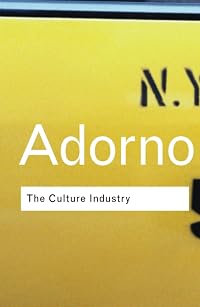
The Culture Industry: Selected Essays on Mass Culture
by Theodor W. Adorno
On This Page
Description
The creation of the Frankfurt School of critical theory in the 1920s saw the birth of some of the most exciting and challenging writings of the twentieth century. It is out of this background that the great critic Theodor Adorno emerged. His finest essays are collected here, offering the reader unparalleled insights into Adorno's thoughts on culture. He argued that the culture industry commodified and standardized allart. In turn this suffocated individuality and destroyed critical thinking. show more At the time, Adorno was accused of everything from overreaction to deranged hysteria by his many detractors. In today's world, where even the least cynical of consumers is aware of the influence of the media, Adorno's work takes on a more immediate significance. The Culture Industryis an unrivalled indictment of the banality of mass culture. show lessTags
Recommendations



















Member Reviews
A lot of Adorno's musings on the culture industry and the mass production of culture gained through industrialization, on the contradictory and blurred opposition between 'serious' and 'popular' art, are so embedded into culture itself that much of this book feels obvious. One thing I'm really glad to now appreciate is that Adorno wasn't simply critiquing a status quo but also went into how that status quo, or an aspect of it, is actually necessary for the 'progressive' oppositions to exist and be structured. He was pushing for awareness, but not necessarily elimination.
What I really appreciated was how one could appreciate the times in which Adorno lived and contrast his view of popular music (jazz) against our modern conception. While show more a lot of what Adorno writes still applies, things have shifted enough that you can't just run with Adorno's criticism and expect it to apply directly. As such, being able to now discern the difference in culture allows me to take Adorno's core sentiment and apply it more intelligently.
The real goldmine in this book, I find, is that of the last few chapters. While the first ones are extremely theoretical and heady and presumably why you are reading this book, it really surprised me to see Adorno taking what I thought to be a primarily arts-based complaint and then applying it to political activism and leisure time. In fact, his demonstration of how the culture industry weaves its tendrils into things that are not mere show or entertainment drives his point home with far more impact and room for introspection. In fact, those are the points that I think people would be far better off retaining as Adorno's culture-centric insights are part of the industry itself, going through the same machinations he set his polemic against. show less
What I really appreciated was how one could appreciate the times in which Adorno lived and contrast his view of popular music (jazz) against our modern conception. While show more a lot of what Adorno writes still applies, things have shifted enough that you can't just run with Adorno's criticism and expect it to apply directly. As such, being able to now discern the difference in culture allows me to take Adorno's core sentiment and apply it more intelligently.
The real goldmine in this book, I find, is that of the last few chapters. While the first ones are extremely theoretical and heady and presumably why you are reading this book, it really surprised me to see Adorno taking what I thought to be a primarily arts-based complaint and then applying it to political activism and leisure time. In fact, his demonstration of how the culture industry weaves its tendrils into things that are not mere show or entertainment drives his point home with far more impact and room for introspection. In fact, those are the points that I think people would be far better off retaining as Adorno's culture-centric insights are part of the industry itself, going through the same machinations he set his polemic against. show less
Here is a short Youtube video capturing the spirit of Theodor W. Adorno's The Culture Industry. Such a clear synopsis of his philosophy, I wanted to include as part of my review here: https://www.youtube.com/watch?v=4YGnPgtWhsw
You will be hard pressed to find a more scathing, uncompromising indictment of popular culture than The Culture Industry, Selected Essays on Mass Culture by Theodor W. Adorno (1903-1969). An accomplished classical pianist, composer and musicologist (he was a friend of composer Arnold Schoenberg) as well as a philosopher and sociologist with a razor-sharp mind, Adorno loathed how commercial interests standardize artistic and aesthetic enjoyment by pressing low-level conformity on an entire population for the show more purpose of maximizing sales and profits.
There are nine essays in this collection, covering such topics as music, film and television. Adorno's writing style can be a bit dense; if you decide to tackle these essays be prepared to spend some time rereading many sections carefully.
Additionally, one Goodreads friend said reading Adorno is like drinking vinegar. I completely agree: the majority of the ideas presented have a taste most bitter. This being said, in order to share some Adorno vinegar, below are my modest comments coupled with several quotes from an essay on a subject I'm sure is near and dear to all of us: Free Time.
"Free time depends on the totality of social conditions which continues to hold people under its spell. Neither in their work nor in their consciousness do people dispose of genuine freedom over themselves. . . . even where the hold of the spell (of social conditions, especially work) is relaxed, and people are at least subjectively convinced that they are acting of their own free will, this will itself is shaped by the very same forces which they are seeking to escape in their hours without work." ----------- After years of training in Jersy Grotowski-style physical theater, an extreme and demanding method to free one's body, I took an improvisational acting class where a number of students were office workers. I could instantly see how, although these students were engaged in theater exercises, their movements were so restricted and mechanical, it was as if they were still at work in their office.
Adorno speaks of his own life: "I have no hobby. As far as my activities beyond the bounds of my recognized profession are concerned, I take them all, without exception, very seriously. So much so, that I should be horrified by the very idea that they had anything to do with hobbies - preoccupations with which I had become mindlessly infatuated merely in order to kill the time . . . Making music, listening to music, reading with all my attention, these activities are part and parcel of my life; to call them hobbies would make a mockery of them. ---------- Adorno's words here can be taken as a direct challenge: Do you `kill time' when you are away from work? Do you need a hobby to occupy your attention?
"For the most part the very development of the imagination is crippled by the experience of early childhood. The lack of imagination which is cultivated and inculcated by society renders people helpless in their free time." --------- Again, are you easily bored and seek out mindless distractions? How frequently do you turn on the TV?
"People have been refused freedom, and its value belittled for such a long time that now people no longer like it. . . . This is one good reason why people have remained chained to their work, and to the system which trains them for work, long after that system has ceased to require their labor. ---------- For the life of me I will never understand how many people spend most of their "free time" thinking and talking about their work. Even if their work is interesting, I fail to see how work can be so interesting and mesmerizing that they can't let it go. Tis true: all work and no play makes Johnny and Suzy very, very dull people.
"The accepted reason for playing team sports is that it makes believe that fitness itself is the sole, independent end of sport: whereas fitness for work is certainly one of the covert ends of sport. Frequently it is in team sport that people first inflict upon themselves (and celebrate as a triumph of their own freedom) precisely what society inflicts upon them and what they must learn to enjoy." ---------- Ha! In a word, team sports acculturate individuals to forfeit their health, creativity and freedom as a first step in forfeiting their health, creativity and freedom when they step into the workplace.
Interestingly, Adordo concludes his essay by relating a study done by his Frankfurt Institute in Germany where members of the public where interviewed after watching the wedding of a Princess and a German diplomat broadcast by all the mass media. The findings were a surprise. Turns out, people were glued to their television sets but there was an element of skepticism about the importance of the event and a reluctance to take the whole thing too seriously. In Adorno's words: " . . . it is indeed consumed and accepted but with a kind of reservation." In other words, Adorno and the Frankfurt School recognized people are not as dumb and gullible as intellectuals and philosophers might think. And thus, they concluded, it is this very capacity to stand back and critically evaluate the commercialized garbage offered up by the culture industry wherein people can realize their freedom. show less
This is a rather intense series of essays by Adorno on the modern media. His style is both dense with references to Marx and Hegel and pungent in its scorn for media conventions - it's like drinking vinegar.
His cantankerous view of culture begins with modern music, which is loud, repetitive, has a strong beat, and offers little or no technical views or ambiguity to cause serious discussion. He moves from there to television, film, the shaping of thoughts by the radio, and comparisons of films to fascist propaganda themes. The idea of a hero or leader, the primordial 'All-Father', a heroic-Wagnerian-Hitlerian man of action, in contrast to the packaged 'spineless intellectual', which is weak and ineffectual.
He holds up a distinction show more between high and low culture, and states that very few have been able to successfully bridge the gap between both. 'High' culture, of literature, music, art, etc., can be used as a means of continual awareness and freedom, ambiguity and discussion and dialectic, but with the caveat that even these exalted means can be used to shoehorn people into little roles - the 'upper class' with monocles, tophats, etc., versus the 'plebs', or something similar.
A particularly interesting point is one which affects our post-industrial society - what do we do when we have to manufacture jobs in order for people to work - work for work's sake - or what do we do when people have enough free time, and how may it be spent happily? In modern terminology, what do we do in a post-scarcity service economy?
Now considering these essays are some 50 years old, their propositions are frightening, and their conclusions necessary. For even post-modern 'ironies' and 'self-awareness' and 'references' can be packaged, bought and sold nowadays. Even the idea of rebellion is being bought and sold. One thinks of those V-for-Vendetta masks, which are the copyright of Warner Brothers.
A challenging book. show less
His cantankerous view of culture begins with modern music, which is loud, repetitive, has a strong beat, and offers little or no technical views or ambiguity to cause serious discussion. He moves from there to television, film, the shaping of thoughts by the radio, and comparisons of films to fascist propaganda themes. The idea of a hero or leader, the primordial 'All-Father', a heroic-Wagnerian-Hitlerian man of action, in contrast to the packaged 'spineless intellectual', which is weak and ineffectual.
He holds up a distinction show more between high and low culture, and states that very few have been able to successfully bridge the gap between both. 'High' culture, of literature, music, art, etc., can be used as a means of continual awareness and freedom, ambiguity and discussion and dialectic, but with the caveat that even these exalted means can be used to shoehorn people into little roles - the 'upper class' with monocles, tophats, etc., versus the 'plebs', or something similar.
A particularly interesting point is one which affects our post-industrial society - what do we do when we have to manufacture jobs in order for people to work - work for work's sake - or what do we do when people have enough free time, and how may it be spent happily? In modern terminology, what do we do in a post-scarcity service economy?
Now considering these essays are some 50 years old, their propositions are frightening, and their conclusions necessary. For even post-modern 'ironies' and 'self-awareness' and 'references' can be packaged, bought and sold nowadays. Even the idea of rebellion is being bought and sold. One thinks of those V-for-Vendetta masks, which are the copyright of Warner Brothers.
A challenging book. show less
UPDATE - JULY 2016
Here is a short youtube video capturing the spirit of Adorno's The Culture Industry. Such a clear synopsis of his philosophy, I wanted to include as part of my update here: https://www.youtube.com/watch?v=4YGnPgtWhsw
You will be hard pressed to find a more scathing, uncompromising indictment of popular culture than The Culture Industry, Essays on Mass Culture by Theodor W. Adorno (1903-1969). An accomplished classical pianist, composer and musicologist (he was a friend of composer Arnold Schoenberg) as well as a philosopher and sociologist with a razor-sharp mind, Adorno loathed how commercial interests standardize artistic and aesthetic enjoyment by pressing low-level conformity on an entire population for the purpose show more of maximizing sales and profits.
There are 9 essays in this collection, covering such topics as music, film and television. Adorno's writing style can be a bit dense; if you decide to tackle these essays be prepared to spend some time reading and rereading many sentence carefully. Additionally, a Goodreads friend said reading Adorno is like drinking vinegar. I completely agree: the majority of the ideas presented have a taste most bitter. This being said, in order to share some Adorno vinegar, below are my modest comments coupled with several quotes from an essay on a subject I'm sure is near and dear to all of us: Free Time.
"Free time depends on the totality of social conditions which continues to hold people under its spell. Neither in their work nor in their consciousness do people dispose of genuine freedom over themselves. . . . even where the hold of the spell (of social conditions, especially work) is relaxed, and people are at least subjectively convinced that they are acting of their own free will, this will itself is shaped by the very same forces which they are seeking to escape in their hours without work." ----------- After years of training in Jersy Grotowski-style physical theater, an extreme and demanding method to free one's body, I took an improvisational acting class where a number of students were office workers. I could instantly see how, although these students were engaged in theater exercises, their movements were so restricted and mechanical, it was as if they were still at work in their office.
Adorno speaks of his own life: "I have no hobby. As far as my activities beyond the bounds of my recognized profession are concerned, I take them all, without exception, very seriously. So much so, that I should be horrified by the very idea that they had anything to do with hobbies - preoccupations with which I had become mindlessly infatuated merely in order to kill the time . . . Making music, listening to music, reading with all my attention, these activities are part and parcel of my life; to call them hobbies would make a mockery of them. ---------- Adorno's words here can be taken as a direct challenge: Do you `kill time' when you are away from work? Do you need a hobby to occupy your attention?
"For the most part the very development of the imagination is crippled by the experience of early childhood. The lack of imagination which is cultivated and inculcated by society renders people helpless in their free time." --------- Again, are you easily bored and seek out mindless distractions? How frequently do you turn on the TV?
"People have been refused freedom, and its value belittled for such a long time that now people no longer like it. . . . This is one good reason why people have remained chained to their work, and to the system which trains them for work, long after that system has ceased to require their labor. ---------- For the life of me I will never understand how many people spend most of their `free time' thinking and talking about their work. Even if their work is interesting, I fail to see how work can be so interesting and mesmerizing that they can't let it go. Tis true: all work and no play makes Johnny and Suzy very, very dull people.
"The accepted reason for playing team sports is that it makes believe that fitness itself is the sole, independent end of sport: whereas fitness for work is certainly one of the covert ends of sport. Frequently it is in team sport that people first inflict upon themselves (and celebrate as a triumph of their own freedom) precisely what society inflicts upon them and what they must learn to enjoy." ---------- Ha! In a word, team sports acculturate individuals to forfeit their health, creativity and freedom as a first step in forfeiting their health, creativity and freedom when they step into the workplace.
Interestingly, Adordo concludes his essay by relating a study done by his Frankfurt Institute in Germany where members of the public where interviewed after watching the wedding of a Princess and a German diplomat broadcast by all the mass media. The findings were a surprise. Turns out, people were glued to their television sets but there was an element of skepticism about the importance of the event and a reluctance to take the whole thing too seriously. In Adorno's words: " . . . it is indeed consumed and accepted but with a kind of reservation." In other words, Adorno and the Frankfurt School recognized people are not as dumb and gullible as intellectuals and philosophers might think. And thus, they concluded, it is this very capacity to stand back and critically evaluate the commercialized garbage offered up by the culture industry wherein people can realize their freedom. show less
Here is a short youtube video capturing the spirit of Adorno's The Culture Industry. Such a clear synopsis of his philosophy, I wanted to include as part of my update here: https://www.youtube.com/watch?v=4YGnPgtWhsw
You will be hard pressed to find a more scathing, uncompromising indictment of popular culture than The Culture Industry, Essays on Mass Culture by Theodor W. Adorno (1903-1969). An accomplished classical pianist, composer and musicologist (he was a friend of composer Arnold Schoenberg) as well as a philosopher and sociologist with a razor-sharp mind, Adorno loathed how commercial interests standardize artistic and aesthetic enjoyment by pressing low-level conformity on an entire population for the purpose show more of maximizing sales and profits.
There are 9 essays in this collection, covering such topics as music, film and television. Adorno's writing style can be a bit dense; if you decide to tackle these essays be prepared to spend some time reading and rereading many sentence carefully. Additionally, a Goodreads friend said reading Adorno is like drinking vinegar. I completely agree: the majority of the ideas presented have a taste most bitter. This being said, in order to share some Adorno vinegar, below are my modest comments coupled with several quotes from an essay on a subject I'm sure is near and dear to all of us: Free Time.
"Free time depends on the totality of social conditions which continues to hold people under its spell. Neither in their work nor in their consciousness do people dispose of genuine freedom over themselves. . . . even where the hold of the spell (of social conditions, especially work) is relaxed, and people are at least subjectively convinced that they are acting of their own free will, this will itself is shaped by the very same forces which they are seeking to escape in their hours without work." ----------- After years of training in Jersy Grotowski-style physical theater, an extreme and demanding method to free one's body, I took an improvisational acting class where a number of students were office workers. I could instantly see how, although these students were engaged in theater exercises, their movements were so restricted and mechanical, it was as if they were still at work in their office.
Adorno speaks of his own life: "I have no hobby. As far as my activities beyond the bounds of my recognized profession are concerned, I take them all, without exception, very seriously. So much so, that I should be horrified by the very idea that they had anything to do with hobbies - preoccupations with which I had become mindlessly infatuated merely in order to kill the time . . . Making music, listening to music, reading with all my attention, these activities are part and parcel of my life; to call them hobbies would make a mockery of them. ---------- Adorno's words here can be taken as a direct challenge: Do you `kill time' when you are away from work? Do you need a hobby to occupy your attention?
"For the most part the very development of the imagination is crippled by the experience of early childhood. The lack of imagination which is cultivated and inculcated by society renders people helpless in their free time." --------- Again, are you easily bored and seek out mindless distractions? How frequently do you turn on the TV?
"People have been refused freedom, and its value belittled for such a long time that now people no longer like it. . . . This is one good reason why people have remained chained to their work, and to the system which trains them for work, long after that system has ceased to require their labor. ---------- For the life of me I will never understand how many people spend most of their `free time' thinking and talking about their work. Even if their work is interesting, I fail to see how work can be so interesting and mesmerizing that they can't let it go. Tis true: all work and no play makes Johnny and Suzy very, very dull people.
"The accepted reason for playing team sports is that it makes believe that fitness itself is the sole, independent end of sport: whereas fitness for work is certainly one of the covert ends of sport. Frequently it is in team sport that people first inflict upon themselves (and celebrate as a triumph of their own freedom) precisely what society inflicts upon them and what they must learn to enjoy." ---------- Ha! In a word, team sports acculturate individuals to forfeit their health, creativity and freedom as a first step in forfeiting their health, creativity and freedom when they step into the workplace.
Interestingly, Adordo concludes his essay by relating a study done by his Frankfurt Institute in Germany where members of the public where interviewed after watching the wedding of a Princess and a German diplomat broadcast by all the mass media. The findings were a surprise. Turns out, people were glued to their television sets but there was an element of skepticism about the importance of the event and a reluctance to take the whole thing too seriously. In Adorno's words: " . . . it is indeed consumed and accepted but with a kind of reservation." In other words, Adorno and the Frankfurt School recognized people are not as dumb and gullible as intellectuals and philosophers might think. And thus, they concluded, it is this very capacity to stand back and critically evaluate the commercialized garbage offered up by the culture industry wherein people can realize their freedom. show less
I had high hopes for this book by a leader of the so-called
Frankfurt School, but it is written so abstrusely as to be barely comprehensible. I gather from other sources that Adorno believed that our lives are so entangled in our social system (namely, capitalism) that we do not realize how much our lives are diminished by this system relative to a possible emancipation. Indeed, the system appears rosy to us but only in a limited, banal, way. Culture, for instance, is manufactured for us by way of mass entertainment corporations. Hence, Adorno's writing is apparently meant to somehow shock us into glimpsing the truth, despite our all-embracing oppression. But I really don't get it. It just seems like sloppy thinking and bad writing. I show more think that his point can be expressed with logical analysis; 'poetry' is not required to convey the truth about social structures. In particular, Adorno's viewpoint about social structures is similar to "systems thinking" in engineering - see Dana Meadows' book, Thinking in a systems: A Primer. This says that we respond to local forces/incentives but may not be aware of system feedbacks that drive the aggregate outcomes. So we make decisions that seem good but harm us in the longer run. There is nothing mysterious here. Systems thinking can be illustrated with simple mathematical models. I don't see the need to be made "self-aware" of my (supposed) oppression through dreadful writing - i.e. writing meant to elicit dread!? In passing, the documentary film on street art, "Exit Through the Gift Shop," is an awesome commentary on the culture industry. show less
Frankfurt School, but it is written so abstrusely as to be barely comprehensible. I gather from other sources that Adorno believed that our lives are so entangled in our social system (namely, capitalism) that we do not realize how much our lives are diminished by this system relative to a possible emancipation. Indeed, the system appears rosy to us but only in a limited, banal, way. Culture, for instance, is manufactured for us by way of mass entertainment corporations. Hence, Adorno's writing is apparently meant to somehow shock us into glimpsing the truth, despite our all-embracing oppression. But I really don't get it. It just seems like sloppy thinking and bad writing. I show more think that his point can be expressed with logical analysis; 'poetry' is not required to convey the truth about social structures. In particular, Adorno's viewpoint about social structures is similar to "systems thinking" in engineering - see Dana Meadows' book, Thinking in a systems: A Primer. This says that we respond to local forces/incentives but may not be aware of system feedbacks that drive the aggregate outcomes. So we make decisions that seem good but harm us in the longer run. There is nothing mysterious here. Systems thinking can be illustrated with simple mathematical models. I don't see the need to be made "self-aware" of my (supposed) oppression through dreadful writing - i.e. writing meant to elicit dread!? In passing, the documentary film on street art, "Exit Through the Gift Shop," is an awesome commentary on the culture industry. show less
More a collection of related essays and less a book with a coherent, unified message, this is a set of nine essays on a variety of topics. I’ll list them here just to give the reader some idea of the vast area these essays cover. They are “On the Fetish Character in Music and the Regression of Listening,” “The Schema of Mass Culture,” “Culture Industry Reconsidered,” “Culture and Administration,” “Freudian Theory and the Pattern of Fascist Propaganda,” “How to Look at Television,” “Transparencies on Film,” “Free Time,” and “Resignation.”
Like much of the writing that comes out of the Frankfurt School, this is heavily influenced by Marxism, especially their idea (Horkheimer collaborated with Adorno show more in writing some of the more important essays in this collection) that mass consumer culture has become commodified, reified, and fetishized. The “culture industry” refers to the processes of standardization, marketing, and distribution which become a part of objects themselves, and therefore indistinguishable from them. Everything has been subsumed under the logic of the mass market, which creates what Adorno and Horkheimer term “false needs” – those needs that capitalism invents, and that capitalism can uniquely satisfy.
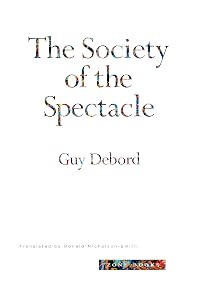
What I found of particular interest with the idea of the culture industry was the resonance that it has with so many other critical thinkers like Baudrillard, Debord, Lyotard, and Marcuse, yet being written several years before the most important work of these thinkers (Baudrillard’s “Simulacra and Simulation” didn’t come out until 1981, Debord’s “The Society of the Spectacle” until 1967, and Lyotard’s “The Postmodern Condition” until 1979). Some of the essays in the second half of the book – “How to Look at Television” and “Transparencies on Film,” especially – reminded me explicitly of the best writing on media of Harold Innis, Marshall McLuhan, and Raymond Williams.
While I credit Adorno for being an innovative, insightful social critic, the orthodox Marxism can become a little laborious and grating after a few essays. The best of his thought isn’t a result of his Marxism at all, but rather his sociological and psychological observations, as is the case with most of the media criticism here. Whether it is the translation or the original writing, the style is at its worst overly turgid and obfuscating, which makes it only digestible in small doses, but Adorno seems like he is always worth the effort. I will probably come back to this again and again in an attempt to inform my readings of later Frankfurt School members, especially Fromm, Lowenthal, and Habermas. show less
Like much of the writing that comes out of the Frankfurt School, this is heavily influenced by Marxism, especially their idea (Horkheimer collaborated with Adorno show more in writing some of the more important essays in this collection) that mass consumer culture has become commodified, reified, and fetishized. The “culture industry” refers to the processes of standardization, marketing, and distribution which become a part of objects themselves, and therefore indistinguishable from them. Everything has been subsumed under the logic of the mass market, which creates what Adorno and Horkheimer term “false needs” – those needs that capitalism invents, and that capitalism can uniquely satisfy.
What I found of particular interest with the idea of the culture industry was the resonance that it has with so many other critical thinkers like Baudrillard, Debord, Lyotard, and Marcuse, yet being written several years before the most important work of these thinkers (Baudrillard’s “Simulacra and Simulation” didn’t come out until 1981, Debord’s “The Society of the Spectacle” until 1967, and Lyotard’s “The Postmodern Condition” until 1979). Some of the essays in the second half of the book – “How to Look at Television” and “Transparencies on Film,” especially – reminded me explicitly of the best writing on media of Harold Innis, Marshall McLuhan, and Raymond Williams.
While I credit Adorno for being an innovative, insightful social critic, the orthodox Marxism can become a little laborious and grating after a few essays. The best of his thought isn’t a result of his Marxism at all, but rather his sociological and psychological observations, as is the case with most of the media criticism here. Whether it is the translation or the original writing, the style is at its worst overly turgid and obfuscating, which makes it only digestible in small doses, but Adorno seems like he is always worth the effort. I will probably come back to this again and again in an attempt to inform my readings of later Frankfurt School members, especially Fromm, Lowenthal, and Habermas. show less
Adorno belonged to the Frankfurt School of Critical Theory in the 1920s. He died in 1969. His criticism of the standardization and commodification of art applies even more today. Read this book together with Tolstoy's "What is Art", but try not to get too depressed. It is a must read for anyone interested in "art" and entertainment (today almost inseparable) in the digital world. It is remarkable because Adorno died before the YouTube / Big Brother phenomena. Yet, you find yourself agreeing with him on almost every point.
Members
- Recently Added By
Lists

culture
320 works; 1 member
Author Information

328+ Works 14,378 Members
Theodor W. Adorno is the progenitor of critical theory, a central figure in aesthetics, and the century's foremost philosopher of music. He was born and educated in Frankfurt, Germany. After completing his Ph.D. in philosophy, he went to Vienna, where he studied composition with Alban Berg. He soon was bitterly disappointed with his own lack of show more talent and turned to musicology. In 1928 Adorno returned to Frankfurt to join the Institute for Social Research, commonly known as The Frankfurt School. At first a privately endowed center for Marxist studies, the school was merged with Frankfort's university under Adorno's directorship in the 1950s. As a refugee from Nazi Germany during World War II, Adorno lived for several years in Los Angeles before returning to Frankfurt. Much of his most significant work was produced at that time. Critics find Adorno's aesthetics to be rich in insight, even when they disagree with its broad conclusions. Although Adorno was hostile to jazz and popular music, he advanced the cause of contemporary music by writing seminal studies of many key composers. To the distress of some of his admirers, he remained pessimistic about the prospects for art in mass society. Adorno was a neo-Marxist who believed that the only hope for democracy was to be found in an interpretation of Marxism opposed to both positivism and dogmatic materialism. His opposition to positivisim and advocacy of a method of dialectics grounded in critical rationalism propelled him into intellectual conflict with Georg Hegel, Martin Heidegger, and Heideggerian hermeneutics. (Bowker Author Biography) show less
Some Editions
Series
Belongs to Publisher Series
Common Knowledge
- Canonical title
- The Culture Industry: Selected Essays on Mass Culture
- Original title
- The Culture Industry: Selected Essays on Mass Culture
- Original publication date
- 1991
- First words
- The contentious arguments surrounding the idea of an affirmative postmodernist culture have brought with them a persistent theoretical depreciation of the claims of high modernist art as well as a positive re-evaluation of th... (show all)e character and potentialities of popular (mass) culture. (from Introduction)
Complaints about the decline of musical taste begin only a little later than mankind's twofold discovery, on the threshhold of historical time, that music represents at once the immediate manifestation of impulse and the locus of its taming. It stirs up the dance of the Maenads and sounds from Pan's bewitching flute, but it also rings out from the Orphic lyre, around which the visions of violence range themselves, pacified. (from first essay, called "On the Fetish Character in Music and the Regression of Listening") - Last words
- (Click to show. Warning: May contain spoilers.)Whoever refuses to permit this thought to be taken from him has not resigned.
- Original language
- German
Classifications
- Genres
- Nonfiction, Sociology, Philosophy, Literature Studies and Criticism, General Nonfiction
- DDC/MDS
- 306.40904 — Society, government, & culture Social sciences, sociology & anthropology Social Behavior - Dating, Marriage, Divorce Specific aspects of culture Biography And History
- LCC
- CB427 .A33 — Auxiliary Sciences of History History of Civilization History of Civilization By period
- BISAC
Statistics
- Members
- 1,106
- Popularity
- 23,038
- Reviews
- 11
- Rating
- (3.94)
- Languages
- 7 — Czech, English, French, German, Polish, Turkish, Portuguese (Portugal)
- Media
- Paper, Ebook
- ISBNs
- 24
- ASINs
- 4