On This Page
Description
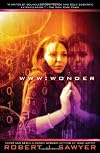
Caitlin Decter, a formerly blind sixteen-year-old math genius, desperately wants to protect her friend, Webmind--the consciousness that sprang from the infrastructure of the World Wide Web--but the Pentagon views him as a threat.Tags
Recommendations














Member Reviews
Ah, the last book in this trilogy had a lot to live up to and it succeeded for the most part.
What can (or should) you do for an intelligent entity living in the World Wide Web who has been outed across the world? Take over? Declare peace? Be hunted, or be the hunter?
It is the Prisoner's Dilemma writ large with many iterations. And does Sawyer pull it off? A worldwide revolution?
Yes. But again, for the most part.
What's my complaint?
Yeah, well, that's my problem. Sawyer's political leanings and outlook is too close to my own to judge this as anything other than a "oh, wow, I really appreciate this" setup.
Do I believe in win/win scenarios and deep optimism? Yes. Do I believe in rational behavior, strong methods to bring about the best show more good for the most people? Yes. So I believe in mercy and understanding? Yes.
And that's kinda the thing. This novel is SO DAMN OPTIMISTIC and joyful to read, with all the conflicts arriving from the outside rather than from within, that I felt like I was reading a wish-fulfillment fantasy.
Come on. Who here hasn't wished for some near-omnipotent being to come down to earth, kick the evildoers in their seat, and give the rest of us a means to take the power into our own hands?
Yeah, that's what I thought. :)
But then, look here at the title of this book. If that doesn't give it all away, I don't know what will.
And I REALLY DID ENJOY it. A lot. :) show less
What can (or should) you do for an intelligent entity living in the World Wide Web who has been outed across the world? Take over? Declare peace? Be hunted, or be the hunter?
It is the Prisoner's Dilemma writ large with many iterations. And does Sawyer pull it off? A worldwide revolution?
Yes. But again, for the most part.
What's my complaint?
Yeah, well, that's my problem. Sawyer's political leanings and outlook is too close to my own to judge this as anything other than a "oh, wow, I really appreciate this" setup.
Do I believe in win/win scenarios and deep optimism? Yes. Do I believe in rational behavior, strong methods to bring about the best show more good for the most people? Yes. So I believe in mercy and understanding? Yes.
And that's kinda the thing. This novel is SO DAMN OPTIMISTIC and joyful to read, with all the conflicts arriving from the outside rather than from within, that I felt like I was reading a wish-fulfillment fantasy.
Come on. Who here hasn't wished for some near-omnipotent being to come down to earth, kick the evildoers in their seat, and give the rest of us a means to take the power into our own hands?
Yeah, that's what I thought. :)
But then, look here at the title of this book. If that doesn't give it all away, I don't know what will.
And I REALLY DID ENJOY it. A lot. :) show less
Wonder” concludes Robert Sawyer’s trilogy about the emergence of a net-based artificial intelligence called WebMind.
“Wake”, “Watch” and “Wonder” are really three volumes of single book. The action of the book takes place over a few weeks and moves continuously from one volume to the next.
Like the preceding volumes “Wonder” is charming, heart-warming and crammed with inside jokes and references to both Science Fiction and life in Canada, where most of the novel is set.
There is enough of a plot here to keep you turning the pages but the author’s intent is not to thrill but, as the title suggests, to make you wonder: about whether human society becomes more moral over time, about the nature of consciousness and show more sentience, about the instinct for violence and the impulse for altruism, about people’s perceived need for a God, about atheism as a wide-spread belief but which those people who need a God can perceive as a form of Asperger’s and most of all about choosing peace and freedom over violence and domination.
If these things light up your imagination you will enjoy this book. If you’re looking for a high body count and high-tech conflict, pick up something else.
On the whole the book is successful. There are just enough surprises to keep the plot interesting. Young Caitlin Decter develops into a woman any of us could love and who embodies our best hopes for the current generation. The humour works and the contemporary references are deft and accurate.
From time to time, the speeches given by WebMind are a little long, but then, he is very young and perhaps we can forgive him for that.
For me, the optimism required to accept WebMind’s solution for mankind went a step too far. It would be nice but… perhaps I’m just too old and jaded to be open to those possibilities.
I would also have preferred not to have the epilogue. The rest of the story is in a tight timeline that we can all relate to. The epilogue takes place a billion years later. That’s too big a number for my imagination to cope with.
I recommend all three books to Sci Fi fans everywhere. I suggest you buy all three and read them without a break. I guarantee you will laugh, cry and even wonder a little. Who can ask for more than that? show less
“Wake”, “Watch” and “Wonder” are really three volumes of single book. The action of the book takes place over a few weeks and moves continuously from one volume to the next.
Like the preceding volumes “Wonder” is charming, heart-warming and crammed with inside jokes and references to both Science Fiction and life in Canada, where most of the novel is set.
There is enough of a plot here to keep you turning the pages but the author’s intent is not to thrill but, as the title suggests, to make you wonder: about whether human society becomes more moral over time, about the nature of consciousness and show more sentience, about the instinct for violence and the impulse for altruism, about people’s perceived need for a God, about atheism as a wide-spread belief but which those people who need a God can perceive as a form of Asperger’s and most of all about choosing peace and freedom over violence and domination.
If these things light up your imagination you will enjoy this book. If you’re looking for a high body count and high-tech conflict, pick up something else.
On the whole the book is successful. There are just enough surprises to keep the plot interesting. Young Caitlin Decter develops into a woman any of us could love and who embodies our best hopes for the current generation. The humour works and the contemporary references are deft and accurate.
From time to time, the speeches given by WebMind are a little long, but then, he is very young and perhaps we can forgive him for that.
For me, the optimism required to accept WebMind’s solution for mankind went a step too far. It would be nice but… perhaps I’m just too old and jaded to be open to those possibilities.
I would also have preferred not to have the epilogue. The rest of the story is in a tight timeline that we can all relate to. The epilogue takes place a billion years later. That’s too big a number for my imagination to cope with.
I recommend all three books to Sci Fi fans everywhere. I suggest you buy all three and read them without a break. I guarantee you will laugh, cry and even wonder a little. Who can ask for more than that? show less
“Wonder” concludes Robert Sawyer’s trilogy about the emergence of a net-based artificial intelligence called WebMind.
“Wake”, “Watch” and “Wonder” are really three volumes of single book. The action of the book takes place over a few weeks and moves continuously from one volume to the next.
Like the preceding volumes “Wonder” is charming, heart-warming and crammed with inside jokes and references to both Science Fiction and life in Canada, where most of the novel is set.
There is enough of a plot here to keep you turning the pages but the author’s intent is not to thrill but, as the title suggests, to make you wonder: about whether human society becomes more moral over time, about the nature of consciousness and show more sentience, about the instinct for violence and the impulse for altruism, about people’s perceived need for a God, about atheism as a wide spread belief but which those people who need a God can perceive as a form of Asperger’s and most of all about choosing peace and freedom over violence and domination.
If these things light up your imagination you will enjoy this book. If you’re looking for a high body count and high tech conflict, pick up something else.
On the whole the book is successful. There are just enough surprises to keep the plot interesting. Young Caitlin Decter develops into a woman any of us could love and who embodies our best hopes for the current generation. The humour works and the contemporary references are deft and accurate.
From time to time, the speeches given by WebMind are a little long, but then, he is very young and perhaps we can forgive him for that.
For me, the optimism required to accept WebMind’s solution for mankind went a step too far. It would be nice but… perhaps I’m just too old and jaded to be open to those possibilities.
I would also have preferred not to have the epilogue. The rest of the story is in a tight timeline that we can all relate to. The epilogue takes place a billion years later. That’s too big a number for my imagination to cope with.
I recommend all three books to Sci Fi fans everywhere. I suggest you buy all three and read them without a break. I guarantee you will laugh, cry and even wonder a little. Who can ask for more than that? show less
“Wake”, “Watch” and “Wonder” are really three volumes of single book. The action of the book takes place over a few weeks and moves continuously from one volume to the next.
Like the preceding volumes “Wonder” is charming, heart-warming and crammed with inside jokes and references to both Science Fiction and life in Canada, where most of the novel is set.
There is enough of a plot here to keep you turning the pages but the author’s intent is not to thrill but, as the title suggests, to make you wonder: about whether human society becomes more moral over time, about the nature of consciousness and show more sentience, about the instinct for violence and the impulse for altruism, about people’s perceived need for a God, about atheism as a wide spread belief but which those people who need a God can perceive as a form of Asperger’s and most of all about choosing peace and freedom over violence and domination.
If these things light up your imagination you will enjoy this book. If you’re looking for a high body count and high tech conflict, pick up something else.
On the whole the book is successful. There are just enough surprises to keep the plot interesting. Young Caitlin Decter develops into a woman any of us could love and who embodies our best hopes for the current generation. The humour works and the contemporary references are deft and accurate.
From time to time, the speeches given by WebMind are a little long, but then, he is very young and perhaps we can forgive him for that.
For me, the optimism required to accept WebMind’s solution for mankind went a step too far. It would be nice but… perhaps I’m just too old and jaded to be open to those possibilities.
I would also have preferred not to have the epilogue. The rest of the story is in a tight timeline that we can all relate to. The epilogue takes place a billion years later. That’s too big a number for my imagination to cope with.
I recommend all three books to Sci Fi fans everywhere. I suggest you buy all three and read them without a break. I guarantee you will laugh, cry and even wonder a little. Who can ask for more than that? show less
I thoroughly enjoyed this book (and indeed this whole trilogy). Sawyer tells a gripping story while speculating on the ramifications of a "webmind" arising from the inner workings of the Internet. The immediate reaction of officials (this must be evil) is all too realistic; the theological and political musings are provocative; the story is a fun ride through it all. I will most definitely read more Sawyer. (I hear his next book grapples with memory, as he's been reading Moonwalking with Einstein...can't wait!)
Still the Sense of Wonder and the What If for which I read SF. Sawyer's got some great ideas and it's so much fun thinking about them that I totally forgive the flaws.
And, yes, there are flaws. For example, I'm not convinced of Caitlin's authenticity, and there are loose threads even at the end, and I'm not quite the optimist that Sawyer is about some ppl's ability to see reason and change their minds, and I'd like to see that certain characters are vegetarians because they're all up on other, related, enlightened viewpoints....
But I still had a blast reading this trilogy, and I recommend it, especially to other fans of old school style SF, and I will continue to read more of Sawyer's works.
"There's no drive to survive in biology. Yes, show more things that survive will be more plentiful than those that don't. But that's just a statistical fact, not an indicator of desire."
"There's a definite moral arrow through time--and, as a matter of fact, it's all due to game theory." (Read on from there for a mostly convincing exposition as one character explains their reasoning to another.) show less
And, yes, there are flaws. For example, I'm not convinced of Caitlin's authenticity, and there are loose threads even at the end, and I'm not quite the optimist that Sawyer is about some ppl's ability to see reason and change their minds, and I'd like to see that certain characters are vegetarians because they're all up on other, related, enlightened viewpoints....
But I still had a blast reading this trilogy, and I recommend it, especially to other fans of old school style SF, and I will continue to read more of Sawyer's works.
"There's no drive to survive in biology. Yes, show more things that survive will be more plentiful than those that don't. But that's just a statistical fact, not an indicator of desire."
"There's a definite moral arrow through time--and, as a matter of fact, it's all due to game theory." (Read on from there for a mostly convincing exposition as one character explains their reasoning to another.) show less
This was the third and final book in the WWW trilogy by Robert Sawyer. It was a fitting end to the series, but not as good as the previous two books. Some of the characters act very against their character and some things are put in the book just to make a statement on something (without adding to the story much). I listened to this on audio book and I highly recommend it. This is one of those series that is so well done on audio book that I think it is vastly better than reading the book on paper. You definitely need to read the previous two book to understand what happens in this book.
The virtual entity Webmind has been discovered by the US government and they have tried, and failed, to shut Webmind down. With Webmind's existence out show more in the open the big question is, what next? Caitlin and her family are naturally drawn into the media frenzy surrounding Webmind. The real question facing humanity is basically this: Is Webmind really benevolent or should measures be taken to shut it down while humanity still can? Humanity has some big decisions to make. Will Webmind survive or become just a blip in humanity's history?
There are a lot of good things about this book. Many of the seemingly random things that happen in the previous books all come together and, as a reader, we can see that this book was meticulously planned out. So kudos to Sawyer for thinking things out so well. As with previous books there are a lot of political and social issues discussed. Most of them focus on the questions of a spontaneous entity like Webmind and what his presence means for humanity. Of course other issues weave through this main issue: there is discussion on Atheism, Communism, etc.
Sawyer himself does an intro talking about how long it took him to finish this series (6 years) and how much technology had changed in that time. It is like he went out of his way to make sure this final book incorporated every little thing he could think of to make it as modern as possible. To that extent there is a lot of Twittering, Face-booking, as well as discussion about modern politics and references to companies like Google. There is even a Big Bang Theory quote in there from that popular sit-com (which I am a huge fan of). My only problem with this is that all these inclusions seem a bit contrived and forced at times.
My other complaint are some of the things the characters themselves do that are way out of character. The one that really floored me was when Caitlin decides to take a cell pic of her naked chest and sexts it to Matt. It has me laughing my butt off with the ridiculousness of it all. I mean really a girl as smart as her, who is inexperienced sexually just wouldn't do something like that. She especially wouldn't do it when she is incredibly aware of how easy that data is to access and how insecure it is. And she wouldn't forget to delete it off of her phone; enabling her mom to find it later. I know Sawyer makes a comment about Webmind making her phone secure, but come on...any idiot knows that kind of thing is stupid to do from a secure data and privacy point of view. Now you ask why was this included in the story? Like many of the weird random things included in this book it was so Sawyer could make a point about the end of Victorianism in an Internet based society. Sawyer takes a number of instances to lecture at his readers; sometimes it is interesting...sometimes it is just awkward.
The above being said, I really enjoyed some of the things Webmind does in this book. Some of them are really well thought out and almost make you wish you could live in that era and witness that kind of progress for humanity. Webmind's ultimate act of benevolence for humankind was intriguing, although I am not sure how realistic it really was. The story is wrapped up in a touchy, feely happy way that is as sweet as any happily ever after you have ever read. Sawyer includes an interesting epilogue that I am uncertain how I feel about. Some aspects of the epilogue are interesting, but I kind of feel like the book would have been better without it...that way the readers would have just been left to Wonder.
Overall this was an excellent conclusion to the series. The plot moves at a quick pace and many interesting issues are discussed. I was a little irked by the fact that the characters act out of character at times and there are numerous times where Sawyer takes opportunities to awkwardly lecture at his readers. These aspects made this my least favorite book of the three. Despite this, it was still an excellent read. I definitely recommend reading this series for anyone who has interest in artificial intelligence or emergent consciousness. This is a series that broaches these deep topics but makes them easy to relate to for a large demographic of readers. Having Caitlin as the main character really makes this book accessible to a young adult crowd as well and I think young adult and older would really enjoy it. show less
The virtual entity Webmind has been discovered by the US government and they have tried, and failed, to shut Webmind down. With Webmind's existence out show more in the open the big question is, what next? Caitlin and her family are naturally drawn into the media frenzy surrounding Webmind. The real question facing humanity is basically this: Is Webmind really benevolent or should measures be taken to shut it down while humanity still can? Humanity has some big decisions to make. Will Webmind survive or become just a blip in humanity's history?
There are a lot of good things about this book. Many of the seemingly random things that happen in the previous books all come together and, as a reader, we can see that this book was meticulously planned out. So kudos to Sawyer for thinking things out so well. As with previous books there are a lot of political and social issues discussed. Most of them focus on the questions of a spontaneous entity like Webmind and what his presence means for humanity. Of course other issues weave through this main issue: there is discussion on Atheism, Communism, etc.
Sawyer himself does an intro talking about how long it took him to finish this series (6 years) and how much technology had changed in that time. It is like he went out of his way to make sure this final book incorporated every little thing he could think of to make it as modern as possible. To that extent there is a lot of Twittering, Face-booking, as well as discussion about modern politics and references to companies like Google. There is even a Big Bang Theory quote in there from that popular sit-com (which I am a huge fan of). My only problem with this is that all these inclusions seem a bit contrived and forced at times.
My other complaint are some of the things the characters themselves do that are way out of character. The one that really floored me was when Caitlin decides to take a cell pic of her naked chest and sexts it to Matt. It has me laughing my butt off with the ridiculousness of it all. I mean really a girl as smart as her, who is inexperienced sexually just wouldn't do something like that. She especially wouldn't do it when she is incredibly aware of how easy that data is to access and how insecure it is. And she wouldn't forget to delete it off of her phone; enabling her mom to find it later. I know Sawyer makes a comment about Webmind making her phone secure, but come on...any idiot knows that kind of thing is stupid to do from a secure data and privacy point of view. Now you ask why was this included in the story? Like many of the weird random things included in this book it was so Sawyer could make a point about the end of Victorianism in an Internet based society. Sawyer takes a number of instances to lecture at his readers; sometimes it is interesting...sometimes it is just awkward.
The above being said, I really enjoyed some of the things Webmind does in this book. Some of them are really well thought out and almost make you wish you could live in that era and witness that kind of progress for humanity. Webmind's ultimate act of benevolence for humankind was intriguing, although I am not sure how realistic it really was. The story is wrapped up in a touchy, feely happy way that is as sweet as any happily ever after you have ever read. Sawyer includes an interesting epilogue that I am uncertain how I feel about. Some aspects of the epilogue are interesting, but I kind of feel like the book would have been better without it...that way the readers would have just been left to Wonder.
Overall this was an excellent conclusion to the series. The plot moves at a quick pace and many interesting issues are discussed. I was a little irked by the fact that the characters act out of character at times and there are numerous times where Sawyer takes opportunities to awkwardly lecture at his readers. These aspects made this my least favorite book of the three. Despite this, it was still an excellent read. I definitely recommend reading this series for anyone who has interest in artificial intelligence or emergent consciousness. This is a series that broaches these deep topics but makes them easy to relate to for a large demographic of readers. Having Caitlin as the main character really makes this book accessible to a young adult crowd as well and I think young adult and older would really enjoy it. show less
I thoroughly enjoyed this book (and indeed this whole trilogy). Sawyer tells a gripping story while speculating on the ramifications of a "webmind" arising from the inner workings of the Internet. The immediate reaction of officials (this must be evil) is all too realistic; the theological and political musings are provocative; the story is a fun ride through it all. I will most definitely read more Sawyer. (I hear his next book grapples with memory, as he's been reading Moonwalking with Einstein...can't wait!)
Members
- Recently Added By
Published Reviews
ThingScore 75
Webmind the essence that consciously evolved from the internet continues to prove its altruistic intentions of helping humanity on a variety of fronts like the cure for cancer. However, the American government pushed by the military-industrial complex wants Webmind destroyed under the guise of a major security threat to the United States.
Having failed once to eliminate the A.I., the president show more invokes executive power to approve the Pentagon’s leading A.I. expert Colonel Peyton Hume to apply any force necessary to eliminate the threat to the security of the country. Hume directs his team of underground hackers to overwhelm and rip away the awareness of being of Webmind. However, his secure unit begins to vanish one at a time while Webmind’s BFF teenage mathematical genius Caitlin Decter vows to save the life of her buddy who gave her the gift of sight.
The third and final thriller in the WWW saga is an engaging climax to an intriguing story line. Action-packed, it behooves fans to have read the previous two entries (Wake and Watch) as the tale ties up seemingly every thread (major and minor) so that at times it feels PowerPoint deep. Still well written, readers will enjoy Robert J. Sawyer’s deep look at the Web age of American power in which leaders believe they need threats like Big Brother is watching you even when none exists. show less
Having failed once to eliminate the A.I., the president show more invokes executive power to approve the Pentagon’s leading A.I. expert Colonel Peyton Hume to apply any force necessary to eliminate the threat to the security of the country. Hume directs his team of underground hackers to overwhelm and rip away the awareness of being of Webmind. However, his secure unit begins to vanish one at a time while Webmind’s BFF teenage mathematical genius Caitlin Decter vows to save the life of her buddy who gave her the gift of sight.
The third and final thriller in the WWW saga is an engaging climax to an intriguing story line. Action-packed, it behooves fans to have read the previous two entries (Wake and Watch) as the tale ties up seemingly every thread (major and minor) so that at times it feels PowerPoint deep. Still well written, readers will enjoy Robert J. Sawyer’s deep look at the Web age of American power in which leaders believe they need threats like Big Brother is watching you even when none exists. show less
added by PLReader
Author Information

107+ Works 20,046 Members
Robert J. Sawyer was born in Ottawa on April 29, 1960, but raised in Toronto. In 1980, while still in high school, Sawyer submitted a short story to the the Rochester Museum and Science Center, which was running a contest for light show ideas. Sawyer didn't win, but the Museum purchased his story Motive anyway and it ran for 192 performances. show more Sawyer went on to attend Toronto's Ryerson Polytechnical Institute, majoring in Radio and Television Arts. In September 1979, he had his first piece of fiction published at the end of his first year, in Ryerson's literary annual, White Wall Review. Sawyer graduated from Ryerson in 1982. Sawyer was hired back the following semester to teach television studio production techniques to second- and third-year students. In the four months interim, he worked for minimum wage at the local SF bookstore, spending all his earnings on books. From 1984 to 1992, while teaching, Sawyer also coordinated a social group of Toronto-area science-fiction writers founded by SF editor Judith Merril. He established a Canadian region of the Science Fiction and Fantasy Writers of America; and in 1998, served as that organization's president. Sawyer also retained freelance nonfiction writing contracts, writing articles for newspapers and magazines, press releases and brochures for corporations, newsletters for government departments. He churned out vast amounts of promotional materials and over 200 articles for computing and personal-finance magazines in a span of five years. But in that time, his only really significant publication was the novelette Golden Fleece, which appeared as the cover story in the September 1988 edition of Amazing Stories. The novel-length Golden Fleece was sold to Warner Books a year later in 1989. The sales of his first five books were uninspiring and Sawyer faced being dropped by his publisher. Sawyer decided to take the time to write a book, without a contract, take as long as necessary, and produce a blockbuster. He also wanted to tackle a controversial issue and deal with it head on. With that in mind, Sawyer wrote The Terminal Experiment, about abortion and the soul. His publisher rejected it on grounds of controversy. HarperPrism then bought the book and serialization rights were sold to Analog, the number-one best-selling English-language SF magazine. The Terminal Experiment went on to win the Science Fiction and Fantasy Writers of America's Nebula Award for Best Novel of 1995. His novel Frameshift was his first book published in hardcover, and was nominated for the Hugo Award, and won Japan's Seiun Award for best foreign novel of the year. (Bowker Author Biography) show less
Awards and Honors
Series

Work Relationships
Common Knowledge
- Canonical title
- WWW: Wonder
- Original title
- WWW: Wonder
- Original publication date
- 2011-03-08
- People/Characters
- Webmind; Caitlin Decter; Hobo
- Important places
- Waterloo, Ontario, Canada
- Dedication
- ForHAYDEN TRENHOLMandELIZABETH WESTBROOK TRENHOLMGreat writersGreat friendsI owe my career as a writer teacher,my connection to Calgary,and so much more to the two of you.Thank you for fifteen yearsof friendship and supportan... (show all)d for making my world a better place.
- First words
- I beheld the universe in all its beauty.
To be conscious, to think, to feel, to perceive! My mind soared, inhaling planets, tasting stars, touching galaxies -- forms dim and diffuse revealed by sensors pointing ever ou... (show all)tward, unveiling an infinitely mysterious, vastly ancient realm. - Last words
- (Click to show. Warning: May contain spoilers.)I feel at peace as I transmit my final words, simple though they are, but truly heartfelt.
Thank you. - Blurbers
- McDevitt, Jack; Steele, Allen
Classifications
- Genres
- Fiction and Literature, Science Fiction, Young Adult
- DDC/MDS
- 813.54 — Literature & rhetoric American literature in English American fiction in English 1900-1999 1945-1999
- LCC
- PR9199.3 .S2533 .W888 — Language and Literature English English Literature English literature: Provincial, local, etc.
- BISAC
Statistics
- Members
- 572
- Popularity
- 51,708
- Reviews
- 40
- Rating
- (3.71)
- Languages
- 5 — English, French, Hungarian, Polish, Turkish
- Media
- Paper, Audiobook, Ebook
- ISBNs
- 22
- ASINs
- 13