On This Page
Description
A fragile period of peace between the eternally warring kingdoms of Oakharn and Langmyr is shattered when a surprise massacre fueled by bloodmagic ravages the Langmyrne border village of Willowfield, killing its inhabitants-including a visiting Oakharne lord and his family-and leaving behind a scene so grisly that even the carrion eaters avoid its desecrated earth. But the dead lord's infant heir has survived the carnage, a discovery that entwines the destinies of Brys Tarnell, a mercenary show more who rescues the helpless and ailing babe, and a Langmyr peasant, a young mother herself, whom Brys enlists to nourish and nurture the child of her enemies as they travel a dark, perilous road. As one infant's life hangs in the balance, so too does the fate of thousands, while deep in the forest, a Maimed Witch practices an evil bloodmagic that could doom them all. show lessTags
Recommendations


Member Reviews
This is exactly the kind of fantasy I love: a potentially epic setting but with "low fantasy" focus on the actual people within it. Peasants have the chance to determine fate for a change. Like Saladin Ahmed, I also want "fewer kings and starship captains, more coach drivers and space waitresses" in my spec fic.
Beyond class diversity, the spec fic genre also needs progress in racial diversity. It's something I try to do in my own writing and also something I consciously keep an eye out for in my reading. I was pleasantly surprised to discover the paladin in The River Kings' Road, Sir Kelland, is from the African-analogue of this fictional universe. Although an orphan raised by Sun Knights, he connects with his heritage by braiding his show more hair in the fashion of its warriors, and the common folk view his dark skin as a manifestation of the Sun Goddess' favor, making him the "Burnt Knight." He's also the subject of a wants-to-be-but-bound-to-celibacy romantic subplot with his assistant, a woman warrior, and I was happy to see that these two will have a bigger part in the sequel.
I hasten to add that the story itself is less of an essay on class and racial diversity than the paragraphs I've written here--I was just impressed at how, while not groundbreaking, this story is able to quietly model that sort of diversity with a cast of well-rounded characters, albeit in a fairly standard fantasy setting.
Although there are some unique and flavorful additions--the sadomasochistic Thorn witches (and that's sadomasochism in the not fun, safe, sane, and consensual manner), Sir Kelland and his background, and even the River Kings' gleaming Road itself--ultimately the setting is a medieval world, complete with analogues to the Vikings. One nice thing is that it's a medieval world written by an author who clearly did historical research: there's a throwaway line about a family losing its milk cow when their house is burned down, because during winter they keep the livestock indoors with them. Again, there's these down-to-earth details of daily lives and what it's like to be an average person in this world. I hasten to add that these are throwaway lines; the main plot isn't bogged down by trivia.
Which isn't exactly to say doesn't get bogged down.
The plot starts with a bang--technically, with fire and Bloodmist, which is exactly what it sounds like--and the story moves forward steadily, without any wasted scenes. Yet, in the middle particularly, there are a lot of flashbacks to provide background information that rarely rises above standard fantasy fare. Wars, evil wizards, hard-bitten mercenaries, strange curses, and those Viking analogues I mention call the undead they fight Skraelings, which is an actual Viking term (meaning "wretch," and applied by them to Native Americans. Specifically the Native Americans who drove them out of Newfoundland. I highly doubt Merciel intends anything racially loaded by the term; that's just interesting trivia I want to bog my review down with).
In contrast to my parenthetical comment above, the characters' flashbacks are generally germane, and frequently help to develop the backstory and personality of individuals. Sometimes I wonder whether the background information could be more gracefully presented, but on the whole it is a fast-paced story as the worldbuilding gets fleshed out. All the same, aspects of the world still feel a bit thrown together--the Thorn Witches, despite some genuinely creepy body modifications, are in many ways a generic evil sorcerers empire to the east with exotic naming conventions, while the Western European main setting has a mixture of names that feel English and French--which makes parts of it feel more constructed than inhabited. Ang'arta especially--I do not know how that country works, and it does not feel like a real place. To be fair, none of the characters have actually been there yet, mostly because in true evil empire fashion it's a place few people go to and survive.
Even if the evil empire which never appears onscreen could be better realized (and when you put it like that, it's obvious), the villainous characters themselves are as well-rounded as the good guys. There does seem to be more character development on their part, with redemptive arcs or at least tragic ones. In fact, I wound up feeling more sympathy for the most decent of the villains than the most antiheroic of the heroes--and I think that's a feature, not a bug. There are enough genuinely kind people for me to care about and root for, like the peasant mother Odosse and Sir Kelland, who are respectively trying to survive and keep two babes in arms alive while fleeing a Thorn Witch through border territory that might at any moment erupt into war, and launching an investigation into a massacre that might wind up triggering said war. Unlike the typical epic fantasy where we're supposed to be cheered at the prospect of a nice war to get the heart pounding and the lungs inflated, here war is shown as terrible as it generally is when you're, say, one of the people who might drop dead when the Bloodmist is unleashed.
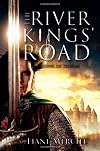
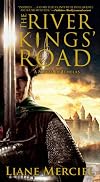
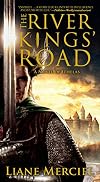
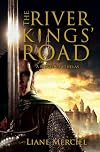
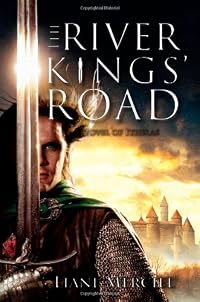
Of a fairly large cast, one of the least interesting characters happens to be the one we start off with--Brys Tarnell, the brilliantly green-eyed swordsman featured on the cover, and pretty much a standard antihero. I actually expected more character development from him than I got. He's a perfectly well-rounded standard antihero, with the street smarts to get Odosse and two babies across enemy territory and the occasional sarcastic barb, but he hasn't hit the full swing of his redemptive arc yet (some might find this refreshing). Odosse, though, is instantly sympathetic without being nothing but a victim, despite being a peasant, a young unmarried mother, and unattractive in more than the "Hollywood Homely" sense. She has to make her own choices in this novel, some of them surprising.
The Thorn Witch and her magic, which relies largely on mutilation, is genuinely terrifying, and while I wish we learned more about her motives, it looks like those will come up in the sequel. All of the backstory dropping and the slow character arcs appear to be in preparation for a much larger story arc--and this book is clearly the first in the series, with much tantalizingly unresolved at the end. I've already ordered the next, Heaven's Needle.
This review is cross-posted from Story Addict. show less
Beyond class diversity, the spec fic genre also needs progress in racial diversity. It's something I try to do in my own writing and also something I consciously keep an eye out for in my reading. I was pleasantly surprised to discover the paladin in The River Kings' Road, Sir Kelland, is from the African-analogue of this fictional universe. Although an orphan raised by Sun Knights, he connects with his heritage by braiding his show more hair in the fashion of its warriors, and the common folk view his dark skin as a manifestation of the Sun Goddess' favor, making him the "Burnt Knight." He's also the subject of a wants-to-be-but-bound-to-celibacy romantic subplot with his assistant, a woman warrior, and I was happy to see that these two will have a bigger part in the sequel.
I hasten to add that the story itself is less of an essay on class and racial diversity than the paragraphs I've written here--I was just impressed at how, while not groundbreaking, this story is able to quietly model that sort of diversity with a cast of well-rounded characters, albeit in a fairly standard fantasy setting.
Although there are some unique and flavorful additions--the sadomasochistic Thorn witches (and that's sadomasochism in the not fun, safe, sane, and consensual manner), Sir Kelland and his background, and even the River Kings' gleaming Road itself--ultimately the setting is a medieval world, complete with analogues to the Vikings. One nice thing is that it's a medieval world written by an author who clearly did historical research: there's a throwaway line about a family losing its milk cow when their house is burned down, because during winter they keep the livestock indoors with them. Again, there's these down-to-earth details of daily lives and what it's like to be an average person in this world. I hasten to add that these are throwaway lines; the main plot isn't bogged down by trivia.
Which isn't exactly to say doesn't get bogged down.
The plot starts with a bang--technically, with fire and Bloodmist, which is exactly what it sounds like--and the story moves forward steadily, without any wasted scenes. Yet, in the middle particularly, there are a lot of flashbacks to provide background information that rarely rises above standard fantasy fare. Wars, evil wizards, hard-bitten mercenaries, strange curses, and those Viking analogues I mention call the undead they fight Skraelings, which is an actual Viking term (meaning "wretch," and applied by them to Native Americans. Specifically the Native Americans who drove them out of Newfoundland. I highly doubt Merciel intends anything racially loaded by the term; that's just interesting trivia I want to bog my review down with).
In contrast to my parenthetical comment above, the characters' flashbacks are generally germane, and frequently help to develop the backstory and personality of individuals. Sometimes I wonder whether the background information could be more gracefully presented, but on the whole it is a fast-paced story as the worldbuilding gets fleshed out. All the same, aspects of the world still feel a bit thrown together--the Thorn Witches, despite some genuinely creepy body modifications, are in many ways a generic evil sorcerers empire to the east with exotic naming conventions, while the Western European main setting has a mixture of names that feel English and French--which makes parts of it feel more constructed than inhabited. Ang'arta especially--I do not know how that country works, and it does not feel like a real place. To be fair, none of the characters have actually been there yet, mostly because in true evil empire fashion it's a place few people go to and survive.
Even if the evil empire which never appears onscreen could be better realized (and when you put it like that, it's obvious), the villainous characters themselves are as well-rounded as the good guys. There does seem to be more character development on their part, with redemptive arcs or at least tragic ones. In fact, I wound up feeling more sympathy for the most decent of the villains than the most antiheroic of the heroes--and I think that's a feature, not a bug. There are enough genuinely kind people for me to care about and root for, like the peasant mother Odosse and Sir Kelland, who are respectively trying to survive and keep two babes in arms alive while fleeing a Thorn Witch through border territory that might at any moment erupt into war, and launching an investigation into a massacre that might wind up triggering said war. Unlike the typical epic fantasy where we're supposed to be cheered at the prospect of a nice war to get the heart pounding and the lungs inflated, here war is shown as terrible as it generally is when you're, say, one of the people who might drop dead when the Bloodmist is unleashed.
Of a fairly large cast, one of the least interesting characters happens to be the one we start off with--Brys Tarnell, the brilliantly green-eyed swordsman featured on the cover, and pretty much a standard antihero. I actually expected more character development from him than I got. He's a perfectly well-rounded standard antihero, with the street smarts to get Odosse and two babies across enemy territory and the occasional sarcastic barb, but he hasn't hit the full swing of his redemptive arc yet (some might find this refreshing). Odosse, though, is instantly sympathetic without being nothing but a victim, despite being a peasant, a young unmarried mother, and unattractive in more than the "Hollywood Homely" sense. She has to make her own choices in this novel, some of them surprising.
The Thorn Witch and her magic, which relies largely on mutilation, is genuinely terrifying, and while I wish we learned more about her motives, it looks like those will come up in the sequel. All of the backstory dropping and the slow character arcs appear to be in preparation for a much larger story arc--and this book is clearly the first in the series, with much tantalizingly unresolved at the end. I've already ordered the next, Heaven's Needle.
This review is cross-posted from Story Addict. show less
Summary: Tensions between the neighboring kingdoms of Oakharn and Langmyr have been high for as long as anyone can remember. After a terrible attack on a Langmyr village, in which an Oakharne prince was visiting, the only survivors are Brys Tarnell, a mercenary man-at-arms, and the infant son of the prince. The attack was committed using bloodmagic, the specialty of the Ang'artan Maimed Witches, a group of terrifyingly dangerous sorcerers. Brys plans to take the baby to Oakharn, and he soon encounters a homely young woman with a son of her own to help him care for the infant, but the witch does not like leaving a job unfinished. Meanwhile, the perpetrators of the attack are being hunted by the religious knight Kellan, who may be the show more only man alive who has a chance of killing of killing the evil sorceress.
Review: This book has a lot going for it - a compelling story, some interesting bits of worldbuilding, and an effectively terrifying bad guy - but it faltered by trying to do too much, too fast. By epic fantasy standards, it's not a particularly long book, and its 400-odd pages are split amongst four storylines and five points of view. Multiple POV characters is something that can be used to move a story along (see: George R. R. Martin's A Song of Ice and Fire series), but in the case of The River Kings' Road, Merciel hasn't yet obtained nearly that level of mastery. Instead, too long is spent on each segment, leaving a hundred pages between successive installments from each character, and effectively keeping me from being too involved in any one story, or from ever becoming particularly attached to any one character.
Merciel also doesn't quite have the grip on her worldbuilding that I would have liked. The raw materials are there, for sure, but there's so much going on in her story that all of the details of the worldbuilding don't always get worked into an organic whole. As a result, there are a number of elements (including the road of the title; a relic of an ancient civilization) that seem to be there only because they sounded good. Perhaps these elements will get picked up and explained in the sequel which the ending is so obviously setting up.
Overall, this was an enjoyable read; Merciel's prose is smooth and her story has a lot of potential to become very interesting. I just think this book was overambitious - too many characters, worldbuilding too complex, etc. - for what it was able to achieve. I'll be reading the sequel, in hopes that as Merciel matures as an author that she manages to take the reins on this sprawling story. 3.5 out of 5 stars.
Recommendation: I enjoy epic fantasy, and am always interested to see a fresh take on it, particularly if it's not a pigboy parable, and particularly if it's written by a woman. The River Kings' Road is not the most astounding debut I've ever come across, but it definitely shows promise, and is therefore probably worth checking out for other fans of epic fantasy. show less
Review: This book has a lot going for it - a compelling story, some interesting bits of worldbuilding, and an effectively terrifying bad guy - but it faltered by trying to do too much, too fast. By epic fantasy standards, it's not a particularly long book, and its 400-odd pages are split amongst four storylines and five points of view. Multiple POV characters is something that can be used to move a story along (see: George R. R. Martin's A Song of Ice and Fire series), but in the case of The River Kings' Road, Merciel hasn't yet obtained nearly that level of mastery. Instead, too long is spent on each segment, leaving a hundred pages between successive installments from each character, and effectively keeping me from being too involved in any one story, or from ever becoming particularly attached to any one character.
Merciel also doesn't quite have the grip on her worldbuilding that I would have liked. The raw materials are there, for sure, but there's so much going on in her story that all of the details of the worldbuilding don't always get worked into an organic whole. As a result, there are a number of elements (including the road of the title; a relic of an ancient civilization) that seem to be there only because they sounded good. Perhaps these elements will get picked up and explained in the sequel which the ending is so obviously setting up.
Overall, this was an enjoyable read; Merciel's prose is smooth and her story has a lot of potential to become very interesting. I just think this book was overambitious - too many characters, worldbuilding too complex, etc. - for what it was able to achieve. I'll be reading the sequel, in hopes that as Merciel matures as an author that she manages to take the reins on this sprawling story. 3.5 out of 5 stars.
Recommendation: I enjoy epic fantasy, and am always interested to see a fresh take on it, particularly if it's not a pigboy parable, and particularly if it's written by a woman. The River Kings' Road is not the most astounding debut I've ever come across, but it definitely shows promise, and is therefore probably worth checking out for other fans of epic fantasy. show less
In many ways I feel its unfair of me to review this book. The concept is interesting, and I certainly wanted to enjoy it since it promised all sorts of gray morality fun, but in the end it didn't deliver. It should say something that I felt the worst for Leferic, who's intentions were fine and meant for the good of his Kingdom's people, but who went way overboard in his methods. I mean he went from a simple assassination plot to a conspiracy that wiped out an entire village and then just kept growing worse by the minute. And I'm not sure 'dark ambitions' is entirely appropriate since he had the same ambitions any second son of a feudal lord would have--to be the feudal lord.
Also his brother, the heir apparent, sounded like a colossal show more idiot, so I can't really help but think Leferic had the right idea in assassinating him and taking his position. Whereas his brother may have been helpful as brute force and PR, he didn't think things through nor care what much happened to anyone unfortunate enough to fall in with his plans.
You had the righteously good (Sir Kelland), the mostly good (Brys), the unbelievably evil (the Maimed Witch), the misguided (Bitharn) and then...Odosse, the peasant girl who left her village at the right time and had the misfortune to then run into Brys on her way back. The two extremes were easy enough to keep track of--they stayed true to their alignment without fail, but everyone else was harder to keep track of. Plans changed so often my head swam. Bitharn, the misguided childhood friend of Sir Kelland who stayed beside him to protect him at all costs, can almost single-handedly be blamed for a lot of bad things. Odosse,who shows a lot of pluck and promise at first, had an annoying habit of questioning everything everyone said, claiming she'll do the opposite of what is the better choice and then changing her mind over something inconsequential.
Merciel seemed to have wanted to set this up as an epic in the making, but it doesn't hold up well. Motivations aren't fully explored, multiple characters could have been interchangeable and plot threads were useless and misleading. show less
Also his brother, the heir apparent, sounded like a colossal show more idiot, so I can't really help but think Leferic had the right idea in assassinating him and taking his position. Whereas his brother may have been helpful as brute force and PR, he didn't think things through nor care what much happened to anyone unfortunate enough to fall in with his plans.
You had the righteously good (Sir Kelland), the mostly good (Brys), the unbelievably evil (the Maimed Witch), the misguided (Bitharn) and then...Odosse, the peasant girl who left her village at the right time and had the misfortune to then run into Brys on her way back. The two extremes were easy enough to keep track of--they stayed true to their alignment without fail, but everyone else was harder to keep track of. Plans changed so often my head swam. Bitharn, the misguided childhood friend of Sir Kelland who stayed beside him to protect him at all costs, can almost single-handedly be blamed for a lot of bad things. Odosse,who shows a lot of pluck and promise at first, had an annoying habit of questioning everything everyone said, claiming she'll do the opposite of what is the better choice and then changing her mind over something inconsequential.
Merciel seemed to have wanted to set this up as an epic in the making, but it doesn't hold up well. Motivations aren't fully explored, multiple characters could have been interchangeable and plot threads were useless and misleading. show less
It has been quite a while since I've had the pleasure of reading a really, really good fantasy, and "The River King's Road" was a fantastic read. In a way, I find this reminded me of "The Lord of the Rings". It had all the wonderful and scary things I crave... magic, witches, knights, good -vs- evil, murder, lies, deceit, treachery, love and loyalty. I found the storyline exciting with lots of twists and turns and the characters reacted just as I would expect for the setting and made them very realistic.
Yes, I loved this book! I found it to be a captivating read that draws you in from the beginning. The main characters are few, and the story jumps between viewpoints, creating a very interesting and well rounded tale. This is the first show more book of the series, and does a wonderful job setting up for the next book. Yes, you can stop here at this one, but really, why would one want to? I can't wait for the next book in the series, "Heaven's Needle". show less
Yes, I loved this book! I found it to be a captivating read that draws you in from the beginning. The main characters are few, and the story jumps between viewpoints, creating a very interesting and well rounded tale. This is the first show more book of the series, and does a wonderful job setting up for the next book. Yes, you can stop here at this one, but really, why would one want to? I can't wait for the next book in the series, "Heaven's Needle". show less
I do not normally delve into the fantasy genre when choosing books. The number of pages, detailed plots/characters/worlds, and the commitment involved when there are 7 books in a series can be very daunting. I jumped at the opportunity to read The River Kings’ Road by Liane Merciel – a debut work and what may be the first in a new series – for a book blog tour.
The story captured my attention from the start. An entire village is destroyed by forces of great evil. A mercenary/former knight rescues a baby who is the sole survivor of a visiting royal family and therefore heir to the family throne. The journey of this mercenary as he attempts to deliver the baby to his home is the main focus of the story. The road is dangerous full of show more rivals, bandits and thieves. Not to mention the Thorn (sadistic evil witch) that is close behind. Too add some excitement to the mix, a blessed Knight is trailing the Thorn with destruction on his mind.
The book is full of rival kingdoms, archery contests, clandestine visits to the inns, knights, and plenty of well-defined characters to keep the reader’s attention and imagination running at high speed. I did not find myself confused at any time when the chapters would jump from one set of characters and story-line to another. The pace never faltered. What I really enjoyed were the array of characters Ms. Merciel created; some are truly good, some are truly evil. Yet there are those that are not so easily defined. Overall, a great read! show less
The story captured my attention from the start. An entire village is destroyed by forces of great evil. A mercenary/former knight rescues a baby who is the sole survivor of a visiting royal family and therefore heir to the family throne. The journey of this mercenary as he attempts to deliver the baby to his home is the main focus of the story. The road is dangerous full of show more rivals, bandits and thieves. Not to mention the Thorn (sadistic evil witch) that is close behind. Too add some excitement to the mix, a blessed Knight is trailing the Thorn with destruction on his mind.
The book is full of rival kingdoms, archery contests, clandestine visits to the inns, knights, and plenty of well-defined characters to keep the reader’s attention and imagination running at high speed. I did not find myself confused at any time when the chapters would jump from one set of characters and story-line to another. The pace never faltered. What I really enjoyed were the array of characters Ms. Merciel created; some are truly good, some are truly evil. Yet there are those that are not so easily defined. Overall, a great read! show less
I read Fantasy novels about 3 or 4 times a year. Usually because their worlds are so full of life that I can't delve into too many. I've got to say, I am so glad I picked this one! By page two, I was hooked!
Fantasy books usually take me a bit to read because their background it epic in nature. Lots of places, people, battles, magic etc. This book had all that and yet instead of taking days, I devoured it. I literally read the majority of it in one day. I just had to know it ended.
The storyline is interesting. A race to save the infant son and heir of a dead lord. On the run from people and forces trying to stop them and finish the job they started. Who wouldn't enjoy this story? I really enjoyed the characters, even the ones I loathed. show more All the characters were very well developed.
My only gripe and it's a small one, is there was no map to refer too. Fantasy worlds are usually so vast and lands are rich in detail. There are kingdoms, villages, rivers, bridges, mountains, etc. I find it helpful to have a map to refer too as I follow the characters on their journey, especially if their journey takes them to many different places as this book did.(blog tour) show less
Fantasy books usually take me a bit to read because their background it epic in nature. Lots of places, people, battles, magic etc. This book had all that and yet instead of taking days, I devoured it. I literally read the majority of it in one day. I just had to know it ended.
The storyline is interesting. A race to save the infant son and heir of a dead lord. On the run from people and forces trying to stop them and finish the job they started. Who wouldn't enjoy this story? I really enjoyed the characters, even the ones I loathed. show more All the characters were very well developed.
My only gripe and it's a small one, is there was no map to refer too. Fantasy worlds are usually so vast and lands are rich in detail. There are kingdoms, villages, rivers, bridges, mountains, etc. I find it helpful to have a map to refer too as I follow the characters on their journey, especially if their journey takes them to many different places as this book did.(blog tour) show less
An impious mercenary witnesses, and avoids an attack in a bordertown between two fractious medieval fantasy kingdoms, Langmyr, the site of the attack, and their implacable enemy, Oakharn. Also surviving the attack are a young woman, and the heir to the Oakharn lord killed in the massacre.
This sets the stage for a complex web of alliances, struggles and strivings, as forces not only on both sides move to investigate and take advantage of the attack, but powers from beyond Oakharn and Langmyr as well. Godtouched champions of good and light maneuver against each other, and those caught in the middle simply try to survive, and wait to see if this massacre will lead to yet another conflict on already blood-soaked ground.
Such is the fodder show more for River Kings' Road, a fantasy novel debut by Liane Merciel. The broad lines of the world and conflict she creates is nothing new for experienced fantasy readers. Medieval fantasy, magic based on devotion to one of a pantheon of deities, the basic trappings of a typical fantasy world. Digging a little deeper, the novel features a variety of multidimensional characters on a decidedly complex chessboard of groups seeking to quell or enflame, the fires of war and conflict between the two kingdoms. Merciel does a good job at the shades of gray between the the two characters who really are black and white. She also has clearly read and grokked the Anderson essay "On Thud and Blunder". She gets underpinnings right that many authors completely and utterly forget. Horses in her universe, for example, are *not* treated as motorcycles. The medieval feel of the world is pervasive and palpable. Faith has a role in this world that feels authentic and nuanced rather than "Crystal Dragon Jesus" .
My only major complaint is that it is not extremely original. I've read much fantasy like this before, of varying qualities, degrees and shadings. Its familiar territory. Kingdoms with ambitious vassals, sorceresses, paladins, and so forth.
Oh, and the novel really could have used a map and a glossary or concordance. While these two features in a fantasy novel are practically cliche by this point, when you have a novel geography and world, it is often useful for really getting a handle on who is where, where they are going, and how people are related to each other.
It's a decent debut, even if not groundshattering. Merciel has ideas here that I would like to have explored further, and I hope her novel does well enough that readers such as myself will have the opportunity to discover them. show less
This sets the stage for a complex web of alliances, struggles and strivings, as forces not only on both sides move to investigate and take advantage of the attack, but powers from beyond Oakharn and Langmyr as well. Godtouched champions of good and light maneuver against each other, and those caught in the middle simply try to survive, and wait to see if this massacre will lead to yet another conflict on already blood-soaked ground.
Such is the fodder show more for River Kings' Road, a fantasy novel debut by Liane Merciel. The broad lines of the world and conflict she creates is nothing new for experienced fantasy readers. Medieval fantasy, magic based on devotion to one of a pantheon of deities, the basic trappings of a typical fantasy world. Digging a little deeper, the novel features a variety of multidimensional characters on a decidedly complex chessboard of groups seeking to quell or enflame, the fires of war and conflict between the two kingdoms. Merciel does a good job at the shades of gray between the the two characters who really are black and white. She also has clearly read and grokked the Anderson essay "On Thud and Blunder". She gets underpinnings right that many authors completely and utterly forget. Horses in her universe, for example, are *not* treated as motorcycles. The medieval feel of the world is pervasive and palpable. Faith has a role in this world that feels authentic and nuanced rather than "Crystal Dragon Jesus" .
My only major complaint is that it is not extremely original. I've read much fantasy like this before, of varying qualities, degrees and shadings. Its familiar territory. Kingdoms with ambitious vassals, sorceresses, paladins, and so forth.
Oh, and the novel really could have used a map and a glossary or concordance. While these two features in a fantasy novel are practically cliche by this point, when you have a novel geography and world, it is often useful for really getting a handle on who is where, where they are going, and how people are related to each other.
It's a decent debut, even if not groundshattering. Merciel has ideas here that I would like to have explored further, and I hope her novel does well enough that readers such as myself will have the opportunity to discover them. show less
Members
- Recently Added By
Author Information

16+ Works 667 Members
Some Editions
Series

Common Knowledge
- Canonical title*
- Der Krieger und der Prinz
- Original title
- The River King's Road
- Original publication date
- 2010-03
- People/Characters
- Brys Tarnell; Odosse; Sir Kelland; Bitharn; Leferic
- Dedication
- For Mom and Dad, who took me to the library week after week, year after year, and (almost) never complained about the late fees;
and Peter, who keeps me something close to sane. - First words
- Brys Tarnell was not a pious man.
- Last words
- (Click to show. Warning: May contain spoilers.)She could.
- Blurbers
- Modesitt, L. E., Jr.
- Original language*
- Englisch
*Some information comes from Common Knowledge in other languages. Click "Edit" for more information.
Classifications
Statistics
- Members
- 180
- Popularity
- 181,309
- Reviews
- 10
- Rating
- (3.39)
- Languages
- English, German
- Media
- Paper, Audiobook, Ebook
- ISBNs
- 10
- ASINs
- 3