On This Page
Description
Accused of being a monster instead of human, Rossamünd Bookchild looks to monster-hunter Branden Rose for help, but powerful forces are after them both, believing that Rossamünd holds the secret to perpetual youth.Tags
Recommendations
















Member Reviews
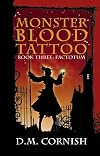
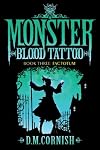
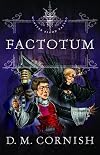
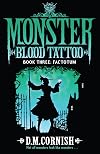
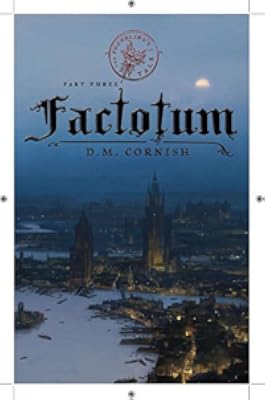
Rossamund returns this time in the company of Ms. Europe as her Factotum proper. His new life takes him to a bustling city and into the surrounding countryside where monsters lurk. But now that Rossamund's own identity as a monster has been revealed, his long-suppressed sympathy for the monsters he fights can no longer be ignored.
As a factotum his job is to help Europe in her fight against some of the most powerful monsters in the land. Rossamund finds himself torn between his loyalty to the only world he has ever known, and his duty to his own kind. How will he balance these competing responsibilities? More to the point, how will he survive in the world of humans when he is revealed as their mortal enemy?
Once again, I reveled in the show more rich detail and huge universe that gives this book so much flavor. The universe is so complex and multilayered with detailed slang and lively vernacular. I could read this book all day. show less
As a factotum his job is to help Europe in her fight against some of the most powerful monsters in the land. Rossamund finds himself torn between his loyalty to the only world he has ever known, and his duty to his own kind. How will he balance these competing responsibilities? More to the point, how will he survive in the world of humans when he is revealed as their mortal enemy?
Once again, I reveled in the show more rich detail and huge universe that gives this book so much flavor. The universe is so complex and multilayered with detailed slang and lively vernacular. I could read this book all day. show less
Oh… this book… I am so happy that I read it and yet so sad that it took me this long to read it. I had loved the first two books in the trilogy when I read them back in 2008. They’re original, imaginative and extremely well written. In fact, I would have to say that this trilogy has some of the best world making that I have ever seen in a children’s or young adult’s novel. It’s definitely reminiscent of how well made Tolkein’s worlds all are put together. So well thought out; it’s just all amazing and real and that alone makes the trilogy worth reading.
Unfortunately, I have to say that because it has been so long between books, it took me over 100 pages to get into the last installment in the trilogy.
Here’s the biggest show more problem about it – because Rossamünd’s story is filled with a lot of travels, and meeting new people throughout his journeys, there are a lot of the colourful characters we met in the first few books… and when they made an appearance in this book, I had no idea who they are. In fact, the only characters I really remembered were the four main characters in this book. Even among the last couple pages, it mentioned characters that I had no idea what their relationship is to Rossamünd. And unfortunately, that made it hard for me to really invets myself into the first bit of this book. That said, once I got back into the swing of the trilogy, I REALLY got into it. It’s just such an amazing story, so touching, so full of action and adventure that any type of reader would enjoy it, whatever they look for in a good book.
Since this is the last in a trilogy, there may be spoilers for the two previous books from this point onward.
The story as a whole shows how those people and things we think are evil may not be as evil as we may originally think them to be. Rossamünd and the Branden Rose’s relationship was one of the most touching of the series in this aspect. Her care and acceptance of Rossam&uum;nd, and how she shows that even she (one of the people who are forever hunting and killing monsters) can learn to love that which she is always hunting, well it gives hope for the whole world. Really, their relationship was quite beautiful – I’ve always found stories where orphans find acceptance and love with a family to be extremely touching. This was that plus so much more. Poor little orphan Rossamünd, not only knowing who he came from, but not even knowing WHAT he is, whether he’s human or whether he’s that which the world hates and fears… it’s so much more touching when he finds the love of a parent/guardian in the Branden Rose.
Actually, the growth of both Rossamünd and the Branden Rose in this installment were amazing and showed such care and depth that you know how well Cornish planned the series ahead of time. They both changed so much and so magnificently throughout the whole trilogy – Rossamünd accepting who he is, and the Branden Rose learning affection for that which she hunts.
And here I haven’t even gotten to talk about the monsters of the series, which all have amazing things that I could say about them. I mean, some of them are nasty to the point where I was shuddering because of how grossed out I was… but some of them were everything that was wonderful and charming. Especially Cinnamon, a sparrow-like creature who walks around in garments that gentlemen would wear. Oh, he was lovely. The book made me believe that such beings could exist, whether in our world or in another one. These are the characters that belong to the GOOD fantasy stories.
The more I think about it, the more I would consider placing these books on-par with the Narnia books, though with much less Christianity in them, and more more detailed and developed. More in terms of the characters in both that make you yearn to find that magical world where something like them could exist.
The Bottom Line
This book, though it was over 600 pages, and though it took about 100 for me to get into, was over before I was ready for it to end. The last few chapters utterly broke my heart, both because of things that were so wonderful that happened and so horrible and so sad… I really wish that there was more in this lovely trilogy. I highly recommend this trilogy to fans of YA fantasy. show less
Unfortunately, I have to say that because it has been so long between books, it took me over 100 pages to get into the last installment in the trilogy.
Here’s the biggest show more problem about it – because Rossamünd’s story is filled with a lot of travels, and meeting new people throughout his journeys, there are a lot of the colourful characters we met in the first few books… and when they made an appearance in this book, I had no idea who they are. In fact, the only characters I really remembered were the four main characters in this book. Even among the last couple pages, it mentioned characters that I had no idea what their relationship is to Rossamünd. And unfortunately, that made it hard for me to really invets myself into the first bit of this book. That said, once I got back into the swing of the trilogy, I REALLY got into it. It’s just such an amazing story, so touching, so full of action and adventure that any type of reader would enjoy it, whatever they look for in a good book.
Since this is the last in a trilogy, there may be spoilers for the two previous books from this point onward.
The story as a whole shows how those people and things we think are evil may not be as evil as we may originally think them to be. Rossamünd and the Branden Rose’s relationship was one of the most touching of the series in this aspect. Her care and acceptance of Rossam&uum;nd, and how she shows that even she (one of the people who are forever hunting and killing monsters) can learn to love that which she is always hunting, well it gives hope for the whole world. Really, their relationship was quite beautiful – I’ve always found stories where orphans find acceptance and love with a family to be extremely touching. This was that plus so much more. Poor little orphan Rossamünd, not only knowing who he came from, but not even knowing WHAT he is, whether he’s human or whether he’s that which the world hates and fears… it’s so much more touching when he finds the love of a parent/guardian in the Branden Rose.
Actually, the growth of both Rossamünd and the Branden Rose in this installment were amazing and showed such care and depth that you know how well Cornish planned the series ahead of time. They both changed so much and so magnificently throughout the whole trilogy – Rossamünd accepting who he is, and the Branden Rose learning affection for that which she hunts.
And here I haven’t even gotten to talk about the monsters of the series, which all have amazing things that I could say about them. I mean, some of them are nasty to the point where I was shuddering because of how grossed out I was… but some of them were everything that was wonderful and charming. Especially Cinnamon, a sparrow-like creature who walks around in garments that gentlemen would wear. Oh, he was lovely. The book made me believe that such beings could exist, whether in our world or in another one. These are the characters that belong to the GOOD fantasy stories.
The more I think about it, the more I would consider placing these books on-par with the Narnia books, though with much less Christianity in them, and more more detailed and developed. More in terms of the characters in both that make you yearn to find that magical world where something like them could exist.
The Bottom Line
This book, though it was over 600 pages, and though it took about 100 for me to get into, was over before I was ready for it to end. The last few chapters utterly broke my heart, both because of things that were so wonderful that happened and so horrible and so sad… I really wish that there was more in this lovely trilogy. I highly recommend this trilogy to fans of YA fantasy. show less
FACTOTUM is a weak link. I love this series, and if you've read the first two there's a good chance you'll forgive a weak third installment -- I certainly do -- but I'm also going to call it like I see it.
I feel like the problem here is fundamental, inherent in the concept of the book. Pretty much the first thing that we find out is that Rossamund is, in fact, a monster. A monster employed by one of the Half-Continent's greatest monster-killers. As if that's not enough, he's soft-hearted and merciful by nature; two qualities that don't mesh very well with a brutal, mercenary lifestyle.
That would be conflict enough, but it's just the first paradox in a book that piles them one on top of another. Not only is Rossamund a monster, but the show more whole world finds out about his true nature at pretty much the exact same moment that he does. What chance does he have of building a life among the "everymen" as a known monster? Pretty much none, but he still tries.
And then there's the biggest paradox of all: Europe. She's always known that there are good monsters and bad monsters, and she's shown mercy on occasion. But that's about as far as she's been willing to go: mercy, and only when it'll be off-the-books.
It's not hard to believe that Europe would keep Rossamund's secret, or employ him as long as the rest of the world remains ignorant. But that's not an option. Rossamund's true nature is public knowledge (or, at least, a very widespread rumor), and that creates a lot of problems for her, too. Very early on, it's clear that Europe has a much bigger job protecting Rossamund than Rossamund has protecting Europe. She can keep him alive and well...but only at a great cost to herself.
I think that's meant to be FACTOTUM'S final destination, seeing Europe evolve to the point where she'll make a public stand on a private belief. But there's no real evolution. There can't be. From the get-go, she has to put her reputation, her fortune, and her life on the line for Rossamund, a monster. But the Europe we knew in FOUNDLING and LAMPLIGHTER wasn't ready to do that...the book suffers because she's shoehorned into acting against her true character, and we don't get to see an honest evolution.
FACTOTUM isn't bad...it's just weaker than the first two, which were so stunning and engrossing. I'll continue with the series, no question, so I do recommend picking up FACTOTUM and reading it. One thing in FACTOTUM'S favor: it sets us up for an intriguing sequel. show less
I feel like the problem here is fundamental, inherent in the concept of the book. Pretty much the first thing that we find out is that Rossamund is, in fact, a monster. A monster employed by one of the Half-Continent's greatest monster-killers. As if that's not enough, he's soft-hearted and merciful by nature; two qualities that don't mesh very well with a brutal, mercenary lifestyle.
That would be conflict enough, but it's just the first paradox in a book that piles them one on top of another. Not only is Rossamund a monster, but the show more whole world finds out about his true nature at pretty much the exact same moment that he does. What chance does he have of building a life among the "everymen" as a known monster? Pretty much none, but he still tries.
And then there's the biggest paradox of all: Europe. She's always known that there are good monsters and bad monsters, and she's shown mercy on occasion. But that's about as far as she's been willing to go: mercy, and only when it'll be off-the-books.
It's not hard to believe that Europe would keep Rossamund's secret, or employ him as long as the rest of the world remains ignorant. But that's not an option. Rossamund's true nature is public knowledge (or, at least, a very widespread rumor), and that creates a lot of problems for her, too. Very early on, it's clear that Europe has a much bigger job protecting Rossamund than Rossamund has protecting Europe. She can keep him alive and well...but only at a great cost to herself.
I think that's meant to be FACTOTUM'S final destination, seeing Europe evolve to the point where she'll make a public stand on a private belief. But there's no real evolution. There can't be. From the get-go, she has to put her reputation, her fortune, and her life on the line for Rossamund, a monster. But the Europe we knew in FOUNDLING and LAMPLIGHTER wasn't ready to do that...the book suffers because she's shoehorned into acting against her true character, and we don't get to see an honest evolution.
FACTOTUM isn't bad...it's just weaker than the first two, which were so stunning and engrossing. I'll continue with the series, no question, so I do recommend picking up FACTOTUM and reading it. One thing in FACTOTUM'S favor: it sets us up for an intriguing sequel. show less
It's a world something like ours but not and the author is determined to fill it with words, some old some new but overall I came away feeling like the author was trying to hard and having too much fun with words, and the words were driving out the plot.
Rossamund Bookchild is now Europe's Factotum and his secret is about to become public knowledge. He's trying to find a place in the world for himself but he has problems finding where he belongs, he's a gentle person who doesn't like conflict but he's finding that conflict is being thrust upon him and he's also finding that while he's strong and able to fight, he doesn't like it.
It falls victim to what I call the Coffee flavoured Coffee issue; why come up with a tonne of new words that show more you explain are the equivalent of a regular earth word in the "explicarium", including Caffene for Coffee. My surprise was that he called Rabbits Rabbits and not Smeerps. The story could have fit into a smaller space and I would have been less distracted by the words. Yes the words are interesting and the world Cornish has created is interesting but I came away feeling vaguely dissatisfied. Maybe they should read more of O S Card's advice on writing and less of Urusula K Le Guin. show less
Rossamund Bookchild is now Europe's Factotum and his secret is about to become public knowledge. He's trying to find a place in the world for himself but he has problems finding where he belongs, he's a gentle person who doesn't like conflict but he's finding that conflict is being thrust upon him and he's also finding that while he's strong and able to fight, he doesn't like it.
It falls victim to what I call the Coffee flavoured Coffee issue; why come up with a tonne of new words that show more you explain are the equivalent of a regular earth word in the "explicarium", including Caffene for Coffee. My surprise was that he called Rabbits Rabbits and not Smeerps. The story could have fit into a smaller space and I would have been less distracted by the words. Yes the words are interesting and the world Cornish has created is interesting but I came away feeling vaguely dissatisfied. Maybe they should read more of O S Card's advice on writing and less of Urusula K Le Guin. show less
Good Reads Summary:Orphan Rossamund Bookchild has been sworn into the Emperor's service his duty is to light the lamps along the Emperor's highways and protect travelers from the ferocious bogles that live in the wild. But he's found it no easier to fit in with the lamplighters than he did with the foundlings always too small and too meek and his loneliness continues no matter how hard he tries to succeed.
But when a haughty young girl, a member of a suspiciously regarded society of all-women teratologists monster hunters is forced upon the lamplighters for training, Rossamund is no longer the most despised soul around. As Rossamund begins to make new friends in the dangerous world of the Half-Continent, he also seems to make more show more enemies, finding himself pushed toward a destiny that he could never have imagined.
My review: I actually enjoyed this book much more than the first because Cornish introduced a feisty female charcacter into the series and this was such a great balance to Rossamund's nice, bumbling along hero. As written for the previous book, Foundling :this series of books would appeal to lovers of fantasy like HP and also those who like their stories a bit on the dark side, and their heroes/heroines are not typical of what you might expect. show less
But when a haughty young girl, a member of a suspiciously regarded society of all-women teratologists monster hunters is forced upon the lamplighters for training, Rossamund is no longer the most despised soul around. As Rossamund begins to make new friends in the dangerous world of the Half-Continent, he also seems to make more show more enemies, finding himself pushed toward a destiny that he could never have imagined.
My review: I actually enjoyed this book much more than the first because Cornish introduced a feisty female charcacter into the series and this was such a great balance to Rossamund's nice, bumbling along hero. As written for the previous book, Foundling :this series of books would appeal to lovers of fantasy like HP and also those who like their stories a bit on the dark side, and their heroes/heroines are not typical of what you might expect. show less
Rivaling Tolkein and Robert L Jordan, Cornish has created an entire world (well, half continent), including creatures, language, everything. Truly a masterful fantasy storyteller. I enjoyed the entire series but I won't spoil the big climax. Suffice it to say that Rosamund in an enigma, hard to quantify.
*Sigh*
Finally it's over.
Faeries of Dreamdark: Blackbringer has a great concept with Magpie Windwich being a Devil Hunting fairy who travels with crows around the land to capture the escaped snags and put them back in their bottles. There's a new problem in her fun filled world and its called the Blackbringer and its going to destroy Dreamdark if Magpie cant stop it!
However the book just seemed to go on and on and on and on and on and....... and on and on.
While the plot was a gripping idea the actual story was....boring.
After reading Daughter of Smoke and Bone I knew that Laini Taylor was one for making poetry out of words, thus making the story longer. However in this story it never worked in favour and instead made this book long show more winded and hard to convince oneself to pick up the damn book and finish it.
At times this book was good and I found myself wondering what was going to happen next eagerly turning the page....to find Im back to reading something of no interest whatsoever.
I loved the crows in this book though, I love how caring they are towards Magpie and how they treat her like one of their own, the dialogue was also a good if not risky idea, as not many people can understand the aye's, nays and kens of the Scottish language. It gave the characters a bit more depth to them and made them a little more likable.
I did find myself thinking of this story to be much like Fern Gully, I know the story is a completely different thing but the way Magpie's character comes across made me picture the stubborn fairy in that cartoon.
the reason for the two stars is simple. I really wanted to but didn't enjoy the story, and I found its saving graces to be the minor characters and the dialogue.
I dont like rating less than two as I understand that a lot of effort goes into writing the stories and regardless of my opinion on a book (unless I find it truly terrible) no book deserves a one star rating
I look forward to the next installment of Daughter of Smoke and Bone Miss Taylor! show less
Finally it's over.
Faeries of Dreamdark: Blackbringer has a great concept with Magpie Windwich being a Devil Hunting fairy who travels with crows around the land to capture the escaped snags and put them back in their bottles. There's a new problem in her fun filled world and its called the Blackbringer and its going to destroy Dreamdark if Magpie cant stop it!
However the book just seemed to go on and on and on and on and on and....... and on and on.
While the plot was a gripping idea the actual story was....boring.
After reading Daughter of Smoke and Bone I knew that Laini Taylor was one for making poetry out of words, thus making the story longer. However in this story it never worked in favour and instead made this book long show more winded and hard to convince oneself to pick up the damn book and finish it.
At times this book was good and I found myself wondering what was going to happen next eagerly turning the page....to find Im back to reading something of no interest whatsoever.
I loved the crows in this book though, I love how caring they are towards Magpie and how they treat her like one of their own, the dialogue was also a good if not risky idea, as not many people can understand the aye's, nays and kens of the Scottish language. It gave the characters a bit more depth to them and made them a little more likable.
I did find myself thinking of this story to be much like Fern Gully, I know the story is a completely different thing but the way Magpie's character comes across made me picture the stubborn fairy in that cartoon.
the reason for the two stars is simple. I really wanted to but didn't enjoy the story, and I found its saving graces to be the minor characters and the dialogue.
I dont like rating less than two as I understand that a lot of effort goes into writing the stories and regardless of my opinion on a book (unless I find it truly terrible) no book deserves a one star rating
I look forward to the next installment of Daughter of Smoke and Bone Miss Taylor! show less
Members
- Recently Added By
Author Information

14+ Works 2,470 Members
Awards and Honors
Awards
Distinctions
Series

Common Knowledge
Classifications
- Genres
- Fiction and Literature, Fantasy, Teen, Young Adult
- DDC/MDS
- 823.92 — Literature & rhetoric English & Old English literatures English fiction 1900- 2000-
- LCC
- PZ7 .C816368 .F — Language and Literature Fiction and juvenile belles lettres Fiction and juvenile belles lettres Juvenile belles lettres
- BISAC
Statistics
- Members
- 358
- Popularity
- 88,449
- Reviews
- 11
- Rating
- (4.16)
- Languages
- English, French, Italian
- Media
- Paper, Audiobook, Ebook
- ISBNs
- 21
- ASINs
- 8