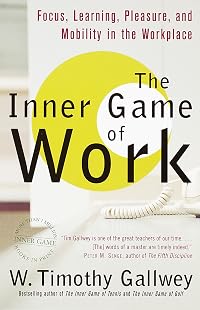
The Inner Game of Work: Focus, Learning, Pleasure, and Mobility in the Workplace
by W. Timothy Gallwey
On This Page
Description
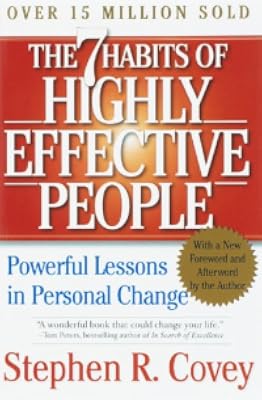
Do you think it's possible to truly enjoy your job? No matter what it is or where you are? Timothy Gallwey does, and in this groundbreaking book he tells you how to overcome the inner obstacles that sabotage your efforts to be your best on the job. Timothy Gallwey burst upon the scene twenty years ago with his revolutionary approach to excellence in sports. His bestselling books The Inner Game of Tennis and The Inner Game of Golf, with over one million copies in print, show more changed the way we think about learning and coaching. But the Inner Game that Gallwey discovered on the tennis court is about more than learning a better backhand; it is about learning how to learn, a critical skill that, in this case, separates the productive, satisfied employee from the rest of the pack. For the past twenty years Gallwey has taken his Inner Game expertise to many of America's top companies, including AT&T, Coca-Cola, Apple, and IBM, to teach their managers and employees how to gain better access to their own internal resources. What inner obstacles is Gallwey talking about? Fear of failure, resistance to change, procrastination, stagnation, doubt, and boredom, to name a few. Gallwey shows you how to tap into your natural potential for learning, performance, and enjoyment so that any job, no matter how long you've been doing it or how little you think there is to learn about it, can become an opportunity to sharpen skills, increase pleasure, and heighten awareness. And if your work environment has been turned on its ear by Internet technology, reorganization, and rapidly accelerating change, this book offers a way to steer a confident course while navigating your way toward personal and professional goals. The Inner Game of Work teaches you the difference between a rote performance and a rewarding one. It teaches you how to stop working in the conformity mode and start working in the mobility mode. It shows how having a great coach can make as much difference in the boardroom as on the basketball court-- and Gallwey teaches you how to find that coach and, equally important, how to become one. The Inner Game of Work challenges you to reexamine your fundamental motivations for going to work in the morning and your definitions of work once you're there. It will ask you to reassess the way you make changes and teach you to look at work in a radically new way. "Ever since The Inner Game of Tennis, I've been fascinated and have personally benefitted by the incredibly empowering insights flowing out of Gallwey's self-one/self-two analysis. This latest book applies this liberating analogy to work inspiring all of us to relax and trust our true self." --Stephen R. Covey, author of 7 Habits of Highly Effective People show lessTags
Recommendations











Member Reviews
This is the third book in the "Inner Game" series that I have read.
The author is an accomplished tennis player and tennis coach. The Inner Game of Tennis was the first in the series and the first I read. It was also clear that it was the book and subject matter which was the most finely-honed regarding the "inner game method."
Next, I read the The Inner Game of Golf. Although it too was helpful and provided some insights, it was clear that the author was less comfortable in the context of golf rather than tennis. It was also clear that the "inner game" method, as it applied to golf, was less rigorously tested.
Now, we come to The Inner Game of Work. The author seems even further removed from his original "inner game" method, less show more comfortable in applying it, and, therefore less successful.
Some of the driving principals of the "inner game" are the following:
1) Each person has a Self 1 and a Self 2
2) We perform our best when we allow the Self 2 (think inner child) to perform and not let Self 1 (think overly critical coach) get in the way
3) The best way to do this is to perform in a state of nonjudgmental awareness
(This is grossly oversimplifying, but will do for the purpose of this review.)
In this book, there is some cursory discussion regarding Self 1 vs. Self 2. There is also some discussion about nonjudgmental awareness (in chapters regarding focus of attention and practice of focus), but much of the rest of the root principles of the "inner game" are obfuscated or missing when put in the practice of work.
To its credit, the book gives some ideas about how to undertake nonjudgmental awareness in your work activities by identifying important variables on which to focus; gives the reader a reminder that they should control their flow of work, not let their flow of work control them; and to remember that THEY are the CEO of their work-product and, therefore, control how to distribute the scarce resources that are inherent in any work/personal/family life.
The author determines that "mobility" is a very important aspect of happiness in one's work life. For him, mobility means the ability to change or adapt. Not exactly a new concept. Certainly not among those providing advice to people in the modern workplace.
There is also a chapter suggesting that one should redefine work. Essentially, one should realize that in addition to being paid for performing at work, they are also given the opportunity to learn and maybe even enjoy their work.
I find these two concepts (mobility and redefining work) to be a difficult re-framing of the issues presented. I would imagine that a reader who finds themselves in a job with little freedom to become "mobile" or with little opportunity to learn or enjoy their work would find that these concepts are neither very applicable nor comforting.
In all, aside from the problems I have listed below, this is not a bad read on improving one's work life. It is probably more suited to managers and others in leadership positions. As a matter of fact, I have chosen to review about four of the chapters with young, recent college graduates who work for me. While this is not a perfect book for work happiness, I hope it will get them thinking early about how to have long, happy careers and make decisions with that in mind.
*70* show less
The author is an accomplished tennis player and tennis coach. The Inner Game of Tennis was the first in the series and the first I read. It was also clear that it was the book and subject matter which was the most finely-honed regarding the "inner game method."
Next, I read the The Inner Game of Golf. Although it too was helpful and provided some insights, it was clear that the author was less comfortable in the context of golf rather than tennis. It was also clear that the "inner game" method, as it applied to golf, was less rigorously tested.
Now, we come to The Inner Game of Work. The author seems even further removed from his original "inner game" method, less show more comfortable in applying it, and, therefore less successful.
Some of the driving principals of the "inner game" are the following:
1) Each person has a Self 1 and a Self 2
2) We perform our best when we allow the Self 2 (think inner child) to perform and not let Self 1 (think overly critical coach) get in the way
3) The best way to do this is to perform in a state of nonjudgmental awareness
(This is grossly oversimplifying, but will do for the purpose of this review.)
In this book, there is some cursory discussion regarding Self 1 vs. Self 2. There is also some discussion about nonjudgmental awareness (in chapters regarding focus of attention and practice of focus), but much of the rest of the root principles of the "inner game" are obfuscated or missing when put in the practice of work.
To its credit, the book gives some ideas about how to undertake nonjudgmental awareness in your work activities by identifying important variables on which to focus; gives the reader a reminder that they should control their flow of work, not let their flow of work control them; and to remember that THEY are the CEO of their work-product and, therefore, control how to distribute the scarce resources that are inherent in any work/personal/family life.
The author determines that "mobility" is a very important aspect of happiness in one's work life. For him, mobility means the ability to change or adapt. Not exactly a new concept. Certainly not among those providing advice to people in the modern workplace.
There is also a chapter suggesting that one should redefine work. Essentially, one should realize that in addition to being paid for performing at work, they are also given the opportunity to learn and maybe even enjoy their work.
I find these two concepts (mobility and redefining work) to be a difficult re-framing of the issues presented. I would imagine that a reader who finds themselves in a job with little freedom to become "mobile" or with little opportunity to learn or enjoy their work would find that these concepts are neither very applicable nor comforting.
In all, aside from the problems I have listed below, this is not a bad read on improving one's work life. It is probably more suited to managers and others in leadership positions. As a matter of fact, I have chosen to review about four of the chapters with young, recent college graduates who work for me. While this is not a perfect book for work happiness, I hope it will get them thinking early about how to have long, happy careers and make decisions with that in mind.
*70* show less
Gallwey posits that Self 1 competes with Self 2 which is what interferes with our learning which is natural and known through the body.
The author had two really well-known profs at Harvard: B.F. Skimmer, and Henry Kissinger.
The author had two really well-known profs at Harvard: B.F. Skimmer, and Henry Kissinger.
Ratings
Members
- Recently Added By
Author Information

12 Works 2,677 Members
W. Timothy Gallwey has produced a series of bestselling Inner Game books, which set forth a new methodology for the development of personal and professional excellence in a variety of fields. For the last twenty years Gallwey has been introducing the Inner Game approach to corporations looking for better ways to manage change. He lives in Malibu, show more California. show less
Classifications
Statistics
- Members
- 221
- Popularity
- 146,795
- Reviews
- 2
- Rating
- (3.47)
- Languages
- Dutch, English, Russian
- Media
- Paper, Ebook
- ISBNs
- 8
- ASINs
- 3