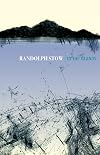
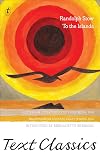
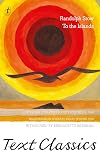
To The Islands
by Randolph Stow
On This Page
Description
Exhausted and losing faith, an Anglican minister flees his mission in Australia's northwest for the vast emptiness of the outback. In the soul country of the desert the old man searches for the islands of the Aboriginal dead, reflecting on past transgressions and on his life's work. A Lear-like tale of madness and destruction, published when Randolph Stow was only 22, To The Islands is compelling and wise - a poetic masterpiece.Tags
Recommendations


















Member Reviews
I have only superlatives to describe Randolph Stow's writing. He understood, it seems, the deep gulf between aboriginal and settler perceptions of the intriguing mystery that is the desert regions of Western Australia.
This is a story of a missionary station manager (Heriot) who realises he is too old to pursue his calling. His response is to take a journey, accompanied by Justin, an aboriginal from the settlement. The walk to the coast and to the islands is one of suffering and expiation.
Heriot is loosely based on Ernest Gribble who ran (poorly, so) the Forest River Mission in WA. Gribble played a key role in inquiries that exposed the role of police in murdering Aboriginal persons in an incident known as the Forrest River massacre in show more 1926.
The book shows deep understanding and frankness about human frailty, aboriginal and white man. The story is told sparingly and with great beauty. The Miles Franklin Award winner of 1958. show less
This is a story of a missionary station manager (Heriot) who realises he is too old to pursue his calling. His response is to take a journey, accompanied by Justin, an aboriginal from the settlement. The walk to the coast and to the islands is one of suffering and expiation.
Heriot is loosely based on Ernest Gribble who ran (poorly, so) the Forest River Mission in WA. Gribble played a key role in inquiries that exposed the role of police in murdering Aboriginal persons in an incident known as the Forrest River massacre in show more 1926.
The book shows deep understanding and frankness about human frailty, aboriginal and white man. The story is told sparingly and with great beauty. The Miles Franklin Award winner of 1958. show less
After reading Stow’s Merry-Go-Round in the Sea, I knew I’d return to his writing before long. This is Stow’s first published novel, completed when he was just 22, and it won a major award in Australia, the Miles Franklin Award, in 1958. Stow’s introduction, which he added in 1981 when he revised the work (minimally, according to him), is instructive, but I will confess that I still found the book—despite some wonderful writing—disappointing. Heriot, an old missionary in a small community in northwest Australia, commits a somewhat contrived act of violence which is the impetus for him to leave and embark on a journey “to the islands,” a phrase with a particular meaning among the local aboriginal community. He is show more accompanied by an old aboriginal friend and most of the book follows their journey through largely uninhabited regions. Stow brilliantly and lovingly evokes the harsh landscape through which they travel as he charts—somewhat less successfully—Heriot’s physical, emotional, and mental disintegration. Heriot wants to die but cannot give up his life. Stow is also concerned with addressing the enormously complex relationship between whites and aboriginal Australians in the 1950s. The difficulty is that Stow’s concerns are far greater than the rather slender framework can support. In the end, he fails to do justice to any of his subjects because he has tried to do so much. Even so, it’s a remarkable work of imagination. Worth a read, I think, because it is the beginning of an impressive career—Stow is far too little known today—but with expectations kept in check. show less
The book’s introduction, “Strange Country” 2015 is essential reading for an understanding of Randolph Stow’s To the Islands. In Strange Country Australian literary critic Bernadette Brennan explains the background to the book we have before us today.
Stow wrote To the Islands in 1957 after working at the Anglican-run Forest River Mission in far north Western Australia. There he learned something of the culture, spirituality and language of the Australian Aboriginal people there. At that time Stow believed that the white Christian missionaries were doing important work for the indigenous communities. Then in 1981 Stow revised the book, removing some of the more heavy-handed propaganda that celebrated the missionaries’ role, show more considering the rest of the text “salvageable”.
Salvageable it certainly was. Along with Patrick White’s Voss it gave aboriginal people a voice, and the Australian landscape a canvas. Until the mid 20th century, the aboriginal people had rarely been featured in Australian literature. Their presence had been alluded to, but there had been very few literary characters that were aboriginal.
The novel won the Miles Franklin literary award in 1958 a year after the inaugural award was given to Voss. You can draw a link between these two novels, not because as some critics have mistakenly suggested Stow was working in Patrick White shadow, but because both books marked the dramatic shift in Australian writing. White and Stow issued realism sending their protagonists on existential journeys into country that was at once the Australian interior and the tortured landscape of the mind - “Strange Country”
Missionary superintendent Heriot’s mind is at the core of the book. A Lear-like man who has lost his faith, he wishes to die. He leaves his mission after a confrontation with a young aboriginal man and is followed by an aboriginal friend, Justin. Justin is compassionate and caring. Together they journey through the harsh but beautiful Australian landscape, Heriot wishing his own death, and Justin propping him up. It is a haunting tale of an aged missionary on a self-destructive self-pitting journey towards death.
Although much of the book is taken up with Heriot and Justin’s trek north, the first chapters introduce the reader to the book’s characters. Life on the mission, the relationships between the aboriginals, and the aborigines and the whites are conveyed objectively. But I found these early pages less enjoyable than the journey through the wilderness.
I put this down to my own negative feelings towards Christian missionaries in general. I didn’t care for the clerical characters and my bias probably got me off to a bad start. I’ve actually visited a Christian mission in the Northern Territory, and seen tribal aborigines queueing up for their rations of white flour and white sugar. These people who still enjoyed the hunter-gatherer feast-and-famine diet were being filled with carbohydrates. I was shocked at their living conditions compared to those of the whites and I was pleased to find out via Google that the mission is no longer a mission, but is now owned by the traditional owners.
I had little sympathy for the self-pitying Heriot, and his references in his pondering to the Classics and T.S. Eliot's The Waste Land left me cold.
Despite my own prejudices and intolerance, I found a book to be brilliant. It is worth reading for the prose alone. Still, at times I felt some of the Australian cultural cringe, and was never sure as to how accurately aboriginal spirituality was depicted.
Although it is a book of its time, it’s not a time that Australianss can be proud of. And sadly it lost a star because of this.
I recommend this book for lovers of literature. 4 stars. show less
Stow wrote To the Islands in 1957 after working at the Anglican-run Forest River Mission in far north Western Australia. There he learned something of the culture, spirituality and language of the Australian Aboriginal people there. At that time Stow believed that the white Christian missionaries were doing important work for the indigenous communities. Then in 1981 Stow revised the book, removing some of the more heavy-handed propaganda that celebrated the missionaries’ role, show more considering the rest of the text “salvageable”.
Salvageable it certainly was. Along with Patrick White’s Voss it gave aboriginal people a voice, and the Australian landscape a canvas. Until the mid 20th century, the aboriginal people had rarely been featured in Australian literature. Their presence had been alluded to, but there had been very few literary characters that were aboriginal.
The novel won the Miles Franklin literary award in 1958 a year after the inaugural award was given to Voss. You can draw a link between these two novels, not because as some critics have mistakenly suggested Stow was working in Patrick White shadow, but because both books marked the dramatic shift in Australian writing. White and Stow issued realism sending their protagonists on existential journeys into country that was at once the Australian interior and the tortured landscape of the mind - “Strange Country”
Missionary superintendent Heriot’s mind is at the core of the book. A Lear-like man who has lost his faith, he wishes to die. He leaves his mission after a confrontation with a young aboriginal man and is followed by an aboriginal friend, Justin. Justin is compassionate and caring. Together they journey through the harsh but beautiful Australian landscape, Heriot wishing his own death, and Justin propping him up. It is a haunting tale of an aged missionary on a self-destructive self-pitting journey towards death.
Although much of the book is taken up with Heriot and Justin’s trek north, the first chapters introduce the reader to the book’s characters. Life on the mission, the relationships between the aboriginals, and the aborigines and the whites are conveyed objectively. But I found these early pages less enjoyable than the journey through the wilderness.
I put this down to my own negative feelings towards Christian missionaries in general. I didn’t care for the clerical characters and my bias probably got me off to a bad start. I’ve actually visited a Christian mission in the Northern Territory, and seen tribal aborigines queueing up for their rations of white flour and white sugar. These people who still enjoyed the hunter-gatherer feast-and-famine diet were being filled with carbohydrates. I was shocked at their living conditions compared to those of the whites and I was pleased to find out via Google that the mission is no longer a mission, but is now owned by the traditional owners.
I had little sympathy for the self-pitying Heriot, and his references in his pondering to the Classics and T.S. Eliot's The Waste Land left me cold.
Despite my own prejudices and intolerance, I found a book to be brilliant. It is worth reading for the prose alone. Still, at times I felt some of the Australian cultural cringe, and was never sure as to how accurately aboriginal spirituality was depicted.
Although it is a book of its time, it’s not a time that Australianss can be proud of. And sadly it lost a star because of this.
I recommend this book for lovers of literature. 4 stars. show less
"White man always talking and never listening" [said Justin].
"I'm sorry," said Heriot humbly.
"Whatever you say to white man, he always got something else to say. Always got to be the last one."
"We call it conversation", Heriot said, and bit his lip as soon as the words were out.
A bleak, atmospheric work, meditating on the relationship between white and black in Australia, between colonists and those they sought to colonise. "We're all lost here", says Heriot, the protagonist. And Stow - although he spent his later life living in England - evidently felt that great sense of loss among this fierce, overpoweringly beautiful country. It's a work of great prose power, as all of Stow's works are. A fairly quick read and, more importantly for show more a work that is now past its 60th anniversary, still a fantastic contribution to the ongoing conversation about the coming of the British to this seemingly endless continent.
They rode in a silence relieved only by the rattle of stones from the horses' hoofs. Trees, grasses and water were still as death, and beyond them was nothing but rock. They passed a stretch of rock pitted and wrinkled like lava. How old is this country? Heriot wondered. But it's not old, it's just born, the sea has never been over it, it was created yesterday, dead as the moon. Let the sea some day come up and drown it and fish come swimming out of the rock-pigeons' holes. I will ride with my hair green and wild, through the canyons of the sea. show less
"I'm sorry," said Heriot humbly.
"Whatever you say to white man, he always got something else to say. Always got to be the last one."
"We call it conversation", Heriot said, and bit his lip as soon as the words were out.
A bleak, atmospheric work, meditating on the relationship between white and black in Australia, between colonists and those they sought to colonise. "We're all lost here", says Heriot, the protagonist. And Stow - although he spent his later life living in England - evidently felt that great sense of loss among this fierce, overpoweringly beautiful country. It's a work of great prose power, as all of Stow's works are. A fairly quick read and, more importantly for show more a work that is now past its 60th anniversary, still a fantastic contribution to the ongoing conversation about the coming of the British to this seemingly endless continent.
They rode in a silence relieved only by the rattle of stones from the horses' hoofs. Trees, grasses and water were still as death, and beyond them was nothing but rock. They passed a stretch of rock pitted and wrinkled like lava. How old is this country? Heriot wondered. But it's not old, it's just born, the sea has never been over it, it was created yesterday, dead as the moon. Let the sea some day come up and drown it and fish come swimming out of the rock-pigeons' holes. I will ride with my hair green and wild, through the canyons of the sea. show less
The second winner of the Miles Franklin award, in 1958. After reading the previous winner, Voss, and drowning in the turgid prose of that book, I was alarmed to read that To The Islands was considered to be inspired by Voss (not true - the writing had been done before Voss was published). But i needn't have worried - this is an incomparably better book. While both books may have been crafted to avoid "realism", this one is highly readable and enjoyable.
Written following a short while after Stow had worked on the Oombulguri Mission in the early 1950s, the book tells of the travails of an aging and dispirited Anglican Brother on a mission.
I visited many aboriginal communities in the Kimberly in the 1970s and Stow's descriptions of life show more on "mission" communities still seemed relevant 20 years later. Very well intentioned, but . . . show less
Written following a short while after Stow had worked on the Oombulguri Mission in the early 1950s, the book tells of the travails of an aging and dispirited Anglican Brother on a mission.
I visited many aboriginal communities in the Kimberly in the 1970s and Stow's descriptions of life show more on "mission" communities still seemed relevant 20 years later. Very well intentioned, but . . . show less
Ok. It took me three goes to finish this book. Not because it was bad, but because it had so much potential, that every now and then I read something awful and had throw it, stamp and yell in disbelief. When I read the opening, I assumed I was in for an amazing read:
"A child dragged a stick along the corrugated iron wall of a hut, and Harriot woke and found the morning standing at his bed like a valet, holding out his daylight self to be put on again, his name, his age, his vague and wearing occupation."
The scenes with Harriot and Justin where the best. When the novel reflected back to the people of the mission, I could not care less. The book could have taken out those chapters.
Stow's prose is unbelievably good. His dialogue is show more portentous and sloppy. Too much tell and not enough show.
Like I said, if the scenes at the mission where cut out, and we only had Herriot's and Justin's scenes post going bush, this would have been a ripper. a 4 stars. show less
"A child dragged a stick along the corrugated iron wall of a hut, and Harriot woke and found the morning standing at his bed like a valet, holding out his daylight self to be put on again, his name, his age, his vague and wearing occupation."
The scenes with Harriot and Justin where the best. When the novel reflected back to the people of the mission, I could not care less. The book could have taken out those chapters.
Stow's prose is unbelievably good. His dialogue is show more portentous and sloppy. Too much tell and not enough show.
Like I said, if the scenes at the mission where cut out, and we only had Herriot's and Justin's scenes post going bush, this would have been a ripper. a 4 stars. show less
Randoph Stow is one of the most interesting and powerful writers of Australian stories. This novel, published in 1958, skirts one of the worlds ancient cultures, and explores a totally different understanding and use of time. This novel is remarkable and valuable for readers who are searching to identify 'a meaning of life' in Australia.
Members
- Recently Added By
Lists

Australia's Greatest Books, as chosen by Geoffrey Dutton (1985)
97 works; 6 members
Author Information

22+ Works 1,003 Members
Born in Western Australia and educated at the university there, Stow wrote his first novels while he was an undergraduate. He has lived in England since 1966. His third novel, To the Islands (1958), received Australia's distinguished Miles Franklin Award for Fiction, a high honor for so young a writer. The novel unfolds the surreal saga of show more Herriot, a disillusioned missionary whose loss of faith compels him to embark on a pilgrimage of self-discovery through the desert to the Aboriginal islands of the dead. The desert landscape also serves as the setting for Tourmaline (1963), a fable in which a water diviner comes to a drought-ridden settlement promising water but discovering gold. The Merry-Go-Round in the Sea (1965) relies much less on the allusive symbolism characteristic of Stow's other work; instead, it records a boy's transition to adolescence against the background of a remote settlement on the far side of Australia. In The Visitants (1979) Stow fictionalizes his experiences as an assistant to the government anthropologist of Papua, New Guinea, but this metaphysical adventure in the tropics has little to do with autobiography. Suburbs of Hell (1984) reveals a series of brutal, motiveless murders that take place in an English village. Also set in England and making use of British myth, The Girl Green as Elderflower (1980) traces the recuperation of a man who has experienced strange things in his past. Stow's work is widely admired, both in Australia and abroad, for the expression of Taoist philosophy, a heightened artistry, an extended use of symbolism, and surreal qualities, even as it handles mainly Australian materials. Critics consider Stow an important influence on younger writers who have followed him in breaking away from the realistic molds that long constricted Australian fiction. In 2015 his novel Tourmaline will be adapted into a film. (Publisher Provided) show less
Awards and Honors
Awards
Notable Lists
Australia's Greatest Books (1958)
Series
Belongs to Publisher Series
Common Knowledge
- Canonical title
- To The Islands
- Original title
- To The Islands
- Original publication date
- 1958
- Important places
- Australia
- First words
- A child dragged a stick along the corrugated iron wall of a hut, and Herriot woke and found the morning standing at his bed like a valet, holding out his daylight self to be put on again, his name, his age, his vague and wear... (show all)ing occupation.
- Last words
- (Click to show. Warning: May contain spoilers.)"My soul," he whispered, over the sea-surge, "my soul is a strange country."
Classifications
Statistics
- Members
- 163
- Popularity
- 200,993
- Reviews
- 8
- Rating
- (3.72)
- Languages
- English, Norwegian
- Media
- Paper, Audiobook, Ebook
- ISBNs
- 15
- ASINs
- 8