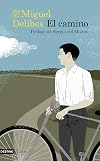
The Path
by Miguel Delibes
On This Page
Description
Set in a remote Castilian village, the story revolves around Daniel, the son of a local cheesemaker, who is about to leave for a distant school. The eleven-year-old is suddenly aware of the the life he will be leaving behind and recounts his memories of the many people in his village and their stories.Tags
Recommendations





















Member Reviews
El camino es un catálogo de anécdotas de un chaval, el Mochuelo, que va a abandonar su pueblo natal para estudiar en la ciudad, todo contra su voluntad. Hay momentos hilarantes, gracias a lo maravillosos que son personajes como el Moñigo, las Guindillas o Quino el Manco. Las descripciones de Delibes de lo que puede pasársele por la cabeza a un niño al ver las injusticias de la infancia son fantásticas, y el estilo es
Y por supuesto, cuando te tiene que pegar un puñetazo en el estómago, particularmente en los tres capítulos finales con la muerte del Tiñoso y la inexorabilidad de la marcha de Daniel, lo hace con contundencia.
Un libro cortito, con cosas que no han envejecido totalmente bien pero que son perdonables, y con unos mensajes bastante profundos. Compro.
Delibes's breakthrough work, El Camino, was published in 1950 and was his third novel. It deals with the daily life of a remote village in the Spanish countryside, as seen though the eyes of an eleven-year-old boy who is on the point of leaving the village for the first time to go to boarding school in the big city.
It's something between a coming-of-age novel and a timeless portrait of life in a small community. There's a great deal of local colour, it positively drips with charm and sentiment, but it's not just chocolate-box: there's a lot of hard reality under the picturesque details, and probably rather too much sex and death for the average eleven-year-old to be entirely comfortable with. It becomes clear as you read it that it's a show more very cleverly constructed book, using all sorts of narrative tricks to build up the picture of how the village works and how Daniel comes to terms with the irreversibility of growing-up (which, as we all know, is one of the scariest things about childhood).
Superficially, it feels a bit like Just William as Marcel Pagnol might have written it, and there is also an occasional echo of the morality of Don Camillo (but without Guareschi's robust humour) — all of which probably just says that it's typical of the way writers of a nostalgic and moderately conservative frame of mind dealt with the challenges of post-war Europe.
Interesting, and very agreeable to read (with a splendidly weepy ending), but you probably wouldn't want too much of it. show less
It's something between a coming-of-age novel and a timeless portrait of life in a small community. There's a great deal of local colour, it positively drips with charm and sentiment, but it's not just chocolate-box: there's a lot of hard reality under the picturesque details, and probably rather too much sex and death for the average eleven-year-old to be entirely comfortable with. It becomes clear as you read it that it's a show more very cleverly constructed book, using all sorts of narrative tricks to build up the picture of how the village works and how Daniel comes to terms with the irreversibility of growing-up (which, as we all know, is one of the scariest things about childhood).
Superficially, it feels a bit like Just William as Marcel Pagnol might have written it, and there is also an occasional echo of the morality of Don Camillo (but without Guareschi's robust humour) — all of which probably just says that it's typical of the way writers of a nostalgic and moderately conservative frame of mind dealt with the challenges of post-war Europe.
Interesting, and very agreeable to read (with a splendidly weepy ending), but you probably wouldn't want too much of it. show less
Daniel el Mochuelo intuye a sus once años que su camino está en la aldea, junto a sus amigos, sus gentes y sus pájaros. Pero su padre quiere que vaya a la ciudad a estudiar el Bachillerato. A lo largo de la noche que precede a la partida, Daniel, insomne, con un nudo en la garganta, evocará sus correrías con sus amigos —Roque el Moñigo y Germán el Tiñoso— a través de los campos descubriendo el cielo y la tierra, y revivirá las andanzas de la gente sencilla de la aldea. La simpatía humana con que esa mirada infantil nos introduce en el pueblo, haciéndonos conocer toda una impresionante galería de tipos y la fuerza con que a través de rasgos frecuentemente caricaturescos se nos presentan siempre netos y vivos es uno de show more los mayores aciertos de esta novela. show less
Daniel "el Mochuelo" pasa su última noche en su aldea antes de partir a la ciudad para progresar. A través de sus recuerdos, se despliega un retrato nostálgico y vívido de la vida rural, la pérdida de la inocencia y el contraste entre el destino impuesto por los padres y el arraigo a la tierra.
Beatiful book about small boy in the tiny Spanish village about to go to the city to study and leaving everything he knows and lives behind. Nostalgic, funny and spiritual. Wonderfully written
Narra la historia de un niño que, al crecer, enfrenta los desafíos de la vida y la transición de la niñez a la madurez. Con un enfoque en la naturaleza y las tradiciones, es una reflexión sobre la inocencia y la pérdida.
Novela que narra la historia de Daniel “el Mochuelo” en su último día en el pueblo antes de marcharse a la ciudad, mostrando la vida rural, la amistad y el paso de la infancia a la adolescencia.
Members
- Recently Added By
Published Reviews
ThingScore 75
El camino es la tercera novela del escritor español Miguel Delibes. Fue publicada en 1950. Está ambientada en la España rural de la posguerra.
added by AlbaRodriguez
Lists

Books Set in Small Towns and Villages
278 works; 16 members
Author Information

142+ Works 6,677 Members
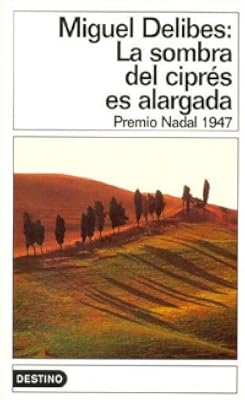
Miguel Delibes was born in Valladolid, Spain on October 17, 1920. During the Spanish civil war, he served in the navy. In 1941, he worked as a cartoonist for Valladolid's main paper, El Norte de Castilla (The North of Castile). A year later, he wrote his first article and by 1944 was a reporter. He became editor of El Norte de Castilla in 1958, show more but was forced to resign in 1963. His first novel, La Sombra del Ciprés es Alargada (The Cypress Casts a Long Shadow), won the Nadal prize in 1948. His other works include Aún es de Día (It's Still Light), Las Ratas (The Rats), Cinco Horas con Mario (Five Hours with Mario), Los Santos Inocentes (The Holy Innocents), La Tierra Herida (The Wounded Earth), and El Hereje (The Heretic). He won numerous awards including the National Literature prize in 1955 and 1999, the Príncipe de Asturias in 1982, and the Cervantes Prize in 1994. He died on March 12, 2010 at the age of 89. (Bowker Author Biography) show less
Awards and Honors
Series
Belongs to Publisher Series
Work Relationships
Common Knowledge
- Canonical title
- The Path
- Original title
- El camino
- Original publication date
- 1950
- People/Characters
- Daniel el Mochuelo
- Related movies*
- El camino (1963 | IMDb)
- First words
- Las cosas podían haber sucedido de cualquier manera y, sin embargo, sucedieron así.
- Last words
- (Click to show. Warning: May contain spoilers.)...un camino distinto del que el Señor le había marcado. Y lloró, al fin.
*Some information comes from Common Knowledge in other languages. Click "Edit" for more information.
Classifications
Statistics
- Members
- 865
- Popularity
- 31,542
- Reviews
- 84
- Rating
- (4.06)
- Languages
- 5 — Danish, Dutch, English, French, Spanish
- Media
- Paper, Audiobook, Ebook
- ISBNs
- 37
- ASINs
- 13