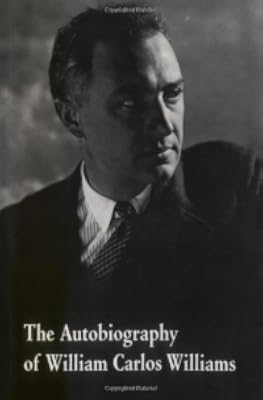
The Autobiography of William Carlos Williams (New Directions Paperbook)
by William Carlos Williams
On This Page
Description
William Carlos Williams (1883-1963) was born in Rutherford, New Jersey. He received his M.D. from the University of Pennsylvania, where he met and befriended Ezra Pound and H.D. (Hilda Doolittle). At the same time as maintaining a popular medical practice, he became a prolific poet, novelist, essayist, and playwright. Experimenting with new techniques of meter and lineation, Williams sought to invent an entirely fresh and singularly American poetics, whose subject matter was centered on the show more everyday circumstances of life and the lives of common people. He was inducted into the New Jersey Hall of Fame in 2009. show lessTags
Recommendations

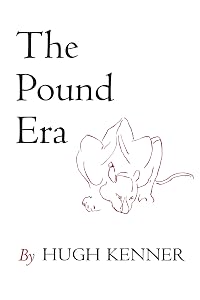
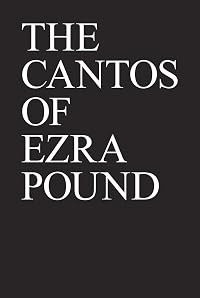
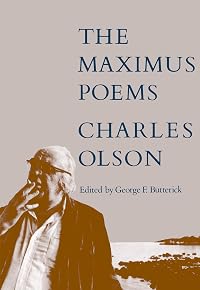


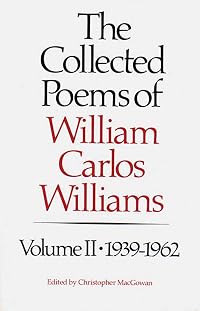









Member Reviews
I found the first three quarters only mildly interesting, his travels and interactions with various artists and fellow writers...Joyce, Stein, Man Ray, and of course his buddy Pound (the chapter on his visits to Pound in the mental hospital are quite moving). However, when I finally got to chapter 43, Of Medicine and Poetry, I was excited to read his thoughts/philosophy related to this topic...
"When they ask me...how I have for so many years continued an equal interest in medicine and the poem, I reply that they amount for me to nearly the same thing. Any worth-his-salt physician knows that no one is 'cured'...a cure is absurd, as absurd as calling these deployments 'diseases'. Sometimes the home team wins, sometimes the visitors. Great show more excitement...We want home runs, antibiotics to 'cure' man with a single shot in the buttocks.
...I found by practice, by trial and error, that to treat a man as something to which surgery, drugs and hoodoo applied was an indifferent matter; to treat him as material for a work of art made him somehow come alive to me.
This immediacy, the thing, as I went on writing, living as I could, thinking a secret life I wanted to tell openly-if only I could-how it lives, secretly about us as much now as ever...I was permitted by my medical badge to follow the poor, defeated body into those gulfs and grottos. And the astonishing thing is that at such times and in such places-foul as they may be with the stinking ischio-rectal abscesses of our comings and goings-just there, the thing, in all its greatest beauty, may for a moment be freed to fly for a moment guiltily about the room." show less
"When they ask me...how I have for so many years continued an equal interest in medicine and the poem, I reply that they amount for me to nearly the same thing. Any worth-his-salt physician knows that no one is 'cured'...a cure is absurd, as absurd as calling these deployments 'diseases'. Sometimes the home team wins, sometimes the visitors. Great show more excitement...We want home runs, antibiotics to 'cure' man with a single shot in the buttocks.
...I found by practice, by trial and error, that to treat a man as something to which surgery, drugs and hoodoo applied was an indifferent matter; to treat him as material for a work of art made him somehow come alive to me.
This immediacy, the thing, as I went on writing, living as I could, thinking a secret life I wanted to tell openly-if only I could-how it lives, secretly about us as much now as ever...I was permitted by my medical badge to follow the poor, defeated body into those gulfs and grottos. And the astonishing thing is that at such times and in such places-foul as they may be with the stinking ischio-rectal abscesses of our comings and goings-just there, the thing, in all its greatest beauty, may for a moment be freed to fly for a moment guiltily about the room." show less
Elliptical & impenetrable, imo. Also too much casual sexism and racism, not necessarily by W. but all too prevalent, all too many references to 'girls and men.'
Ratings
Members
- Recently Added By
Author Information

187+ Works 9,289 Members
Poet, artist, and practicing physician of Rutherford, New Jersey, William Carlos Williams wrote poetry that was experimental in form, ranging from imagism to objectivism, with great originality of idiom and human vitality. Credited with changing and directing American poetry toward a new metric and language, he also wrote a large number of short show more stories and novels. Paterson (1946--58), about the New Jersey city of that name, was his epic and places him with Ezra Pound of the Cantos as one of the great shapers of the long poem in this century. National recognition did not come early, but eventually Williams received many honors, including a vice-presidency of the National Institute of Arts and Letters (1952); the Bollingen Prize (1953); the $5,000 fellowship of the Academy of American Poets; the Loines Award for poetry of the National Institute of Arts and Letters (1948); and the Brandeis Award (1957). Book II of Paterson received the first National Book Award for poetry in 1949. Williams was named consultant in poetry in English to the Library of Congress for 1952--53. Williams's continuously inventive style anchored not only objectivism, the school to which he most properly belongs, but also a long line of subsequent poets as various as Robert Lowell, Frank O'Hara, and Allen Ginsberg. With Stevens, he forms one of the most important sources of a specifically American tradition of modernism. In addition to his earlier honors, Williams received two important awards posthumously, the Pulitzer Prize for Poetry (1963) and the Gold Medal for Poetry from the National Institute of Arts and Letters (1963). (Bowker Author Biography) show less
Awards and Honors
Awards
Distinctions
Common Knowledge
- Original title
- The Autobiography of William Carlos Williams
Classifications
- Genres
- Biography & Memoir, Poetry, Literature Studies and Criticism
- DDC/MDS
- 809 — Literature & rhetoric Literature, rhetoric & criticism History, description, critical appraisal of more than two literatures
- LCC
- PS3545 .I544 .Z5 — Language and Literature American literature American literature Individual authors 1900-1960
- BISAC
Statistics
- Members
- 185
- Popularity
- 176,489
- Reviews
- 2
- Rating
- (4.00)
- Languages
- English, German
- Media
- Paper, Ebook
- ISBNs
- 5
- ASINs
- 8