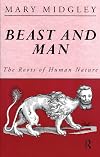
Beast and Man: The Roots of Human Nature
by Mary Midgley
On This Page
Description
Philosophers have traditionally concentrated on the qualities that make human beings different from other species. In Beast and Man Mary Midgley, one of our foremost intellectuals, stresses continuities. What makes people tick? Largely, she asserts, the same things as animals. She tells us humans are rather more like other animals than we previously allowed ourselves to believe, and reminds us just how primitive we are in comparison to the sophistication of many animals. A veritable classic show more for our age, Beast and Man has helped change the way we think about ourselves and the world in which we live. show lessTags
Recommendations



























Member Reviews
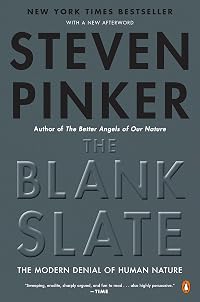
While it has been a while since I read Beast and Man, I remember the book and its arguments fondly. Midgley's premise is to find a middle ground between two extremes: between biological reductionism and the "blank slate" view of sociologists. We have natures because we are animals, but to say that we are "just" animals ignores how malleable we are compared to most animals. Just as behavoristic psychology ignores that we have a mind, so does evolutionary psychology (for different reasons).
Midgley's writing is crisp and forceful and the book is a real pleasure to read. The only criticism I have is that she is very quick to misunderstand authors, especially when discussing Richard Dawkins' selfish gene model, where she attributes Dawkins show more as saying that humans are somewhow automatons and zombies who do all for the sake of their genes. (This is a very un-nuanced reading of Dawkins and Midgley has been rightly taken to taks for this in a famous interlocution with Dawkins.)
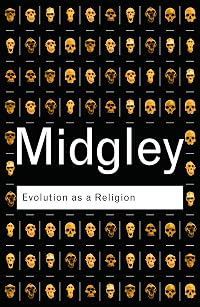
Midgley's, though, is a voice that is needed. If you like this book, I would also reccomend her Evolution as a Religion and Science and Poetry. She is a critic of science who, unlike many postmodernists etc., does not wish to "throw the baby out with the bathwater.' Disabuse science of its excesses only. show less
Midgley's writing is crisp and forceful and the book is a real pleasure to read. The only criticism I have is that she is very quick to misunderstand authors, especially when discussing Richard Dawkins' selfish gene model, where she attributes Dawkins show more as saying that humans are somewhow automatons and zombies who do all for the sake of their genes. (This is a very un-nuanced reading of Dawkins and Midgley has been rightly taken to taks for this in a famous interlocution with Dawkins.)
Midgley's, though, is a voice that is needed. If you like this book, I would also reccomend her Evolution as a Religion and Science and Poetry. She is a critic of science who, unlike many postmodernists etc., does not wish to "throw the baby out with the bathwater.' Disabuse science of its excesses only. show less
Fleming, Peter
Ratings
Members
- Recently Added By
Author Information

25+ Works 1,991 Members
Mary Midgley was born Mary Scrutton in Dulwich, England on September 13, 1919. She was educated at Oxford University. While raising her sons, she reviewed novels and children's books for The New Statesman. She returned to teaching philosophy in 1965 at the University of Newcastle Upon Tyne. She was a moral philosopher who wrote numerous books show more including Beast and Man: The Roots of Human Nature, Evolution as a Religion, Science as Salvation: A Modern Myth and Its Meaning, Science and Poetry, The Owl of Minerva, and What Is Philosophy For? She died on October 10, 2018 at the age of 99. (Bowker Author Biography) show less
Series
Belongs to Publisher Series
Common Knowledge
- Canonical title
- Beast and Man: The Roots of Human Nature
- Original publication date
- 1978
Classifications
Statistics
- Members
- 280
- Popularity
- 115,390
- Reviews
- 2
- Rating
- (4.09)
- Languages
- English, Finnish, Japanese
- Media
- Paper, Ebook
- ISBNs
- 14
- ASINs
- 4