
I'd Know You Anywhere
by Laura Lippman
On This Page
Description
Eliza Benedict's peaceful suburban life is shattered after she is contacted by Walter Bowman, the man who kidnapped and held her hostage as a teen in 1985, and who now claims to want forgiveness while on death row.Tags
Recommendations



























Member Recommendations
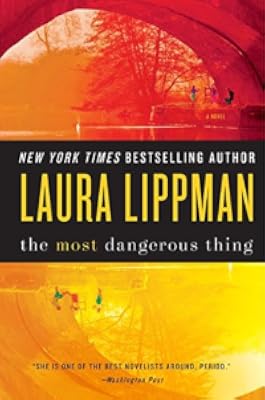
vancouverdeb I've read both -and enjoyed them very much. They are different -but also have much in common.

Bookmarque This one is less inert and domestic than Lippman's novel. This time the survivor is affected by her experience and while she may not be likable, she's at least interesting. It also deals with memory of the crime that may or may not be faulty.
11
Member Reviews
I love Laura Lippman. Her “I’d Know You Anywhere” is so beautifully constructed that you become so enveloped in her characters and story, you lose track of time and only want to finish the novel. The premise of Eliza wife and mother who had been kidnapped and raped at 15 seems like a familiar plot. Flashbacks flesh out the possible how’s and why’s. Eliza’s current state of mind is in play. Additionally the novel deals with Walter, the serial kidnapper murderer on death row that might have “something” on Eliza to prevent his execution. The mother of one of the murdered girls blames Eliza for her daughter’s death by Walter. Eliza’s daughter has possible “bad seed” qualities. Lippman knows how to juggle all these show more characters like a fine surgeon. Digging deep into their psyche. It all builds to a gang buster logical ending with enough guessing that all good mysteries need. show less
First Line: "Iso, time for---"
After living in England for six years, 38-year-old married mother of two Eliza Benedict has returned with her family to Bethesda, Maryland. In their affluent neighborhood having lived in England has a great deal of cachet. Her teenage daughter, Isobel, is turning into an angry, snobbish stranger while her young son, Albie, is still a lovable little boy who's eager to please. The last thing Eliza ever expected was a letter from Walter Bowman waiting in the mailbox for her.
Back in 1985 when Eliza was fifteen, she was kidnapped and kept for weeks by Walter Bowman as he made a endless road trip through a tri-state area. She is there when Walter abducts and murders another teenage girl, but fortunately is show more rescued and returned to her parents and sister shortly thereafter. Naturally this experience has had repercussions on Eliza's life and relationships ever since.
Walter is now on death row and ostensibly wants to make amends before his execution. He uses as go-between an advocate for prisoners, Barbara LaFortuny. Eliza knows he has a different agenda-- as she has her own. Lippman alternates chapters between the present and Eliza's nightmare back in 1985, and what unfolds is a masterful novel about fear, manipulation and survival.
After such a horrendous experience, everyone has had the tendency to close ranks around Eliza to protect her. Who wouldn't? But Eliza learns that one of the consequences of this protection is that she's given up a lot of control over her own life.
I love the way Lippman holds each character up to the light like a prism, and moves that prism a bit at a time, uncovering nuances of behavior and thought that had previously been unseen. It's the major reason why opinions about characters can change the further one progresses into the book. The more one sees the character, the more one thinks, and a more reliable opinion is formed. Lippman even had me wavering over Walter Bowman's character until she'd twisted that prism around a few more times.
If you like reading a novel that worms its way into your mind with brilliant plotting and nuanced characterization, I'd Know You Anywhere is a book for you. show less
After living in England for six years, 38-year-old married mother of two Eliza Benedict has returned with her family to Bethesda, Maryland. In their affluent neighborhood having lived in England has a great deal of cachet. Her teenage daughter, Isobel, is turning into an angry, snobbish stranger while her young son, Albie, is still a lovable little boy who's eager to please. The last thing Eliza ever expected was a letter from Walter Bowman waiting in the mailbox for her.
Back in 1985 when Eliza was fifteen, she was kidnapped and kept for weeks by Walter Bowman as he made a endless road trip through a tri-state area. She is there when Walter abducts and murders another teenage girl, but fortunately is show more rescued and returned to her parents and sister shortly thereafter. Naturally this experience has had repercussions on Eliza's life and relationships ever since.
Walter is now on death row and ostensibly wants to make amends before his execution. He uses as go-between an advocate for prisoners, Barbara LaFortuny. Eliza knows he has a different agenda-- as she has her own. Lippman alternates chapters between the present and Eliza's nightmare back in 1985, and what unfolds is a masterful novel about fear, manipulation and survival.
After such a horrendous experience, everyone has had the tendency to close ranks around Eliza to protect her. Who wouldn't? But Eliza learns that one of the consequences of this protection is that she's given up a lot of control over her own life.
I love the way Lippman holds each character up to the light like a prism, and moves that prism a bit at a time, uncovering nuances of behavior and thought that had previously been unseen. It's the major reason why opinions about characters can change the further one progresses into the book. The more one sees the character, the more one thinks, and a more reliable opinion is formed. Lippman even had me wavering over Walter Bowman's character until she'd twisted that prism around a few more times.
If you like reading a novel that worms its way into your mind with brilliant plotting and nuanced characterization, I'd Know You Anywhere is a book for you. show less
 This review was written for LibraryThing Early Reviewers.
I wasn't sure at first that I was even going to like this story. Actually... I found that it started out slow showing us seemingly unimportant and boring facts about the victim's life, who is now an adult and the mother of two children. We learned that the family had returned to the U.S. from London, and then Eliza gets that first of several letters from Walter, the man who kidnapped her and held her hostage for a month while she was a teenager. What is with these victims and their abductors fascination with one another? That's when the story started to get interesting. Each chapter that had a current exchange between them, or a flashback to Walter as a young man with or without Eliza, hooked me into the story. I wanted to know what he show more had done, and I wanted to know the why, but Eliza's background???, not so much. It was Walter... the "so-called" serial killer that held my interest. The POV also altered in each and every chapter making the story a bit confusing at times keeping up with who was speaking. When all the secrets and truths come out in the end during Eliza's and Walter's final meeting with only jail cell bars between them, I was just...disappointed. I have to admit that the story was interesting and well-written, but I wanted and had expected more. There was a lot leading up to this moment and when it finally happened, it felt...well, rushed. No details I was hoping for about Walter and his past were ever given and the story went on and on about Eliza's children's school problems...but no real details about the main character. I gave the book 4 stars for the reasons already mentioned and I would recommend the book to Mystery & Suspense fans. The author writes very well, I enjoyed the story but just thought there were things that needed to be known that were missing. show less
An unexpectedly satisfying suspense....
The crimes have already been committed. The criminal has been convicted and the lone surviving victim has moved on. So where, might you ask, is the story?
Eliza Benedict is an ordinary housewife adjusting her family to life back in the States when a letter arrives that shatters her carefully crafted world. The victim of a kidnapping and rape, at the age of fifteen, Eliza had escaped the consequence of memory by leaving her small town life and all those who remembered the crime a long time ago, she made a new start.
The move back to the area of her childhood has seemingly allowed Eliza's past to be revealed by the one person with the most intimate knowledge of her trauma, Walter Bowmen, the show more perpetrator of the crime. Walter's behind bars on death row awaiting execution but that single letter reveals the power he still yields. Eliza will do anything to protect her family but just how much will she have to remember to keep them safe?
Laura Lippman builds this slow burning psychological suspense by pitting empathy of Eliza's understandable fear, guilt, and isolation against the uncomfortable annoyance at her passivity, an unlikely conflict for the reader that proves to be hypnotic.
Pick this book up!and it will be hard to put down. show less
The crimes have already been committed. The criminal has been convicted and the lone surviving victim has moved on. So where, might you ask, is the story?
Eliza Benedict is an ordinary housewife adjusting her family to life back in the States when a letter arrives that shatters her carefully crafted world. The victim of a kidnapping and rape, at the age of fifteen, Eliza had escaped the consequence of memory by leaving her small town life and all those who remembered the crime a long time ago, she made a new start.
The move back to the area of her childhood has seemingly allowed Eliza's past to be revealed by the one person with the most intimate knowledge of her trauma, Walter Bowmen, the show more perpetrator of the crime. Walter's behind bars on death row awaiting execution but that single letter reveals the power he still yields. Eliza will do anything to protect her family but just how much will she have to remember to keep them safe?
Laura Lippman builds this slow burning psychological suspense by pitting empathy of Eliza's understandable fear, guilt, and isolation against the uncomfortable annoyance at her passivity, an unlikely conflict for the reader that proves to be hypnotic.
Pick this book up!and it will be hard to put down. show less
Eliza Benedict has the distinction of being "the one that got away". She was kidnapped by serial killer Walter Bowman in 1985 when she was fifteen years old and was held hostage for six weeks. She's always wondered why she was the only girl that Walter left alive. Eliza is now married with two children. One day she receives a letter out of the blue from Walter, who is now on death row for his crimes. Will she finally find out why Walter spared her? Or is Walter still manipulating her all these years later?
This was a fascinating crime drama. I thought the author did a great job of showing how Eliza's kidnapping affected not only her but the people around her. Even Eliza's two children were deeply affected despite the fact that Eliza hid show more the crime from them and they had no idea their mother was a kidnapping victim. I found the story unpredictable yet authentic. I was bothered by one thing - Lippman's author's note at the back of the book states that this book was inspired by a true crime but she's not going to say which one. Of course that makes me want to know even more! If anyone happens to know what crime Lippman is referring to, please put me out of my misery. show less
This was a fascinating crime drama. I thought the author did a great job of showing how Eliza's kidnapping affected not only her but the people around her. Even Eliza's two children were deeply affected despite the fact that Eliza hid show more the crime from them and they had no idea their mother was a kidnapping victim. I found the story unpredictable yet authentic. I was bothered by one thing - Lippman's author's note at the back of the book states that this book was inspired by a true crime but she's not going to say which one. Of course that makes me want to know even more! If anyone happens to know what crime Lippman is referring to, please put me out of my misery. show less
As a fifteen-year-old, Elizabeth was kidnapped by Walter Bowman and held hostage for almost six weeks. He had killed at least two other girls, yet let Elizabeth go for reasons known only to him. Now he is on death row for the murder of his last victim.
Now a grown woman, Elizabeth has changed her name to Eliza, married and had children, and shed her old identity as the rape victim and former hostage. Then she receives a letter from Walter. As his death comes near, he seems contrite.
But is that the only thing he is after? Is he finally willing to confess to murdering other girls? Or is he intent on forcing Eliza to remember everything that happened that summer, remember the truth of all that happened, to gain the upper hand and possibly show more stay his execution?
This thriller was very well written. The narrative changes from the present time to the terrible summer when Walter held Elizabeth hostage, and Lippman does a fine job building suspense through this. Each time I seemed to be close to reading all that happened—particularly with Holly, his last victim, and Elizabeth's rape—Lippman left me hanging and desperate to read on to find out the truth. (I read this in one afternoon, which is unusual for me.)
The emotions run high: Eliza is torn between her desire to leave the past behind and her desperation to protect her family from Walter's unpredictable actions. We hear the voices of the grown Eliza and the young Elizabeth, Walter, his last victim's mother, and Barbara, who, for counterintuitive reasons of her own, helps him contact Eliza and is obsessed with staying Walter's execution.
What was most fascinating to me was getting inside Walter's head and learning how warped his view of the world is, the way he manipulates others around him: Elizabeth/Eliza, his other victims, and Barbara. Fascinating and frightening. Fascinating because it opens the mind of a depraved and violent mind to the rest of us. Frightening because it points me to the unsettling question of how much do I, any of us, justify our misdeeds and manipulations of others. A question to ponder.
As a side note: there isn't much in the way of foul language, explicit violence or sexual content. Lippman alludes to the violent deaths but never describes them, and the rape scene is so barebones that most of it is left to the imagination. The technique makes Walter's crimes all the more horrifying. Effective, and a way that I wish many other writers of crime novels would take note of. show less
Now a grown woman, Elizabeth has changed her name to Eliza, married and had children, and shed her old identity as the rape victim and former hostage. Then she receives a letter from Walter. As his death comes near, he seems contrite.
But is that the only thing he is after? Is he finally willing to confess to murdering other girls? Or is he intent on forcing Eliza to remember everything that happened that summer, remember the truth of all that happened, to gain the upper hand and possibly show more stay his execution?
This thriller was very well written. The narrative changes from the present time to the terrible summer when Walter held Elizabeth hostage, and Lippman does a fine job building suspense through this. Each time I seemed to be close to reading all that happened—particularly with Holly, his last victim, and Elizabeth's rape—Lippman left me hanging and desperate to read on to find out the truth. (I read this in one afternoon, which is unusual for me.)
The emotions run high: Eliza is torn between her desire to leave the past behind and her desperation to protect her family from Walter's unpredictable actions. We hear the voices of the grown Eliza and the young Elizabeth, Walter, his last victim's mother, and Barbara, who, for counterintuitive reasons of her own, helps him contact Eliza and is obsessed with staying Walter's execution.
What was most fascinating to me was getting inside Walter's head and learning how warped his view of the world is, the way he manipulates others around him: Elizabeth/Eliza, his other victims, and Barbara. Fascinating and frightening. Fascinating because it opens the mind of a depraved and violent mind to the rest of us. Frightening because it points me to the unsettling question of how much do I, any of us, justify our misdeeds and manipulations of others. A question to ponder.
As a side note: there isn't much in the way of foul language, explicit violence or sexual content. Lippman alludes to the violent deaths but never describes them, and the rape scene is so barebones that most of it is left to the imagination. The technique makes Walter's crimes all the more horrifying. Effective, and a way that I wish many other writers of crime novels would take note of. show less
I'd Know You Anywhere begins innocuously enough with what seems like an admittedly dull look at one family's domestic life. Eliza Benedict is a middle-aged wife and mother of two, who recently moved to Maryland after spending several years abroad in London. Out of the blue, Eliza gets a letter one day from a man on death row about to be executed for the murders of two teen-aged girls -- the same man who abducted her when she was 15 years old and held her captive for a month's time.
For roughly the first half of the book, the third-person narrative alternates between the present day and 1985, when Eliza (then going by Elizabeth) was abducted. The sections taking place in the past are told from both Elizabeth's point of view and the POV of show more her abductor, Walter. Writing from the point of view of a rapist/murderer is tricky, and many authors fail. (They either get too descriptive and it becomes too disturbing, or they fail to make a convincing case.) The book could have gotten icky with Walter's POV but instead the author managed to get inside his creepy criminal mind without getting too sordid and uncomfortable.
In the present, we hear mostly from Eliza's POV, but half-way through the book we start hearing from other characters as well - there's Walter again of course, but we also hear from his biographer, the criminals' advocate working with him, and the mother of one of his victims. Generally speaking, I am not a huge fan of introducing new points of view mid-way through a book. I often think of this as poor writing in which an author has backed himself or herself into a corner and can't get out of it without introducing a new character and/or perspective. Lippman wrote so well in this book though that I cannot accuse her of that. Still, I could have done without hearing from Jared Garrett (the biographer) or Barbara LaFortuny (the advocate) as I don't think their perspectives added much to the narrative or even did enough to shine a light on their characterizations. I did find the addition of Trudy Tackett's perspective interesting though, especially as this allowed the book to explore deeper the issues related to trauma and grief. Trudy's life also served in some way as a foil to Eliza's. Obviously, their experiences were difference and so their responses would be as well, but Trudy seemed stalemated back in 1985 and unable to move on past her grief and anger while Eliza was able to salvage her life to some extent and press forward with the rest of her future.
Besides exploring the past and its attendant grief and trauma, there's also an underlying theme throughout of fear of technology. For instance, Eliza bizarrely despises the voice of the GPS and feels smug when it's proven wrong. Eliza's daughter Iso gets into increasingly serious trouble at school, with technological advances like Facebook and Iphones being used as part of her deceptions. But more pressingly, technology is what allows Walter, Barbara, and Trudy to all easily find Eliza even though she thought she managed to stay hidden from her past life. Obviously, another undercurrent of food for thought throughout the book is the look at the criminal justice system and the death penalty.
Overall, I found this book compelling and gripping, and it definitely left me wanting to read more at every opportunity. (It's been some time since I've read a book I could say that about!) Throughout, there's some mystery/teasing about certain past events and what really happened, which keeps the reader interested to see what will happen next. It's a fast read, although its dark content might not make a beach read per se.
The audio version has an excellent reader who mastered several different accents and perfectly modulated her pitch and tone depending on the character. She was very believable at being the various characters.
The ending of the book was a tiny bit of a disappointment as I wanted more answers than were given, particularly about what would happen in the future, but I think it was the best ending there could have been. I'd recommend this book for people looking for a compelling drama, an interesting mystery, a good character study, or something that will provide some themes to mull over long after the book is finished. show less
For roughly the first half of the book, the third-person narrative alternates between the present day and 1985, when Eliza (then going by Elizabeth) was abducted. The sections taking place in the past are told from both Elizabeth's point of view and the POV of show more her abductor, Walter. Writing from the point of view of a rapist/murderer is tricky, and many authors fail. (They either get too descriptive and it becomes too disturbing, or they fail to make a convincing case.) The book could have gotten icky with Walter's POV but instead the author managed to get inside his creepy criminal mind without getting too sordid and uncomfortable.
In the present, we hear mostly from Eliza's POV, but half-way through the book we start hearing from other characters as well - there's Walter again of course, but we also hear from his biographer, the criminals' advocate working with him, and the mother of one of his victims. Generally speaking, I am not a huge fan of introducing new points of view mid-way through a book. I often think of this as poor writing in which an author has backed himself or herself into a corner and can't get out of it without introducing a new character and/or perspective. Lippman wrote so well in this book though that I cannot accuse her of that. Still, I could have done without hearing from Jared Garrett (the biographer) or Barbara LaFortuny (the advocate) as I don't think their perspectives added much to the narrative or even did enough to shine a light on their characterizations. I did find the addition of Trudy Tackett's perspective interesting though, especially as this allowed the book to explore deeper the issues related to trauma and grief. Trudy's life also served in some way as a foil to Eliza's. Obviously, their experiences were difference and so their responses would be as well, but Trudy seemed stalemated back in 1985 and unable to move on past her grief and anger while Eliza was able to salvage her life to some extent and press forward with the rest of her future.
Besides exploring the past and its attendant grief and trauma, there's also an underlying theme throughout of fear of technology. For instance, Eliza bizarrely despises the voice of the GPS and feels smug when it's proven wrong. Eliza's daughter Iso gets into increasingly serious trouble at school, with technological advances like Facebook and Iphones being used as part of her deceptions. But more pressingly, technology is what allows Walter, Barbara, and Trudy to all easily find Eliza even though she thought she managed to stay hidden from her past life. Obviously, another undercurrent of food for thought throughout the book is the look at the criminal justice system and the death penalty.
Overall, I found this book compelling and gripping, and it definitely left me wanting to read more at every opportunity. (It's been some time since I've read a book I could say that about!) Throughout, there's some mystery/teasing about certain past events and what really happened, which keeps the reader interested to see what will happen next. It's a fast read, although its dark content might not make a beach read per se.
The audio version has an excellent reader who mastered several different accents and perfectly modulated her pitch and tone depending on the character. She was very believable at being the various characters.
The ending of the book was a tiny bit of a disappointment as I wanted more answers than were given, particularly about what would happen in the future, but I think it was the best ending there could have been. I'd recommend this book for people looking for a compelling drama, an interesting mystery, a good character study, or something that will provide some themes to mull over long after the book is finished. show less
Members
- Recently Added By
Lists

Crime and Mysteries to Read
746 works; 31 members
Talk Discussions
Past Discussions
[i'd know you anywhere] in Reviews of Early Reviewers Books (July 2011)
Author Information

56+ Works 24,446 Members
Laura Lippman grew up in Baltimore and returned to her home town in 1989 to work as a journalist. After writing seven books while still a full-time reporter, she left the Baltimore Sun to focus on fiction. Laura is the author of What the Dead Know, 2016 New York Times Bestseller, Another Thing to Fall, After I'm Gone, and Wilde Lake. She also show more writes the Tess Monaghan series. She has won numerous awards for her work including the Edgar, Quill, Anthony, Nero Wolfe, Agatha, Gumshoe, Barry, and Macavity. (Bowker Author Biography) show less
Awards and Honors
Awards
Common Knowledge
- Canonical title
- I'd Know You Anywhere
- Original title
- I'd Know You Anywhere
- Alternate titles
- Don't Look Back
- Original publication date
- 2010-08-17
- Important places
- Virginia, USA
- Dedication
- For Dorothy and Bernie
- First words
- "ISO, time for-"
- Last words
- (Click to show. Warning: May contain spoilers.)"Tonight-tonight, I'd like to sleep with the windows open."
- Blurbers
- Cusumano, Bill; English, David; King, Stephen
Classifications
Statistics
- Members
- 1,632
- Popularity
- 13,826
- Reviews
- 137
- Rating
- (3.48)
- Languages
- 5 — Danish, Dutch, English, French, German
- Media
- Paper, Audiobook, Ebook
- ISBNs
- 31
- UPCs
- 1
- ASINs
- 11
