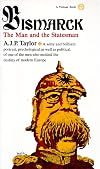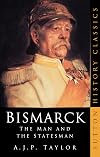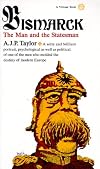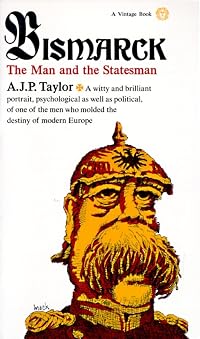
Bismarck: The Man and Statesman
by A. J. P. Taylor
On This Page
Description
Biography & Autobiography. History. Nonfiction. In this compelling biography, historian A. J. P. Taylor reevaluates Bismarck's motives and methods, focusing on the chancellor's rise to power in the 1860s and his removal from office in 1890.Tags
Recommendations





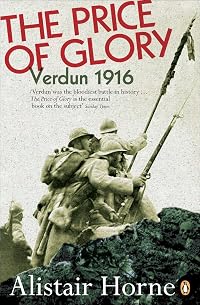


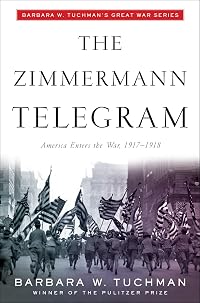
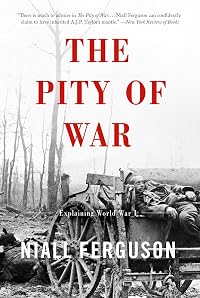

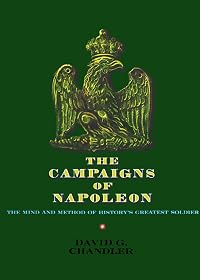










Member Reviews
A surprisingly positive biography. Clear and to point, there is very little personal life examined but the range of Bismarck's political career is dealt with in an excellent fashion. Argues that Bismarck was always interested in advancing his own role and power within Prussia and then Germany, not so much the larger national interest. Argues that Bismarck did not see the dynamic aspect of politics, seemed to think that once a balance had been achieved it could easily be maintained indefinitely. Bismarck was an extreme example of the opportunistic politician. The one thing the book seems to skip is how Bismarck got away with being so utterly contemptible towards everyone else in politics for so long without getting kicked out much sooner.
A solid introduction to the life of the Iron Chancellor. A solid assessment of his life, focuses on his temperament and his achievements in a balanced way.
Ratings
Members
- Recently Added By
Lists

All Things Germany
321 works; 4 members
Author Information

190+ Works 6,196 Members
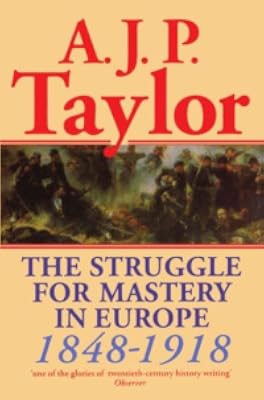
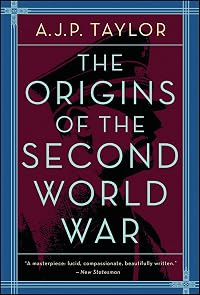
British historian A.J.P. Taylor studied at Oxford University and in 1938 became a fellow of Magdalen College. Interested chiefly in diplomatic and central European history, he is a prolific and masterful writer. Fritz Stern wrote of him and his The Struggle for Mastery in Europe, 1848--1918 (1954) in the Political Science Quarterly: "There is show more something Shavian about A. J. P. Taylor and his place among academic historians; he is brilliant, erudite, witty, dogmatic, heretical, irritating, insufferable, and withal inescapable. He sometimes insults and always instructs his fellow-historians, and never more so than in his present effort to reinterpret the diplomatic history of Europe from 1848 to the end of the First World War. . . . After a brilliant introduction, in which he defines the balance of power and assesses the relative and changing strength of the Great Powers, Mr. Taylor presents a chronological survey, beginning with the diplomacy of war, 1914--1918. . . . [He] writes on two levels. He narrates the history of European diplomacy and compresses it admirably into a single volume. Imposed upon the narrative is his effort to probe the historical meaning of given actions and conditions. . . . He has a peculiar sense of inevitability, growing out of what he regards the logic of a given development, as well as a delicate feeling for live options and alternatives. Mr. Taylor suggests that fear, not aggression, was the dominant impulse of pre-war diplomacy." The Origins of the Second World War (1961), again controversial and lively, starts from the premise (in Taylor's words) that "the war of 1939, far from being premeditated, was a mistake, the result on both sides of diplomatic blunders." The New Statesman said of it: "Taylor is the only English historian now writing who can bend the bow of Gibbon and Macaulay. [This is] a masterpiece: lucid, compassionate, beautifully written in a bare, sparse style, and at the same time deeply disturbing." Several of Taylor's other works also received high praise. Among these were Bismarck, the Man and the Statesman (1955), in which he exonerated Bismarck; Hapsburg Monarchy, 1809--1914, a survey of the era; and English History, 1919--1945, a volume in the Oxford History of England Series, greeted by the N.Y. Review of Books as "an astonishing tour de force." (Bowker Author Biography) show less
Series
Belongs to Publisher Series
Common Knowledge
- Original publication date
- 1955-06-30
- People/Characters
- Otto von Bismarck; Albert, Prince Consort; Alexander I, Emperor of Russia; Alexander II, Emperor of Russia; Alexander III, Emperor of Russia; Ferdinand von Bismarck (show all 24); Herbert von Bismarck; Johanna von Bismarck; George Canning; Joseph Chamberlain; Oliver Cromwell; Benjamin Disraeli, 1st Earl of Beaconsfield; Franz Joseph, Emperor of Austria; Frederick the Great, King of Prussia; William Ewart Gladstone; Klemens Wenzel, Prince von Metternich; Napoleon Bonaparte; Napoleon III; Henry John Temple, 3rd Viscount Palmerston; Robert Peel; William Pitt the Elder; William Pitt the Younger; Robert Gascoyne-Cecil, 3rd Marquess of Salisbury; Victoria, Queen of the United Kingdom
- Important places
- Bavaria, Germany; Berlin, Germany; Constantinople, Byzantine Empire; Frankfurt am Main, Hesse, Germany; Hamburg, Germany; Hanover, Lower Saxony, Germany (show all 16); Indo-China; Luxembourg; Paris, France; Poland; Potsdam, Brandenburg, Germany; Rhineland, Germany; Rome, Italy; Romania; St. Petersburg, Russia; Vienna, Austria
- Important events
- Crimean War
- Original language
- English
Classifications
- Genres
- History, Nonfiction, Biography & Memoir, General Nonfiction
- DDC/MDS
- 943.08092 — History & geography History of Europe Central Europe: Germany, Austria, Switzerland, Czech, Poland, Hungary Historical periods of Germany Germany 1866-
- LCC
- DD218 .T33 — History of Europe, Asia, Africa and Oceania Germany History of Germany History By period Modern, 1519- 19th-20th centuries New Empire, 1871-1918
- BISAC
Statistics
- Members
- 417
- Popularity
- 74,404
- Reviews
- 3
- Rating
- (3.33)
- Languages
- 7 — Czech, Danish, English, German, Hungarian, Italian, Portuguese
- Media
- Paper, Audiobook, Ebook
- ISBNs
- 22
- ASINs
- 14