On This Page
Description
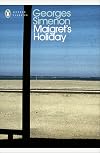
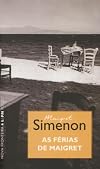
A local scandal intrudes on Maigret's seaside holiday in book twenty-eight of the new Penguin Maigret series. At what point in the day could the note have been slipped into his pocket, his left breast pocket? It was an ordinary sheet of glazed squared paper, probably torn out of an exercise book. The words were written in pencil, in a regular handwriting that looked to him like a woman's. For pity's sake, ask to see the patient in room 15. When Inspector Maigret's wife falls ill on their show more seaside holiday, a visit to the hospital leads him on an unexpected quest to find justice for a young girl. show lessTags
Recommendations

















































Member Reviews
I really enjoyed the start of this story because it showed me Maigret living very much outside his comfort zone, letting me see the man when he isn't manically focused on solving a case and has to find a way to try and be a normal human being. Frankly, that's something he's not very good at and his discomfiture made me smile, not just in a spirit of schadenfreude but because Maigret's coping mechanisms are described with dry humour and great accuracy.
Maigret and his wife are holidaying in Les Sables-d'Olonne, a seaside town on the Atlantic coast, when Madame Maigret is taken into hospital, leaving Maigret with no obligations or itinerary other than a daily visit to his wife's bedside. This visit is a source of great discomfiture to show more Maigret, partly because the daily obligation chafes on him but mostly because the hospital is attached to a convent and is run by nuns whose quiet competence and complete control of their environment makes him feel like a schoolboy being guided or admonished by adult authority figures so that he almost feels mocked by their softly spoken civilities. His visits have become a ritual not of his choosing. Every day he phones at 11.00 to confirm that he can visit, for thirty minutes, at 15.00. Every visit occurs as it was the first and is carried out with an unvarying routine that seems more like a ritual observance than a procedure. The setting, the odd mix of innocence, solicitude and serene authority knock Maigret so far off balance that he barely recognises himself. His discomfort is so obvious to his wife that she takes pity on him and tells him, "You can go now." when the thirty minutes of the visit have passed.
The second thing that made me smile was seeing Maigret dealing with having complete freedom on how he spends twenty-three-and-a-half hours each day by establishing a rigid routine which mostly involves walking, according to an unvarying timetable from hotel, to bar, to café, to restaurant and back to the hotel. taking a glass of white wine or an aperitif at each stop.
Maigret is rescued from his self-imposed Purgatory of enforced idleness when someone at the hospital leaves a note in his jacket pocket saying: "For pity's sake, ask to see the patient in room 15." Maigrer initially ignores the request, focussing more on how it was slipped into his jacket than on what it might mean. By the time decides to act on the request, the young woman in room fifteen has died. Maigret's guilt at having delayed responding to the request and his need to do something that reaffirms his identity pushes him into an informal investigation that sets him on the path of a killer who Maigret is certain will strike again soon,
From that point onwards, Maigret slides into obsession and becomes his usual brusquely brooding, uncommunicative self, thinking of nothing but the solution to the mystery in front of him and interested in the people around him only in so far as they can be instrumental in him solving the case.
Maigret's unofficial status, which he holds on to even when offered the opportunity to lead the investigation, means that he must adopt slightly different tactics for tracking down his prey. He has to do more of the legwork himself and he feels the need to get face to face with potential suspects. Maigret's lack of official status is aggravated by his encounter with an upper-class Investigating Magistrate who regards Maigret with amused interest that turns to outrage when he thinks Maigret is getting above himself.
The mystery itself is not particularly complicated. It becomes obvious who the killer is fairly early on although exactly what the killer has done and how they did it remain obscured for most of the book. Maigret's challenge is to find proof of what has been done and confront the killer with it.
The last third of the book is a duel of wills and wits between Maigret and the killer. As I watched them circle each other, I was struck by how similar they were. Maigret is all insight and no empathy. He is completely focused on his goal. He has no regard for how others view him and is unconcerned with their needs and wants. In these things, he and the killer are alike. Where they differ is that Maigret is driven by a need for justice, or at least his own brand of it.
I felt that the final exposition, a set piece between Maigret and the killer, went on for a little too long. The need to explain how clever the killer and Maigret had been started to erode the drama of the denouement. I wanted to shout at them to get on with it already.
Even so, I had a lot of fun with this book and it's made me hungry for some more Maigret soon. show less
Maigret and his wife are holidaying in Les Sables-d'Olonne, a seaside town on the Atlantic coast, when Madame Maigret is taken into hospital, leaving Maigret with no obligations or itinerary other than a daily visit to his wife's bedside. This visit is a source of great discomfiture to show more Maigret, partly because the daily obligation chafes on him but mostly because the hospital is attached to a convent and is run by nuns whose quiet competence and complete control of their environment makes him feel like a schoolboy being guided or admonished by adult authority figures so that he almost feels mocked by their softly spoken civilities. His visits have become a ritual not of his choosing. Every day he phones at 11.00 to confirm that he can visit, for thirty minutes, at 15.00. Every visit occurs as it was the first and is carried out with an unvarying routine that seems more like a ritual observance than a procedure. The setting, the odd mix of innocence, solicitude and serene authority knock Maigret so far off balance that he barely recognises himself. His discomfort is so obvious to his wife that she takes pity on him and tells him, "You can go now." when the thirty minutes of the visit have passed.
The second thing that made me smile was seeing Maigret dealing with having complete freedom on how he spends twenty-three-and-a-half hours each day by establishing a rigid routine which mostly involves walking, according to an unvarying timetable from hotel, to bar, to café, to restaurant and back to the hotel. taking a glass of white wine or an aperitif at each stop.
Maigret is rescued from his self-imposed Purgatory of enforced idleness when someone at the hospital leaves a note in his jacket pocket saying: "For pity's sake, ask to see the patient in room 15." Maigrer initially ignores the request, focussing more on how it was slipped into his jacket than on what it might mean. By the time decides to act on the request, the young woman in room fifteen has died. Maigret's guilt at having delayed responding to the request and his need to do something that reaffirms his identity pushes him into an informal investigation that sets him on the path of a killer who Maigret is certain will strike again soon,
From that point onwards, Maigret slides into obsession and becomes his usual brusquely brooding, uncommunicative self, thinking of nothing but the solution to the mystery in front of him and interested in the people around him only in so far as they can be instrumental in him solving the case.
Maigret's unofficial status, which he holds on to even when offered the opportunity to lead the investigation, means that he must adopt slightly different tactics for tracking down his prey. He has to do more of the legwork himself and he feels the need to get face to face with potential suspects. Maigret's lack of official status is aggravated by his encounter with an upper-class Investigating Magistrate who regards Maigret with amused interest that turns to outrage when he thinks Maigret is getting above himself.
The mystery itself is not particularly complicated. It becomes obvious who the killer is fairly early on although exactly what the killer has done and how they did it remain obscured for most of the book. Maigret's challenge is to find proof of what has been done and confront the killer with it.
The last third of the book is a duel of wills and wits between Maigret and the killer. As I watched them circle each other, I was struck by how similar they were. Maigret is all insight and no empathy. He is completely focused on his goal. He has no regard for how others view him and is unconcerned with their needs and wants. In these things, he and the killer are alike. Where they differ is that Maigret is driven by a need for justice, or at least his own brand of it.
I felt that the final exposition, a set piece between Maigret and the killer, went on for a little too long. The need to explain how clever the killer and Maigret had been started to erode the drama of the denouement. I wanted to shout at them to get on with it already.
Even so, I had a lot of fun with this book and it's made me hungry for some more Maigret soon. show less
Maigret’s Holiday, first released in 1948, was republished in 1970 with the more accurate title No Vacation for Maigret. Louise Maigret, Chief Inspector Maigret’s placid wife, undergoes an emergency appendectomy while they’re on holiday (vacation, for you Yanks) in Les Sables-d’Olonne. While his wife is recovering at the hospital, Maigret gets a note directing his attention to a young patient; however, by the time he gets to her, 19-year-old Lili Godreau is dead.
Needless to say, Maigret begins to look around — especially at Lili Godreau’s brother-in-law, with whom she lived from the time she was an ungainly girl of 13. Lili was struck by a speeding a car on the day of her concert, and the incident is ruled an accident; show more however, Maigret thinks the car accident and the girl’s death need a closer look. And readers will love to follow along as Maigret takes on every aspect of this very suspenseful case. Highly, highly recommended. show less
Needless to say, Maigret begins to look around — especially at Lili Godreau’s brother-in-law, with whom she lived from the time she was an ungainly girl of 13. Lili was struck by a speeding a car on the day of her concert, and the incident is ruled an accident; show more however, Maigret thinks the car accident and the girl’s death need a closer look. And readers will love to follow along as Maigret takes on every aspect of this very suspenseful case. Highly, highly recommended. show less
I read this, or most of it, while waiting to get my hair cut. Maigret always seems to work during his holidays. He is in Sable d’Olonnes in this one and by about page 85 there are already three dead bodies. His wife has been taken ill too and is in a strange hospital run by nuns. Don’t go on holiday with Maigret is my advice or to the same resort. Gripping. How does he function with such an intake of alcohol?
The Maigrets are back in the Vendée, on holiday in Les Sables-d'Olonne (close to where Simenon lived during the war). But Mme Maigret, taken ill after eating mussels, is in the local hospital, and the Commissaire is at something of a loose end. Fortunately, it's not long before there's a sudden death, just after someone has slipped a note into his pocket asking him to take a look at Patient 15...
So, as so often, Maigret is investigating unofficially in a case where he has no jurisdiction, and he's free to follow his own inclinations without bothering about police procedure. And it soon turns out that this is one of those cases where there is a single suspect who is obviously guilty of something, and the mystery is all about precisely show more what he has done and why, and whether it can be proved.
There's some nice Atlantic coast atmosphere, some interesting digging into social structures in the town and its hotels, and a brief cameo appearance by the young Simenon himself, as a 19-year-old cub reporter on the local paper from a poor-but-honest background who is on his way to a new career in Paris after the necessary spell soliciting advertising from shopkeepers and doing the daily rounds of police station, town hall and hospital to gather news. But the character of the arrogant Dr Bellamy is so obviously antipathetic to Maigret (and Simenon) that the investigation is put rather out of balance by all the hostility. show less
So, as so often, Maigret is investigating unofficially in a case where he has no jurisdiction, and he's free to follow his own inclinations without bothering about police procedure. And it soon turns out that this is one of those cases where there is a single suspect who is obviously guilty of something, and the mystery is all about precisely show more what he has done and why, and whether it can be proved.
There's some nice Atlantic coast atmosphere, some interesting digging into social structures in the town and its hotels, and a brief cameo appearance by the young Simenon himself, as a 19-year-old cub reporter on the local paper from a poor-but-honest background who is on his way to a new career in Paris after the necessary spell soliciting advertising from shopkeepers and doing the daily rounds of police station, town hall and hospital to gather news. But the character of the arrogant Dr Bellamy is so obviously antipathetic to Maigret (and Simenon) that the investigation is put rather out of balance by all the hostility. show less
First Maigret mystery I have read. Nice with the 40's milieu, but some pretty sexist comments (which was probably common then). Not an awful lot of deducing from clues, more of a "I know what must have happened". Still, quite enjoyable.
I usually enjoy the Maigret stories. Unfortunately this one opens with Maigret being thoroughly bored and disliking everything around him while his wife was in hospital. This went on for far too long, his thoughts circulating around and around, showing aspects of Maigret’s character which I found quite unpleasant. It took a couple of hours for the plot to get into gear, with the last quarter being quite engaging.
Overall, not one I will listen to again.
Overall, not one I will listen to again.
The plot was OK, the characters were lacking. They were more like moving cardboard figures than real people. Sometimes when I read a Maigret I get transported, to Paris, or to some canal, or to the Cote d'Azur. But that didn't happen with this, which was an OK read, but not one of his best. But if Penguin insists on publishing all these Maigrets that I don't think were translated into English until now, then I must read them! Simenon churned out so many, it stands to reason that some are going to be better than others. It might also explain why some were not translated into English before...
Members
- Recently Added By
Lists

Reading LIst
648 works; 1 member
Author Information

1,321+ Works 62,809 Members
The prolific Belgian-born writer Georges Simenon produced hundreds of fictional works under his own name and 17 pseudonyms, in addition to more than 70 books about Inspector Maigret, long "the favorite sleuth of highbrow detective-story readers" (SR). More than 50 "Simenons" have been made into films. In addition to his mystery stories, he wrote show more what he called "hard" books, the serious psychological novels numbering well over 100. The autobiographical Pedigree, set in his native town of Liege, is perhaps his finest work. The publication of Simenon's intimate memoirs also attracted considerable attention. Simenon himself once said that he would never write a "great novel." Yet Gide called him "a great novelist, perhaps the greatest and truest novelist we have in French literature today," and Thornton Wilder (see Vol. 1) found that Simenon's narrative gift extends "to the tips of his fingers." The following are some of Simenon's novels, exclusive of the Maigret detective stories, that are in print. (Bowker Author Biography) Georges Simenon was born on February 13, 1903 in Liege, Belgium. He wrote more than 200 fiction works under 16 different pseudonyms. His first book, The Case of Peter the Lent led to 80 more of the like including the main character, Inspector Maigret. He published over 400 books that were translated into 50 different languages and sold by the millions. He also wrote psychological novels, including The Man Who Watched the Train Go By. He died on September 4, 1989 in Lausanne. (Bowker Author Biography) show less
Some Editions
Series

Belongs to Publisher Series
Work Relationships
Common Knowledge
- Canonical title
- Maigret on Holiday
- Original title
- Les Vacances de Maigret, 1951
- Alternate titles
- No Vacation for Maigret; Maigret's Holiday
- Original publication date
- 1948
- People/Characters*
- Jules Maigret; Louise Maigret; Philippe Bellamy; Odette Bellamy; Lili Godreau; Albert Janvier
- Important places*
- Les Sables-d'Olonne, Francia; Francia
- Related movies*
- On Holiday (1961 | IMDb); Maigret en vacances (1971 | IMDb); Les vacances de Maigret (1995 | IMDb)
- First words
- The street was narrow, like all streets in the old quarter of Les Sables d'Olonne, with uneven cobblestones and pavements so narrow that you had to step off to let another person pass.
- Last words
- (Click to show. Warning: May contain spoilers.)And in fact Maigret did go back into the house, looking at the little key that Bellamy had slipped into his hand, the key to the room with closed curtains where the air quivered with the regular breathing of a slumbering woman.
- Original language
- French
*Some information comes from Common Knowledge in other languages. Click "Edit" for more information.
Classifications
Statistics
- Members
- 470
- Popularity
- 64,619
- Reviews
- 21
- Rating
- (3.64)
- Languages
- 13 — Catalan, Czech, Danish, Dutch, English, Finnish, French, German, Italian, Polish, Portuguese, Spanish, Swedish
- Media
- Paper, Audiobook, Ebook
- ISBNs
- 36
- ASINs
- 14