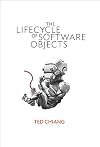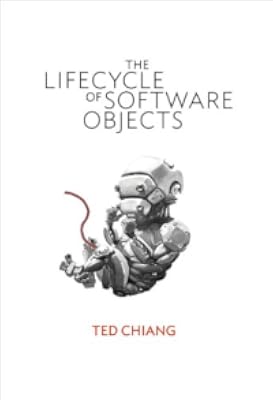
The Lifecycle of Software Objects {novella}
by Ted Chiang
On This Page
Description
The story of two people and the artificial intelligences they helped create, following them for more than a decade as they deal with the upgrades and obsolescence that are inevitable in the world of software. At the same time, it's an examination of the difference between processing power and intelligence, and of what it means to have a real relationship with an artificial entity.Tags
Recommendations



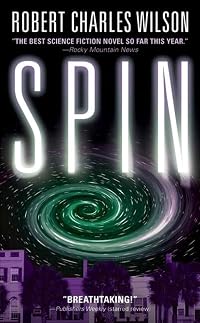

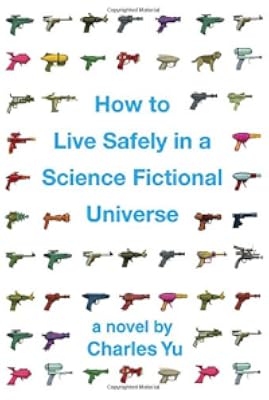
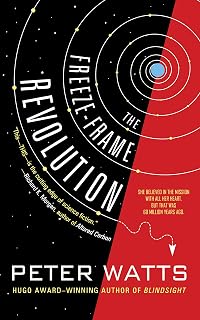


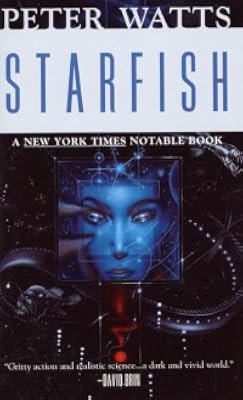

Member Recommendations
Member Reviews
With recent breakthroughs in embodied AI, made possible by multimodal generative models, this is the right time to revisit one of the most prophetic works of speculative fiction. Ted Chiang’s Life Cycle of Software Objects challenges the conventional notions of sentience like no other work. Innumerable other classics in the genre, for instance, Bicentennial Man of Isaac Asimov, Alex Garland’s Ex Machina, or Spike Jonze’s Her, do raise interesting questions about one or two dimensions of intricate relationships between humans and machines, but none come close to asking the ultimate question, i.e., what it ultimately means to be human in the age of artificial intelligence?
Chiang’s story revolves around the evolution of digital show more entities known as digients and the related ethical dilemmas invite an examination of our relationships with technology. This classic novella which came out in 2010 remains a profound philosophical meditation on the essence of being.
Please read the full review here: https://eclecticreader.medium.com/ontological-democracy-and-life-cycle-of-softwa... show less
Chiang’s story revolves around the evolution of digital show more entities known as digients and the related ethical dilemmas invite an examination of our relationships with technology. This classic novella which came out in 2010 remains a profound philosophical meditation on the essence of being.
Please read the full review here: https://eclecticreader.medium.com/ontological-democracy-and-life-cycle-of-softwa... show less
With all the AI news these days, I’ve been thinking about how everyone seems to expect a human-level intelligence to sprout, fully formed, from some startup’s churning data centers. Of course, no thought ever goes into the personhood of such a being - it’s always about how it will be useful as a kind of product-slave.
It was refreshing to read this novella, which explores an alternative future. What if we end up with basic intelligences that we have to raise as if they were children? As a parent of a toddler, this felt pretty realistic. Of course, once you’ve built a relationship like this, you start to think of this “software object” as a real person…
It was refreshing to read this novella, which explores an alternative future. What if we end up with basic intelligences that we have to raise as if they were children? As a parent of a toddler, this felt pretty realistic. Of course, once you’ve built a relationship like this, you start to think of this “software object” as a real person…
There's depth to this that I want to think on but I think my main objection is going to sound extremely stupid: for a book where THE theme is the practicalities of "sapient
ai as software", it feels like I'm constantly thinking "this is ludicrously impractical"
ai as software", it feels like I'm constantly thinking "this is ludicrously impractical"
But maybe it stops where it does because, like Ana, the author wants to preserve Jax's innocence. And Marco's as well since he has to stop when the story stops. Characters in a story are stuck in their text as surely as software is bound by hardware. I personally don't believe in conscious software any more than I believe the characters in fiction have actual lives, but that doesn't spoil fiction for me, including this work of fiction.
The tech world with its reliance on money to bring it to life feels tragic to me and the plight of the digients and the humans who love them brings that feeling
But some coercions are worse than others. Being a wage slave isn't as bad as being a prostitute. Forced overtime isn't as bad as rape.
Are arranged marriages statistically less successful than those chosen by our own free will? If we're raised in that culture, and our upbringing makes us find a family negotiated union acceptable, perhaps it works out to our advantage?
Is it consensual if we're chemically induced to like what we get? Aren't we chemical beings just like digients are software ones? We like to think we're more than just chemistry which is why we blame junkies for shooting up and think they can just say "no." (I'm in the middle of reading Gabor Maté's book about addiction in which he argues it's possible but prohibitively difficult to walk away from one's drug.) An algorithmic being is nothing BUT coercion even with random number generators hiding the determinism. That a computer generated entity can respond to the love of their human trainer in some deeper way than a mood ring can change color with one's mood is but a literary fiction yet so many of us strive to be more like machines than humans to avoid the pain of being alive. We're all part digient so we can relate.
In the end I think Derek is right. Or maybe no one is right. I'd really like a sequel so we could find out. If this were a movie, there would be money for a sequel and thus there would be a sequel for that is the power of economics.
It's extremely common for fans of science fiction to describe the genre as being about "exploring what it means to be human". This is both a prestige move, to try and raise it to the level of Real Books where Real Stuff happens; and a tactical move, to separate it from the greasy wastes of fantasy with its endless repetitions of elves and chainmail bikinis. This book isn't the pinnacle of sci-fi or anything, and in fact I'm pretty sure several authors have neatly tucked its insights into their works before, but its fits right into that description of sci-fi and is actually fairly well-written. It's about two people, Ana and Derek, who get involved in the creation and use of digients, which are essentially sentient Tamagotchis for people show more who want alternatives to pets or children. They develop attachments to their digients, but when the company that makes them goes out of business and there's not enough money to port them to a new virtual environment, they have to cope with how the digients will fit into their lives as they try to get the money to pay for the port. It's basically a parable about how parents relate to their children, how do you deal with them growing up and having their own lives, how do you make time for them, etc. I have to say that this world is disturbingly possible, and I can easily see people getting extremely attached to software objects in lieu of having real children, getting caught up in this world where virtual relationships are more important than real ones. A large part of modern innovation consists of tricking existing human instincts to get people to buy things or do things they wouldn't otherwise do, and sometimes I feel like the generation that perfects virtual reality will be the last one, since it's so addictive and can offer plausible substitutes for reality that are far more sophisticated than most of what previous generations could ever dream of (at least outside of narcotics). The smooth, transparent writing style helped make the story even more plausible, so if you are more pro-Internet than I am you'll probably like it even more. The book was short but sweet, and won the 2011 Hugo Award for Best Novella. show less
This is an amazing novella. It's about an evolving, conscious lifeform, one that is a software object in a future Internet. It's brilliant. It's about how we define what life is, where we draw our limits on sentience and why, the how and when of choice, and what that might look like in the future, when even more of our lives are lived online. It's also about love, and commitment, in a very real and very timeless way. I can't recommend this enough.
(I also thought this book was going to break my heart, when I first started reading it. I'm quite happy to say that, while it has a poignant air, it did not.)
(I also thought this book was going to break my heart, when I first started reading it. I'm quite happy to say that, while it has a poignant air, it did not.)
What if Tamagotchis evolved and interacted for decades, into full AIs, roaming virtual worlds, and apparently having and certainly inducing emotional bonds?
Image: Tamagotchi (Source.)
This wide-ranging, thoughtful novella’s only (slight) disappointment was a rather anticlimactic end.
A zookeeper-cum-primatologist is recruited by a software company to work with an animator to develop digients for the game world, Data Earth. They must be cute, engaging, and realistic, but without broaching Uncanny Valley.
They can be bred and trained. Nature and nurture affect them, which immediately raises questions about whether it’s wrong to neglect or actively abuse a digient, and whether it depends in part on how much free will they have to consent, show more and also how conscious they are as beings. What if they develop their own culture, beyond what they’re taught?
Over the years of the story, the tech improves (digients can use robot bodies to interact in the real world), but changes in consumer tastes, data markets, and the wider economy affect development in ways that broaden the story and raises questions in unexpected ways.
This story is fundamentally about human relationships with intelligent technology. Here’s a short article about real research exploring the same idea from the other side:
“If you give someone a 3D head-mounted display… and “beam” her into a robot’s body so she sees the world from its perspective, you can change her attitude toward it.”
Robot rights and abuse - on Vox.com
Helping people be kind to robots is one thing, but that comes at a price:
“Empathizing with robots risks actually reducing our empathy for people.”
And that’s the basis of the next story in the Exhalation collection, Dacey’s Patent Automatic Nanny.
This story was published in Chiang’s collection, Exhalation. See HERE for my reviews of the other stories. show less
Image: Tamagotchi (Source.)
This wide-ranging, thoughtful novella’s only (slight) disappointment was a rather anticlimactic end.
A zookeeper-cum-primatologist is recruited by a software company to work with an animator to develop digients for the game world, Data Earth. They must be cute, engaging, and realistic, but without broaching Uncanny Valley.
They can be bred and trained. Nature and nurture affect them, which immediately raises questions about whether it’s wrong to neglect or actively abuse a digient, and whether it depends in part on how much free will they have to consent, show more and also how conscious they are as beings. What if they develop their own culture, beyond what they’re taught?
Over the years of the story, the tech improves (digients can use robot bodies to interact in the real world), but changes in consumer tastes, data markets, and the wider economy affect development in ways that broaden the story and raises questions in unexpected ways.
This story is fundamentally about human relationships with intelligent technology. Here’s a short article about real research exploring the same idea from the other side:
“If you give someone a 3D head-mounted display… and “beam” her into a robot’s body so she sees the world from its perspective, you can change her attitude toward it.”
Robot rights and abuse - on Vox.com
Helping people be kind to robots is one thing, but that comes at a price:
“Empathizing with robots risks actually reducing our empathy for people.”
And that’s the basis of the next story in the Exhalation collection, Dacey’s Patent Automatic Nanny.
This story was published in Chiang’s collection, Exhalation. See HERE for my reviews of the other stories. show less
Members
- Recently Added By
Lists

ALA The Reading List
490 works; 28 members

Recommended Speculative Fiction by Women and People of Color
298 works; 45 members

Short and Sweet
246 works; 24 members

sandstone78's AI Reading List
34 works; 4 members

Books Tagged Artificial Intelligence
17 works; 1 member

Books Read in 2021
5,361 works; 114 members

An evolving science fiction novel canon
50 works; 2 members
Author Information

35+ Works 12,347 Members
Some Editions
Awards and Honors
Awards
Work Relationships
Is contained in
Common Knowledge
- Canonical title
- The Lifecycle of Software Objects {novella}
- Original title
- The Lifecycle of Software Objects
- Original publication date
- 2010
- People/Characters
- Ana Alvarado
- First words
- Her name is Ana Alvarado, and she's having a bad day.
- Last words
- (Click to show. Warning: May contain spoilers.)"Playtime's over, Jax," she says. "Time to do your homework."
- Original language
- English
Classifications
Statistics
- Members
- 717
- Popularity
- 39,660
- Reviews
- 59
- Rating
- (3.87)
- Languages
- English, French, German, Italian
- Media
- Paper
- ISBNs
- 2
- ASINs
- 1