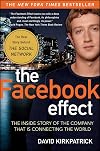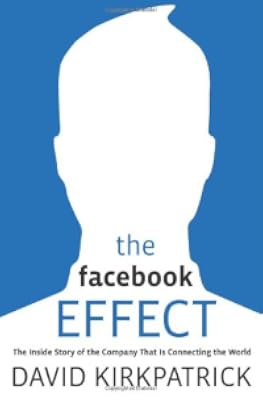
The Facebook Effect: The Inside Story of the Company That Is Connecting the World
by David Kirkpatrick
On This Page
Description
How did a nineteen-year-old Harvard student create a company that has transformed the Internet and how did he grow it to its current enormous size? In half a decade, Facebook has gone from a dorm-room novelty to a company with 500 million users. It is one of the fastest growing companies in history, an essential part of the social life not only of teenagers but millions of adults worldwide. As Facebook spreads around the globe, it creates surprising effects--even becoming instrumental in show more political protests. Veteran technology reporter David Kirkpatrick had the full cooperation of Facebook's key executives in researching the history of the company and its impact on our lives. Kirkpatrick tells us how Facebook was created, why it has flourished, and where it is going next. He chronicles its successes and missteps, and gives readers the most complete assessment anywhere of founder and CEO Mark Zuckerberg.--From publisher description. show lessTags
Recommendations




























Member Reviews
This is a riveting account of the meteoric rise of Mark Zuckerberg's "baby" - from TheFacebook on the Harvard University campus to Facebook, the $100+ billion company. Mr. Kirkpatrick does an excellent job of weaving the highlights and details into a fast-paced and interesting story. I only wish it hadn't ended in 2010, two years before the initial public offering. An amazing story told well.
At the start the book seemed duplicative of many other accounts of the Facebook founding that I've read, and I considered not finishing. I'm happy that I did. The by-now iconic history morphs into thoughtful and intricate musings on online transparency, globalization, the potential effects on governments, organized groups, commercial entities and media of Facebook and other social media. I am impressed with Zuckerberg's vision, and how despite his of naivety and at times immaturity, he has shifted the paradigm of friendships and interactions. Although it drags at times, and is becoming a bit dated, I learned a lot about this service that I have been using since 2008. More importantly (to me), I learn a good bit about monetization of the show more Internet and the philosophy of social networks. Recommended. show less
Interesting story about the start of Facebook. Felt a little like the author was pulling punches, though, our was just kind of dazzled by Zuckerberg. But overall a decent narrative about the rise, and rise, and rise of Facebook and the people involved that made it that way. Would give it three and a half stars if I could.
Kirkpatrick's The Facebook Effect is a journalistic approach to the development and changes in Facebook as a platform and company since its inception. The book is easy and fairly quick to read, and chock full of details. At times, I think it was a bit too heavy on advertising approaches and financial issues, but overall, it was enjoyable. The book also serves as a nice counterpart to the dramatized The Social Network, and provides some factual accounts that the movie glosses over, dramatizes, or changes for filmic and dramatic effect.
Kirkpatrick spends a chapter chronicling the beginning of Facebook, from Zuckerberg's Facemash (23-24) to the development of Thefacebook at Harvard, which he notes was "from the beginning driven by the show more hormones of young adults" with the ability to mark what one was "Looking for" and "interested in" (32). Later chapters place Facebook in the context of other social networks at the time, explore how they got investors and advertisers, changes in the platform and reactions to those changes, the move from Harvard to California, and other issues and experiences.
One of the issues that Kirkpatrick discusses is privacy, and the constantly shifting privacy policies and new privacy issues that Facebook constantly dealt with as they rolled out new features. Part of the reason people trust Facebook, Kirkpatrick claims, is that the platform relies on and requires a real identity. He quotes Chris Kelly, who heads privacy at Facebook: "Trust on the Internet depends on having identity fixed and known" (13). Zuckerberg also believes that to have multiple identities shows "al lack of integrity," and that the world is becoming more transparent, so it's pragmatic to have just one identity on a social networking site (198). Zuckerberg also attributes people's willingness to be open and "real" on Thefacebook to the platform's orderliness: unlike Myspace, which allowed users to do just about anything, Thefacebook was structured and ordered from the beginning (100). Kirkpatrick devotes an entire chapter on Privacy (Chapter 10).
With almost every new feature, Facebook was critiqued for harming privacy. For instance, the News Feed, which was developed to make content more easily accessible (because before, you had to go to users' pages to see if they've updated), led to many feeling that Facebook was allowing for stalking. Facebook responded with new privacy features (188-194)
Facebook's platform itself gets a lot of attention in the book. Zuckerberg had a vision of a platform where people would use it as they needed, and he understood Facebook as helping people "understand the world around them" and other people, not as a waste of time (143). He called Facebook "a utility," attempting to get the platform out of the way so that people could just interact (144, 160). Aaron Sittig, a graphic designer who worked for Facebook, said, "We didn't want people to have a relationship with Facebook so much as to find and interact with each other" (144-145).
This perspective is a bit ironic given how much they tried to create the "Facebook trance," where people would just keep clicking through Facebook. In fact, the photos app that added was designed just for this: just by clicking a picture, not by clicking "next," allowed users to fly through photos quickly and easily (154-155). However, it's clear Facebook was about relationships, as the photos showed. Unlike Myspace, where photos were about self-presentation, on Facebook they are about showing relationships (156).
Zuckerberg seems to have a bit of a utopian perspective on Facebook, wanting to create a platform that could be the entire Internet experience. Also, interestingly, there's a hope that Facebook could improve relations, that somehow getting more information about others "should create more empathy" (278) and that Facebook works as a gift economy (287-288).
Overall, this was an enjoyable and easy read.
Kirkpatrick, David. The Facebook Effect: The Inside Story of the Company That Is Connecting the World. New York: Simon & Schuster, 2010. show less
Kirkpatrick spends a chapter chronicling the beginning of Facebook, from Zuckerberg's Facemash (23-24) to the development of Thefacebook at Harvard, which he notes was "from the beginning driven by the show more hormones of young adults" with the ability to mark what one was "Looking for" and "interested in" (32). Later chapters place Facebook in the context of other social networks at the time, explore how they got investors and advertisers, changes in the platform and reactions to those changes, the move from Harvard to California, and other issues and experiences.
One of the issues that Kirkpatrick discusses is privacy, and the constantly shifting privacy policies and new privacy issues that Facebook constantly dealt with as they rolled out new features. Part of the reason people trust Facebook, Kirkpatrick claims, is that the platform relies on and requires a real identity. He quotes Chris Kelly, who heads privacy at Facebook: "Trust on the Internet depends on having identity fixed and known" (13). Zuckerberg also believes that to have multiple identities shows "al lack of integrity," and that the world is becoming more transparent, so it's pragmatic to have just one identity on a social networking site (198). Zuckerberg also attributes people's willingness to be open and "real" on Thefacebook to the platform's orderliness: unlike Myspace, which allowed users to do just about anything, Thefacebook was structured and ordered from the beginning (100). Kirkpatrick devotes an entire chapter on Privacy (Chapter 10).
With almost every new feature, Facebook was critiqued for harming privacy. For instance, the News Feed, which was developed to make content more easily accessible (because before, you had to go to users' pages to see if they've updated), led to many feeling that Facebook was allowing for stalking. Facebook responded with new privacy features (188-194)
Facebook's platform itself gets a lot of attention in the book. Zuckerberg had a vision of a platform where people would use it as they needed, and he understood Facebook as helping people "understand the world around them" and other people, not as a waste of time (143). He called Facebook "a utility," attempting to get the platform out of the way so that people could just interact (144, 160). Aaron Sittig, a graphic designer who worked for Facebook, said, "We didn't want people to have a relationship with Facebook so much as to find and interact with each other" (144-145).
This perspective is a bit ironic given how much they tried to create the "Facebook trance," where people would just keep clicking through Facebook. In fact, the photos app that added was designed just for this: just by clicking a picture, not by clicking "next," allowed users to fly through photos quickly and easily (154-155). However, it's clear Facebook was about relationships, as the photos showed. Unlike Myspace, where photos were about self-presentation, on Facebook they are about showing relationships (156).
Zuckerberg seems to have a bit of a utopian perspective on Facebook, wanting to create a platform that could be the entire Internet experience. Also, interestingly, there's a hope that Facebook could improve relations, that somehow getting more information about others "should create more empathy" (278) and that Facebook works as a gift economy (287-288).
Overall, this was an enjoyable and easy read.
Kirkpatrick, David. The Facebook Effect: The Inside Story of the Company That Is Connecting the World. New York: Simon & Schuster, 2010. show less
The fact the author was able to get extensive face time with the founder, early employees, investors and key executives would make this the definitive work on this web phenom. The story of how a dorm room project evolved into a site with 500 mil users has some interesting lessons for budding entrepreneurs.
Like watching an episode of Silicon Valley (paying graffiti artist for a mural, the Thiel/Gregory character, being rude to VC on purpose).
As a product manager, some decision process and design events are nice learning from the inside. After all Facebook is a very widely used product.
Also worth noting is the short history of all social networks, putting things in perspective.
Warning: the author seems very very close to the Facebook inner circle. Everything has to be complemented with other books/sources.
On the audio version Kirkpatrick is even interviewed by Facebook marketing manager and Zuckerberg sister on how wonderful his book is and how Facebook is truly fantastic.
A bit too much :)
Still learned a lot, well written and did not show more want to stop, so 4 stars :) show less
As a product manager, some decision process and design events are nice learning from the inside. After all Facebook is a very widely used product.
Also worth noting is the short history of all social networks, putting things in perspective.
Warning: the author seems very very close to the Facebook inner circle. Everything has to be complemented with other books/sources.
On the audio version Kirkpatrick is even interviewed by Facebook marketing manager and Zuckerberg sister on how wonderful his book is and how Facebook is truly fantastic.
A bit too much :)
Still learned a lot, well written and did not show more want to stop, so 4 stars :) show less
"When you combine four hundred million people with data about not only where they live, but who their friends are, what they're interested in, and what they do online - Facebook potentially has the Internet genome project." This engaging read details one of the greatest examples of entrepreneurial success to date - the rise of Facebook. The author touches on all aspects of Facebook's business which led to its unparalleled dominance, including its globalization, economics, finance, advertising, and marketing. Not only does the book discuss Facebook, it also includes many anecdotal stories of other contemporary corporations, visionaries, and competitors. "The Facebook Effect," a concept coined by the author, describes the societal impact show more that Facebook's delirious success has had on worldwide interpersonal relationships, attitudes regarding privacy, and business expectations. Kirkpatrick could have used stricter editing, as there was significant repetition in content and phrasing. It was, however, written in such a way that even a layman could understand the business jargon. This account, while much more substantial than the one upon which the "Social Network" movie was based, felt just as one-sided, this time slanted in favor of Mark Zuckerberg. Because this version was written as a business case study, as opposed to a drama-filled novel, it FELT more factual, but I imagine the truth is likely somewhere in the middle. This was extremely informative and is a must read for anyone interested in business, technology, social media, and/or the evolution of the internet. show less
Members
- Recently Added By
Lists

The Enlightened Economist
107 works; 1 member
Author Information
3 Works 663 Members
David Kirkpatrick was for many years the senior editor for Internet and technology at Fortune magazine. He is a member of the Council on Foreign Relations and organized the Techonomy conference on the centrality of technology innovation for all human activity.
Awards and Honors
Common Knowledge
- People/Characters
- Mark Zuckerberg
Classifications
- Genres
- Technology, Nonfiction, Business, General Nonfiction, Biography & Memoir
- DDC/MDS
- 338.761006754 — Society, government, & culture Economics Production Business Enterprises By Industry Service
- LCC
- HD9696.8 .U64 .F335 — Social sciences Industries. Land use. Labor Industries. Land use. Labor Special industries and trades Mechanical industries
- BISAC
Statistics
- Members
- 664
- Popularity
- 43,597
- Reviews
- 26
- Rating
- (3.73)
- Languages
- 11 — Catalan, Chinese, Danish, Dutch, English, French, German, Italian, Japanese, Korean, Marathi
- Media
- Paper, Audiobook, Ebook
- ISBNs
- 24
- ASINs
- 11