
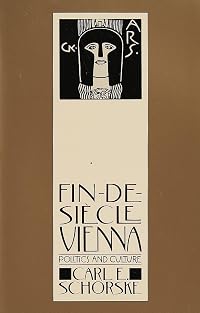
Fin-de-Siècle Vienna: Politics and Culture
by Carl E. Schorske
On This Page
Description
A Pulitzer Prize Winner and landmark book from one of the truly original scholars of our time: a magnificent revelation of turn-of-the-century Vienna where out of a crisis of political and social disintegration so much of modern art and thought was born. "Not only is it a splendid exploration of several aspects of early modernism in their political context; it is an indicator of how the discipline of intellectual history is currently practiced by its most able and ambitious craftsmen. It is show more also a moving vindication of historical study itself, in the face of modernism's defiant suggestion that history is obsolete." -- David A. Hollinger, History Book Club Review "Each of [the seven separate studies] can be read separately....Yet they are so artfully designed and integrated that one who reads them in order is impressed by the book's wholeness and the momentum of its argument." -- Gordon A. Craig, The New Republic "A profound work...on one of the most important chapters of modern intellectual history" -- H.R. Trevor-Roper, front page, The New York Times Book Review "Invaluable to the social and political historian...as well as to those more concerned with the arts" -- John Willett, The New York Review of Books "A work of original synthesis and scholarship. Engrossing." -- Newsweek show lessTags
Recommendations












Member Reviews
This collection of essay’s that all shed a different light on Vienna in the second half of the 19th century touched me in several ways.
First, Schorske is able to give cultural analyses of artists, politicians and scientist and thereby communicating a certain zeitgeist. A zeitgeist that values aestheticism and introspection, but at the same time a time where irrational-emotional mass politics are entering the stage and where the old aristocracy and intellectuals no longer are able to order society. By taking a few thinkers or works per essay he is able to go into depth regarding the individuals, but at the same time giving the reader a general sense of the time.
Secondly, the topics that are getting shape in Vienna society that time are show more recognizable. Topics like, nationalism, democracy, racism, the role of intellectuals, narcissistic behavior of the rich and lethargy in the face of diversity and complexity -- all these topics and more have the quality to evoke vivid reflection on these same topics today.
This book is not the most easy to read. First of al because of the jargon used. Secondly because of the namedropping. If you new to Vienna or the artistic, political and scientific events of this period I recommend you first watch some documentaries before digging into this book.
Still I highly recommend this book. I've had the luxury of traveling to Vienna while reading Fin-de-siècle and especially the chapters about architecture made the city speak while walking there. show less
First, Schorske is able to give cultural analyses of artists, politicians and scientist and thereby communicating a certain zeitgeist. A zeitgeist that values aestheticism and introspection, but at the same time a time where irrational-emotional mass politics are entering the stage and where the old aristocracy and intellectuals no longer are able to order society. By taking a few thinkers or works per essay he is able to go into depth regarding the individuals, but at the same time giving the reader a general sense of the time.
Secondly, the topics that are getting shape in Vienna society that time are show more recognizable. Topics like, nationalism, democracy, racism, the role of intellectuals, narcissistic behavior of the rich and lethargy in the face of diversity and complexity -- all these topics and more have the quality to evoke vivid reflection on these same topics today.
This book is not the most easy to read. First of al because of the jargon used. Secondly because of the namedropping. If you new to Vienna or the artistic, political and scientific events of this period I recommend you first watch some documentaries before digging into this book.
Still I highly recommend this book. I've had the luxury of traveling to Vienna while reading Fin-de-siècle and especially the chapters about architecture made the city speak while walking there. show less
"Politics and culture" means that the author is relating developments in culture (art, architecture, literature, psychoanalysis and more) with each other as well as to the "liberal" ascendancy and then decline in the politics of Vienna and Austria-Hungary in the second half of the nineteenth century. The description of the interactions between political trends, cultural trends and different cultural manifestations (such as psychoanalysis and art) make for complexities that challenge the reader. Schorske often uses binary comparisons/contrasts to bring out the changes taking place (Schnitzler/von Hoffmanstahl, Sitte/Wagner, Schoenberg/Kokoschka). He also introduces the three political figures who led the movements which undercut liberal show more politics (Georg von Schoenerer/Pan-Germanism, Karl Lueger/Christian Socialism), and Herzl/Zionism)). It is a fascinating book well worth the investment of reading it, especially the long chapter on Klimt. The reader who wants some more background on Vienna itself could read the short work by Arthur May, Vienna in the Age of Franz Josef. show less
Brilliant essays on the period. I only wish I had a stronger background in the history in order to better understand Schorske.
2526 Fin-de-Siecle Vienna Politics and Culture, by Carl E. Schorske (read 7 Aug 1993) (Pulitzer Nonfiction prize in 1981) For years I wanted to read this book, and finally got it thru inter-library loan. It surely was not what I expected. It is essentially seven articles discussing art, architecture, music, and politics in Austria before World War One. The blurb says it is a landmark book from one of the truly original scholars of our time, a significant revelation of turn-of-the-century Vienna where out of a crisis of political and social disintegration so much of modern art and thought was born. I found it a chore to read. I sure welcomed the last page.
Tirando Freud, tudo me interessa: Scnitzler, von Hoffmansthal, Klimt, Art Nouveau em geral, Kokoschka, Shoenberg. A história do jardim de Shoenberg é fascinante.
הנושא מרתק. המחבר בבירור יודע מבין וחקר. אבל הספר בסופו של דבר מאכזב. הסיבות לכך הן שתיים. הראשונה שמדובר באוסף וינייטים ללא אפילו ניסיון לקשר ביניהם. מאמרים נפרדים ומנותקים שלפעמים אפילו מפנים את הגב אחד לשני. הבעיה השניה היא האקדמיזמיה המוגזמת, ז'רגון מוגזם, ניסוחים כבדים ולא ברורים, עודף אורדיציה ופחות מדי סיפור הופכים ספר לספר עם פוטנציאל אדיר אך לא ממוצה.
Aug 11, 2013Hebrew
Carl Schorske liefert mit diesem Werk eine umfassende Erläuterung zu einigen Phenomenen des 20sten Jahrhunderts und argumentiert eindrucksvoll warum diese Ihren Ursprung im Östereich - oder besser Wien - der Jahrhundertwende hatten. Ein besonders lesenswertes und zu empfehlendes Buch, welches viele Entwicklungen der letzten hunderten Jahre verständlicher macht.
Mar 31, 2010German
1
Members
- Recently Added By
Author Information

8+ Works 1,389 Members
Carl Emil Schorske was born in the Bronx, New York on March 15, 1915. He received a bachelor's degree from Columbia University and a master's degree from Harvard University before serving in the Office of Strategic Services during World War II. After the war, he returned to Harvard for his Ph.D. He taught at several universities including the show more University of California, Berkeley, Princeton University, and Wesleyan University. In 1966, he was one of 10 "great teachers" pictured on the cover of Time magazine. He wrote several books during his lifetime including Fin-de-Siècle Vienna: Politics and Culture, German Social Democracy, 1905-1917, and Thinking with History: Explorations in the Passage to Modernism. In 1981, he received the Pulitzer Prize for general nonfiction and was among the first class of recipients of a MacArthur fellowship, the so-called genius award. He died on September 13, 2015 at the age of 100. (Bowker Author Biography) show less
Awards and Honors
Awards
Common Knowledge
- Canonical title
- Fin-de-Siècle Vienna: Politics and Culture; Fin-de-Siècle Vienna: Politics and Culture
- Original publication date
- 1980
- People/Characters
- Gustav Klimt; Arnold Schoenberg; Karl Lueger; Theodor Herzl; Leopold von Andrian; Heinrich Drendorf (show all 20); Heinrich Ferstel; Sigmund Freud; Theophil Hansen; Wilhelm von Hartel; Joseph Hoffmann; Hugo von Hofmannsthal; Oskar Kokoschka; Karl Kraus; Gustav Mahler; Arthur Schnitzler; Georg von Schönerer; Camillo Sitte; Adalbert Stifter; Otto Wagner
- Important places
- Vienna, Austria; Austro-Hungarian Empire; Austria; Burgtheater, Vienna, Austria; Ringstrasse, Vienna, Austria
- Disambiguation notice
- ISBN was reused for a book titled Whodunnit: Bk 2.
Classifications
- Genres
- History, Nonfiction, Art & Design, General Nonfiction
- DDC/MDS
- 943.61304 — History & geography History of Europe Central Europe: Germany, Austria, Switzerland, Czech, Poland, Hungary Austria and Liechtenstein Vienna, Lower Austria, Burgenland Vienna 1815-1918, Austrian Empire
- LCC
- DB851 .S42 — History of Europe, Asia, Africa and Oceania Austria – Liechtenstein – Hungary – Czechoslovakia History of Austria. Liechtenstein. Hungary. Czechoslovakia Local history and description Vienna
- BISAC
Statistics
- Members
- 1,140
- Popularity
- 22,047
- Reviews
- 8
- Rating
- (4.05)
- Languages
- 11 — Chinese, Dutch, English, French, German, Hungarian, Italian, Lithuanian, Portuguese, Romanian, Spanish
- Media
- Paper, Ebook
- ISBNs
- 23
- ASINs
- 5