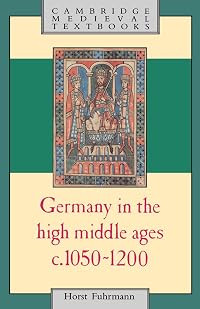
Germany in the High Middle Ages: c.1050-1200
by Horst Fuhrmann
99 Members (3.88)
On This Page
Description
Germany in the High Middle Ages opens with a wide-ranging and yet detailed description of the conditions under which men lived and their attitudes of mind during the period 1050-1200: against this background it proceeds to analyse the fundamental political, social, economic and cultural changes of the period in central Europe. Professor Fuhrmann considers the social transformation brought about by the emergence of new classes such as ministeriales and burghers, and examines the intellectual show more renewal reflected in the rise of scholasticism and the foundation of the universities. He also describes the gradual erosion of the power of the German rulers, which led to the Empire losing its position as the leading power in Europe, and yet was accompanied, by a last flowering under the Staufen emperors amid the chivalric culture with which they were closely associated. Throughout the book these changes are contrasted with contemporary developments elsewhere in Europe, especially in France, England and Italy. show lessTags
Recommendations








































Member Reviews
Members
- Recently Added By
Author Information
22 Works 219 Members
Series
Belongs to Publisher Series
Common Knowledge
- Canonical title
- Germany in the High Middle Ages: c.1050-1200
Classifications
- Genres
- History, Nonfiction, General Nonfiction
- DDC/MDS
- 943.023 — History & geography History of Europe Central Europe: Germany, Austria, Switzerland, Czech, Poland, Hungary Historical periods of Germany Empire before the reformation House of Franconia 1024-1125; House of Saxony 1125-37
- LCC
- DD141 .F8313 — History of Europe, Asia, Africa and Oceania Germany History of Germany History By period Early and medieval to 1519 Medieval Empire, 481-1273 919-1125. Houses of Saxony and Franconia
- BISAC
Statistics
- Members
- 99
- Popularity
- 320,078
- Rating
- (3.88)
- Languages
- English, German
- Media
- Paper
- ISBNs
- 5