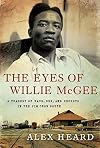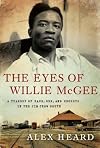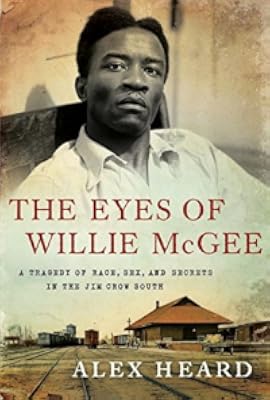
The Eyes of Willie McGee: A Tragedy of Race, Sex, and Secrets in the Jim Crow South
by Alex Heard
On This Page
Description
"A saga of race and retribution in the deep South that says as much about Mississippi today as it does about the mysteries of the past"--Provided by publisher.Tags
Recommendations











Member Reviews
Convicted of the rape of a white woman in Mississippi, Willie McGee was executed in 1951, and the mysteries surrounding his case live on in this provocative tale about justice in the deep South.
The first time I heard the name Willie McGee was in a song by the Flobots about Anne Braden. Anne Braden is mentioned twice in this book, but the book is mainly about Willie McGee and then next Willette Hawkins, the woman he is accused of raping and then the politics of the day, in Mississippi in the late 1940s. It starts in November 2, 1945 with the assault on Willette and ends on May 8, 1951, with the execution of Willie McGee. Of course that is not really the end, since there was great controversy raised about this case that continues today. show more His execution is referred to as 'legalized lynching' by some, and justice by others.
This case raises several questions, among them: Was Mrs. Hawkins really raped? Did Mr. McGee do it? Did he get a fair trial? Did the politics of the people trying to save his life actually hurt his case?
Alex Heard considers these questions and more, he researched the case extensively, including interviews with any survivors he could find, including the children of Willie McGee and Willette Hawkins. Besides considering this one specific case, we are also treated to a lesson in the politics of the day, the injustices suffered by black people in the south at that time. He ties in other lynchings from the time period and statistics and the prevailing 'opinions' of the time period.
In total this is a very informative, interesting, well researched, and I believe factual telling of this event. I recommend this book. show less
This review was first written for Author Exposure: http://www.authorexposure.com/2010/07/book-review-eyes-of-willie-mcgee-by.html
THE EYES OF WILLIE McGEE: A TRAGEDY OF RACE, SEX, AND SECRETS IN THE JIM CROW SOUTH by Alex Heard presents more questions than answers. Yet, in so doing, it is an outrageously honest and well-documented vehicle to enlighten those unaware of how one extraordinary judicial argument unknowingly provided the ballast for the Civil Rights movement in our country.
Willie McGee endured the charade of three blatantly biased “trials,” for a questionable crime he allegedly committed—the impulsive rape of a white Southern woman by the name of Willette Hawkins in Laurel, Mississippi one early morning in November 1945. show more He consequently became a pivotal icon for the Civil Rights Congress in their initial impetus to challenge the “Jim Crow” laws, which measured justice solely on the color of one’s skin, rather than any heinous crime itself.
Alex Heard provides a complex, yet systematically presented view of pre-Civil Rights history. It is a challenging narrative, chronicling the controversial and scandalous actions of respectable politicians and government agencies during this volatile period of America’s history. The battle between an unyielding “Jim Crow” South, at odds over federal intrusion into their rights to adjudicate laws in accordance to instilled Southern values and cultural traditions, and the federal government, forms the historical backdrop of the book. Ultimately, according to Craig Zaim (in a legal analysis of the case), “…Willie McGee died a casualty of the battle Mississippi waged to maintain its autonomy against federal power” (340-41).
This mesmerizing chronological narration includes a staggering forty pages of bibliography and notes, numerous and exacting interviews, time-consuming trips to locales, family members, and research venues. Despite this evidence, Alex Heard readily acknowledges that the Willie McGee case remains a question mark in the troublesome archives of this one black man sentenced to die for a crime he personally alleged never occurred. Alex Heard’s attempts to unravel what actually happened on that fateful pre-dawn morning, and the contradictory assertions he uncovered, reveal that only two people can bear witness to the truth: young, black, married father and provider Willie McGee and young, white, married mother and housewife Willette Hawkins. Whether a consensual and long-standing sexual alliance between the two ever existed still remains a mystery because both individuals are deceased.
The aforementioned scrupulous attention to the minutest details might suggest tedious, textbook-style writing. On the contrary, I found this book to be both absorbing and shocking. I was amazed by the number of well-known celebrities, authors, politicians, etc., who willingly joined in the battle to prevent an execution. White Southern citizens’ crimes of the same caliber and worse, rarely, if ever, ended with the death penalty. Willie McGee’s fate was sealed before he entered any courtroom. All avenues and any attempts to save his life were futile.
Most startling was the revelation of the Civil Rights Congress’ role. The CRC was allegedly committed to the wide-ranging issues of civil liberties, but actually dedicated itself to defend individual Communists and the Communist Party. Tainted by this ostracized and feared association, the CRC and the NAACP often clashed on viable tactics to preeminently attain civil liberties for the Negro citizens of the United States. The Civil Rights Congress was supremely instrumental in sustaining worldwide visibility for Willie McGee. Conversely, the NAACP sought to distance itself from the CRC and chose to abandon one man in order to focus on the ultimate struggle to gain civil liberties for all Negroes.
Fortunately, as Heard writes, “By the mid-1950’s, the civil rights movement was moving rapidly, spurred by dramatic events that set the tone for the historic changes of the late 1950’s and 1960’s...the eventual triumph of the NAACP’s core strategy of forcing change by waging constitutional battles in federal courts—made it easy to forget that the Civil Rights Congress had ever existed, which it ceased to do in early 1956” (341-42).
I would find it difficult to forget what I read, and rightfully so. Without hesitation, we fought a world war to secure freedom and justice for all. Yet, we failed to carry that message home. Rather than yield, we shamefully engaged in a tumultuous period of unwarranted conflict until irrefutable laws granted equality to all our citizens. show less
THE EYES OF WILLIE McGEE: A TRAGEDY OF RACE, SEX, AND SECRETS IN THE JIM CROW SOUTH by Alex Heard presents more questions than answers. Yet, in so doing, it is an outrageously honest and well-documented vehicle to enlighten those unaware of how one extraordinary judicial argument unknowingly provided the ballast for the Civil Rights movement in our country.
Willie McGee endured the charade of three blatantly biased “trials,” for a questionable crime he allegedly committed—the impulsive rape of a white Southern woman by the name of Willette Hawkins in Laurel, Mississippi one early morning in November 1945. show more He consequently became a pivotal icon for the Civil Rights Congress in their initial impetus to challenge the “Jim Crow” laws, which measured justice solely on the color of one’s skin, rather than any heinous crime itself.
Alex Heard provides a complex, yet systematically presented view of pre-Civil Rights history. It is a challenging narrative, chronicling the controversial and scandalous actions of respectable politicians and government agencies during this volatile period of America’s history. The battle between an unyielding “Jim Crow” South, at odds over federal intrusion into their rights to adjudicate laws in accordance to instilled Southern values and cultural traditions, and the federal government, forms the historical backdrop of the book. Ultimately, according to Craig Zaim (in a legal analysis of the case), “…Willie McGee died a casualty of the battle Mississippi waged to maintain its autonomy against federal power” (340-41).
This mesmerizing chronological narration includes a staggering forty pages of bibliography and notes, numerous and exacting interviews, time-consuming trips to locales, family members, and research venues. Despite this evidence, Alex Heard readily acknowledges that the Willie McGee case remains a question mark in the troublesome archives of this one black man sentenced to die for a crime he personally alleged never occurred. Alex Heard’s attempts to unravel what actually happened on that fateful pre-dawn morning, and the contradictory assertions he uncovered, reveal that only two people can bear witness to the truth: young, black, married father and provider Willie McGee and young, white, married mother and housewife Willette Hawkins. Whether a consensual and long-standing sexual alliance between the two ever existed still remains a mystery because both individuals are deceased.
The aforementioned scrupulous attention to the minutest details might suggest tedious, textbook-style writing. On the contrary, I found this book to be both absorbing and shocking. I was amazed by the number of well-known celebrities, authors, politicians, etc., who willingly joined in the battle to prevent an execution. White Southern citizens’ crimes of the same caliber and worse, rarely, if ever, ended with the death penalty. Willie McGee’s fate was sealed before he entered any courtroom. All avenues and any attempts to save his life were futile.
Most startling was the revelation of the Civil Rights Congress’ role. The CRC was allegedly committed to the wide-ranging issues of civil liberties, but actually dedicated itself to defend individual Communists and the Communist Party. Tainted by this ostracized and feared association, the CRC and the NAACP often clashed on viable tactics to preeminently attain civil liberties for the Negro citizens of the United States. The Civil Rights Congress was supremely instrumental in sustaining worldwide visibility for Willie McGee. Conversely, the NAACP sought to distance itself from the CRC and chose to abandon one man in order to focus on the ultimate struggle to gain civil liberties for all Negroes.
Fortunately, as Heard writes, “By the mid-1950’s, the civil rights movement was moving rapidly, spurred by dramatic events that set the tone for the historic changes of the late 1950’s and 1960’s...the eventual triumph of the NAACP’s core strategy of forcing change by waging constitutional battles in federal courts—made it easy to forget that the Civil Rights Congress had ever existed, which it ceased to do in early 1956” (341-42).
I would find it difficult to forget what I read, and rightfully so. Without hesitation, we fought a world war to secure freedom and justice for all. Yet, we failed to carry that message home. Rather than yield, we shamefully engaged in a tumultuous period of unwarranted conflict until irrefutable laws granted equality to all our citizens. show less
Here's a real-life version of the trial in To Kill a Mockingbird, though it's far murkier and complicated. Willie McGee was an African-American man who, in 1945, was sentenced to death for raping a white housewife, Willette Hawkins. His trial was unfair- he was tried by an all-white jury who debated for only about two minutes before convicting him in a hostile courthouse where he couldn't even put together two words coherently, he was so terrified of being lynched by the mob outside.
Willie McGee caught the interest of many civil rights organizations in America (mainly the Communists, which may have been troublesome for him), and even more people around the world. William Faulkner spoke out about him. Norman Mailer. Letters poured in show more from China, Germany, the UK and countless other places, pleading his innocence.
But did those supporters really have the facts straight? As Alex Heard investigates the case, he finds multiple, serious discrepancies about the "facts" presented. Did Willie and Willette have a forbidden affair? Who was Willie's wife at the time, and did she really take care of his children? Was Willie innocent? Was Willette as horrible and manipulative as some people believe?
In 1940s and 1950s Mississippi, only black men could be sentenced to death for rape. White men would, at most, get life in prison (and often got out early). As if that wasn't unfair enough, many black men didn't even make it to trial. They would often be attacked by mobs and lynched. Or sometimes they'd go to trial and be sentenced to death so quickly, it was basically a "legal lynching."
Alex Heard discusses Communism and the way Communists were treated by the government (and everyone else) in the 1950s. He touches on newspaper titans, white supremacist senators, Harry Truman, Eleanor Roosevelt, Jessica Mitford and the way people can manipulate facts to make a rape victim seem like a malicious and cruel adulterer.
But that's the sad (and fascinating) thing. What were the facts? Whites who remember Willette Hawkins strongly believe that she was raped. Blacks who remember Willie McGee believe he was innocent and was the victim of a corrupt justice system. Both sides are so strong in their beliefs that they are unwilling to budge, looking at the same trial transcripts, the same information- and are unable to meet in the middle.
Honestly, I don't read much non-fiction and I found this book absolutely riveting. It was a disturbing portrait of America after World War II, but it was also a very successful attempt to view the country through the lens of one case and the way it affected everyone. It was amazing to see how far news of Willie McGee spread- we like to think that we live in a global environment now, but even in the 1950s, people as far away as the USSR and China knew and had strong opinions about one African-American man sentenced to death. It was amazing to read about someone who so captured the public imagination and who helped, in some small part, in starting a full-scale Civil Rights movement. show less
Willie McGee caught the interest of many civil rights organizations in America (mainly the Communists, which may have been troublesome for him), and even more people around the world. William Faulkner spoke out about him. Norman Mailer. Letters poured in show more from China, Germany, the UK and countless other places, pleading his innocence.
But did those supporters really have the facts straight? As Alex Heard investigates the case, he finds multiple, serious discrepancies about the "facts" presented. Did Willie and Willette have a forbidden affair? Who was Willie's wife at the time, and did she really take care of his children? Was Willie innocent? Was Willette as horrible and manipulative as some people believe?
In 1940s and 1950s Mississippi, only black men could be sentenced to death for rape. White men would, at most, get life in prison (and often got out early). As if that wasn't unfair enough, many black men didn't even make it to trial. They would often be attacked by mobs and lynched. Or sometimes they'd go to trial and be sentenced to death so quickly, it was basically a "legal lynching."
Alex Heard discusses Communism and the way Communists were treated by the government (and everyone else) in the 1950s. He touches on newspaper titans, white supremacist senators, Harry Truman, Eleanor Roosevelt, Jessica Mitford and the way people can manipulate facts to make a rape victim seem like a malicious and cruel adulterer.
But that's the sad (and fascinating) thing. What were the facts? Whites who remember Willette Hawkins strongly believe that she was raped. Blacks who remember Willie McGee believe he was innocent and was the victim of a corrupt justice system. Both sides are so strong in their beliefs that they are unwilling to budge, looking at the same trial transcripts, the same information- and are unable to meet in the middle.
Honestly, I don't read much non-fiction and I found this book absolutely riveting. It was a disturbing portrait of America after World War II, but it was also a very successful attempt to view the country through the lens of one case and the way it affected everyone. It was amazing to see how far news of Willie McGee spread- we like to think that we live in a global environment now, but even in the 1950s, people as far away as the USSR and China knew and had strong opinions about one African-American man sentenced to death. It was amazing to read about someone who so captured the public imagination and who helped, in some small part, in starting a full-scale Civil Rights movement. show less
Convicted of the rape of a white woman in Mississippi, Willie McGee was executed in 1951, and the mysteries surrounding his case live on in this provocative tale about justice in the deep South.
The first time I heard the name Willie McGee was in a song by the Flobots about Anne Braden. Anne Braden is mentioned twice in this book, but the book is mainly about Willie McGee and then next Willette Hawkins, the woman he is accused of raping and then the politics of the day, in Mississippi in the late 1940s. It starts in November 2, 1945 with the assault on Willette and ends on May 8, 1951, with the execution of Willie McGee. Of course that is not really the end, since there was great controversy raised about this case that continues today. show more His execution is referred to as ‘legalized lynching’ by some, and justice by others.
This case raises several questions, among them: Was Mrs. Hawkins really raped? Did Mr. McGee do it? Did he get a fair trial? Did the politics of the people trying to save his life actually hurt his case?
Alex Heard considers these questions and more, he researched the case extensively, including interviews with any survivors he could find, including the children of Willie McGee and Willette Hawkins. Besides considering this one specific case, we are also treated to a lesson in the politics of the day, the injustices suffered by black people in the south at that time. He ties in other lynchings from the time period and statistics and the prevailing ‘opinions’ of the time period.
In total a very informative, interesting, well researched, and I believe factual telling of this event. I recommend this book. show less
The first time I heard the name Willie McGee was in a song by the Flobots about Anne Braden. Anne Braden is mentioned twice in this book, but the book is mainly about Willie McGee and then next Willette Hawkins, the woman he is accused of raping and then the politics of the day, in Mississippi in the late 1940s. It starts in November 2, 1945 with the assault on Willette and ends on May 8, 1951, with the execution of Willie McGee. Of course that is not really the end, since there was great controversy raised about this case that continues today. show more His execution is referred to as ‘legalized lynching’ by some, and justice by others.
This case raises several questions, among them: Was Mrs. Hawkins really raped? Did Mr. McGee do it? Did he get a fair trial? Did the politics of the people trying to save his life actually hurt his case?
Alex Heard considers these questions and more, he researched the case extensively, including interviews with any survivors he could find, including the children of Willie McGee and Willette Hawkins. Besides considering this one specific case, we are also treated to a lesson in the politics of the day, the injustices suffered by black people in the south at that time. He ties in other lynchings from the time period and statistics and the prevailing ‘opinions’ of the time period.
In total a very informative, interesting, well researched, and I believe factual telling of this event. I recommend this book. show less
This was a very well-researched text. Almost too well-researched. The author didn't know what to leave out. But the core of the information was interesting, even though it was upsetting. Heard did an excellent job of trying to remain unbiased as his research into the McGee tragedy continued. What kept this from being a five-star book for me was simply my personal preference for non-fiction to be told in a linear fashion. Heard jumped around too much in his storytelling (he followed his research path) for my personal taste.
This review first appeared on my blog: http://jewelknits.blogspot.com/2010/10/eyes-of-willie-mcgee-book-review.html
I am always interested in reading about events that really happened, especially if they have historical significance.
This book centers around Willie McGee, a young black man accused in the 1940's South, of raping a white woman named Willette Hawkins. The evidence was circumstantial; the trials were rushed, and the outcome was inevitable, based on the time period.
Willie McGee became somewhat of a "cause celebre", with various groups and prominent figures taking up the fight, first for a new trial, then another, then for his execution to be stayed, then for him to be pardoned.
It IS apparent that Mr. McGee was abused for an show more extended period of time to extract his initial "confession". What's NOT apparent, however, is whether or not he was actually guilty, AND whether or not there is even a rape that occurred at all.
Much of the book, although centered around Willie McGee, focuses on the events happening outside of this particular story.
Although it is apparent that the writer performed meticulous, laborious, research and spent quite a long time gathering the material to put this book together, including getting together with the surviving family members of both families, this book did not grab me. I wanted to be interested in it, but just could not summon up the interest to read more than a chapter or two at a time, which is a shame, because someone actually lost their life over this story.
The writer did not pick sides, which was good .. but ... well, it amounted to what to me came down to a bare recital of the facts and the times, and it just didn't pull me in. I DID, however, learn some facts about the times and people that I did not know prior to reading this book, and learning something new, even if it's only something that could be used as an answer on the Jeopardy category "1940's America" .. that's worth the read.
(I received a copy of this title through Crazy Book Tours to facilitate my review) show less
I am always interested in reading about events that really happened, especially if they have historical significance.
This book centers around Willie McGee, a young black man accused in the 1940's South, of raping a white woman named Willette Hawkins. The evidence was circumstantial; the trials were rushed, and the outcome was inevitable, based on the time period.
Willie McGee became somewhat of a "cause celebre", with various groups and prominent figures taking up the fight, first for a new trial, then another, then for his execution to be stayed, then for him to be pardoned.
It IS apparent that Mr. McGee was abused for an show more extended period of time to extract his initial "confession". What's NOT apparent, however, is whether or not he was actually guilty, AND whether or not there is even a rape that occurred at all.
Much of the book, although centered around Willie McGee, focuses on the events happening outside of this particular story.
Although it is apparent that the writer performed meticulous, laborious, research and spent quite a long time gathering the material to put this book together, including getting together with the surviving family members of both families, this book did not grab me. I wanted to be interested in it, but just could not summon up the interest to read more than a chapter or two at a time, which is a shame, because someone actually lost their life over this story.
The writer did not pick sides, which was good .. but ... well, it amounted to what to me came down to a bare recital of the facts and the times, and it just didn't pull me in. I DID, however, learn some facts about the times and people that I did not know prior to reading this book, and learning something new, even if it's only something that could be used as an answer on the Jeopardy category "1940's America" .. that's worth the read.
(I received a copy of this title through Crazy Book Tours to facilitate my review) show less
Ratings
Members
- Recently Added By
Published Reviews
Author Information
9 Works 222 Members
Alex Heard is the editorial director of Outside magazine. He has worked as an editor and writer at The New York Times Magazine, Slate, Wired, and The New Republic, and is the author of Apocalypse Pretty Soon. He lives in Santa Fe, New Mexico.
Awards and Honors
Awards
Common Knowledge
- People/Characters
- Willie McGee; Harry S. Truman
- Important places
- Laurel, Mississippi
- Dedication
- For Jim Leeson
- First words
- On May 8, 1951, a thirty-five-year-old African American named Willie McGee was electrocuted in Laurel, Mississippi, on a much-disputed charge that he raped a white housewife named Willette Hawkins.
Classifications
- Genres
- Nonfiction, History, Politics and Government, General Nonfiction
- DDC/MDS
- 364.66092 — Society, government, & culture Social problems and social services Crime Punishment Death penalty
- LCC
- HV8699 .U6 .M744 — Social sciences Social pathology. Social and public welfare. Criminology Social pathology. Social and public welfare. Criminal justice administration Penology. Prisons. Corrections
- BISAC
Statistics
- Members
- 108
- Popularity
- 300,186
- Reviews
- 6
- Rating
- (3.77)
- Languages
- English, French
- Media
- Paper, Audiobook, Ebook
- ISBNs
- 7
- ASINs
- 2