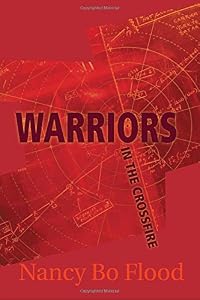
Warriors in the Crossfire
by Nancy Bo Flood
On This Page
Description
Twelve-year-old Joseph helps his family to survive when the natives of Saipan are caught in the crossfire between the Japanese soldiers and the American troops at the end of World War II.Tags
Recommendations













Member Reviews
Warriors in the Crossfire by Nancy Bo Flood is a YA novel about World War II as the Japanese and the Americans are battling across the many islands of the Pacific. The natives of these islands were caught in the crossfire between these armies and many were slaughtered. These islands in the Western Pacific were important as the Americans could launch air strikes from them directly at Japan.
The story is of Joseph a twelve year old islander. He and his family have been living under Japanese occupation for a number of years by 1944. The Japanese changed the natives way of life. They weren’t allowed to take their boats out onto the ocean and fish, they were forced into manual labour either in the cane fields or repairing the runways at the show more airport. When the Americans started their bombing prior to their landing, the natives were on their own to survive as best they could. When it became obvious that the Japanese were not going to win, they gathered as many people as they could and forced them to leap off the cliffs to their death. Joseph’s father and brother-in-law are taken by the Japanese as forced labour so it is up to Joseph to get his family to the caves and then keep them safe.
This story about the indigenous people who were caught up in the battles between the Japanese and the American armies is quite short and being a YA novel, it doesn’t go into the depth I would have liked. These natives had their way of life destroyed and their homeland devastated by the meeting of these two massive forces. Warriors in the Crossfire gives the reader a glimpse of this little known perspective on World War II as seen through the eyes of a twelve year old. show less
The story is of Joseph a twelve year old islander. He and his family have been living under Japanese occupation for a number of years by 1944. The Japanese changed the natives way of life. They weren’t allowed to take their boats out onto the ocean and fish, they were forced into manual labour either in the cane fields or repairing the runways at the show more airport. When the Americans started their bombing prior to their landing, the natives were on their own to survive as best they could. When it became obvious that the Japanese were not going to win, they gathered as many people as they could and forced them to leap off the cliffs to their death. Joseph’s father and brother-in-law are taken by the Japanese as forced labour so it is up to Joseph to get his family to the caves and then keep them safe.
This story about the indigenous people who were caught up in the battles between the Japanese and the American armies is quite short and being a YA novel, it doesn’t go into the depth I would have liked. These natives had their way of life destroyed and their homeland devastated by the meeting of these two massive forces. Warriors in the Crossfire gives the reader a glimpse of this little known perspective on World War II as seen through the eyes of a twelve year old. show less
When the fighting of WWII reaches the strategic island of Saipan, it falls to 12-year-old Joseph to help his family survive. The war exposes a rift between Joseph and his best friend and cousin, Kento. While Kento's mother and Joseph's mother are sisters from one of the local tribes, Kento's father is Japanese. Should Joseph trust Kento once the fighting begins? Which ties are stronger for Kento – family or nation?
This coming of age novel explores themes of war, family, friendship, loyalty, courage, fear, and grief. The point of view of the non-Japanese, non-American inhabitants of a Pacific island is probably unfamiliar to many readers. Each chapter opens with a short free verse poem, adding an emotional dimension to the story. The show more novel could be used as supplemental reading for a study of the Pacific Theater in World War II. Recommended for middle school age and up. show less
This coming of age novel explores themes of war, family, friendship, loyalty, courage, fear, and grief. The point of view of the non-Japanese, non-American inhabitants of a Pacific island is probably unfamiliar to many readers. Each chapter opens with a short free verse poem, adding an emotional dimension to the story. The show more novel could be used as supplemental reading for a study of the Pacific Theater in World War II. Recommended for middle school age and up. show less
Flood, Nancy Bo. (2010). Warriors in the Crossfire. Ashville, NC: Front Street Books. 142 pp. ISBN 978-1-59078-661-1 (Hard Cover); $17.95.
Joseph and his family have lived on Saipan longer than either the Japanese or the Americans. However, both the Japanese and Americans will kill Joseph and his family if they are not very careful.
American students often think of the war between the Japanese and the United States during WWII in very simple, US vs. THEM, terms. However these islands are home to people who are neither American nor Japanese and who share a history with both Americans and Japanese. These people have been ravaged, burned, killed, and, perhaps worse, largely forgotten by both sides. In a well-researched book that features show more language attempting to capture the rhythm and cadence of a culture, we feel the loss and isolation and confusion of a people who quickly realize that their survival will depend on luck and their own superior knowledge of their homeland. Both Americans and Japanese are equally likely to kill them. This book shows us the culture of the Carolinian and Chomorro people AND the major historical facts of the defeat of the Japanese in Saipan. The significance of this book combined with a poetic and absorbing story make this a book well worth adding to high school and middle school libraries. show less
Joseph and his family have lived on Saipan longer than either the Japanese or the Americans. However, both the Japanese and Americans will kill Joseph and his family if they are not very careful.
American students often think of the war between the Japanese and the United States during WWII in very simple, US vs. THEM, terms. However these islands are home to people who are neither American nor Japanese and who share a history with both Americans and Japanese. These people have been ravaged, burned, killed, and, perhaps worse, largely forgotten by both sides. In a well-researched book that features show more language attempting to capture the rhythm and cadence of a culture, we feel the loss and isolation and confusion of a people who quickly realize that their survival will depend on luck and their own superior knowledge of their homeland. Both Americans and Japanese are equally likely to kill them. This book shows us the culture of the Carolinian and Chomorro people AND the major historical facts of the defeat of the Japanese in Saipan. The significance of this book combined with a poetic and absorbing story make this a book well worth adding to high school and middle school libraries. show less
Flood, N.B. (2010). Warriors in the Crossfire. Honesdale, PA: Front Street.
9781590786611
141 Pages.
Appetizer: Joseph, his family and his tribe live on the island of Saipan in 1944. The island has already been under the control of the Japanese for the duration of the war, and many of the tribe's freedoms stripped away. As the American forces grow close, the Japanese military's presence also increases, taking the last vestiges of freedom and replacing it with the certainty that the island will be bombed.
When Joseph's father is forced to leave to do manual labor for the Japanese, it falls to Joseph to lead his family to safety in the island caves, despite the fact that the rest of the islanders don't think anyone will be safe there.
As you show more can probably guess, this book is a laugh riot.
But seriously, there are a few moments of brevity, mixed in among the many tensions between the natives and the japanese, boyhood and manhood, loyalty and betrayal, imprisonment and freedom. It's a lot to take on. And Nancy Bo Flood manages to do so with a lot of poetic language.
Flood does a stunning job of describing the setting. Her writing helped me to picture the island, but still left me wanting more. As a teacher, if I used this book in a social studies classroom, I would be sure to try to include some photos of Saipan (in the 1940s and now--Flood notes that the island is now home to many hotels and resorts) to support and really bring home the setting and sorrows of the story. However, when taking on such a project, while I would of incorporate this photo, and this one, I might leave this one out, depending upon the messages I wanted to share with young impressionable minds.
As I read more and more, I found that while the book was a mere 140 pages, and a relatively quick read, I still had to take some breaks from some of the content. While there's nothing that is graphically upsetting, Joseph has to deal with a lot of tough emotional realities, fears and responsibilities in a time and place that is often ignored by the standard issue history textbooks, making this an important but also intense read.
Dinner Conversation:
"They're coming. Get down. Now!" I stared into the darkness at the black curved beach. Soldiers should not have been patrolling so early. The last group usually finished their round at midnight. Waves lapped against the wet sand. Palm fonds clattered. I heard the sounds of hard leather military boots stomping across loose coral and rock" (p. 9).
"We flew up, over the outer edge of the reef, and were free. Free of the rules, the restrictions, the always watching, patrolling soldiers. The Japanese may have taken our stores, our schools, even our lands, but they could not take this. Not the ocean" (p. 14).
"The new Japanese rules forbade us--any native--to use a canoe or fish outside the lagoon. We were all suspected of being spies, of sending information to the American military. We were not allowed to have a radio--none--in the entire village. No newspapers. Nothing printed. Each week brought new restrictions, earlier curfews, more arrests" (p. 25).
"The cave is up there. As soon as I am certain no one has followed us, we will climb to it."
"I don't understand--"
"Remember the turtle. Joseph. When the shark smells blood, he attacks. The turtle pulls in his head, waits...survives. Joseph, survive. Bring our family here" (p. 59).
Tasty Rating: !!! show less
9781590786611
141 Pages.
Appetizer: Joseph, his family and his tribe live on the island of Saipan in 1944. The island has already been under the control of the Japanese for the duration of the war, and many of the tribe's freedoms stripped away. As the American forces grow close, the Japanese military's presence also increases, taking the last vestiges of freedom and replacing it with the certainty that the island will be bombed.
When Joseph's father is forced to leave to do manual labor for the Japanese, it falls to Joseph to lead his family to safety in the island caves, despite the fact that the rest of the islanders don't think anyone will be safe there.
As you show more can probably guess, this book is a laugh riot.
But seriously, there are a few moments of brevity, mixed in among the many tensions between the natives and the japanese, boyhood and manhood, loyalty and betrayal, imprisonment and freedom. It's a lot to take on. And Nancy Bo Flood manages to do so with a lot of poetic language.
Flood does a stunning job of describing the setting. Her writing helped me to picture the island, but still left me wanting more. As a teacher, if I used this book in a social studies classroom, I would be sure to try to include some photos of Saipan (in the 1940s and now--Flood notes that the island is now home to many hotels and resorts) to support and really bring home the setting and sorrows of the story. However, when taking on such a project, while I would of incorporate this photo, and this one, I might leave this one out, depending upon the messages I wanted to share with young impressionable minds.
As I read more and more, I found that while the book was a mere 140 pages, and a relatively quick read, I still had to take some breaks from some of the content. While there's nothing that is graphically upsetting, Joseph has to deal with a lot of tough emotional realities, fears and responsibilities in a time and place that is often ignored by the standard issue history textbooks, making this an important but also intense read.
Dinner Conversation:
"They're coming. Get down. Now!" I stared into the darkness at the black curved beach. Soldiers should not have been patrolling so early. The last group usually finished their round at midnight. Waves lapped against the wet sand. Palm fonds clattered. I heard the sounds of hard leather military boots stomping across loose coral and rock" (p. 9).
"We flew up, over the outer edge of the reef, and were free. Free of the rules, the restrictions, the always watching, patrolling soldiers. The Japanese may have taken our stores, our schools, even our lands, but they could not take this. Not the ocean" (p. 14).
"The new Japanese rules forbade us--any native--to use a canoe or fish outside the lagoon. We were all suspected of being spies, of sending information to the American military. We were not allowed to have a radio--none--in the entire village. No newspapers. Nothing printed. Each week brought new restrictions, earlier curfews, more arrests" (p. 25).
"The cave is up there. As soon as I am certain no one has followed us, we will climb to it."
"I don't understand--"
"Remember the turtle. Joseph. When the shark smells blood, he attacks. The turtle pulls in his head, waits...survives. Joseph, survive. Bring our family here" (p. 59).
Tasty Rating: !!! show less
Although a YA book, quite good. The poems at the beginning of each chapter were very poignant and brought a lot of texture to the story. So sad. The islands can never be the same after being gutted by war.
What happens when war breaks out and you find yourself and your country caught in the middle between two warring nations? This book is based on actual historical events. The characters are made up. The setting was unfamiliar to me which is great. It meant research to learn more about the island of Saipan. Joseph lives on this island which has fallen under Japanese control The Japanese encroach on these native people believing many of them are spies for the Americans. Joseph is instructed by his father to hide the people in a cave so that they may survive. A tough decision but one he follows. No child should have to witness the atrocities of war like Joseph has, yet we know that children present and past live this life all the time. This show more is a book that will stay with me for a long time. It is also a book that I will recommend to our history teachers. show less
Saipan becomes the center point of this fictional story that takes place near the end of WWII. The Japanese have taken the island and the inhabitants are little more than slaves. When the Americans advance to the island, the Japanese vow to defend it.
Two young boys living on the island vow to protect their families. One boy is a native of the island. The other is mixed; his father is Japanese and his mother is a native.
The battle that took place near the end of WWII became one of the bloodiest of the war. The author takes a dark part of this war and weaves it into a story that leaves the reader unable to set the book aside.
Two young boys living on the island vow to protect their families. One boy is a native of the island. The other is mixed; his father is Japanese and his mother is a native.
The battle that took place near the end of WWII became one of the bloodiest of the war. The author takes a dark part of this war and weaves it into a story that leaves the reader unable to set the book aside.
Members
- Recently Added By
Author Information
20 Works 478 Members
Awards and Honors
Awards
Distinctions
Common Knowledge
- Canonical title
- Warriors in the Crossfire
- Important places
- Saipan
- Important events
- World War II, Pacific Theater
Classifications
Statistics
- Members
- 83
- Popularity
- 382,498
- Reviews
- 10
- Rating
- (3.92)
- Languages
- English
- Media
- Paper, Ebook
- ISBNs
- 4
- ASINs
- 2