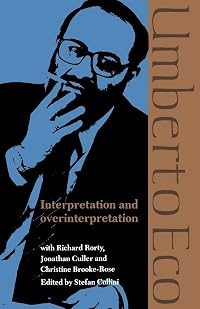
Interpretation and Overinterpretation
by Umberto Eco
On This Page
Description
Umberto Eco, international bestselling novelist and leading literary theorist, here brings together these two roles in a provocative discussion of the vexed question of literary interpretation. The limits of interpretation - what a text can actually be said to mean - are of double interest to a semiotician whose own novels' intriguing complexity has provoked his readers into intense speculation as to their meaning. Eco's illuminating and frequently hilarious discussion ranges from Dante to show more The Name of the Rose, Foucault's Pendulum to Chomsky and Derrida, and bears all the hallmarks of his inimitable personal style. Three of the world's leading figures in philosophy, literary theory and criticism take up the challenge of entering into debate with Eco on the question of interpretation. Richard Rorty, Jonathan Culler and Christine Brooke-Rose each offer a distinctive perspective on this contentious topic, contributing to a unique exchange of ideas between some of the foremost and most exciting theorists in the field. show lessTags
Recommendations






Member Reviews
In 1990, Umberto Eco was invited by Cambridge University to give the annual Tanner Lecture. He chose for his topic the somewhat academically contentious area of literary interpretation or rather the question of whether one can set limits to the range of what a text can be said to mean. Over the course of three lectures Eco tries to establish that, whilst it may not be possible to prove which of any competing interpretations is correct, one may be able to point out those interpretations which are perhaps unfounded. Following the three lectures are responses by Richard Rorty, Jonathan Culler and Christine Brooke-Rose with a final reply to his critics by Eco although in this review I shall focus upon Eco's lectures..
In his first lecture on show more 'interpretation and history' Eco traces the history of Hermetic tradition in interpretation dating back from the dialogues of Hermes Trismegistus (one of my favourite names from philosophy, Trismegistus meaning thrice wise). He shows how, if we accept Hermetic thought, interpretation is essentially endless. "A plant is not defined in terms of its morphological and functional characteristics but on the basis of its resemblance, albeit only partial, to another element in the cosmos. If it is vaguely like part of the human body, then it has meaning because it refers to the body. But that part of the body has meaning because it refers to a star, and the latter has meaning because it refers to a musical scale, and this in turn because it refers to a hierarchy of angels, and so on ad infinitum'. Essentially a text would never have meaning because each interpretation could lead to another leaving the text as a meaningless shell. If we reject this theory, he argues, we arrive at the conclusion that a text has meaning. We are "not entitled to say that the message can mean everything. It can mean many things, but there are senses which it would be preposterous to suggest". This is the theme he takes up in his second lecture.
Overinterpreting texts is the subject of the second lecture and Eco starts by listing the ways in which images or words can be connected, the very basis of semiosis, by similitude, by homonymy, by irony, by sign and so on. Similarity is important for interpretation because 'the interpreter has the right and the duty to suspect that what one believed to be the meaning of a sign is in fact the sign for a further meaning'. However, as Eco puts it, 'the passage from similarity to semiosis is not automatic'. In other words if a text suggests something to you by means of similarity does not mean to say that it is a valid or useful interpretation of the text. Eco shows how Gabriele Rossetti's attempt to interpret Dante in the light of Masonic-Rosicrucian symbolism is ill-fated as he goes in search of a pelican and a rose. "Rossetti, in his desperate and rather pathetic fowling, could find in the divine poem seven fowls and eleven birds and ascribe them all to the pelican family: but he would find them all far from the rose". Rossetti's interpretation had another pitfall to overcome, that he was looking for symbolism that was not conceived until after Dante had written his Divine Comedy.
In the third lecture Eco poses the question of whether 'we should still be concerned with the empirical author of a text', his rather surprising answer is not really. Taking an example from his own work The Name of the Rose, in the trial scene William is asked 'What terrifies you most in purity?' and he responds 'haste'. On the same page 'Bernard Gui, threatening the cellarer with torture, says 'Justice is not inspired by haste, as the Pseudo Apostles believe, and the justice of God has centuries at its disposal'. A reader asked Umberto Eco what connection he had meant to establish 'between the haste feared by William and the absence of haste extolled by Bernard. The answer was that the author had intended no connection but that the text had created its effects whether he wanted them or not.
The responses are interesting. Richard Rorty, ever the pragmatist argues that interpretations are essentially pointless and what is more important is how we use and enjoy literature. Jonathan Culler attacks Eco's notion of overinterpretation and takes up his example of Rossetti's Dante interpretation arguing that it is in fact underinterpretation as Rossetti had been following false leads rather than positing valid interpretations of the material that was actually there. Finally Christine Brooke-Rose rather side-steps the debate with a lecture on Palimpsest history.
It is certainly an interesting debate and Eco makes his arguments with his usual charm and good humour (I would love to see him talk). Sadly it appears that Eco's respondents were not supplied with his lectures in advance which meant that Rorty's response was to an earlier piece by Eco in which he put forward a different argument and Brooke-Rose was off-topic nearly altogether but the most interesting aspect of the book is Eco himself. His general principle is spot on, there definitely has to be scope for determining the degree to which any given interpretation is valid. He is also right in suggesting that once a text has been created that it takes upon a life independent of its empirical author therefore any appeal to the author for a 'correct interpretation' is not strictly valid.
I also agree with Jonathan Culler that this framework should not be used to discourage the search for meaning in texts. "At the beginning of his second lecture Umberto Eco linked overinterpretation to what he called an 'excess of wonder'...this deformation professionelle, which inclines critics to puzzle over element is a text, seems to me, on the contrary, the best source of insights into language and literature that we seek, a quality to be cultivated rather than shunned'. Basically I'm saying feel free to interpret texts any way you like but I reserve the right to say that you've overinterpretted.
In sum, the book would have been better if all speakers were singing from the same hymn sheet although what does get said is very interesting.
http://paolosinterweblog.blogspot.com/2010/07/interpretation-and-overinterpretat... show less
In his first lecture on show more 'interpretation and history' Eco traces the history of Hermetic tradition in interpretation dating back from the dialogues of Hermes Trismegistus (one of my favourite names from philosophy, Trismegistus meaning thrice wise). He shows how, if we accept Hermetic thought, interpretation is essentially endless. "A plant is not defined in terms of its morphological and functional characteristics but on the basis of its resemblance, albeit only partial, to another element in the cosmos. If it is vaguely like part of the human body, then it has meaning because it refers to the body. But that part of the body has meaning because it refers to a star, and the latter has meaning because it refers to a musical scale, and this in turn because it refers to a hierarchy of angels, and so on ad infinitum'. Essentially a text would never have meaning because each interpretation could lead to another leaving the text as a meaningless shell. If we reject this theory, he argues, we arrive at the conclusion that a text has meaning. We are "not entitled to say that the message can mean everything. It can mean many things, but there are senses which it would be preposterous to suggest". This is the theme he takes up in his second lecture.
Overinterpreting texts is the subject of the second lecture and Eco starts by listing the ways in which images or words can be connected, the very basis of semiosis, by similitude, by homonymy, by irony, by sign and so on. Similarity is important for interpretation because 'the interpreter has the right and the duty to suspect that what one believed to be the meaning of a sign is in fact the sign for a further meaning'. However, as Eco puts it, 'the passage from similarity to semiosis is not automatic'. In other words if a text suggests something to you by means of similarity does not mean to say that it is a valid or useful interpretation of the text. Eco shows how Gabriele Rossetti's attempt to interpret Dante in the light of Masonic-Rosicrucian symbolism is ill-fated as he goes in search of a pelican and a rose. "Rossetti, in his desperate and rather pathetic fowling, could find in the divine poem seven fowls and eleven birds and ascribe them all to the pelican family: but he would find them all far from the rose". Rossetti's interpretation had another pitfall to overcome, that he was looking for symbolism that was not conceived until after Dante had written his Divine Comedy.
In the third lecture Eco poses the question of whether 'we should still be concerned with the empirical author of a text', his rather surprising answer is not really. Taking an example from his own work The Name of the Rose, in the trial scene William is asked 'What terrifies you most in purity?' and he responds 'haste'. On the same page 'Bernard Gui, threatening the cellarer with torture, says 'Justice is not inspired by haste, as the Pseudo Apostles believe, and the justice of God has centuries at its disposal'. A reader asked Umberto Eco what connection he had meant to establish 'between the haste feared by William and the absence of haste extolled by Bernard. The answer was that the author had intended no connection but that the text had created its effects whether he wanted them or not.
The responses are interesting. Richard Rorty, ever the pragmatist argues that interpretations are essentially pointless and what is more important is how we use and enjoy literature. Jonathan Culler attacks Eco's notion of overinterpretation and takes up his example of Rossetti's Dante interpretation arguing that it is in fact underinterpretation as Rossetti had been following false leads rather than positing valid interpretations of the material that was actually there. Finally Christine Brooke-Rose rather side-steps the debate with a lecture on Palimpsest history.
It is certainly an interesting debate and Eco makes his arguments with his usual charm and good humour (I would love to see him talk). Sadly it appears that Eco's respondents were not supplied with his lectures in advance which meant that Rorty's response was to an earlier piece by Eco in which he put forward a different argument and Brooke-Rose was off-topic nearly altogether but the most interesting aspect of the book is Eco himself. His general principle is spot on, there definitely has to be scope for determining the degree to which any given interpretation is valid. He is also right in suggesting that once a text has been created that it takes upon a life independent of its empirical author therefore any appeal to the author for a 'correct interpretation' is not strictly valid.
I also agree with Jonathan Culler that this framework should not be used to discourage the search for meaning in texts. "At the beginning of his second lecture Umberto Eco linked overinterpretation to what he called an 'excess of wonder'...this deformation professionelle, which inclines critics to puzzle over element is a text, seems to me, on the contrary, the best source of insights into language and literature that we seek, a quality to be cultivated rather than shunned'. Basically I'm saying feel free to interpret texts any way you like but I reserve the right to say that you've overinterpretted.
In sum, the book would have been better if all speakers were singing from the same hymn sheet although what does get said is very interesting.
http://paolosinterweblog.blogspot.com/2010/07/interpretation-and-overinterpretat... show less
This is a very short work on the possibilities of semiotics by Italian theoretician and novelist Eco. This book is thought provoking and interesting. Interpretation and Overinterpretation attempts to postulate a philosophy of hermeneutics which, unfortunately, cannot be valid for any discipline outside of literary theory. Eco maintains that “the text” is transparent and has, by necessity, to be interpreted in the most manifold ways possible. The intent of the author must be regarded as unknowable (standard axiom in most of today’s English departments) and the reader must try to understand the grammatical and cultural conventions of a text. This gives rise to Eco’s notion of the Model Reader. The Model Reader would be someone who show more could master the infinite interpretations of the text. This person will never exist in reality. Interpretations can only be comparative with other interpretations. Persuasive skill about which interpretation is a better fit becomes the determiing factor for a winning and accepted interpretation. The author’s original intent is unknowable and therefore irrelevant. This book was published in 1992. show less
Ratings
Members
- Recently Added By
Published Reviews
Hva er en tekst?
I boken Fortolkning og overfortolkning søker Umberto Eco fortolkningens grenser. Sentrale intellektuelle kommenterer hans bidrag.
Lar det seg gjøre, som Jorge Luis Borges (med sin figur Pierre Ménard) har foreslått, å lese middelalderteksten Imitatio Christi som om den var skrevet av Céline? Umberto Eco har prøvd, og han påstår å ha funnet opp til flere setninger som show more kunne ha vært skrevet av den franske romanforfatteren («Nåden elsker lave ting og frastøtes ikke av de tornete, og den elsker skitne klær»). Men en så avsindig fortolkningsstrategi fører oss neppe særlig langt. De fleste av passasjene i Imitatio Christi, sier Eco, blir først meningsfulle når boken leses med utgangspunkt i den kristne middelalders filosofi og kultur.
Ikke hva som helst
Ecos mål i Fortolkning og overfortolkning (basert på forelesninger ved Cambridge, 1990), er å vise at det gis grenser for forståelsen. Man kan ikke gjøre hva som helst med en tekst. De sammenhenger som den lar seg forstå innenfor, er ikke uendelige. Selv om det ikke lar seg gjøre å bevise at en bestemt tolkning er gyldig, går det an å vise at noen tolkninger må være gale. En nålevende leser, sier Eco, som i Playboy finner Wordsworths linje «A poet could not but be gay», vil ikke være like følsom og ansvarlig som en person med kunnskap om hvordan det leksikalske system så ut for 200 år siden. Playboy-leserens tolkning, som ikke tar høyde for at ordet gay på Wordsworths tid ble brukt uten seksuelle konnotasjoner, blir absurd. Teksten har en iboende intensjon (intentio operis) som må respekteres. Tekstens intensjon kan ikke tilbakeføres til forfatterintensjonen, men må søkes i et samspill mellom leseren og teksten, der leseren søker å gjette seg til hvordan en ideal leser, den leseren tekstens ideale forfatter postulerer, ville forstå.
Tolkningsparanoiaen
For mange vil det virke innlysende at noen tolkninger åpenbart må være gale. Ifølge Eco er imidlertid tolkningsparanoiaen, som han fører tilbake til de mystiske tekstene i Corpus Hermeticum, et utbredt samtidsfenomen. Både i natur- og humanvitenskapene gjenfinner han den gnostiske forestillingen om teksten som en uavbrutt kjede av uendelige forflytninger. Innestengt i en ond skapers skinnunivers, blir leseren en negativ teolog. Fordi en stabil og koherent mening i prinsippet er umulig, tvinges leseren til å avvise enhver sannhetsorientert tolkning som umoden. Noe transcendent, som må respekteres, vil nødvendigvis unnslippe vår konvensjonelle forståelse. Ecos roman Foucaults pendel kan leses som en satire over de fortvilte søkerne etter den for evig og alltid skjulte Planen.
Anarkister
I forbindelse med forelesningsrekken som boken Fortolkning og overfortolkning er basert på, ble Richard Rorty, Jonathan Culler og Christine Brooke-Rose trukket inn for å spille rollen som anarkister. I så måte lykkes kanskje Rorty best. Ifølge Rorty forutsetter idéen om at det finnes noe, en bestemt referent, som en tekst virkelig dreier seg om, at man er offer for den illusjon at man kan adskille objektet fra det man finner for godt å si om det. Ecos skille mellom tolkning av en teksts mening og tolkningens anvendelse (som kan være åpen og anarkistisk), må altså anses som en regresjon tilbake til en slags metafysisk realisme. Tekster, hevder Rorty, er redskaper vi helt fritt kan bruke til «våre egne formål». Særlig er de tekster som kan utfordre oss, og som kan «hjelpe én til å endre sine formål og således endre sitt liv», av verdi.
Narsissistisk
Men vil ikke den lekne avvisningen av spørsmål om mening, referent, sannhet osv. føre til at lesningen antar en rent narsissistisk karakter? Dersom tekster bare er leketøy, hvordan kan de da utfordre oss? Hvorfor skulle vi ta dem på alvor? For de som reiser slike innvendinger mot Rorty, kan Cullers bidrag være av interesse. Culler insisterer på at selv om vi aldri kan fremsette kriterier for hvilke sammenhenger det er fruktbart å forstå en tekst i lys av, så betyr ikke dette at et studium av de mekanismer som frembringer mening («litteraturens semiotiske mekanismer») er meningsløst. Slik kan litteraturstudiene kaste lys over meningsproblemet i sin alminnelighet.
Bidragene i denne boken er paradeoppvisninger i elegant og intelligent formidlingskunst. For Eco-fans er boken særlig viktig for å ta stilling til hans oppgjør med den formen for leserorientert litteraturteori som han på 60- og 70-tallet selv var en sentral eksponent for.
Umberto Eco (m.fl.)
Fortolkning og overfortolkning
Oversatt av Mikael Brødsgaard
og Keld B. Jessen
1995 (dansk utgave)
Forlaget Systime a/s
Anmeldt av Espen Hammer show less
I boken Fortolkning og overfortolkning søker Umberto Eco fortolkningens grenser. Sentrale intellektuelle kommenterer hans bidrag.
Lar det seg gjøre, som Jorge Luis Borges (med sin figur Pierre Ménard) har foreslått, å lese middelalderteksten Imitatio Christi som om den var skrevet av Céline? Umberto Eco har prøvd, og han påstår å ha funnet opp til flere setninger som show more kunne ha vært skrevet av den franske romanforfatteren («Nåden elsker lave ting og frastøtes ikke av de tornete, og den elsker skitne klær»). Men en så avsindig fortolkningsstrategi fører oss neppe særlig langt. De fleste av passasjene i Imitatio Christi, sier Eco, blir først meningsfulle når boken leses med utgangspunkt i den kristne middelalders filosofi og kultur.
Ikke hva som helst
Ecos mål i Fortolkning og overfortolkning (basert på forelesninger ved Cambridge, 1990), er å vise at det gis grenser for forståelsen. Man kan ikke gjøre hva som helst med en tekst. De sammenhenger som den lar seg forstå innenfor, er ikke uendelige. Selv om det ikke lar seg gjøre å bevise at en bestemt tolkning er gyldig, går det an å vise at noen tolkninger må være gale. En nålevende leser, sier Eco, som i Playboy finner Wordsworths linje «A poet could not but be gay», vil ikke være like følsom og ansvarlig som en person med kunnskap om hvordan det leksikalske system så ut for 200 år siden. Playboy-leserens tolkning, som ikke tar høyde for at ordet gay på Wordsworths tid ble brukt uten seksuelle konnotasjoner, blir absurd. Teksten har en iboende intensjon (intentio operis) som må respekteres. Tekstens intensjon kan ikke tilbakeføres til forfatterintensjonen, men må søkes i et samspill mellom leseren og teksten, der leseren søker å gjette seg til hvordan en ideal leser, den leseren tekstens ideale forfatter postulerer, ville forstå.
Tolkningsparanoiaen
For mange vil det virke innlysende at noen tolkninger åpenbart må være gale. Ifølge Eco er imidlertid tolkningsparanoiaen, som han fører tilbake til de mystiske tekstene i Corpus Hermeticum, et utbredt samtidsfenomen. Både i natur- og humanvitenskapene gjenfinner han den gnostiske forestillingen om teksten som en uavbrutt kjede av uendelige forflytninger. Innestengt i en ond skapers skinnunivers, blir leseren en negativ teolog. Fordi en stabil og koherent mening i prinsippet er umulig, tvinges leseren til å avvise enhver sannhetsorientert tolkning som umoden. Noe transcendent, som må respekteres, vil nødvendigvis unnslippe vår konvensjonelle forståelse. Ecos roman Foucaults pendel kan leses som en satire over de fortvilte søkerne etter den for evig og alltid skjulte Planen.
Anarkister
I forbindelse med forelesningsrekken som boken Fortolkning og overfortolkning er basert på, ble Richard Rorty, Jonathan Culler og Christine Brooke-Rose trukket inn for å spille rollen som anarkister. I så måte lykkes kanskje Rorty best. Ifølge Rorty forutsetter idéen om at det finnes noe, en bestemt referent, som en tekst virkelig dreier seg om, at man er offer for den illusjon at man kan adskille objektet fra det man finner for godt å si om det. Ecos skille mellom tolkning av en teksts mening og tolkningens anvendelse (som kan være åpen og anarkistisk), må altså anses som en regresjon tilbake til en slags metafysisk realisme. Tekster, hevder Rorty, er redskaper vi helt fritt kan bruke til «våre egne formål». Særlig er de tekster som kan utfordre oss, og som kan «hjelpe én til å endre sine formål og således endre sitt liv», av verdi.
Narsissistisk
Men vil ikke den lekne avvisningen av spørsmål om mening, referent, sannhet osv. føre til at lesningen antar en rent narsissistisk karakter? Dersom tekster bare er leketøy, hvordan kan de da utfordre oss? Hvorfor skulle vi ta dem på alvor? For de som reiser slike innvendinger mot Rorty, kan Cullers bidrag være av interesse. Culler insisterer på at selv om vi aldri kan fremsette kriterier for hvilke sammenhenger det er fruktbart å forstå en tekst i lys av, så betyr ikke dette at et studium av de mekanismer som frembringer mening («litteraturens semiotiske mekanismer») er meningsløst. Slik kan litteraturstudiene kaste lys over meningsproblemet i sin alminnelighet.
Bidragene i denne boken er paradeoppvisninger i elegant og intelligent formidlingskunst. For Eco-fans er boken særlig viktig for å ta stilling til hans oppgjør med den formen for leserorientert litteraturteori som han på 60- og 70-tallet selv var en sentral eksponent for.
Umberto Eco (m.fl.)
Fortolkning og overfortolkning
Oversatt av Mikael Brødsgaard
og Keld B. Jessen
1995 (dansk utgave)
Forlaget Systime a/s
Anmeldt av Espen Hammer show less
added by kirstenlund
Author Information

512+ Works 115,572 Members
Umberto Eco was born in Alessandria, Italy on January 5, 1932. He received a doctorate of philosophy from the University of Turin in 1954. His first book, Il Problema Estetico in San Tommaso, was an extension of his doctoral thesis on St. Thomas Aquinas and was published in 1956. His first novel, The Name of the Rose, was published in 1980 and won show more the Premio Strega and the Premio Anghiar awards in 1981. In 1986, it was adapted into a movie starring Sean Connery. His other works include Foucault's Pendulum, The Island of the Day Before, Baudolino, The Prague Cemetery, and Numero Zero. He also wrote children's books and more than 20 nonfiction books including Serendipities: Language and Lunacy. He taught philosophy and then semiotics at the University of Bologna. He also wrote weekly columns on popular culture and politics for L'Espresso. He died from cancer on February 19, 2016 at the age of 84. (Bowker Author Biography) show less
Series
Belongs to Publisher Series
Common Knowledge
- Canonical title
- Interpretation and Overinterpretation
- Original publication date
- 1992
- First words*
- "La mia unica riserva sull'argomento riguarda la sua attinenza alla questione dei 'valori umani'".
INTRODUZIONE
INTERPRETAZIONE TERMINABILE E INTERMINABILE
di
Stefan Collini
È del 1957 il libro di J.M. Castillet, senza dubbio profetico, La hora del lector (L'ora del lettore).
INTERPRETAZIONE E STORIA
In Interpretazione e storia mi sono occupato di un metodo di interpretazione del mondo e dei testi basato sull'individuazione di relazioni di simpatia che legano reciprocamente microcosmo e macrocosmo.
SOVRAINTE... (show all)RPRETARE I TESTI
Ho concluso la precedente conferenza, Sovrainterpretare i testi, con una domanda drammatica: possiamo ancora occuparci dell'autore empirico di un testo?
TRA AUTORE E TESTO
Dopo aver letto Il pendolo di Foucault, mi convinsi del fatto che si trattava di una satira del modo in cui scienziati, studiosi, critici e filosofi pensano a se stessi, ovvero una satira del loro credersi sempre nelle... (show all) vesti di chi sbroglia codici, sbuccia i fatti di ogni accidente per rivelarne l'essenza, strappa veli di apparenze per mostrare la realtà.
IL PROGRESSO DEL PRAGMATISTA
di
Richard Rorty
Il saggio di Rochard Rorty che compare in questo volume non è tanto una risposta alle conferenze tenute da Umberto Eco, quanto un commento a un suo precedente articolo intitolato Intentio lectoris, in cui l'autore svi... (show all)luppava un argomento in parte diverso da quello poi seguito nelle conferenze.
IN DIFESA DELLA SOVRAINTEPRETAZIONE
di
Jonathan Culler
Il mio titolo è ripreso da una nozione ormai familiare ma particolarmente bene espressa nel romanzo di Salman Rushdie La vergogna.
STORIA A PALINSESTO
di
Christine Brooke-Rose
Lo scritto di Richard Rorty è un esempio notevole di close reading applicata a diversi dei miei testi.
REPLICA
di
Umberto Eco
In alcuni articoli recenti, dedicati a una ricognizione della teoria e della critica americane, Remo Ceserani lamentava il fatto che raramente il dibattito che continua a tenersi - sia in Europa che negli Stati Uniti - attorn... (show all)o alle questioni del testo e dell'interpretazione conosca incroci che permettano qualcosa di più di un parallelo svolgersi delle rispettive attività di ricerca.
POSTFAZIONE
di
Sandra Cavicchioli - Quotations*
- Tra l'inattingibile intenzione dell'autore e la discutibile intenzione del lettore, c'è la trasparente intenzione del testo che smentisce un'interpretazione insostenibile.
Quando un testo viene messo in una bottiglia - e ciò accade non solo per la poesia o la narrativa, ma anche per la Critica della ragion pura - ovvero quando un testo è prodotto non per un destinatario singolo ma per ... (show all)una comunità di lettori - l'autore sa che verrà interpretato non secondo le proprie intenzioni ma sexondo una complessa strategia di interazioni che coinvolge anche i lettori e la competenza che essi hanno del linguaggio come patrimonio socialmente dato. Con quest'ultima espressione, non intendo semplicemente riferirmi a un linguaggio dato come insieme di regole grammaticali, ma anche all'intera enciclopedia prodotta dall'uso di quel linguaggio, ovvero le convenzioni culturali che esso ha create e la storia delle precedenti interpretazioni di molti testi, compreso il testo che il lettore sta leggendo.
L'atto della lettura ovviamente deve tenere conto di tutti questi elementi, per quanto sia improbabile che un lettore singolo possa poi padroneggiarli tutti. Così ogni atto di lettura è una difficile transazione tra la competenza del lettore (la conoscenza del mondo in possesso del lettore) e il tipo di competenza che un dato testo postula per essere letto in modo economico. - Last words*
- (Click to show. Warning: May contain spoilers.)Ciò ci suggerisce anche che l'ansioso membro del comitato non deve preoccuparsi: come testimonia ampiamente la sorprendente vitalità e diversità dei contributi a questo volume, la questione dell'interpretazione e della sovrainterpretazione tocca la problematica dei "valori umani" continuamente.
INTRODUZIONE
INTERPRETAZIONE TERMINABILE E INTERMINABILE
di
Stefan Collini
(Click to show. Warning: May contain spoilers.)Se c'è qualcosa che va interpretato, l'interpretazione deve parlare di qualcosa che deve essere trovato altrove e in qualche modo rispettato. Così, almeno per quanto riguarda la prossima conferenza, il mio proposito è: mettiamoci anzitutto dalla parte dello schiavo. È l'unico modo per diventare, se non signori, almeno servi rispettosi della semiosi.
INTERPRETAZIONE E STORIA
(Click to show. Warning: May contain spoilers.)È allora possibile (allo stesso modo) tenere conto di casi di interpretazione di testi scritti, il cui autore - ancora vivente - reagisca dicendo: "No, non intendevo dire ciò"? Ecco l'argomento della prossima conferenza.
SOVRAINTERPRETARE I TESTI
(Click to show. Warning: May contain spoilers.)Tra la storia misteriosa della produzione di un testo, e l'incontrollabile deriva delle sue letture successive, il testo in quanto testo costituisce una presenza rassicurante, un punto fermo a cui attenersi.
TRA AUTORE E TESTO
(Click to show. Warning: May contain spoilers.)E siamo anche convinti che si tradiscano Heidegger e Derrida quando si cerchi di trovare un metodo. In questo modo infatti, si comincia a soccombere alla vecchia urgenza occultista di sbrogliare i codici, di distinguere tra realtà e apparenza, di fare una distinzione sgradevole tra ciò che è giusto e ciò che è utile.
IL PROGRESSO DEL PRAGMATISTA
di
Richard Rorty
(Click to show. Warning: May contain spoilers.)Sarebbe infatti triste se la paura della "sovrainterpretazione" ci portasse a evitare o reprimere lo stato di meraviglia verso il gioco dei testi e dell'interpretazione - del tutto raro, mi sembra al giorno d'oggi - per quanto ammirevolmente rappresentato dai romanzi e dalle esplorazioni semiotiche di Umberto Eco.
IN DIFESA DELLA SOVRAINTEPRETAZIONE
di
Jonathan Culler
(Click to show. Warning: May contain spoilers.)Può sembrare irrispettoso collocare I versi satanici a metà strada tra quel testo sacro che è il Corano e gli esegeti veri e propri che esecrano il libro di Rishdie, ma sto solo parlando in termini letterari e quello che intendo può essere forse più chiaro se dico che Omero è solo parzialmente storico e in gran parte mitico, o che la storia della Spagna di Fuentes è interessante come la storia "reale" resa sacra dall'insegnamento scolastico, o il pendolo di Eco come la storia "reale" della teosofia. È questo perché si tratta di storie a palinsesto.
STORIA A PALINSESTO
di
Christine Brooke-Rose
(Click to show. Warning: May contain spoilers.)Se tutti abbiamo ragione, allora tutti abbiamo torto e ho dunque il diritto di trascurare il punto di vista di chiunque altro.
Fortunatamente non la penso in questo modo. Questa è la ragione per cui ringrazio ognuno dei partecipanti al dibattito, per avermi offerto tante acute riflessioni e tante interpretazioni della mia opera. E sono sicuro che ognuno di loro la pensa come me. In caso contrario non sarebbero qui.
REPLICA
di
Umberto Eco
(Click to show. Warning: May contain spoilers.)Abbandonato l'ordine della rappresentazione ed entrati a pieno titolo in quello del fare e del potere, si tratterà almeno di capire se queste interazioni sono divieti, ordini, minacce, subdole persuasioni, abili seduzioni o che altro.
POSTFAZIONE
di
Sandra Cavicchioli - Original language
- English
*Some information comes from Common Knowledge in other languages. Click "Edit" for more information.
Classifications
- Genres
- Literature Studies and Criticism, Nonfiction, Philosophy, Fiction and Literature, Religion & Spirituality
- DDC/MDS
- 801.95 — Literature & rhetoric Literature, rhetoric & criticism Philosophy and theory Nature and character Literary theory and criticism
- LCC
- PN98 .S46 .E25 — Language and Literature Literature (General) Literature (General) Criticism
- BISAC
Statistics
- Members
- 393
- Popularity
- 79,610
- Reviews
- 2
- Rating
- (3.82)
- Languages
- 12 — Danish, Dutch, English, French, German, Greek, Italian, Polish, Portuguese (Portugal), Slovak, Spanish, Turkish
- Media
- Paper, Ebook
- ISBNs
- 24
- ASINs
- 3