Mohammed and Charlemagne
by Henri Pirenne
On This Page
Description
Remarkable classic that developed the revolutionary theory of how the advance and influence of Islam caused the Europe of the Roman Empire to evolve into the Europe of the Middle Ages. ""An important...seminal book, worthy to close one of the most distinguished careers in European scholarship."" - Saturday Review of Literature.
Tags
Recommendations










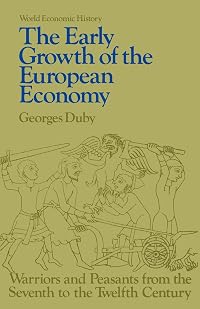

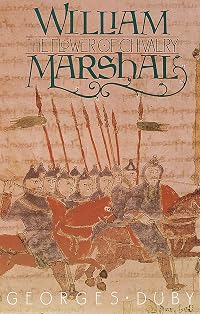

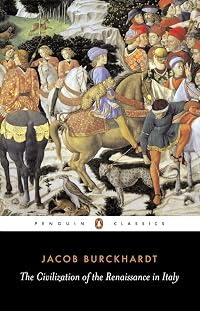
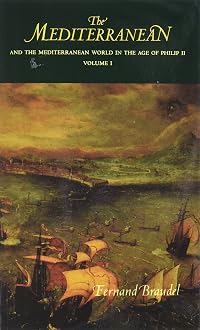


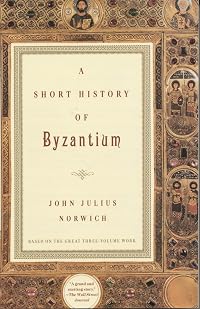


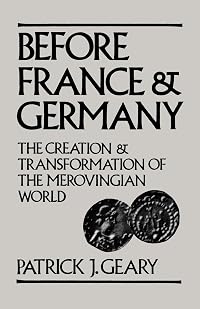
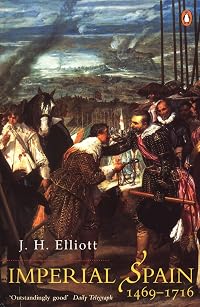

Member Recommendations

Member Reviews
The Pirenne Thesis is one which has been much debated since this book was first published (as Mahomet et Charlemagne) in the 1930s. Pirenne's claim is essentially this: that Romanitas—Roman culture, trade, social order, etc—survived the disappearance of an emperor in the West and the Germanic invasions. European civilisation was still essentially Mediterranean and centred on the Mediterranean Sea. It was only with the emergence of Islam, which ended the unity of trade and of cultures around that sea and shifted the political and cultural centre of European gravity northwards, that Late Antiquity came to an end. From this new climate came feudalism, the medieval Church, and the Holy Roman Empire. In other words, without Mohammed, no show more Charlemagne.
It's an appealing idea in its neatness, and in its emphasis on the dependence between Western Europe and the areas around it, and the prose is astonishingly well-written for a first draft (Pirenne died before the book was finished, and it was ultimately published by his son). Of course, its very neatness should raise alarm bells. The archaeological evidence doesn't really accord with Pirenne's statements about it (and far more contradictory evidence has been found since he wrote), he's got some weird ideas about Islam (Muslims did trade with Christians and with other People of the Book without major issue for most of the medieval period, so far as I'm aware), and there's an anti-Semitic undercurrent to a lot of what he says about Jewish merchants. He also engages in a lot of special pleading to bolster his idea that Romanitas continued because some of its forms of government were adopted by new Germanic kings, or because popes dated their documents still according to imperial reigns. The latter in particular really doesn't tell us anything about the political situations on the ground—formal papal recordkeeping is an inherently conservative genre. That's like saying that the fact that the term "last will and testament" is still current means that most people could tell you the difference between a will and a testament.
Mahommed and Charlemagne is still a classic of the field, and important because it encouraged medievalists for the first time to really think about the implications of Western European/Middle Eastern contacts in the Middle Ages. It cannot, however, be read with unqualified acceptance. show less
It's an appealing idea in its neatness, and in its emphasis on the dependence between Western Europe and the areas around it, and the prose is astonishingly well-written for a first draft (Pirenne died before the book was finished, and it was ultimately published by his son). Of course, its very neatness should raise alarm bells. The archaeological evidence doesn't really accord with Pirenne's statements about it (and far more contradictory evidence has been found since he wrote), he's got some weird ideas about Islam (Muslims did trade with Christians and with other People of the Book without major issue for most of the medieval period, so far as I'm aware), and there's an anti-Semitic undercurrent to a lot of what he says about Jewish merchants. He also engages in a lot of special pleading to bolster his idea that Romanitas continued because some of its forms of government were adopted by new Germanic kings, or because popes dated their documents still according to imperial reigns. The latter in particular really doesn't tell us anything about the political situations on the ground—formal papal recordkeeping is an inherently conservative genre. That's like saying that the fact that the term "last will and testament" is still current means that most people could tell you the difference between a will and a testament.
Mahommed and Charlemagne is still a classic of the field, and important because it encouraged medievalists for the first time to really think about the implications of Western European/Middle Eastern contacts in the Middle Ages. It cannot, however, be read with unqualified acceptance. show less
Now and again we have to fill in the holes in our education. This is a book I've talked about for a couple decades without actually having read it. The Pirenne thesis, that the true break between the ancient and medieval worlds and the true genesis of the West as we know it occurred with the Arab conquests in the Levant and North Africa and not with the Germanic conquests in Europe, has long been one of the core historical debates of the period, and a debate of particular interest for those of us with an interest in Islamic history and the history of the places caught between the Islamic and Christian worlds. While Pirenne is often on the losing end of the debate, and the specific arguments made by him are considered simply off base by show more most historians, the debate persists because Pirenne points out some fundamental dynamics of the age missing from Gibbon and his heirs and from other major historians of the period.
The book shows its age. A number of Pirenne's points are rather poorly argued, and the arguement throughout is plagued by insufficient support. It was a posthumous work, not finished and barely annotated at Pirenne's death, and in many ways is more of an outline for further work than a finished book. Indeed, the lack of detailed support makes Pirenne an easy target for more thorough though less brilliant scholarly opponents. All too often Pirenne gives us conclusions and tells us they're obvious, despite being highly controversial and difficult to support. As one example, as he talks about the role of the Jews in the late ancient world, his conclusions seem to belie his prejudices rather than his studies. He describes Jews as 'mostly' or 'substantially' engaged in banking and money lending, even while noting the significant size of the communities. The idea that the Jewish population was so thoroughly wealthy and so limited and ghettoized in its occupation seems unsustainable; given the size of the community, there would simply be too many bankers! What were his Syrians to do? Nonetheless, shining through what is at the core of a rather poorly argued work is a little bit of absolute genius, a twist of profound historical insight.
Oddly, having been exposed to the genius of the thesis for a long time, I almost find the flaws in the work more interesting than his presentation of the thesis itself. If it is the debate you are interested in, you can probably dispense with the original work laying out the theory; the kernel is here, but the analysis has long since left this book behind. But for pure historiographical interest, this one is a fascinating and fairly quick read. show less
The book shows its age. A number of Pirenne's points are rather poorly argued, and the arguement throughout is plagued by insufficient support. It was a posthumous work, not finished and barely annotated at Pirenne's death, and in many ways is more of an outline for further work than a finished book. Indeed, the lack of detailed support makes Pirenne an easy target for more thorough though less brilliant scholarly opponents. All too often Pirenne gives us conclusions and tells us they're obvious, despite being highly controversial and difficult to support. As one example, as he talks about the role of the Jews in the late ancient world, his conclusions seem to belie his prejudices rather than his studies. He describes Jews as 'mostly' or 'substantially' engaged in banking and money lending, even while noting the significant size of the communities. The idea that the Jewish population was so thoroughly wealthy and so limited and ghettoized in its occupation seems unsustainable; given the size of the community, there would simply be too many bankers! What were his Syrians to do? Nonetheless, shining through what is at the core of a rather poorly argued work is a little bit of absolute genius, a twist of profound historical insight.
Oddly, having been exposed to the genius of the thesis for a long time, I almost find the flaws in the work more interesting than his presentation of the thesis itself. If it is the debate you are interested in, you can probably dispense with the original work laying out the theory; the kernel is here, but the analysis has long since left this book behind. But for pure historiographical interest, this one is a fascinating and fairly quick read. show less
This jewel was found at Ohio Books and read while a contractor lowered our bathroom ceiling and installed an exhaust fan. I feel enriched by the opportunity.
His thesis elicited an outcry at the time of its publication: the Middle Ages did not begin with collapse of Rome in the 5th Century but rather in the 8th after Arab control of the Mediterranean threw the West into stasis and decline. Pirenne argues that the barbarian invasions did not disrupt Roman institutions but were simply co-opted by the needy n'er-do-wells.
His thesis elicited an outcry at the time of its publication: the Middle Ages did not begin with collapse of Rome in the 5th Century but rather in the 8th after Arab control of the Mediterranean threw the West into stasis and decline. Pirenne argues that the barbarian invasions did not disrupt Roman institutions but were simply co-opted by the needy n'er-do-wells.
Scholars are still trying to punch holes in Henri's classic thesis. Some have been successful, some not so much, but what we must agree on, is that in order to develop a more accurate picture of the economies of the early middle ages, we must first deal with the persuasive arguments put forward by Mr. Pirenne. If you are interested in the Middle Ages at all, you HAVE to read this book, and all of his works.
Gaul remained Roman until the Muslim invasion of Spain
Written in 1935, and published posthumously, this is a pedantic summary of the end of the Roman Empire in the west. Pirenne's thesis is that the Germanic invasions of the 5th to 6th century left the essential Roman character of the western empire intact. The invaders were eager to settle in the areas controlled by Rome, and to learn the classical language and model themselves after the Romans. The ancient Senatorial families controlled large estates and provided administrators for the church. The culture was preserved in the coastal regions of the Mediterranean. The break with antiquity came only with the rapid and unexpected advance of Islam. The western Mediterranean became a show more Muslim lake, and the emperor in Constantinople was preoccupied with resisting the Islamic advance. Thus, cut off from the ancient culture built around commerce and the sea, the Merovingians and then Charlemagne needed to reward their vassals with fiefdoms rather than abundant tax collections, and Feudal society began.
Difficult to read, with discursions and repetitions, and endless footnotes
It was interesting to learn that Henri Pirenne is a national hero in Belgium after WW I, having resisted German insistence on changing the official language in his university, and being deported to Germany as a result. show less
Written in 1935, and published posthumously, this is a pedantic summary of the end of the Roman Empire in the west. Pirenne's thesis is that the Germanic invasions of the 5th to 6th century left the essential Roman character of the western empire intact. The invaders were eager to settle in the areas controlled by Rome, and to learn the classical language and model themselves after the Romans. The ancient Senatorial families controlled large estates and provided administrators for the church. The culture was preserved in the coastal regions of the Mediterranean. The break with antiquity came only with the rapid and unexpected advance of Islam. The western Mediterranean became a show more Muslim lake, and the emperor in Constantinople was preoccupied with resisting the Islamic advance. Thus, cut off from the ancient culture built around commerce and the sea, the Merovingians and then Charlemagne needed to reward their vassals with fiefdoms rather than abundant tax collections, and Feudal society began.
Difficult to read, with discursions and repetitions, and endless footnotes
It was interesting to learn that Henri Pirenne is a national hero in Belgium after WW I, having resisted German insistence on changing the official language in his university, and being deported to Germany as a result. show less
Mahoma y Carlomagno es una de las obras más importantes sobre la Edad Media. Escrita por Henri Pirenne al final de su vida, este texto publicado de forma póstuma, refleja la ruptura de la unidad mediterránea debido a la irrupción del Imperio Carolingio. Con gran simplicidad y sin abuso de tecnicismos, Pirenne parte de los últimos años del Imperio Romano de Occidente para pasar a describir los cambios acontecidos con las invasiones bárbaras. Así, el Imperio Islámico y el Imperio Cristiano se ven representados por dos personajes claves, que marcaron el destino de la Edad Media.
Henri Pirenne (1862-1935)
Edited by Jacques Pirenne assisted by F. Vercauteren. cf. Pref.
"Translated by Bernard Miall from the French of the 10th edition."
"First published in 1939."
Edited by Jacques Pirenne assisted by F. Vercauteren. cf. Pref.
"Translated by Bernard Miall from the French of the 10th edition."
"First published in 1939."
Members
- Recently Added By
Lists

Further Reading Recommended by Herrin's Byzantium
151 works; 1 member
Author Information

Belgian-born historian Henry Pirenne spent most of his professional life as professor of history at the University of Ghent. During World War I, he was a leader of Belgian passive resistance and spent several years as a hostage of the Germans. As a historian Pirenne centered his attention on the urban development of the Low Countries during the show more medieval period. In Medieval Cities, published in 1925, he argues that medieval urban development grew out of regional fortresses. With the economic revival beginning in the tenth century, city and town life expanded. These communities created their own laws, allowing the development of individual freedoms. Pirenne is best remembered, however, for the "Pirenne thesis" about the foundations of European civilization, which he put forth in his 1937 work Mohammed and Charlemagne. The thesis is that the great event that pushed Europeans into the formation of their own civilization was not the collapse of the Roman Empire in the fifth century but the Islamic conquest of much of the Mediterranean. (Bowker Author Biography) show less
Some Editions
Series
Belongs to Publisher Series
Common Knowledge
- Canonical title
- Mohammed and Charlemagne
- Original title
- Mahomet et Charlemagne
- Original publication date
- 1939 (English Translation) (English Translation); 1937
- People/Characters
- Charlemagne; Muhammad (as Mohammed)
- Important places
- Europe
- First words
- Of all the features of that wonderful structure, the Roman Empire, the most striking, and also the most essential, was its Mediterranean character.
- Last words
- (Click to show. Warning: May contain spoilers.)This development was completed in 800 by the constitution of the new Empire, which consecrated the break between the West and the East, inasmuch as it gave to the West a new Roman Empire -- the manifest proof that it had broken with the old Empire, which continued to exist in Constantinople.
- Original language
- French
Classifications
Statistics
- Members
- 749
- Popularity
- 37,657
- Reviews
- 12
- Rating
- (3.95)
- Languages
- 9 — Dutch, English, French, German, Italian, Portuguese, Romanian, Spanish, Turkish
- Media
- Paper, Ebook
- ISBNs
- 44
- UPCs
- 2
- ASINs
- 21