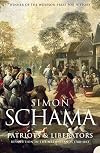
Patriots and Liberators: Revolution in the Netherlands, 1780-1813
by Simon Schama
On This Page
Description
"A tour de force, the first work of a young English scholar that is already attracting the highest acclaim..., Patriots and Liberators captures the disintegration of a great European power--the Dutch Republic--into military impotence, economic ruin and near terminal eclipse as a nation state. Drawing on a mass of previously untouched archival material from several countries, Simon Schama gives us a brilliant portrait of an extraordinary nation at the point of no return. The moment is the show more ominous pause before the political cataclysm that will engulf the Old World in 1789. ... For more than a hundred years, the Dutch have been admired and envied as the miracle of a continent: affluent, urbane and tolerant, the masters of a global maritime empire, providers of Europe's ships, grain, cloth and spices, bankers to its monarchs, pioneers in science and printing, they have placed their stamp upon Western civilisation. But now their splendour is decaying, their Golden Century at an end. As grandeur sinks towards catastrophe (an incapable ruler, chaos in government, famine and poverty spreading across the land, an army and fleet pathetically inadequate to safeguard the Republic's independence), we see a people in extremis: they must either resign themselves to the total erosion of their power or else embark--deliberately--upon their own revolution. They choose the second course (three years before revolution erupts in France), but the brave attempt at regeneration--their enterprise: to create a democracy of citizens in arms--ends in disaster. Schama's book graphically documents the succession of calamities--civil war, invasion, occupation, economic strangulation and political sabotage--that befalls the Dutch from this moment on in their desperate efforts to avert obliteration as an independent state. Attacked by greedy enemies on all sides (first Prussia, then Britain, then Napoleonic France exporting "Liberty" and revolutionary imperialism on the points of bayonets), the country is tom apart. Livelihoods are ruined, crops destroyed; the fishermen of the deltas are driven to destitution by hostile privateers; beggars and academics in Leiden are caught up in a gunpowder explosion that rips their city apart; all across the land, people are subjected to financial extortion as agents and spies, generals and ambassadors, conspire to wreck the government and exploit every weakness to satisfy the limitless demands of the French war machine. Even Louis Bonaparte, installed by his brother as puppet king of the Dutch, joins his "subjects" in their concerted resistance; ultimately, he will contemplate breaking the dykes that protect his people from the seas and flooding the country rather than surrender. Patriots and Liberators is the anatomy of a satellite state in a time of total war. How the Dutch miraculously survived is the drama of this monumental, driving book, whose revelations mark a major contribution to our understanding of the shaping of modern Europe."--Dust jacket. show lessTags
Recommendations
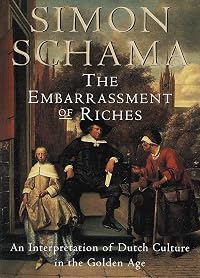



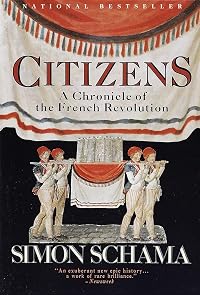






















Member Recommendations

Member Reviews
An engaging account of the Batavian Republic and its struggles to modernise the administrative machinery of government while grappling with opposing federalist and unitarist forces in achieving this. To add to the woes of Dutch Republic from 1780 to 1813 was the occupation, and then absorption, into the French Empire, a disastrous war with England, an economic blockade with debilitating demands for money and loans from France.
France treated the Dutch with disdain, imagining the country was the counting house of Europe, as it had once been during its Golden Century.
Schama gives due credit to Dutch values of persistence, thrift and self-management as the qualities that maintained the affiliation of the various parts of the Dutch Republic. show more At the heart of the struggle was a determination among its ablest politicians to reach a stage where a well managed unified Netherlands would emerge, even though it meant reduction in status as a department of France for some years, until Napoleon's megalomania was reversed in Russia and Prussia. show less
France treated the Dutch with disdain, imagining the country was the counting house of Europe, as it had once been during its Golden Century.
Schama gives due credit to Dutch values of persistence, thrift and self-management as the qualities that maintained the affiliation of the various parts of the Dutch Republic. show more At the heart of the struggle was a determination among its ablest politicians to reach a stage where a well managed unified Netherlands would emerge, even though it meant reduction in status as a department of France for some years, until Napoleon's megalomania was reversed in Russia and Prussia. show less
Most interesting book, however written in sophisticated and sometimes old English, comparing to the similar historical books from current times.
Ratings
Members
- Recently Added By
Published Reviews
Dr. Schama’s very long (his own words are “indecently corpulent”), detailed but eloquent book is justified, in his view, by a revised interpretation of the importance of the reforming Patriot movement that arose in the 1780s, of the Batavian Republic set up after French troops entered the Netherlands in 1795, and of the “French times” that followed. What apparently started for Dr. show more Schama as a study of the French Revolution as it was mirrored in Dutch history ended as an autonomous study of the Dutch “revolution” itself. More than that, his bold theory of the specifically Dutch contribution to their own later development after 1813 takes unequivocal form. “…[I]t seems incontestable that the Dutch monarchy of the nineteenth century, conservative before 1848 and liberal after it, was not merely preceded but caused by the Batavian Republic and its successor Kingdom. show less
added by John_Vaughan
Lists

Works Cited in The Life and Death of Democracy by John Keane
278 works; 1 member
Author Information

70+ Works 19,294 Members
Simon Schama is an historian, educator, and writer. He was born in London, England on February 13, 1945. Schama earned a B.A. in history in 1966 from Cambridge University and later became a fellow of Christ College. Schama was a Fellow and Tutor in Modern History at Brasenose College, Oxford from 1976 to 1980. He also was an Erasmus Lecturer in show more the civilization of the Netherlands at Harvard University in 1978, and from 1980 to 1993 he was Professor of History and Mellon Professor of the Social Sciences and Senior Associate at the Center for European Studies. Schama has been the Old Dominion Professor of Humanities at Columbia University since 1993, teaching in the history, art history and archaeology departments. Schama's 1977 book, Patriots and Liberators: Revolution in the Netherlands, 1780-1813, received the Wolfson Prize for history and the Leo Gershoy Memorial Prize of the American History Association. Another book, Citizens: A Chronicle of the French Revolution, won the NCR Prize for Nonfiction. Schama also worked as an art critic for The New Yorker and has written historical and art documentaries for the BBC. In 2001 he received the CBE. In 2006 Schama earned the National Book Critics Circle Award for Nonfiction for Rough Crossings. His more recent works include A History of Britain and The Sory of the Jews, both written in multiple volumes. (Bowker Author Biography) Simon Schama is the author of The Embarrassment of Riches, Citizens, Landscape and Memory, and most recently, Rembrandt's Eyes. He is currently Old Dominion Professor of the Humanities at Columbia University. The second installment of his epic history of Britain is due to be published in April 2001. (Publisher Provided) show less
Some Editions
Awards and Honors
Awards
Common Knowledge
- Canonical title
- Patriots and Liberators: Revolution in the Netherlands, 1780-1813
- Original title
- Patriots and Liberators
- Alternate titles
- Patriotten en bevrijders
- Original publication date
- 1977
- People/Characters
- Bicker, Jan Bernd; Blauw, Jacob; Derk, Baron van der Capellen tot den Pol Joan; Daendels, General Herman Willem; Fijnje, Wybo; Gogel, Isaac Jan Alexander (show all 14); van de Kasteele, Pieter Leonard; Bonaparte, King Louis; Napoleon Bonaparte; Schimmelpenninck, Count Rutger Jan; Valckenaer, Johan; Vreede, Pieter; William V, Prince of Orange; Wiselius, Samuel Iperuszoon
- Important places
- Amsterdam, North Holland, Netherlands; Batavian Republic; Rotterdam, South Holland, Netherlands; Utrecht, Utrecht, Netherlands
- Epigraph
- Behold, O Free Bataves, Ambition's Head
By the Sovereign of the People is toppled
from the Throne!
Salute its might! Through which Liberty shall prevail
And through which every Netherlands' Tyrant sha... (show all)ll surely fall! - Dedication
- For my mother and father
- First words
- John Adams, who knew the Dutch Republic well, once likened its predicament to that of a frog caught between the legs of two fighting bulls.
- Last words
- (Click to show. Warning: May contain spoilers.)But there are some for whom - amidst all the rites of passage - the etravagant alarums and excursions with which these years are famously crowded - the still small enterprise of tilling God's wet allotment merits at least an honourable mention.
- Original language
- English
Classifications
- Genres
- History, Nonfiction, General Nonfiction
- DDC/MDS
- 949.2 — History & geography History of Europe Greece, Albania, Yugoslavia, Serbia, Romania, Bulgaria Netherlands
- LCC
- DJ202 .S32 — History of Europe, Asia, Africa and Oceania Netherlands (Holland) History of Netherlands (Holland) History By period 1555-1795. United provinces
- BISAC
Statistics
- Members
- 215
- Popularity
- 150,829
- Reviews
- 2
- Rating
- (3.66)
- Languages
- Dutch, English
- Media
- Paper
- ISBNs
- 8
- ASINs
- 1