The First Heretic
by Aaron Dembski-Bowden
The Horus Heresy Novels (14), The Horus Heresy (XIV), Warhammer 40,000 (fiction) (Horus Heresy novel #14)
On This Page
Description
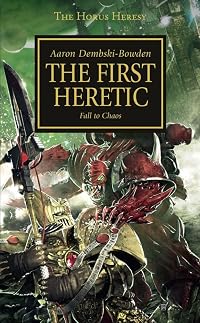
Amidst the galaxy-wide war of the Great Crusade, the Emperor castigates the Word Bearers for their worship. Distraught at this judgement, Lorgar and his Legion seek another path while devastating world after world, venting their fury and fervour on the battlefield. Their search for a new purpose leads them to the edge of the material universe, where they meet ancient forces far more powerful than they could have imagined. Having set out to illuminate the Imperium, the corruption of Chaos show more takes hold and their path to damnation begins. Unbeknownst to the Word Bearers, their quest for truth contains the very roots of heresy... show lessTags
Recommendations








Member Reviews
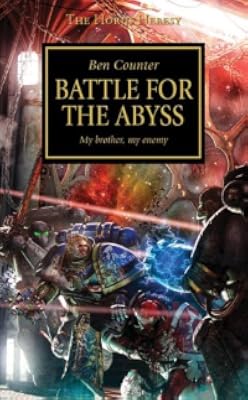
This is one my absolute favourite books from this series and was such a wonderful bolstering of the first touch of Heresy Burnout I was feeling after Battle for the Abyss (BFTA). I'm using a combination of the Shadow Crusade I: Only the Faithful and Shadow Crusade II: Underworld War omnibussies from www.heresyomnibus.com to follow the Word Bearers vs Ultramarines storyline, as well as going onto Lorgar: Bearer of the Word (Primarchs) next. I say it's one of the best Horus Heresy, but I haven't given it full marks for reasons I'll get more into later.
From the shameful wreckage of Monarchia, through the Eye of Terror, to the Dropsite Massacre, A D-B tells the story of how Lorgar was disregarded, broken, and manipulated by everyone around show more him. This is the heartbreaking backstory of what was less a fall, but a damning push and pull to seeking answers and discovering darker truths.
We're so back baybee!
That's the feeling I was instantly hit by when picking this up. Honestly, I'm not sure why this wasn't released after Flight of the Eisenstein instead of Fulgrim, or included first in the Shadow Crusade Omnibus because it fully establishes the apotheosis of the Red vs Blue rivalry. I partly understand BFTA being before this, despite none of the Legions or context being established (I talked about this more in my BFTA review), because this is the introduction of the Ultramarines and an incredibly ignoble one at that. Honestly, it's a testament to the writing of Dan Abnett and co that they can elicit any sympathy for the XIII after this book.
I did not recall Monarchia being as brutal as it was. This is at least the third time I've read this and I was just as, if not more, shocked this time. There are aspects of seeing the Sons of Guilliman's interactions with the Monarchians that tragically resonate with atrocities we see in the real world. The entire tale of Monarchia from the Word Bearers' perspective is harrowing; there is shame, of course, but their is a cruelty of very real physical, emotional, and psychic abuse that Lorgar and the XVII suffer, along with what we come to learn about previous understandings the Urizen had, are beyond heartbreaking.
In previous novels the merits of brutal and punishing Compliances and/ or dealing with rebellion against the Imperial Truth have been discussed by Astartes with one pointing out that they ferment resentment that leads to further opposition. You have to question whether the Emperor could be so incredibly ignorant in the handling of his sons from Monarchia, to the Emperor's Children's Aquila, his actions upon meeting the Red Angel on Nuceria and Night Haunter on Nostromo, etc., or his indifference and cruelty are part of his grand plan.
I have long talked about my love and sympathy for the Primarchs of the VIII and XII, but I always forget how Lorgar's life is also a tragedy of epic proportions. The outcast brother and devoted son, desperate to venerate his father, traumatised by the abuse he received in response. The way his adopted father and son then use this grief and vulnerability to manipulate and compel him is truly painful to see. I think how genuine and humble he was, and the suffering he experienced gets forgotten and he becomes such an easy target for contempt due to the ego, confidence, and zealotry that come to fill the husk his life leaves him, makes him such an unbelievably smarmy and unlikable prick.
Through tantalising discussion of the Lost Legions it seems that only Lorgar and his sons who feel the heartbreaking familial fear of being cut out and purged hanging over them, along with the pain of losing two brothers and countless cousins that his is sworn to never speak of. It's always exciting to see how the Lost Legions are included and discussed--those familiar with Warhammer 40K will be aware that these were wiped from all records to enable players to create their own First Founding Legions--they can never be detailed, but the little we glean is fascinating, but, more than that, in this deeper story this is an absolute nightmare to live with the knowledge of.
This is a book of a great deal of unknown and forbidden knowledge. In fact, it's an amazing masterclass in turning a colossal info and lore dump into an engaging narrative. I am a self-admitted lore nerd so my perspective is going to be biased compared to someone reading this series without prior knowledge and/ or interest, but I do think it does a brilliant job of making it fun to read and parseable for the majority of readers.
There are so many huge drops and reveals, so many that I had forgotten, that I won't spoil here, but I definitely was gagged a bunch of times. One thing that has been clear throughout the series is the way it plays with dramatic irony for those with knowledge of the Dark Millennium, without being impenetrable for those without. Something I particular enjoy, which we see in here, is the way both 'Loyalist' and 'Traitor' forces plant seeds that will eventually bloom to benefit their opponents. Watching elements of each other's doom and difficulty being sewn brings me a wonderful schadenfreude.
Let's talk about one of my favourite characters in the Horus Heresy, my sweet prince, the Last Angel, the Crimson Lord of the Gal Vorbak, Argel Tal. His depth of character is easily comparable to Loken and Garro, though he is shaped by different experiences that make him in various ways courser and party to dark deeds. Nevertheless, he has that rare humanity in him so many Astartes lose after ascension. His relationship with Cyrene actually mirrors that of Loken's with Mersadie Oliton, enabling a confessional and for tales of the Legion to be told. In the way she becomes revered, there is also a dark reflection of Euphrati Keeler in Cyrene--again, we see the importance of humans in affecting the galaxy and the Heresy. Argel Tal is an echo of Lorgar himself, with the personal tragedies and experiences being closely aligned, but with the Gal Vorbak actually going further and being the canary in the Warp for Lorgar and suffering for it; another devoted son, mistreated. I did year up when he said, "I'm sorry."
I don't want to go on for too much longer or into more florid detail, so I will try to cover things more briefly.
A D-B's descriptions and discussions of the Immaterium are gorgeous and riveting! The sheer weight of reveals and context are staggering! This series does so well to justify within context the ridiculous events and make me care for individuals, and this book has that in spades!
Ferrus Mannus is given such a raw deal in Horus Heresy and I do wonder if it's because ole Durus Renatus has such a silly name for a 'Loyalist' (The Red Angel was given the slave name, Angron-Thal'kr, literally Child of the Mountain [House], and Night Haunter is the VIII Primarch's chosen name & incredibly apropos).
As much criticism as I had for BFTA, one thing it did, along with all other novels so far, including this one with how it described the Gal Vorbak as standing 'together, but alone', is the echoing leitmotifs of Astartes brotherhood and its dichotomy of the perilously fragile assumed/ told bonds and the individually established/ cemented true connections, while everything happening around them and just being individual weapons/ expendible, they are all alone or at least threatened by it.
The story of Lorgar, the Horus Heresy, The Emperor and the Imperium of Man at its heart is a story of withheld truths, lies, manipulations (genetic, mental, and psychic), neglect, abuse, and trauma that make the possibility of informed consent impossible. It's a tragedy of destiny and being trapped by circumstance and I love it! Never is it more on display, at least in the books so far, that in The First Heretic.
This book is so nearly perfect with some of the most wonderful descriptions, excellent storytelling, and mastercrafted dialogue, so when it isn't hitting those highs the lows feel lower and I do have some criticisms to discuss.
I'm sure I've read A D-B books that had good battles in them, but the general action of the Compliances in this book are compently described, but lack any real energy or interest, which is almost certainly exacerbated by everything else being so bloody good
(*shhh* Don't tell anymore, but I'm not really into the Heresy for the battles as much as the pain and the drama)
The rather bizarre organisation and weighting of parts of this book are really effective when they work, but it does lead to parts almost feeling vastly different in terms of interest and quality, almost tacked on. This makes sense in the way different parts are being told by different people as we see them play out, but there are whole sections that might have been better as separate stories to keep the story more focused and balanced.
My only other complaint is if the writing is that it seems A D-B has She Who Must Be A Bigoted Fuck levels of fatphobia. I don't know how purposeful it is, but any kind of fat or overweight aspect to a character is portrayed as gross and bad, as well as being a reflection of their negative character. This is something that comes up in so many books, genre fiction particularly, and it's always noticeable, but often ignorable as it only comes up once or twice, but it comes up a LOT over the course of this book. This really isn't OK and I hate it. I don't compare an author or their writing to that virulent hatemonger lightly, especially not books and authors I genuinely have the highest respect for, but on this one issue, it's warranted.
One thing about the otherwise brilliant audio book narrated by Gareth Armstrong is the voice he uses for the Remembrancer, Ishaq Kadeen, which seems to be a questionable, vague South Asian accent. I assume this is in an attempt to be explicit about diversity and the character, but white British folx doing accents in books is weird and uncomfortable, unless the accent is flawless. But even then it is a a question.
This book is so gods damned good and I'm so excited to get into more Imperial Herlads-Word Bearers shenanigans starting with Lorgar's Primarchs backstory, and following the Shadow Crusade storyline at least through the extended Calth storyline, but I'm so enamoured with Lorgar and Argel Tal that I might follow it all the way to the Shadow Crusade III: Chosen of Chaos to really get my fix, as well as getting into my sweet, sad, angry bois, and the big [Roommates] energy between Argel Tal and Khârn.
You can find the omnibussies referenced in this review here: www.heresyomnibus.com show less
From the shameful wreckage of Monarchia, through the Eye of Terror, to the Dropsite Massacre, A D-B tells the story of how Lorgar was disregarded, broken, and manipulated by everyone around show more him. This is the heartbreaking backstory of what was less a fall, but a damning push and pull to seeking answers and discovering darker truths.
We're so back baybee!
That's the feeling I was instantly hit by when picking this up. Honestly, I'm not sure why this wasn't released after Flight of the Eisenstein instead of Fulgrim, or included first in the Shadow Crusade Omnibus because it fully establishes the apotheosis of the Red vs Blue rivalry. I partly understand BFTA being before this, despite none of the Legions or context being established (I talked about this more in my BFTA review), because this is the introduction of the Ultramarines and an incredibly ignoble one at that. Honestly, it's a testament to the writing of Dan Abnett and co that they can elicit any sympathy for the XIII after this book.
I did not recall Monarchia being as brutal as it was. This is at least the third time I've read this and I was just as, if not more, shocked this time. There are aspects of seeing the Sons of Guilliman's interactions with the Monarchians that tragically resonate with atrocities we see in the real world. The entire tale of Monarchia from the Word Bearers' perspective is harrowing; there is shame, of course, but their is a cruelty of very real physical, emotional, and psychic abuse that Lorgar and the XVII suffer, along with what we come to learn about previous understandings the Urizen had, are beyond heartbreaking.
In previous novels the merits of brutal and punishing Compliances and/ or dealing with rebellion against the Imperial Truth have been discussed by Astartes with one pointing out that they ferment resentment that leads to further opposition. You have to question whether the Emperor could be so incredibly ignorant in the handling of his sons from Monarchia, to the Emperor's Children's Aquila, his actions upon meeting the Red Angel on Nuceria and Night Haunter on Nostromo, etc., or his indifference and cruelty are part of his grand plan.
I have long talked about my love and sympathy for the Primarchs of the VIII and XII, but I always forget how Lorgar's life is also a tragedy of epic proportions. The outcast brother and devoted son, desperate to venerate his father, traumatised by the abuse he received in response. The way his adopted father and son then use this grief and vulnerability to manipulate and compel him is truly painful to see. I think how genuine and humble he was, and the suffering he experienced gets forgotten and he becomes such an easy target for contempt due to the ego, confidence, and zealotry that come to fill the husk his life leaves him, makes him such an unbelievably smarmy and unlikable prick.
Through tantalising discussion of the Lost Legions it seems that only Lorgar and his sons who feel the heartbreaking familial fear of being cut out and purged hanging over them, along with the pain of losing two brothers and countless cousins that his is sworn to never speak of. It's always exciting to see how the Lost Legions are included and discussed--those familiar with Warhammer 40K will be aware that these were wiped from all records to enable players to create their own First Founding Legions--they can never be detailed, but the little we glean is fascinating, but, more than that, in this deeper story this is an absolute nightmare to live with the knowledge of.
This is a book of a great deal of unknown and forbidden knowledge. In fact, it's an amazing masterclass in turning a colossal info and lore dump into an engaging narrative. I am a self-admitted lore nerd so my perspective is going to be biased compared to someone reading this series without prior knowledge and/ or interest, but I do think it does a brilliant job of making it fun to read and parseable for the majority of readers.
There are so many huge drops and reveals, so many that I had forgotten, that I won't spoil here, but I definitely was gagged a bunch of times. One thing that has been clear throughout the series is the way it plays with dramatic irony for those with knowledge of the Dark Millennium, without being impenetrable for those without. Something I particular enjoy, which we see in here, is the way both 'Loyalist' and 'Traitor' forces plant seeds that will eventually bloom to benefit their opponents. Watching elements of each other's doom and difficulty being sewn brings me a wonderful schadenfreude.
Let's talk about one of my favourite characters in the Horus Heresy, my sweet prince, the Last Angel, the Crimson Lord of the Gal Vorbak, Argel Tal. His depth of character is easily comparable to Loken and Garro, though he is shaped by different experiences that make him in various ways courser and party to dark deeds. Nevertheless, he has that rare humanity in him so many Astartes lose after ascension. His relationship with Cyrene actually mirrors that of Loken's with Mersadie Oliton, enabling a confessional and for tales of the Legion to be told. In the way she becomes revered, there is also a dark reflection of Euphrati Keeler in Cyrene--again, we see the importance of humans in affecting the galaxy and the Heresy. Argel Tal is an echo of Lorgar himself, with the personal tragedies and experiences being closely aligned, but with the Gal Vorbak actually going further and being the canary in the Warp for Lorgar and suffering for it; another devoted son, mistreated. I did year up when he said, "I'm sorry."
I don't want to go on for too much longer or into more florid detail, so I will try to cover things more briefly.
A D-B's descriptions and discussions of the Immaterium are gorgeous and riveting! The sheer weight of reveals and context are staggering! This series does so well to justify within context the ridiculous events and make me care for individuals, and this book has that in spades!
Ferrus Mannus is given such a raw deal in Horus Heresy and I do wonder if it's because ole Durus Renatus has such a silly name for a 'Loyalist' (The Red Angel was given the slave name, Angron-Thal'kr, literally Child of the Mountain [House], and Night Haunter is the VIII Primarch's chosen name & incredibly apropos).
As much criticism as I had for BFTA, one thing it did, along with all other novels so far, including this one with how it described the Gal Vorbak as standing 'together, but alone', is the echoing leitmotifs of Astartes brotherhood and its dichotomy of the perilously fragile assumed/ told bonds and the individually established/ cemented true connections, while everything happening around them and just being individual weapons/ expendible, they are all alone or at least threatened by it.
The story of Lorgar, the Horus Heresy, The Emperor and the Imperium of Man at its heart is a story of withheld truths, lies, manipulations (genetic, mental, and psychic), neglect, abuse, and trauma that make the possibility of informed consent impossible. It's a tragedy of destiny and being trapped by circumstance and I love it! Never is it more on display, at least in the books so far, that in The First Heretic.
This book is so nearly perfect with some of the most wonderful descriptions, excellent storytelling, and mastercrafted dialogue, so when it isn't hitting those highs the lows feel lower and I do have some criticisms to discuss.
I'm sure I've read A D-B books that had good battles in them, but the general action of the Compliances in this book are compently described, but lack any real energy or interest, which is almost certainly exacerbated by everything else being so bloody good
(*shhh* Don't tell anymore, but I'm not really into the Heresy for the battles as much as the pain and the drama)
The rather bizarre organisation and weighting of parts of this book are really effective when they work, but it does lead to parts almost feeling vastly different in terms of interest and quality, almost tacked on. This makes sense in the way different parts are being told by different people as we see them play out, but there are whole sections that might have been better as separate stories to keep the story more focused and balanced.
My only other complaint is if the writing is that it seems A D-B has She Who Must Be A Bigoted Fuck levels of fatphobia. I don't know how purposeful it is, but any kind of fat or overweight aspect to a character is portrayed as gross and bad, as well as being a reflection of their negative character. This is something that comes up in so many books, genre fiction particularly, and it's always noticeable, but often ignorable as it only comes up once or twice, but it comes up a LOT over the course of this book. This really isn't OK and I hate it. I don't compare an author or their writing to that virulent hatemonger lightly, especially not books and authors I genuinely have the highest respect for, but on this one issue, it's warranted.
One thing about the otherwise brilliant audio book narrated by Gareth Armstrong is the voice he uses for the Remembrancer, Ishaq Kadeen, which seems to be a questionable, vague South Asian accent. I assume this is in an attempt to be explicit about diversity and the character, but white British folx doing accents in books is weird and uncomfortable, unless the accent is flawless. But even then it is a a question.
This book is so gods damned good and I'm so excited to get into more Imperial Herlads-Word Bearers shenanigans starting with Lorgar's Primarchs backstory, and following the Shadow Crusade storyline at least through the extended Calth storyline, but I'm so enamoured with Lorgar and Argel Tal that I might follow it all the way to the Shadow Crusade III: Chosen of Chaos to really get my fix, as well as getting into my sweet, sad, angry bois, and the big [Roommates] energy between Argel Tal and Khârn.
You can find the omnibussies referenced in this review here: www.heresyomnibus.com show less
Int: Games Workshop, day. Some men are sitting around.
Man One: You know what would really fuck with peoples heads?
Man Two: Space Marine slash fic?
Man Three: Not this again.
Man One: No, never that. What we need is a book that makes Lorgar look tragic.
Man Three: Tragically deluded, but well intentioned? A lover, not a fighter? Led to search too far by trusting those who shouldn't be trusted?
Man One: Yes exactly. Everyone thinks Lorgar is a monster, lets show him and his Word Bearers to be tragic heroes in the Aristolean sense.
Man Three: But who could perform such a feat? This involves plot and characterisation and depths that only Dan can reach, and he's put a Do Not Disturb sign on his door and pretends to be out whenever we knock.
Man show more Two; Wait, didn't we just do this with Night Lords.... monsters that were really men, honour amongst theives, noble savages, filling in the lore gaps, that sort of thing.
Mans One And Three: did we?
They rummage through boxes and boxes and boxes of books, appear to find what they are looking for.
Man One: Aaron Thingy Bowing, d'yer ken him?
Man Three: Wee fellow in the hat. Well liked on the Internet.
Man One: Get him on the phone, tell him he's got three months, usual rates, and then phone my secretary and get her to order me another superyacht! Christmas in Monte Carlo baby!
All: hurrah! show less
Man One: You know what would really fuck with peoples heads?
Man Two: Space Marine slash fic?
Man Three: Not this again.
Man One: No, never that. What we need is a book that makes Lorgar look tragic.
Man Three: Tragically deluded, but well intentioned? A lover, not a fighter? Led to search too far by trusting those who shouldn't be trusted?
Man One: Yes exactly. Everyone thinks Lorgar is a monster, lets show him and his Word Bearers to be tragic heroes in the Aristolean sense.
Man Three: But who could perform such a feat? This involves plot and characterisation and depths that only Dan can reach, and he's put a Do Not Disturb sign on his door and pretends to be out whenever we knock.
Man show more Two; Wait, didn't we just do this with Night Lords.... monsters that were really men, honour amongst theives, noble savages, filling in the lore gaps, that sort of thing.
Mans One And Three: did we?
They rummage through boxes and boxes and boxes of books, appear to find what they are looking for.
Man One: Aaron Thingy Bowing, d'yer ken him?
Man Three: Wee fellow in the hat. Well liked on the Internet.
Man One: Get him on the phone, tell him he's got three months, usual rates, and then phone my secretary and get her to order me another superyacht! Christmas in Monte Carlo baby!
All: hurrah! show less
Fantastic! This was my first Warhammer 40k novel and, although very chunky in names and jargon, I was able to follow along due in large part to the wonderful writing of [a: Aaron Dembski-Bowden|172152|Aaron Dembski-Bowden|https://images.gr-assets.com/authors/1332318340p2/172152.jpg] and this great story.
Aaron's words were almost poetic in nature but still easy to digest as they painted a clear picture of what was happening at every twist and turn this novel took, and there were many. I didn't know what to expect from this story, and I'm glad nothing was spoiled because it only made what was unveiled even more shocking and disturbing. The pacing was handled really well with such a huge cast to work with, though there were some characters show more with diminished storylines later on that I felt took away from the story. Other introductory moments felt like they slowed the pace a bit.
Overall, a superb novel that I will definitely read again when I get a bit more of the 40k lore under my belt! show less
Aaron's words were almost poetic in nature but still easy to digest as they painted a clear picture of what was happening at every twist and turn this novel took, and there were many. I didn't know what to expect from this story, and I'm glad nothing was spoiled because it only made what was unveiled even more shocking and disturbing. The pacing was handled really well with such a huge cast to work with, though there were some characters show more with diminished storylines later on that I felt took away from the story. Other introductory moments felt like they slowed the pace a bit.
Overall, a superb novel that I will definitely read again when I get a bit more of the 40k lore under my belt! show less
In "The First Heretic" you follow Lorgar and the Word Bearers on a journey from believing in the Emperor of mankind as a God, to the edge of the Imperium where they turn there back on the Emperor and all the way back to the battle on Isstvan V. This edition does a good job of bringing some of the other novels together, but up until a strong finish this was going to be my least favorite of the series so far.
After serving the Emperor loyally for a century, Primarch Lorgar suffers a crisis of faith that leaves him and his Word Bearers scouring the edges of the galaxy for answers.
• Mastery of the written form, with resonant & well-paced prose.
• Interesting characters with varied perspectives and meaningful relationships.
• Plot's pretty predictable, but at least has a solid progression to it.
• Mastery of the written form, with resonant & well-paced prose.
• Interesting characters with varied perspectives and meaningful relationships.
• Plot's pretty predictable, but at least has a solid progression to it.
Yet another outstanding entry in the multi-dimensional, multi-era Horus Heresy series as this one deals with the origins of the betrayal of Lorgar and the Word Bearers legion. Much as Horus was lured by Chaos, Lorgar is basically dressed down by the Emperor in front of a fellow primarch, Guilliman of the Ultramarines, for too much worship and not enough conquest in The Great Crusade. This leads him to reject the Emperor and set out on a pilgrimage of finding the truth through utter destruction of compliant worlds, which ultimately lead him to the edge of the galaxy and a date with Chaos as well. Fast forward forty years and the Word Bearers find themselves part of the seven traitorous legions with Horus on Isstvan V where they basically show more declare galactic war against the Imperium. Memorable scenes involving subordinates of Lorgar where Chaos has basically taken control ensue during the battle, spoilers notwithstanding, soldiers undergoing "shape-changing". Once again, Erebus seems to be behind the scenes instrumenting yet another conversion of Imperium personnel to Chaos. The Heresy series continues to crank out memorable stories with fascinating characters. show less
Another interesting read for the Horus Heresy series. Though Horus is completely in the background and this novel takes place mostly decades before the galactic civil war, we see the first seeds of Chaos bring about its corruption. We also get a lot of lore explanation as Aurelian Lorgar navigates his relentless quest for a superior faith.
There are some interesting non-Astartes, as well, that grace the page, each with their own stories.
There are some interesting non-Astartes, as well, that grace the page, each with their own stories.
Members
- Recently Added By
Lists

Kindle Books - To Read
63 works; 1 member
Author Information

84+ Works 2,913 Members
Some Editions
Awards and Honors
Series

The Horus Heresy Novels
54 works (14)

The Horus Heresy
55 works (XIV)

Warhammer 40,000 (fiction)
1240 works (Horus Heresy novel #14)
Belongs to Publisher Series
Work Relationships
Common Knowledge
- Canonical title
- The First Heretic
- Original title
- The First Heretic
- Alternate titles
- The First Heretic : Fall to Chaos
- Original publication date
- 2010-10
- People/Characters
- Lorgar Aurelian (Primarch of the Word Bearers); Roboute Guilliman (Primarch of the Ultramarines); Magnus the Red (Primarch of the Thousand Sons); Corvus Corax (Primarch of the Raven Guard); Konrad Curze (Primarch of the Night Lords); Ferrus Manus (Primarch of the Iron Hands) (show all 30); Perturabo (Primarch of the Iron Warriors); Kor Phaeron (First Captain, Word Bearers Legion); Ererbus (First Chaplain, Word Bearers Legion); Deumos (Master of the Serrated Sun Chapter, Word Bearers Legion); Argel Tal (Captain, 7th Assault Company, Word Bearers Legion); Xaphen (Chaplain, 7th Assault Company, Word Bearers Legion); Torgal (Sergeant, Torgal Assault Squad, Word Bearers Legion); Malnor (Sergeant, Malnor Assault Squad, Word Bearers Legion); Dagotal (Sergeant, Dagotal Outrider Squad, Word Bearers Legion); The Crimson Lord (Commander of the Gal Vorbak, Word Bearers Legion); Jago Sevatarion (First Captain, Night Lords Legion [here named as Sevatar]); Aquillon (Occuli Imperator, 'Eyes of the Emperor', Custodian, Legio Custodes); Vendatha (Custodian, Legio Custodes); Kalhin (Custodian, Legio Custodes); Nirallus (Custodian, Legio Custodes); Sythran (Custodian, Legio Custodes); Baloc Torvus (Master of the Fleet, 1301st Expedition Fleet); Arric Jesmetine (Major, Euchar 54th Infantry, 1301st Expedition Fleet); Cyrene Valantion (Confessor of the Word); Ishaq Kadeen (Official remembrancer, imagist); Absolum Cartik (Personal astropath to the Occuli Imperator); Incaradine (Conqueror Primus of the 9th Maniple, Carthage Cohort, Legio Cybernetica); Xi-Nu 73 (Tech-Adept of the 9th Maniple, Carthage Cohort, Legio Cybernetica); Ingethel (Emissary of the Primordial Truth, Non-Imperial)
- Important places
- Khur; Colchis; 1301-12; The Eye of Terror; Isstvan V; Imperium of Man
- Epigraph
- 'Kill me then, "Emperor". Better to die in freedom's twilight than draw breath at the dawn of tyranny. May the gods grant me my last wish: that my spirit lingers long enough to laugh when your faithless kingdom at last f... (show all)alls apart.'
– Daival Shan, Terran seperatist warlord, at his execution.
'If a man gathers ten thousand suns in his hands... If a man seeds a hundred thousand worlds with his sons and daughters, granting them custody of the galaxy itself... If a man guides a million vessels between the infinite... (show all) stars with a mere thought... Then I pray you tell me, if you are able, how such a man is anything less than a god.'
– Lorgar Aurelian, Primarch of the Word Bearers
'There is no surer sign of decay in a country than to see the rites of religion held in contempt.'
– Nikollo Makiavelli, Ancient Eurasian philosopher - Dedication
- For my brother Adam, the glue that keeps my family together.
- First words
- Mighty heroes battle for the right to rule the galaxy.
Introduction: The Horus Heresy / It is a time of legend.
His sisters wept when the Legion came for him.
Prologue
The Grey Warrior
I remember the Day of Judgement
I
False Angels - Last words
- (Click to show. Warning: May contain spoilers.)No, the voice rose from within. I am your brother.
Classifications
Statistics
- Members
- 438
- Popularity
- 70,189
- Reviews
- 15
- Rating
- (4.08)
- Languages
- 6 — English, French, German, Hungarian, Polish, Spanish
- Media
- Paper, Audiobook, Ebook
- ISBNs
- 14
- ASINs
- 12