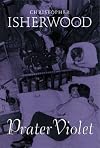
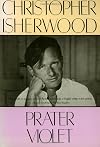
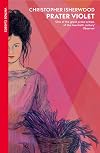
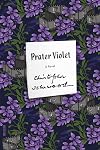
Prater Violet
by Christopher Isherwood
On This Page
Description
Isherwood's story centers on the production of the vacuous fictional melodrama Prater Violet, set in nineteenth-century Vienna, providing ironic counterpoint to tragic events as Hitler annexes the real Vienna of the 1930s. The novel features the vivid portraits of imperious, passionate, and witty Austrian director Friedrich Bergmann and his disciple, a genial young screenwriter: the fictionalized Christopher Isherwood.Tags
Recommendations
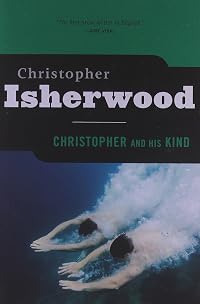





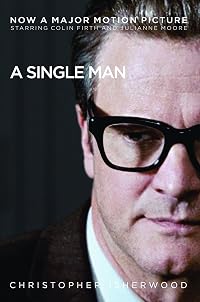
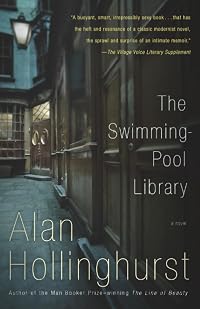
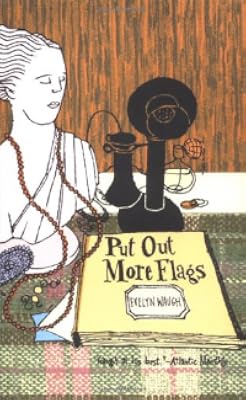

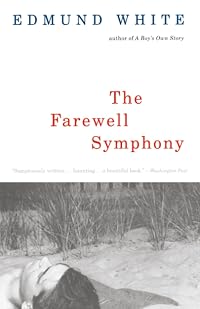















Member Recommendations

by anonymous user

by anonymous user
Member Reviews
This novella is only the second book of Isherwood’s that I’ve read, and I enjoyed it even more than the first, Goodbye to Berlin. It’s an interesting feature of his work that he blurs the line between memoir and fiction.
As in Goodbye to Berlin, in Prater Violet Isherwood writes in the first person as a character named Christopher Isherwood and bases the tale on his own experience, in this case, his first foray into film. Nevertheless, it is a novel that reads like a novel. It has the freedom and snappy dialogue of the best fiction.
Friedrich Bergmann, Viennese intellectual director, is a memorably-depicted figure. The character of Isherwood is only slightly less successful, perhaps because one has seen the type of the effete show more university-educated product of a middle-class home unable to act on his sympathy for the down-trodden before (most recently, in my case, in the author's Berlin collection). Still, this portrait is an interesting variation on the theme.
While some of the supporting characters are sketchy, others are vivid; I think of Lawrence the technician, Chatsworth, the producer, and Ashmeade, Cambridge poet-turned-studio intriguer.
The juxtaposition of the self-important, insular, crisis-ridden studio and the percolating instability of central Europe under the shadow of Fascism works for me. I was glad that the one was not clumsily portrayed as the counterpart to the other. The points of contact Isherwood evokes are sufficient, and deftly handled. A very good read. show less
As in Goodbye to Berlin, in Prater Violet Isherwood writes in the first person as a character named Christopher Isherwood and bases the tale on his own experience, in this case, his first foray into film. Nevertheless, it is a novel that reads like a novel. It has the freedom and snappy dialogue of the best fiction.
Friedrich Bergmann, Viennese intellectual director, is a memorably-depicted figure. The character of Isherwood is only slightly less successful, perhaps because one has seen the type of the effete show more university-educated product of a middle-class home unable to act on his sympathy for the down-trodden before (most recently, in my case, in the author's Berlin collection). Still, this portrait is an interesting variation on the theme.
While some of the supporting characters are sketchy, others are vivid; I think of Lawrence the technician, Chatsworth, the producer, and Ashmeade, Cambridge poet-turned-studio intriguer.
The juxtaposition of the self-important, insular, crisis-ridden studio and the percolating instability of central Europe under the shadow of Fascism works for me. I was glad that the one was not clumsily portrayed as the counterpart to the other. The points of contact Isherwood evokes are sufficient, and deftly handled. A very good read. show less
Prater Violet is a short, sharp read. I think I may have read it a bit too fast, actually. Isherwood's prose is charming and economical, and he does a good job keeping the story's smaller players distinguishable. I loved how, in addition to the central interactions between Bergmann and the fictionalized Isherwood, a whole world behind this brief story is hinted at, is fed to the reader sideways-- the further vast workings of the film industry, the interior lives of each technician and secretary, the hint of the past with Ashmeade, and most hugely, the hulking terror of Hitler and World War II. In general, it's quick and light and contemplative, but the story really opens up and swallows you at the end.
Well, gotta go read more Isherwood now.
Well, gotta go read more Isherwood now.
A truly delightful read, with enticing insight into Art and the process of creation in relation to Man, the roles he plays under cold, artificial lights, the paths he moves along, and the chill mathematics of show-business and of the falling dominoes of history that tamper with the artistic temperament.
Gripping questions related to the human condition such as love and friendship are explored in more depth on a few pages than they usually are in thick volumes.
Bittersweet truths about who we might be and what we are doing with ourselves often come in deliciously manageable bite-sized chunks.
Gripping questions related to the human condition such as love and friendship are explored in more depth on a few pages than they usually are in thick volumes.
Bittersweet truths about who we might be and what we are doing with ourselves often come in deliciously manageable bite-sized chunks.
This is quite a succinct book, really being a mini Biography of the larger than life, Viennese film director Friedrich Bergmann during the pre-WWII period that Isherwood worked with him on the film Prater Violet. But he is an extremely entertaining, unrelenting and observant writer, who writes with great affection about a man who, for a while, seemed like a father to him.
This was a very amusing read, but the larger, darker background story of the prelude to war and of day to day loneliness isn't lost. He is not afraid to laugh at himself, and the images that he creates are wonderful - here's a bit that had me laughing out loud at the beginning:
"He was off the line. I jiggled the phone for a moment, stupidly, with vague indignation. Then show more I picked up the directory, found Imperial Bulldog's number, dialled the first letter, stopped. I walked across to the dining-room door. My mother and my younger brother Richard were still sitting at breakfast. I stood just inside the doorway and lit a cigarette, not looking at them, very casual.
'Was that Stephen?' my mother asked. She generally knew when I needed a cue-line.
'No.' I blew out a lot of smoke, frowning at the mantelpiece clock. 'Only some movie-people.'
'Movie-people!' Richard put down his cup with a clatter. 'Oh, Christopher! How exciting!'
This made me frown harder.
After a suitable pause my mother asked with extreme tact: 'Did they want you to write something?'
'Apparently,' I drawled, almost too bored to speak."
...I'm smirking as I read it right now! show less
This was a very amusing read, but the larger, darker background story of the prelude to war and of day to day loneliness isn't lost. He is not afraid to laugh at himself, and the images that he creates are wonderful - here's a bit that had me laughing out loud at the beginning:
"He was off the line. I jiggled the phone for a moment, stupidly, with vague indignation. Then show more I picked up the directory, found Imperial Bulldog's number, dialled the first letter, stopped. I walked across to the dining-room door. My mother and my younger brother Richard were still sitting at breakfast. I stood just inside the doorway and lit a cigarette, not looking at them, very casual.
'Was that Stephen?' my mother asked. She generally knew when I needed a cue-line.
'No.' I blew out a lot of smoke, frowning at the mantelpiece clock. 'Only some movie-people.'
'Movie-people!' Richard put down his cup with a clatter. 'Oh, Christopher! How exciting!'
This made me frown harder.
After a suitable pause my mother asked with extreme tact: 'Did they want you to write something?'
'Apparently,' I drawled, almost too bored to speak."
...I'm smirking as I read it right now! show less
A lovely but light fictional recreation of "Christopher Isherwood"'s experiences in the movie business in England before the outbreak of WW2.
Friedrich Bergmann is the real character of the book, the Viennese director of the eponymous film, and though his reactions to the news of the events of 1938 in Austria, we learn of the general indifference of Britain to Nazi-ism immediately before the outbreak of WW2, such as the comment that people were joking about holidays in Europe next summer, if there is a Europe!
Overall this was a light and remarkably quick read.
Friedrich Bergmann is the real character of the book, the Viennese director of the eponymous film, and though his reactions to the news of the events of 1938 in Austria, we learn of the general indifference of Britain to Nazi-ism immediately before the outbreak of WW2, such as the comment that people were joking about holidays in Europe next summer, if there is a Europe!
Overall this was a light and remarkably quick read.
It is a marvelous moment when Isherwood, as narrator, casts off his "camera" disguise and lays bare his up-until-then unsuspected personal feelings. The character of the expatriate film director is a comic gem.
Simply written, and rather easily understood novel that explores Isherwood's thoughts regarding the German refugees he came into contact with while WWII was raging. One of his more successful efforts.
Members
- Recently Added By
Published Reviews
ThingScore 75
In "Prater Violet," the Isherwood character who calls himself Christopher Isherwood and who is the focussing eye of all these narratives works in London on the script of a movie with an Austrian Jewish director. The director is a man of real talent: imaginative, energetic, and resourceful, a Viennese mixture of Jewish irony, worldly cleverness, and old-fashioned Goethean culture, whose show more soliloquies are brilliant examples of the author's mimetic gift. But in England, Imperial Bulldog Pictures sets him to making one of those idiotic films about the romance of gay old Vienna... It is to be hoped that Mr. Isherwood, with his recent experience of the Coast, will go on to give us the story of the more streamlined and larger- scale American methods of wrecking talent and suppressing issues. show less
added by SnootyBaronet
Lists

greasy film of cinematic fiction
36 works; 3 members

Good LGBT fiction for LGBT folk and friends
551 works; 55 members

Read These Too
458 works; 9 members

Books Read in 2018
4,360 works; 110 members
Author Information

88+ Works 14,824 Members
Christopher Isherwood, born in Cheshire, England, in 1904, wrote both novels and nonfiction. He was a lifelong friend of W.H. Auden and wrote several plays with him, including Dog Beneath the Skin and The Ascent of F6. He lived in Germany from 1928 until 1933 and his writings during this period described the political and social climate of show more pre-Hitler Germany. Isherwood immigrated to the United States in 1939 and became a U.S. citizen in 1946. He lived in California, working on film scripts and adapting plays for television. The musical Cabaret is based on several of Isherwood's stories and on his play, I Am a Camera. His other works include Mr. Norris Changes Trains, about life in Germany in the early 1930s; Down There on a Visit, an autobiographical novel; and Where Joy Resides, published after his death in 1986. (Bowker Author Biography) show less
Some Editions
Awards and Honors
Notable Lists
Series
Belongs to Publisher Series
Common Knowledge
- Canonical title*
- Prater Violet
- Original title
- Prater Violet
- Alternate titles*
- Prater Violet : portret van een regisseur
- Original publication date
- 1945
- Important places
- Berlin, Germany; Vienna, Austria; London, England, UK
- Related movies
- Prater Violet (IMDb)
- Dedication
- To Rene Blanc-Roos
- First words
- 'Mr. Isherwood ?'
- Quotations
- Bergmann was reckless, now. He was ready to pass even the weakest of my suggestions with little more than a sigh. Also, I myself was getting bolder. My conscience no longer bothered me. The dyer’s hand was subdued. There we... (show all)re days when I could write page after page with magical facility.
“You see, this umbrella of his I find extremely symbolic. It is the British respectability which thinks: ‘I have my traditions, and they will protect me. Nothing unpleasant, nothing ungentlemanly can possibly happen withi... (show all)n my private park.’ This respectable umbrella is the Englishman’s magic wand, with which he will try to wave Hitler out of existence. When Hitler declines rudely to disappear, the Englishman will open his umbrella and say, ‘After all, what do I care for a little rain?’ But the rain will be a rain of bombs and blood. The umbrella is not bomb-proof.”
“Don’t underrate the umbrella,” I said. “It has often been used successfully, by governesses against bulls. It has a very sharp point.”
With a foreigner’s luck, or intuition, he nearly always succeeded in picking out the unusual individual from the average type: a constable who did water colors, a beggar who knew classical Greek. And this betrayed him into ... (show all)a foreigner’s generalizations. In London, all policemen paint, all the scholars are starving. - Last words
- (Click to show. Warning: May contain spoilers.)He went out there with his family, early in 1935.
- Original language*
- Engels
*Some information comes from Common Knowledge in other languages. Click "Edit" for more information.
Classifications
Statistics
- Members
- 579
- Popularity
- 50,946
- Reviews
- 12
- Rating
- (3.73)
- Languages
- 9 — Catalan, Dutch, English, Finnish, French, German, Italian, Spanish, Swedish
- Media
- Paper, Audiobook, Ebook
- ISBNs
- 34
- ASINs
- 24