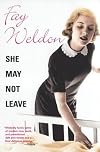
She May Not Leave
by Fay Weldon
On This Page
Description
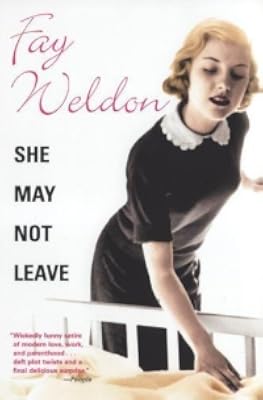
Fay Weldon lets her incisive wit loose on a hot issue facing many modern families -- child care, and what can happen when that involves having a nanny under your roof. Hattie and Martyn are the proud parents of newborn Kitty; both are in their early thirties, smart, handsome, and, for reasons of liberal principle, not married but partnered. All seems fine at first -- healthy baby, happy couple -- but when they have to decide who'll look after little Kitty, things get complicated. Hattie's show more dying to get back to work but Martyn fears employing foreign help might hurt his leftist political aspirations. Martyn capitulates when Agnieska arrives -- a Polish nanny who happens to be both domestic goddess and first-rate belly dancer, the maker of a mean cup of cocoa who's also educated in early childhood development. Having her in the house makes life livable again for the young couple, so when problems arise with her immigration papers Martyn and Hattie will do anything to keep her in the country. But will their decision to have Martyn marry her be the trouble-free solution they envision. show lessTags
Recommendations















Member Reviews
A thirtyish London couple, partnered but not married, have a baby and hire a Polish au pair, who may or may not be what she seems.
What's distinctive about this novel is its unusual style and set-up. It's narrated by the young woman's (Hattie) seemingly omniscient grandmother (who gets her intimate information from Hattie and a few others), who uses the young couple's story as a platform for her own ruminations on motherhood and marriage and to tell us her own experiences and those of her sister, a famous writer, both of whom have been both lucky and unlucky in love. Also, the novel is set out in individual, set-apart paragraphs, some of which could be a short, short story full of insight in itself. A clever book, really. Nice prose. show more For example,
Hattie is wise, all the same, to have done the choosing. When the man hires female help another element becomes involved. She is the slave he brings back from battle: she is the booty of war and her body is his by right. As it is Agnieszka becomes Hattie's maidservant, and her loyalty is to the one she first set eyes on, in this case the female mistress, not the male conqueror. Hattie abhors biologism - indeed, both she and Martyn laugh heartily at the absurdities published in the name of science in Devolution's sister magazine Evolution - and I don't put any of this to her. She would scoff.
I liked the book, but it took me a long time to read because others always seemed more compelling. It's worth reading. Really, quite clever. show less
What's distinctive about this novel is its unusual style and set-up. It's narrated by the young woman's (Hattie) seemingly omniscient grandmother (who gets her intimate information from Hattie and a few others), who uses the young couple's story as a platform for her own ruminations on motherhood and marriage and to tell us her own experiences and those of her sister, a famous writer, both of whom have been both lucky and unlucky in love. Also, the novel is set out in individual, set-apart paragraphs, some of which could be a short, short story full of insight in itself. A clever book, really. Nice prose. show more For example,
Hattie is wise, all the same, to have done the choosing. When the man hires female help another element becomes involved. She is the slave he brings back from battle: she is the booty of war and her body is his by right. As it is Agnieszka becomes Hattie's maidservant, and her loyalty is to the one she first set eyes on, in this case the female mistress, not the male conqueror. Hattie abhors biologism - indeed, both she and Martyn laugh heartily at the absurdities published in the name of science in Devolution's sister magazine Evolution - and I don't put any of this to her. She would scoff.
I liked the book, but it took me a long time to read because others always seemed more compelling. It's worth reading. Really, quite clever. show less
I know other readers disliked the book for it's unlikeable characters but I rather found Hatty, Martyn, and 'Agnes' realistic. I know couples like them, and au pairs like Agnieszka, and even though I suspected some of the plot twists, the final conclusion had me shocked and a little shaken (in a good way!). The device of the great-grandmother as narrator is lovely, as she provides some parallels to the main triad, ruminations on the nature of relationships, parenthood, and partnership. A very...more I know other readers disliked the book for it's unlikeable characters but I rather found Hatty, Martyn, and 'Agnes' realistic. I know couples like them, and au pairs like Agnieszka, and even though I suspected some of the plot twists, the show more final conclusion had me shocked and a little shaken (in a good way!). The device of the great-grandmother as narrator is lovely, as she provides some parallels to the main triad, ruminations on the nature of relationships, parenthood, and partnership. A very dark, twisted novel! show less
Were it not for my great faith in Fay Weldon, I would have abandoned this after some thirty pages repelled by the staccato style of the bohemian grandmother narrator. Once I had acclimatized to the harsh abrubt sentences, however, I found the moral decay and self-deceit to have a prurient appeal. The plot was largely predictable given the nigh comprehensive synopsis on the back cover and the abrupt twists are not prefigured which lays Weldon open to charges of dependence on Deus ex machina. The characters, however, have a depth that may arise from author cynicism but still held my interest throughout.
Fay Weldon's novels have a very subversive quality to them. I read this with a great deal of enjoyment and without any clue as to where she was taking me. The ending did not disappoint.
A professional couple have a baby. He likes her to stay at home, she wants to go back to work. They get an au pair. But is she sho she says she is? And why don't her stories seem to add up? Toe-curling situations with the husband ending up marrying the au pair, as she's in the country illegally (the couple were not married). Now the au pair looks after the couple's baby, wears the clothes of the woman (who is gaining weight because of the au pair's good cooking), and also has married her partner. When she joins the couple's bed, the woman decides it's time to leave.
The story was told by the woman's grandmother, who also added in lots of details from her own youth and marriages. This was not very interesting. Also, the woman claiming, in show more the end, that she actually schemed to be away from her husband and baby, i.e., it was all her idea, was not convincing. Still, a fun book to read.
[I read the Dutch translation] show less
The story was told by the woman's grandmother, who also added in lots of details from her own youth and marriages. This was not very interesting. Also, the woman claiming, in show more the end, that she actually schemed to be away from her husband and baby, i.e., it was all her idea, was not convincing. Still, a fun book to read.
[I read the Dutch translation] show less
I wish she had left, this was boring as anything! I only continued reading it because it was for a book club and I wanted to try hard to complete it. The best bit happens in the last 15 pages but the blurb already tells you what's going to happen so you aren't even excited about getting there!
Hattie and Martyn aren't married, they are `partnered'. They have a little baby, called Kitty and are on the look out for an au pair so that Hattie can return to work. I think Fay Weldon was trying to get us to look at modern life and has taken it to an extreme, I don't know, it's my opinion. It would have been good if it had been a take on the way we live our lives but it wasn't well written enough for that. The story is narrated by Frances who show more is Hattie's grandmother. This is where a second story runs parallel, in that we live Frances' life as well.
The characters are boring, very selfish, snobbish people - maybe they were written that way intentionally. A predictable plot that mirrors the blurb, nothing is a surprise. We are given a look into both Hattie and Martyn's life - who they work with and why they are motivated to be the way they are (they simply want to be better than anyone else). We are also invited into Agnieszka's life (the au pair) as and when Hattie 'discovers' something about her.
I still don't understand why we were told everything as it happened. I got to the end not feeling like there was any spark that could make me recommend this book. I couldn't even picture what the characters would look like. Too much emphasis was placed on Hattie gaining weight etc as it was obvious why Agnieszka was 'fattening' her up - to move her out and get herself into the marital bed: this was explicit.
This is my first Fay Weldon novel and I have a feeling it may be my last. I do have a few others dotting around from charity buys but I think they may go unread now unless I'm persuaded otherwise. I really can't see the point to this novel. The sentences were quite blunt, which clearly reflected the selfishness and insecurities of the characters but made for disjointed reading. I begain to enjoy Frances' life story more with the details of her and Serena's (Frances' sister) number of husbands and wrong doings. I couldn't work out the family structure in great deal as they all aren't mentioned in enough detail. show less
Hattie and Martyn aren't married, they are `partnered'. They have a little baby, called Kitty and are on the look out for an au pair so that Hattie can return to work. I think Fay Weldon was trying to get us to look at modern life and has taken it to an extreme, I don't know, it's my opinion. It would have been good if it had been a take on the way we live our lives but it wasn't well written enough for that. The story is narrated by Frances who show more is Hattie's grandmother. This is where a second story runs parallel, in that we live Frances' life as well.
The characters are boring, very selfish, snobbish people - maybe they were written that way intentionally. A predictable plot that mirrors the blurb, nothing is a surprise. We are given a look into both Hattie and Martyn's life - who they work with and why they are motivated to be the way they are (they simply want to be better than anyone else). We are also invited into Agnieszka's life (the au pair) as and when Hattie 'discovers' something about her.
I still don't understand why we were told everything as it happened. I got to the end not feeling like there was any spark that could make me recommend this book. I couldn't even picture what the characters would look like. Too much emphasis was placed on Hattie gaining weight etc as it was obvious why Agnieszka was 'fattening' her up - to move her out and get herself into the marital bed: this was explicit.
This is my first Fay Weldon novel and I have a feeling it may be my last. I do have a few others dotting around from charity buys but I think they may go unread now unless I'm persuaded otherwise. I really can't see the point to this novel. The sentences were quite blunt, which clearly reflected the selfishness and insecurities of the characters but made for disjointed reading. I begain to enjoy Frances' life story more with the details of her and Serena's (Frances' sister) number of husbands and wrong doings. I couldn't work out the family structure in great deal as they all aren't mentioned in enough detail. show less
A bit too predictable, but nevertheless entertaining. I generally like Weldon.
Members
- Recently Added By
Author Information

95+ Works 9,286 Members
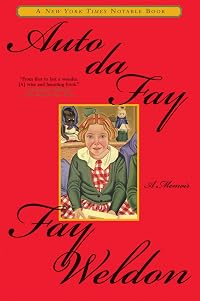
Fay Weldon was born in Worcester, England on September 22, 1931. She read economics and psychology at the University of St. Andrews. She worked as a propaganda writer for the British Foreign Office and then as an advertising copywriter for various firms in London before making writing a full-time career. Her work includes over twenty novels, five show more collections of short stories, several children's books, non-fiction books, and a number of plays written for television, radio and the stage. Her collections of short stories include Mischief and Nothing to Wear and Nowhere to Hide. She wrote a memoir entitled Auto Da Fay and non-fiction book entitled What Makes Women Happy. She wrote the pilot episode for the television series Upstairs Downstairs. Her first novel, The Fat Woman's Joke, was published in 1967. Her other novels include Praxis, The Life and Loves of a She-Devil, Puffball, Rhode Island Blues, Mantrapped, She May Not Leave, The Spa Decameron, Habits of the House, Long Live the King, and The New Countess. Wicked Women won the PEN/Macmillan Silver Pen Award. She was awarded a CBE in 2001. (Bowker Author Biography) show less
Common Knowledge
- First words
- "Agnieszka?" asks Marilyn.
- Last words
- (Click to show. Warning: May contain spoilers.)"I am happy that you are happy," I say, and I am.
Classifications
Statistics
- Members
- 209
- Popularity
- 157,047
- Reviews
- 10
- Rating
- (3.16)
- Languages
- Dutch, English, Norwegian (Bokmål), Russian
- Media
- Paper, Audiobook, Ebook
- ISBNs
- 19
- ASINs
- 4